
Published November 2, 2026 06:33AM
Bottom Line: Each of the bike lights in our Best Bike Lights of 2026 list below has been tested on long rides by an experienced triathlete for many miles. Our reviewer is unbiased, with no brand relationships, meaning no brand has paid to appear in our list.
It’s that time of year again. You glance at your training plan, realize your post-work ride slot will now be taking place in the dark, and suddenly “bike light” jumps to the top of your shopping list. The good news is that bike lights in 2026 are significantly better than offerings from just a few years ago. You could even say they are light-years ahead (pun intended) of the bike lights from the 20th century. They are brighter, lighter, and – critically for triathletes – easier to mount on your bike than ever before.
But before you order the cheapest bike light on Amazon, there’s a bit more to think through. The cheapest option is far from the best, but you also don’t need to take out a second mortgage to buy a bike light either. Here’s what actually matters when buying lights as a triathlete, followed by the best options on the market right now.
Why you want in a bike light (beyond the obvious)
As a light-toting triathlete, your goal isn’t just to see the road ahead of you; it is also to be seen. Public roads are far from perfectly safe, especially in today’s phone-addicted world filled with distracted drivers. But thankfully, having a bike light is one of the best ways to gain the attention of nearby drivers, reminding them to slow down and give you space as they pass by.
When shopping for a bike light, you want to consider two different design priorities, and pay close attention because most lights optimize for one or the other. First, you want a bike light that shines a powerful beam down the road, illuminating your path at speed in the dark. Second, you want a light that is designed to be seen. These lights use wide-angle optics, lateral emission, and attention-grabbing flash patterns to make you visible to cross-traffic and drivers approaching from the rear. Ideally, your bike light(s) do both.
For triathletes specifically, the lighting challenge runs deeper than a single unit on your bicycle. You might actually want three different lights for the corresponding sports. The ideal setup might include front and rear coverage on the bike, a headlamp or chest light for early-morning runs, and some form of visibility for open-water swims, especially those before sunrise. Each sport requires different hardware, but in this guide, we’ll focus on bike lights. Let’s help you figure out how to sort and sift through the hundreds of options on the market.
What to look for in a bike light
Lumens
The standard brightness unit for sports lights is lumens. The higher the number, the brighter the light. But brighter isn’t always better. Some brands love to advertise max lumens at maximum output, but that can drain the battery in under two hours. Always check the light’s runtime at the mode you’ll actually use.
Consider the type of darkness you’ll be riding in, and how much light you’ll need. Not every triathlete will train in pitch darkness, so here is a quick reference of what you’ll find on the light market:
| 10 to 50 lumens: | Visible to drivers at night – bare minimum to be seen |
| 100 lumens: | Visible during daylight hours |
| 200 to 400 lumens: | Enough to ride through well-lit city streets and for drivers to notice you |
| 400 to 600 lumens: | Allows you to spot minor debris and potholes, but only at the last second if you are riding at speed |
| 700+ lumens: | What you need for if you are riding in the dark at speed, or for off-road or trail running in the dark |
Beam pattern
A pinpoint beam aimed straight ahead is great for one thing, and that’s seeing directly in front of you. But if you’re riding in the dark, you also want to have side visibility, not just from your own perspective, but for other riders and drivers to see you. The best bike lights have a wide spread beam that alerts drivers approaching from angles, not just head-on. Some lights now use multiple LEDs, which is worth considering if you ride in the dark year-round.
Battery life
This is one of the most important aspects of a bike light because if the battery dies while you are riding in the dark 20 miles from home, you are SOL. Most bike lights are USB-C rechargeable, but runtime varies enormously. If you don’t get a light with a low-battery warning (ideally with several minutes of reserve before shutdown), make sure you keep tabs on how long you’ve been running it before it’s time to recharge.
Mount compatibility
This is where triathletes diverge from road cyclists. Aero bars, clip-on extensions, and non-standard cockpit shapes make standard clamp mounts useless in many setups. When shopping for lights, you’ll want to look for options that come with flexible silicone straps, GoPro-style mounts, or Garmin quarter-turn compatibility. Silicone straps cover the widest range of setups and are easy to transfer between bikes.
Smart features
In the 2026 bike light market, there are a number of smart features that come with some of the more pristine options. Some of the features are just bells and whistles, but a few are genuinely helpful, especially for triathletes. Radar integration (Garmin Varia), ANT+ connectivity, automatic brightness adjustment, and brake-sensing technology are popular features that help improve function and safety on the bike. These are not marketing gimmicks – radar in particular can dramatically improve your confidence when riding on open roads with traffic.
Mounting your lights on a tri bike
Front light placement can be the trickiest part of lighting your tri bike. You can choose between below the basebar (the most aerodynamic option), midway down the aerobars (if the light rotates that direction), and arguably the best solution: adding a computer bridge to your aerobars and mounting the light on top or below it. Whatever you choose, test it on a bumpy road during daylight hours before relying on it in the dark. Remember that you’re not only looking for the light to stay attached, but also for the angle to remain stable as the light illuminates the road in front of you.
Rear lights are much more forgiving, with the seatpost being the most ideal spot for a rear-facing bike light. If you have limited seatpost access, you can mount a light on the seatstay. Just make sure your light is pointing backward rather than toward the sky or floor. If you have bottles or other gear mounted under or behind your seat, make sure they don’t block the bike light when they are fully loaded.
The best bike lights for triathletes in 2026
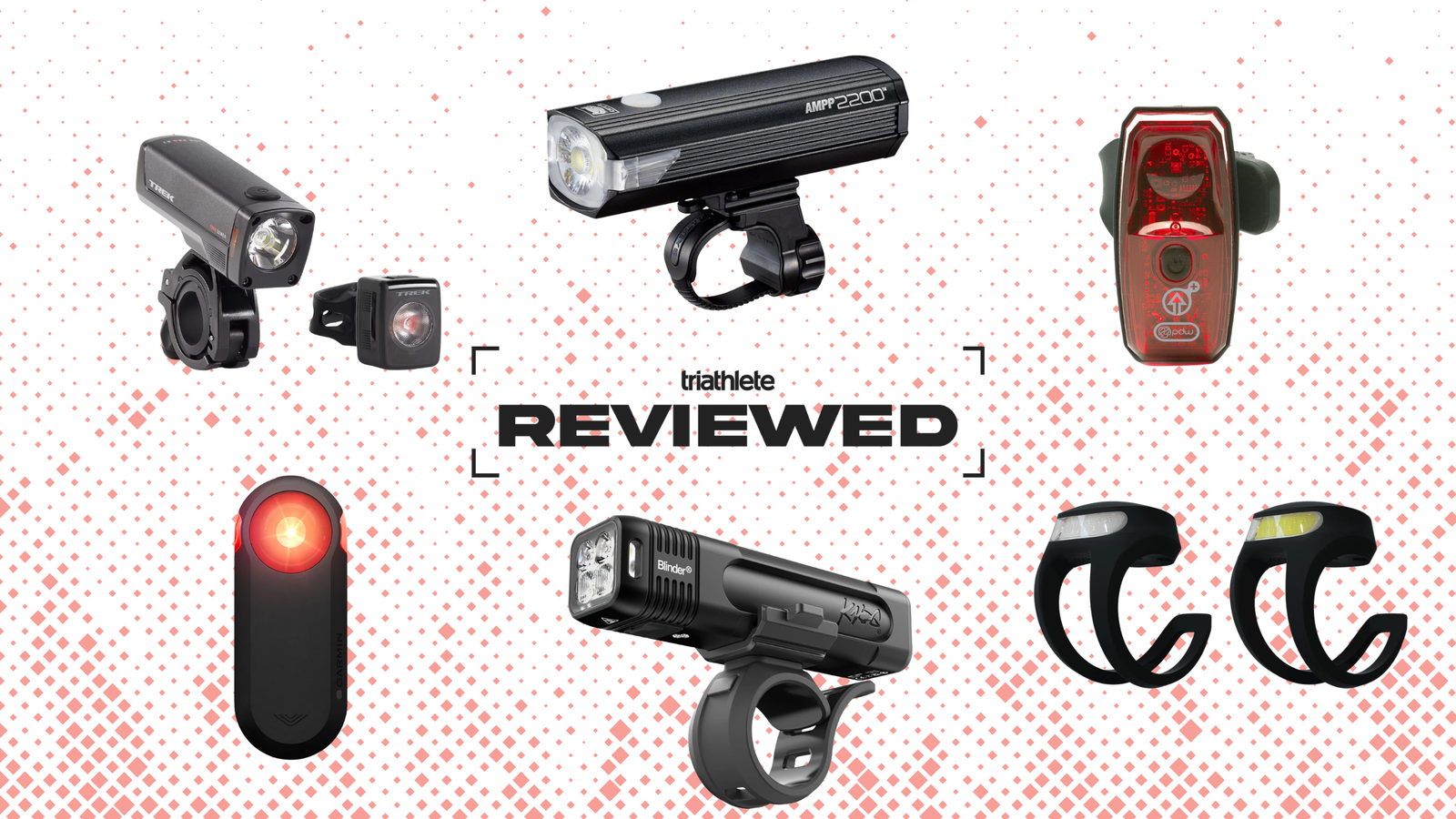
Best overall front + rear set: Trek Ion Pro RT/Flare RT
Output: 1,300 lumens front; 90 lumens rear
Battery life: 1.5 hrs front; 4.5 hrs rear
Weight: 192g front; 71g rear
The Ion Pro and Flare bike lights do much more than illuminate through darkness. The paired set uses ANT+ to link the front and rear lights together, and you can control both from a compatible Garmin or Wahoo head unit. Up front, the Ion Pro has up to 1,300 lumens, which is more than enough for most low-light situations. It also has a clean beam pattern with solid front and side visibility, with a few hours of battery life across various power settings. In the rear, the Flare can be used with a 16-degree offset mount option that helps solve one of the most common triathlete problems: mounting a rear light on an angled seatpost or seatstay. The mount is sold separately, but it only costs $5.
Pros: ANT+ integration, offset rear mount solves tri-bike seatpost issues ($5 cost), strong front output
Cons: Pricey for a set; front light only has 90 minutes of runtime at max output
Best mid-range front light: Knog Blinder 1000
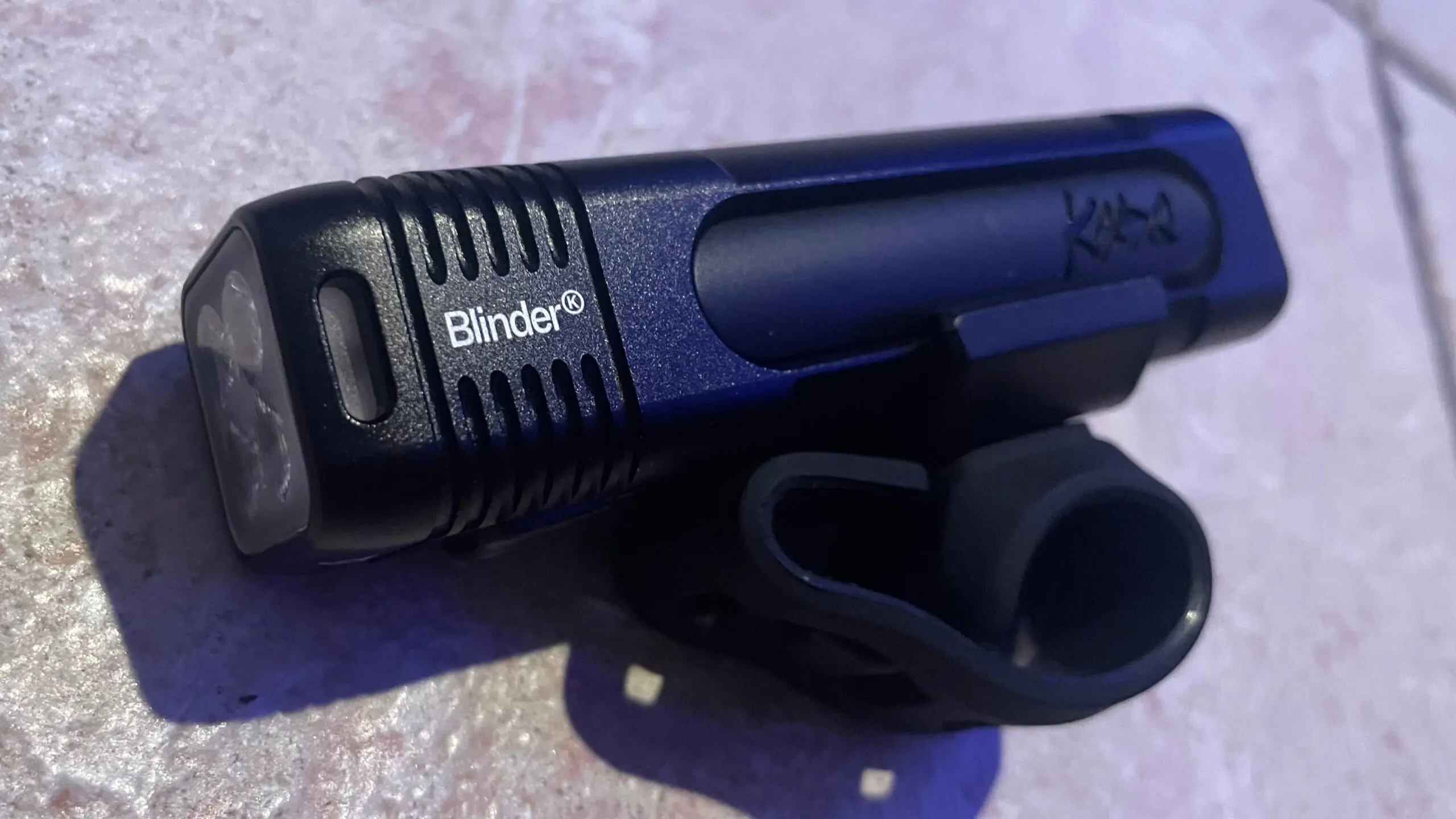
Output: 130 to 1,000 lumens with six different modes
Battery life: 120 hrs on ECO FLASH; up to 2 hrs at max output
Weight: 167g
The Blinder has earned its spot on best-of lists for years, and the 2026 version is no exception. IP67 waterproofing and six different light modes make the Blinder 1000 suitable for a wide range of weather and light conditions, including midnight rain-riding. At low outputs, the Blinder 1000 lasts for days on a single charge. GoPro-style and standard handlebar mounts are both included, making it versatile on almost any tri cockpit.
Pros: Fully IP67 waterproof, versatile mounts, solid build quality, side window visibility
Cons: Heavier than some competitors at the same lumen output
Best high-output front light: Cateye AMPP 2200

Output: 2,200 lumens
Battery life: 1 hr at max output; up to 60 hrs at minimum output
Weight: 213g
If your friends call you “Nightrider,” then the AMPP 2200 might be the perfect bike light for you. With a max output of 2,200 lumens, the AMPP 2200 obliterates darkness in a way that can make you feel like you’re riding during the daytime. This is the light for those who ride in pitch darkness at speed, or those who live in extreme daylight climates such as Alaska or Iceland. While its top-end output is impressive, the AMPP 2200 includes different light modes that are ideal for riding in the dusk rather than the pitch black. At 500 to 800 lumens, the AMPP 2200 becomes a practical all-night light with sufficient battery reserve. Its included mount is quite secure, even on rough pavement. The trade-off is weight; at 211g, it’s the heaviest option on this list.
Pros: Exceptional max output, wide runtime range, secure mount, high-quality build
Cons: Heaviest light on this list; 2,200 lumens if overkill for those who don’t ride in complete darkness
Best budget lights just to be seen: Knog Frog Bike Light Set

Output: 40 lumens front; 20 lumens rear
Battery life: 4 to 80 hrs (front); 3 to 60 hrs (rear)
Weight: 20g each
If you’re only looking for a pair of lights that will help you be seen, the Knog Frog combo could be the perfect fit. The front light output isn’t enough to illuminate a dark road, but not every triathlete wants to ride in the dark. Sometimes, you just want to be seen by drivers and cross-traffic, especially in low-light conditions. The combo’s battery life is fitting for the price point, and the pair is so light that you won’t even notice them. They come with a flexible silicone strap that wraps around virtually any tube shape, including aero bars. While they won’t light up a country road, the Knog Frog combo is great for being seen in the city, on the bike path, or on a foggy training loop.
Pros: Aero-bar compatible, extremely lightweight, very affordable, easy to use
Cons: 40 lumens won’t illuminate a dark road; not a standalone solution for night riding
Best smart rear light: Garmin Varia RTL515

Output: 65 lumens (day flash)
Battery life: 16 hrs (day flash mode); 6 hrs (solid mode)
Weight: 71g
The Varia is a rear light that also functions as a vehicle radar. In terms of safety and security, it is one of the best bike lights on the market. When paired with a compatible Garmin head unit or Varia app, the light alerts you to vehicles approaching from behind, before you can even hear them. It is an incredibly useful safety feature, especially if you frequently ride in groups or on busy roads. If you get nervous riding on open roads, the Varia RTL515 could be the best option for you. While the light function itself isn’t anything special, the radar is the reason to buy it.
Pros: Vehicle radar is a game-changer on open roads; lightweight, impressive battery life, pairs with Garmin ecosystem
Cons: Expensive for a single rear light; radar requires a compatible head unit or phone mount
Best brake-sensing rear light: Portland Design Works Gravity Plus
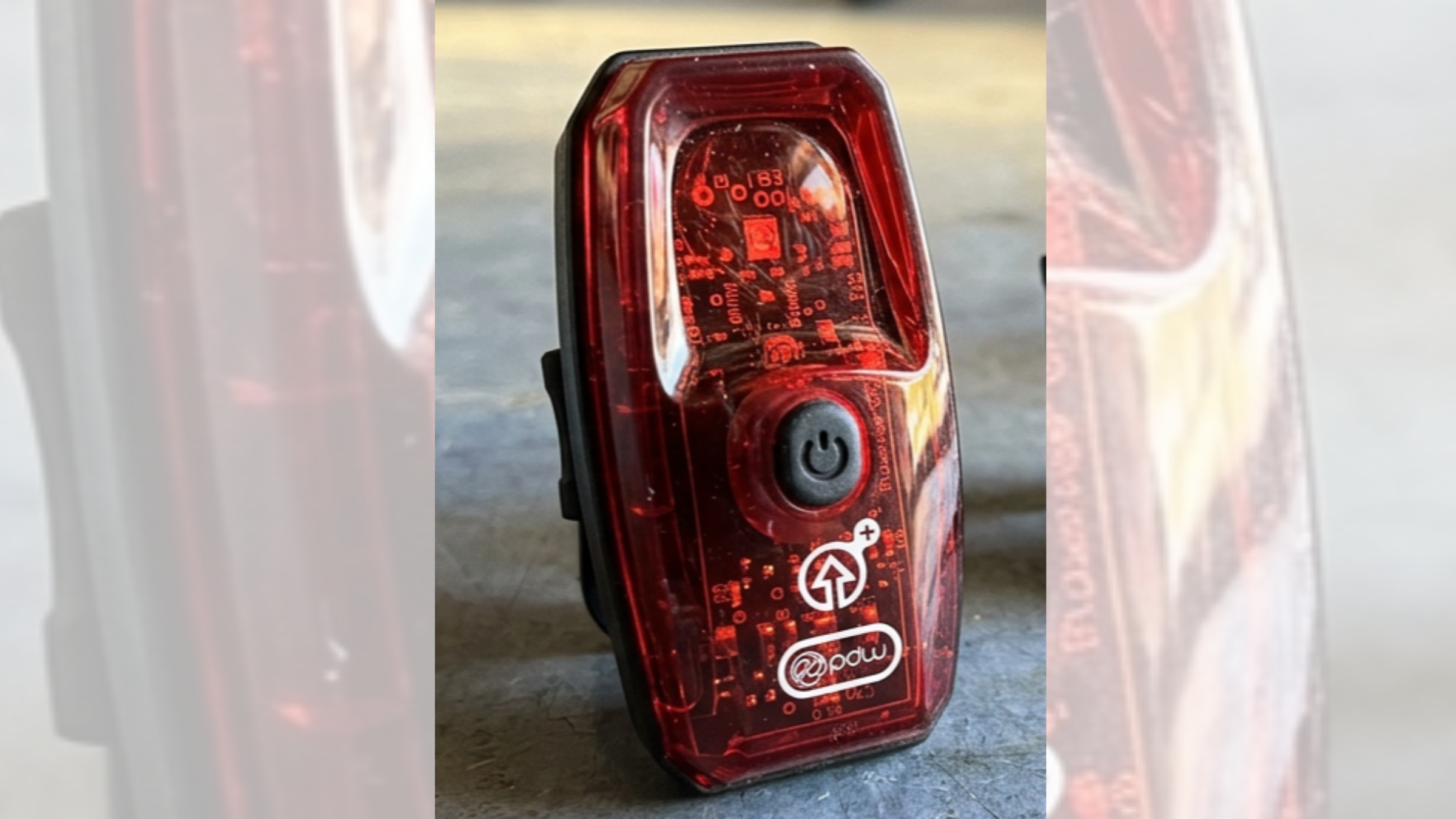
Output: 80 lumens
Battery life: 12 hrs constant; 30 hrs flash
Weight: 54g
In terms of bang for your buck, it’s hard to beat the Gravity Plus, which uses an accelerometer to detect braking and automatically increases brightness when you decelerate. It is effectively functioning as a brake light, and it is one of the cheapest options on this list. For triathletes who ride out of town, train with unpredictable stop-and-go conditions, or frequent group rides, the brake-sensing rear light is surprisingly effective. Runtime is excellent for a budget light, and you probably won’t even notice the added weight.
Pros: Brake-sensing technology, outstanding battery life, lightweight
Cons: 100 lumens is modest; a brighter light is necessary for riding in complete darkness



