
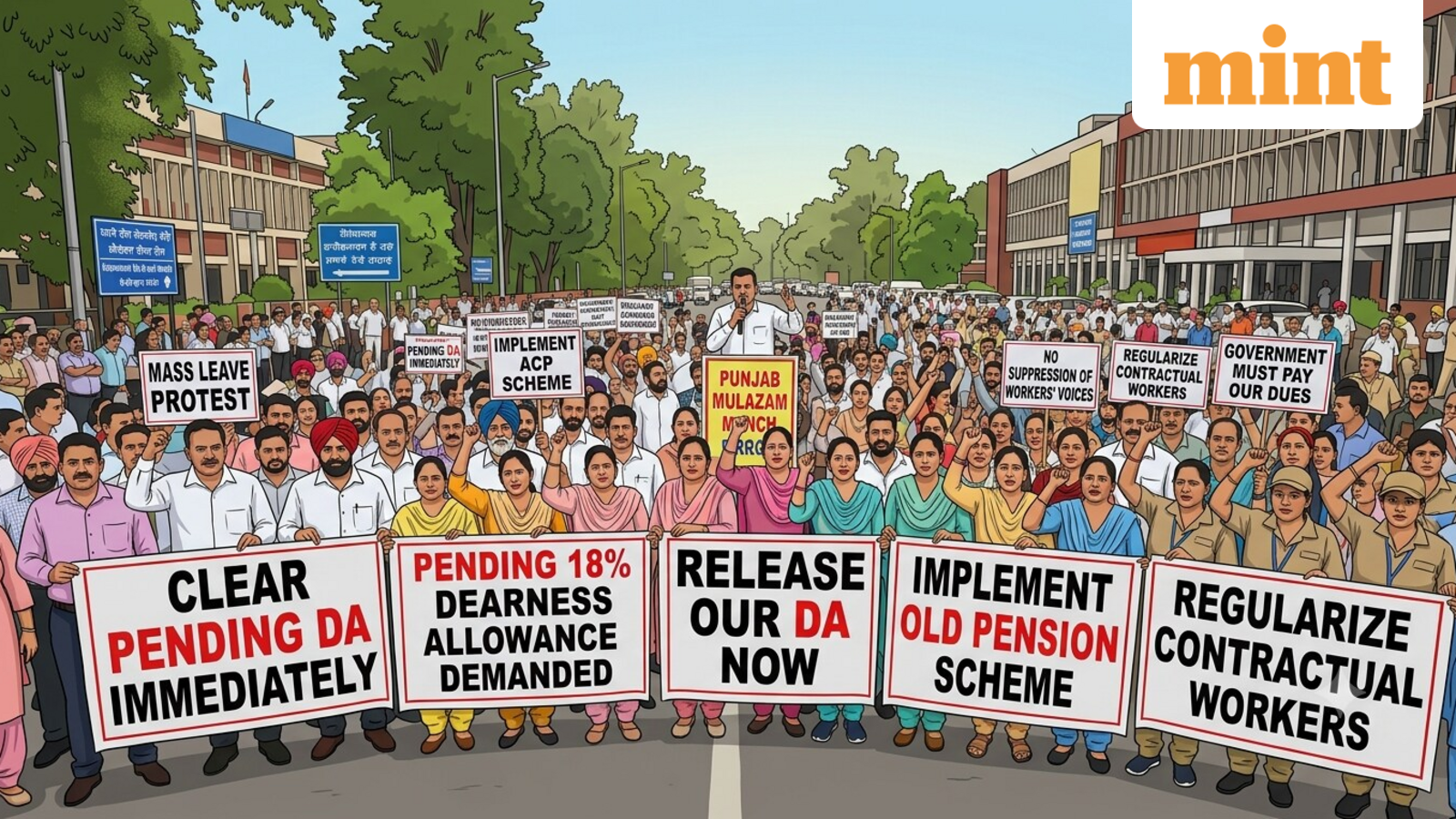
DA arrears case: The Punjab and Haryana High Court held a hearing in the state’state’s pending dearness allowance case on Tuesday, 3 November, PTI reported.
And in its order has issued a contempt notice to the Chief Secretary of Punjab, besides ordering the authority to file a reply via a compliance affidavit within 10 days. The affidavit will be on the state’s previous non-compliance of the HC’s order dated 3 August, it said.
The next hearing is scheduled on 17 November, it added.
- Meanwhile, counsel representing the petitioners argued that the state is facing a financial emergency and urged the Court to restrain the government from spending public funds on freebies.
- Highlighting the court’s strict stance against the administrative delay, Senior Advocate Sunny Singla stated, “The issue reached the High Court again after employees sought action against state officials for failing to implement the August 3 order. The petitioners’ counsel submitted that the state government neither disbursed the DA arrears within the stipulated timeframe nor filed the mandatory compliance report sought by the Court.”
What happened? The case so far…
Earlier in October, the court heard a case concerning pending DA arrears of Punjab government employees and pensioners and took a stern view of the state’s failure to comply with its orders.
The hearing was held on a contempt petition filed by Nirmal Singh Dhillon, a retired Chief Engineer of Punjab State Power Corporation Limited (PSPCL), over the alleged non-compliance with court directions regarding DA)and Dearness Relief (DR).
During the hearing before the bench of Justice Harsh Bunger, the counsel representing the employees submitted that the Punjab government was adopting delaying tactics to avoid implementing the HC’s orders.
The counsel also pointed out that the SLP filed by the state before the SC remained on the defect list for more than two months.
During the proceedings, the court made strong observations and questioned why the government had withheld DA/DR benefits from employees but had not similarly withheld the benefits of its senior officials.



