
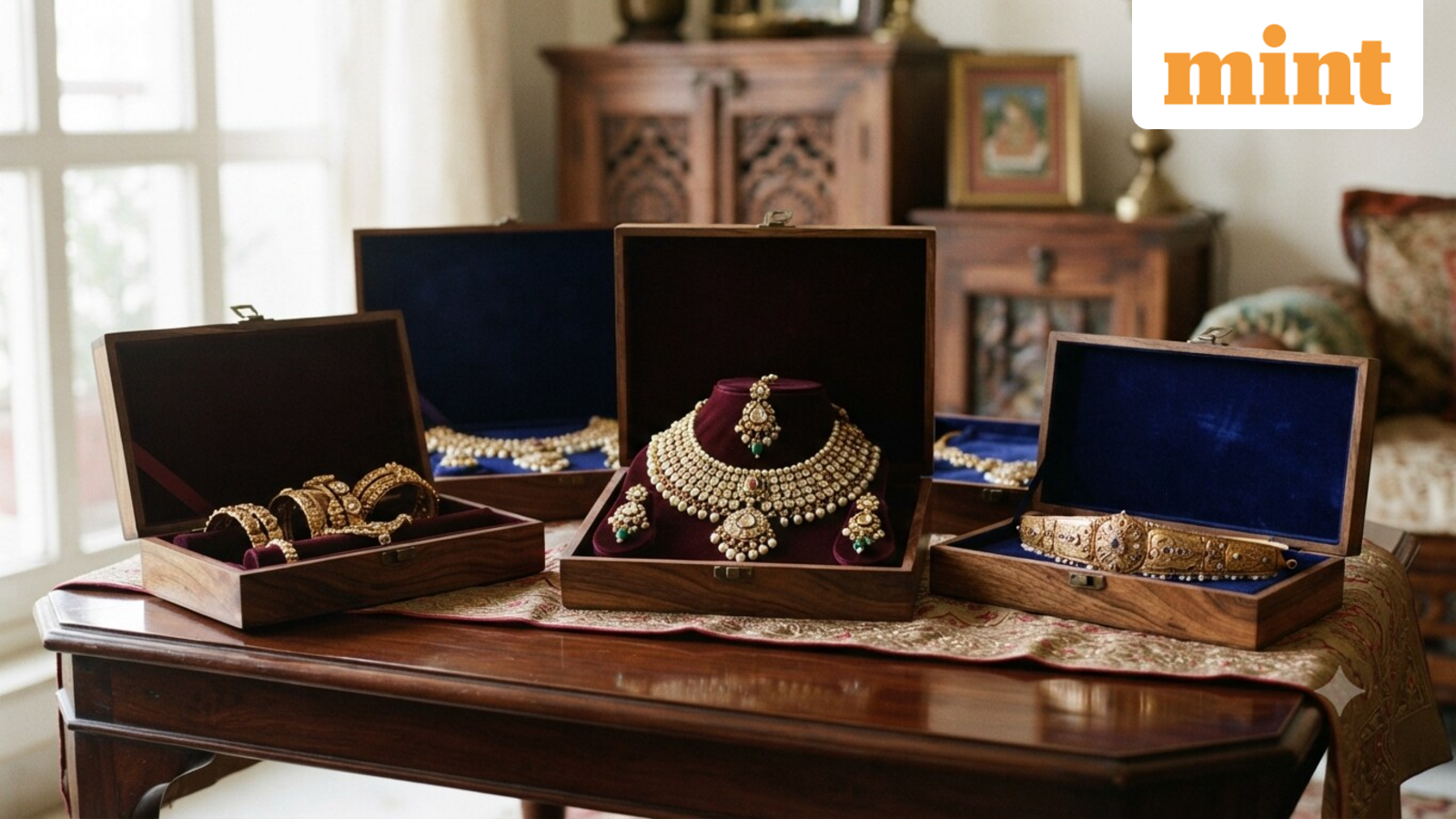
The Income Tax Appellate Tribunal (ITAT), Delhi, has ruled that jewellery belonging to married daughters can be kept at their parental home and cannot automatically be treated as unexplained investment merely because they live with their husbands.
In a recent ruling, the tribunal deleted a ₹92 lakh addition made by the Income Tax Department after accepting a taxpayer’s explanation that 3.9 kg of jewellery found at his residence belonged to his late wife and three married daughters.
The ruling in Vakil Ahmed vs ITO, Ward 59(3), Delhi (ITA No. 2550/DEL/2026), pronounced on 29 September 2026, also provides an important reminder about the evidence taxpayers may need to establish ownership and the source of family jewellery.
The case arose after the National Investigation Agency (NIA) found ₹21 lakh in cash and jewellery weighing approximately 3.9 kg at Ahmed’s residence during a search in January 2019. The Income Tax Department subsequently questioned the source of these assets, particularly because Ahmed had declared an income of ₹10.45 lakh in his income tax return for assessment year 2019-20.
Why did the Income Tax Department question the gold jewellery?
During the reassessment proceedings, the tax officer questioned Ahmed’s explanation that the jewellery belonged to his late wife and three married daughters. He said the ornaments had been received as gifts from family members and in-laws during their respective marriages.
The department rejected this explanation, observing that the married daughters were living with their husbands and should ordinarily have kept their jewellery at their matrimonial homes. It also questioned the absence of purchase bills, payment records and other documents establishing the source of the jewellery.
The tax officer accepted 1,600 grams of jewellery as explained but treated the remaining 2.3 kg as unexplained investment. Based on this, the department made an addition of ₹92 lakh under Section 69A of the Income-tax Act.
The department also made a separate addition of ₹21 lakh towards unexplained cash found during the NIA search. Ahmed challenged these additions before the ITAT after the National Faceless Appeal Centre (NFAC) upheld the tax department’s assessment.
What evidence did the taxpayer submit?
Before the tribunal, Ahmed maintained that the jewellery was not purchased during the relevant financial year but had accumulated over several years.
He submitted affidavits from family members and his daughters’ in-laws confirming that the jewellery had been gifted during their marriages in 1974, 2001, 2004 and 2005.
He also produced photographs from the wedding ceremonies, identifying specific jewellery articles to establish their ownership and history.
The taxpayer further argued that the jewellery had been seized by the NIA, not the Income Tax Department. The jewellery had not been independently valued by the tax authorities and was subsequently returned following a court order.
He also pointed out that the family had declared substantial income over the years. Its aggregate income offered for taxation between assessment years 1995-96 and 2018-19 stood at approximately ₹5.93 crore.
The taxpayer argued that the department could not simply assume that the entire 3.9 kg of jewellery weighed during the NIA search represented gold. He contended that the actual gold content was not more than 50% of the total weight.
Why did ITAT delete the ₹92 lakh addition?
The tribunal observed that the tax officer had rejected the taxpayer’s explanation primarily because the jewellery belonging to married daughters was kept at their parental home.
It disagreed with this reasoning, noting that keeping married daughters’ jewellery at their parental home is a customary practice in India and that there is no legal prohibition against keeping jewellery belonging to relatives at one’s residence.
The tribunal also considered the affidavits submitted by the daughters’ in-laws, wedding photographs and other supporting documents.
Importantly, it referred to CBDT Circular No. 1916 dated 11 May 1994, which provides guidelines on the quantity of jewellery that should ordinarily not be seized during income-tax searches. The limits specified are 500 grams for a married woman, 250 grams for an unmarried woman and 100 grams for a male member.
The tribunal noted that the taxpayer’s late wife and three married daughters could collectively account for 2,000 grams under these guidelines. It also considered the family’s financial status and historical income while examining the remaining jewellery.
The tribunal further observed that the jewellery had not been valued by the tax department and that the addition was made on an ad hoc basis. It consequently deleted the entire ₹92 lakh addition.
What does this ITAT ruling mean for taxpayers?
The ruling highlights the importance of establishing ownership and the source of jewellery, particularly when family members keep their ornaments at a common residence.
However, CBDT’s jewellery guidelines should not be interpreted as a blanket exemption from explaining the source of gold. The limits primarily guide tax authorities on seizure during searches. The tribunal’s decision also relied on the specific evidence, family circumstances and financial history presented in this case.