
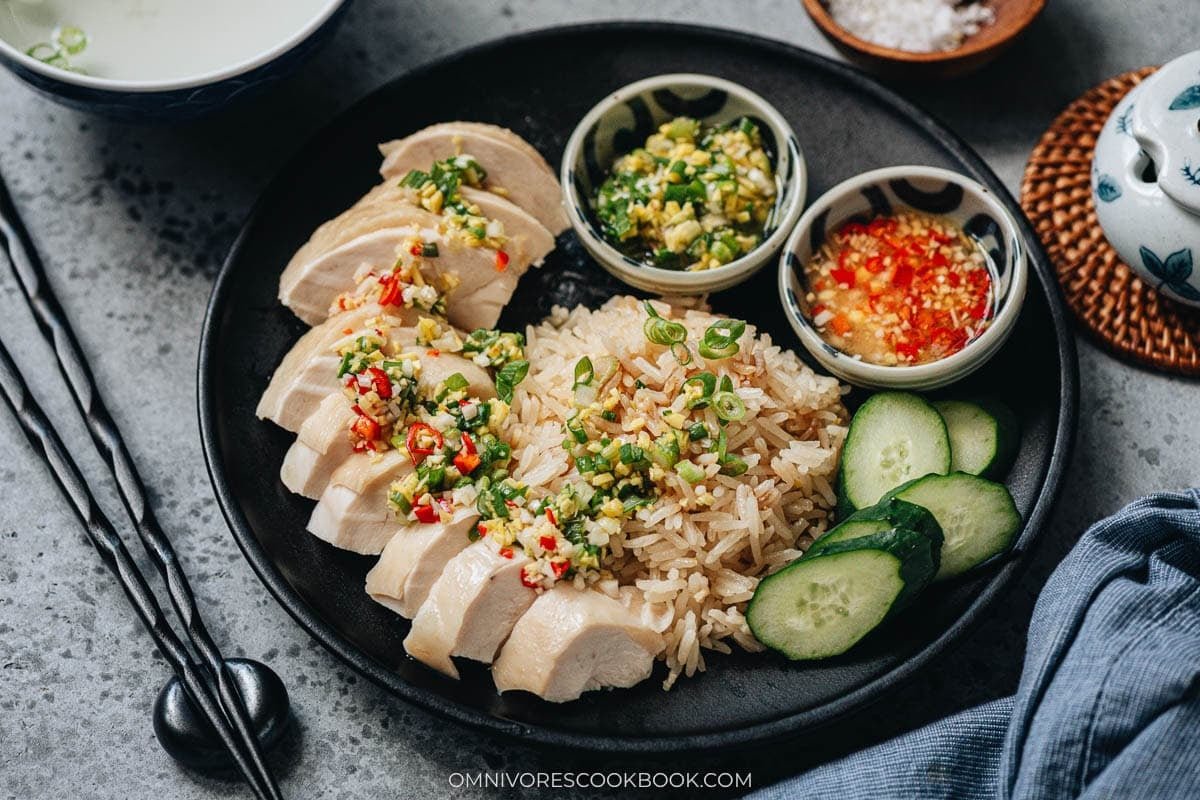
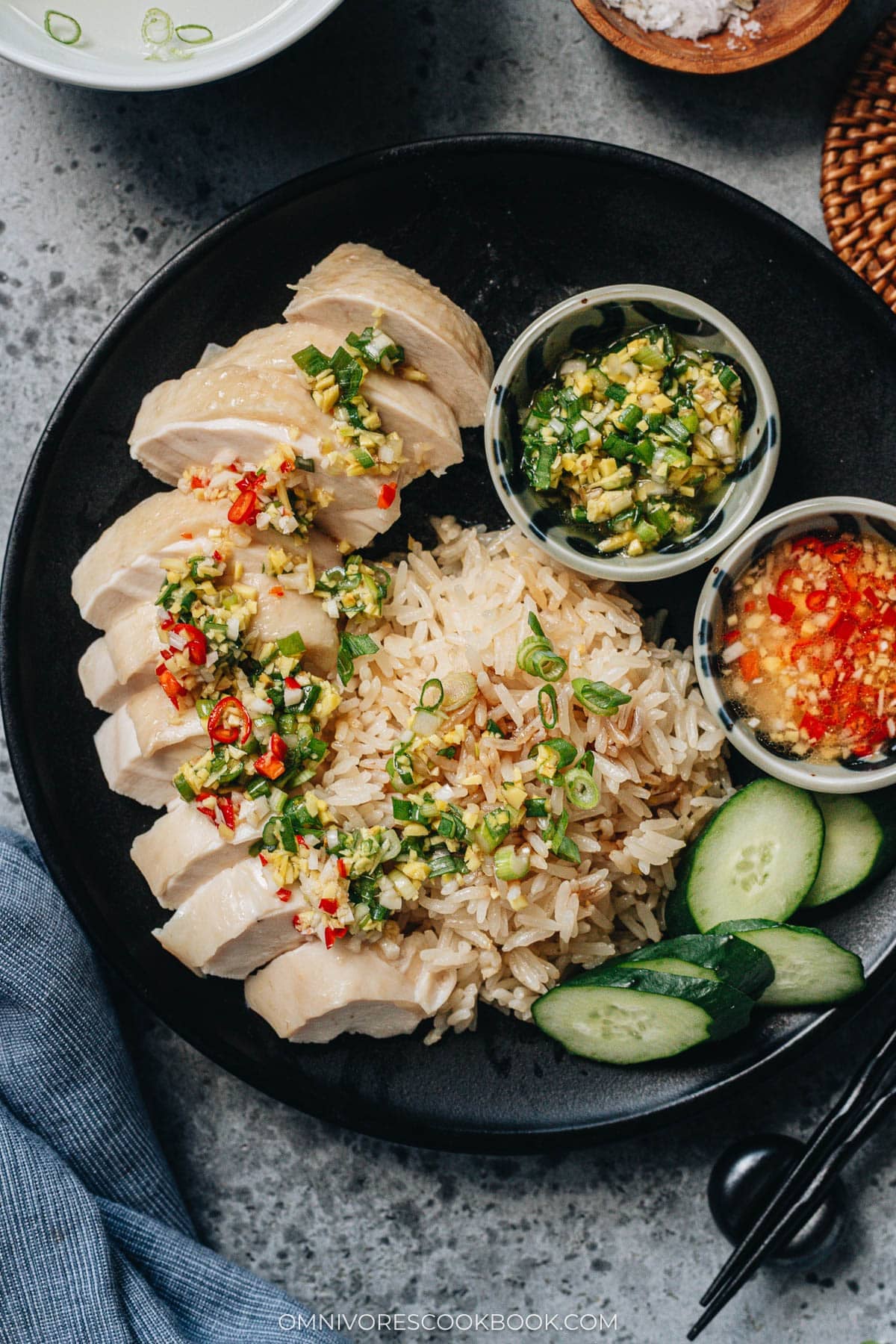
Hainanese chicken rice started in Hainan and became so popular in Singapore that it is now one of the country’s national dishes. The plate brings together poached chicken with silky skin, fragrant rice cooked in rendered chicken fat with ginger and garlic, a bright chili sauce, a fresh ginger scallion sauce, and a drizzle of sweet soy sauce. It is mild and clean, which is exactly why the quality of the chicken and the richness of the rice matter so much.
I grew up in northern China and never heard of this dish until I moved to Japan for college. My first real taste came years later on a business trip to Singapore, when a local colleague took me to a hawker center and ordered it for me. The chicken was juicy and the rice cooked in chicken fat and broth was the part I could not stop eating, and it changed my whole impression of what poached chicken could be.
These days, I love recreating Hainanese chicken rice in my own kitchen. It’s the kind of dish I enjoy making on a weekend when I have a little extra time to cook. While it takes some planning, the process is quite straightforward, and the result is a comforting, restaurant-style meal that’s well worth the effort.
I first published this Hainanese Chicken Rice recipe back in January 2014, and I’ve since completely redeveloped it based on everything I’ve learned over the years. The new version uses a simpler, more reliable poaching method for tender, juicy chicken, a flavorful rice cooked with chicken fat and homemade broth, and two dipping sauces that bring the whole dish together. I’ve also included tips for using bone-in chicken pieces instead of a whole chicken, which makes the recipe much easier to manage.
I’m so happy with how this updated version turned out. It’s a recipe I’m proud to serve my family, and I hope you’ll enjoy making it at home, too!
Ingredients
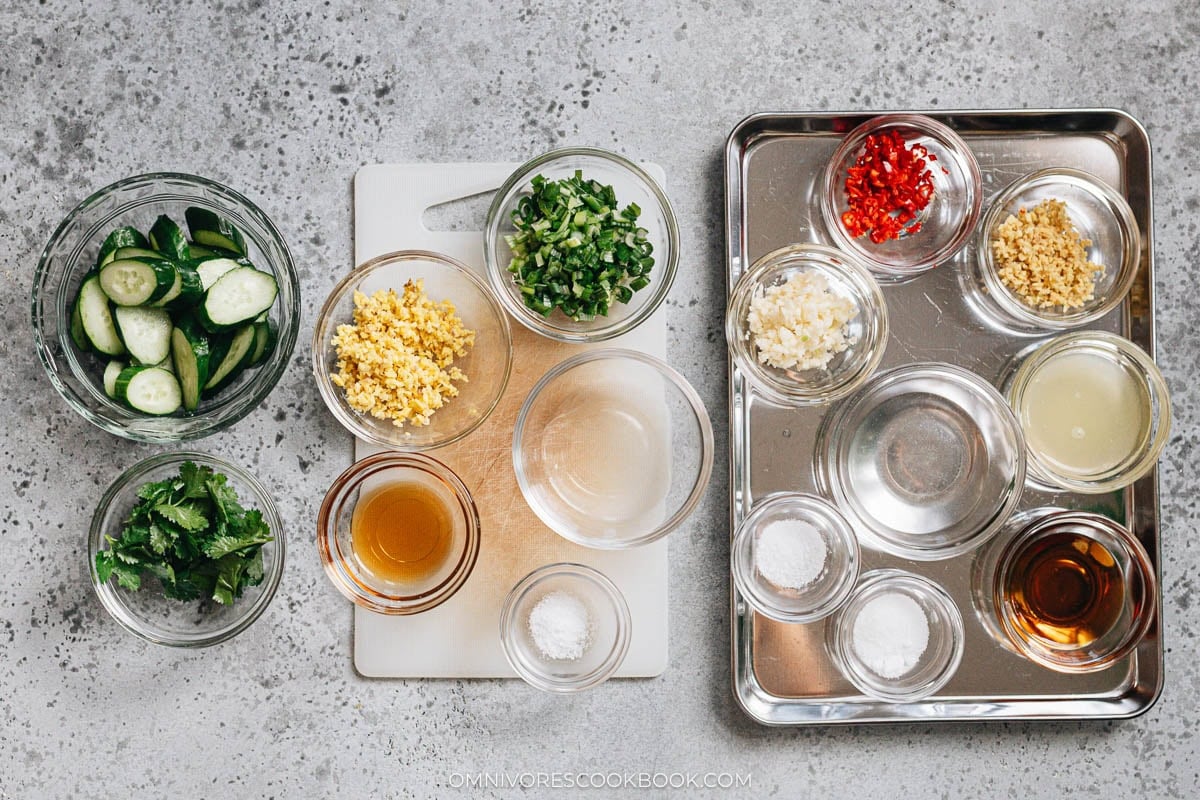
Below, I show you everything I use to make this Hainanese Chicken Rice recipe, along with a few helpful tips I highly recommend reading before you start shopping for ingredients.
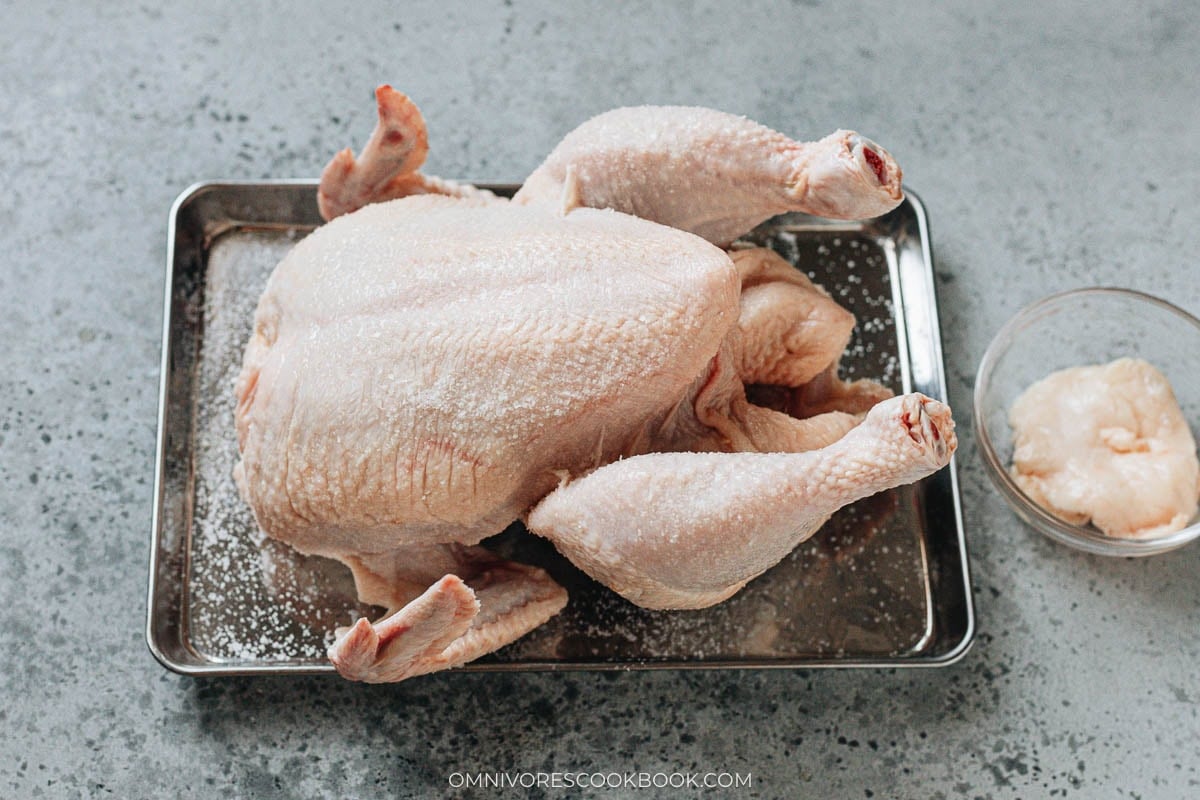
Chicken: I use a whole chicken between 3 and 4 pounds, preferably the best-quality bird I can find. A smaller chicken fits more easily in the pot and cooks faster. Quality also matters because the seasonings are minimal, allowing the natural flavor of the chicken to shine through. I rub the chicken with kosher salt, poach it with scallions and ginger, and brush the skin with sesame oil at the end.
Wondering If You Can Use Chicken Pieces Instead?
Absolutely! You can make my recipe using chicken pieces instead of a whole bird. In fact, for many home cooks, it’s actually the easier option. Bone-in, skin-on breasts, thighs, drumsticks, or whole legs are all good options. Here is why I recommend chicken pieces:
- You can buy only the cuts you prefer instead of a whole chicken. But I highly recommend bone-in skin-on pieces, which gives the dish a much better flavor.
- They fit a pot more easily, so you can use a smaller pot and less water.
- They are simpler to lower in and lift out of the hot broth.
- I can check each piece on its own and pull it the moment it reaches 165°F (74°C).
- Fast-cooking breasts come out before the legs and thighs, so nothing overcooks while it waits on a slower cut.
Chicken rice: I cook jasmine rice with rendered chicken fat, minced garlic, minced ginger, and chicken broth.
Use Store-Bought Broth or Reserve the Poaching Broth for the Rice
For the liquid, I use store-bought chicken broth so I can start the rice while the chicken is still poaching. Cooking the rice in the reserved poaching broth is the traditional route and works just as well. Both give the rice plenty of chicken flavor, so it comes down to timing and convenience.
Chili sauce: I stir this one together from red bird’s eye chilies, garlic, ginger, lime juice, sugar, salt, and a spoonful of the poaching broth.
Ginger scallion sauce: I mix finely minced ginger and scallions with salt, warm poaching broth, and sesame oil.
To serve: I slice Persian or English cucumber for the plate, keep sweet soy sauce or regular soy sauce on the side, and scatter cilantro on top if I have it.
Two Key Techniques for Restaurant-Quality Hainanese Chicken Rice
Before we get started with the step by step instructions, I want to share 2 important techniques with you. Keep these in mind as you cook, and I promise you’ll have the best Hainanese chicken rice ever!
Salt the chicken ahead of time: The salt needs time to work past the surface, which is why I plan this a day out when I can. An overnight rest uncovered in the fridge produces juicier and fully seasoned meat, and the 20-minute version is the shortcut I take only when I am pressed.
Poach the chicken slowly: The reason I keep the pot at a bare simmer is that hard fast heat squeezes the moisture out and leaves the meat tough. Slow heat is what keeps a tender silky poached texture, so I would rather wait a few extra minutes than rush it.
How to Make Hainanese Chicken Rice
Prepare the chicken
Dry brine the chicken: Remove any excess fat from around the cavity and save it for the rice. Pat the chicken dry, then rub kosher salt all over, including inside the cavity. Let it rest for 20 minutes, or refrigerate uncovered overnight for the best result (I highly recommend overnight dry brining). Tuck the wing tips under the wings.
Bring the water to a boil: Choose a pot just large enough to hold the chicken. Add 10 cups of water and bring it to a boil.
Lower the chicken in: Holding the chicken by the cavity, carefully lower it into the boiling water. Lift it back out to drain any water trapped inside the cavity, then lower it in again. Make sure it is mostly or fully submerged, adding more hot water if needed, then add the scallions and ginger.
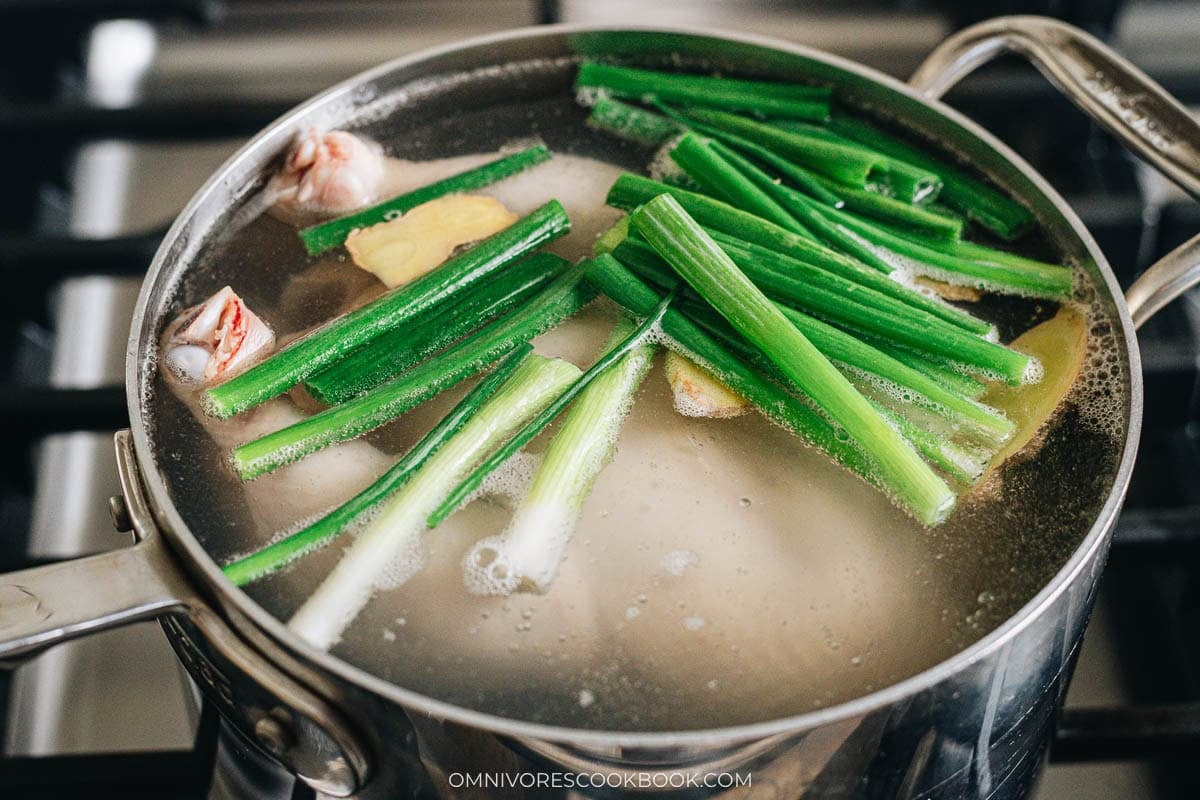
Poach at a bare simmer: Once the water returns to a very gentle simmer, reduce the heat to low. Skim off and discard any foam that rises to the surface. Cook at a bare simmer until the chicken is cooked through, about 25 to 30 minutes for a 3 pound chicken, or 35 to 40 minutes for a 3 1/2 to 4 pound chicken. An instant-read thermometer in the thickest part of the thigh, without touching the bone, should read 165°F (74°C).
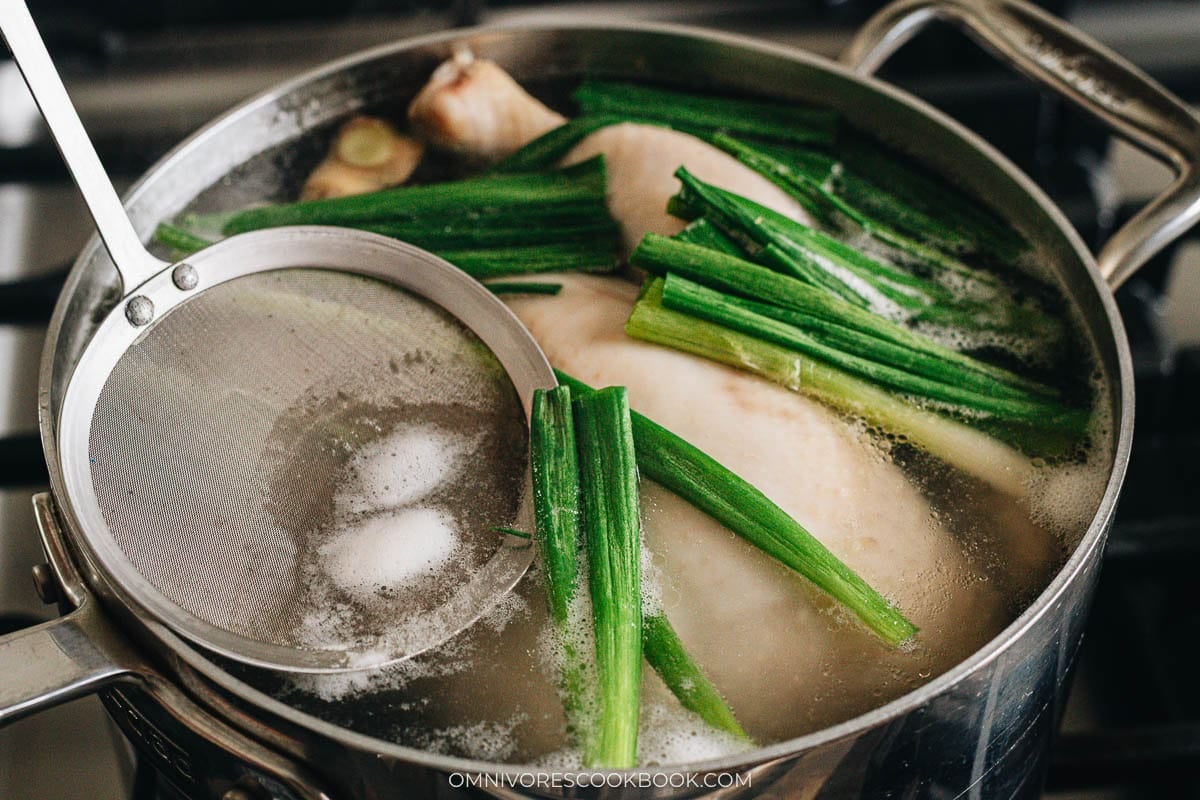
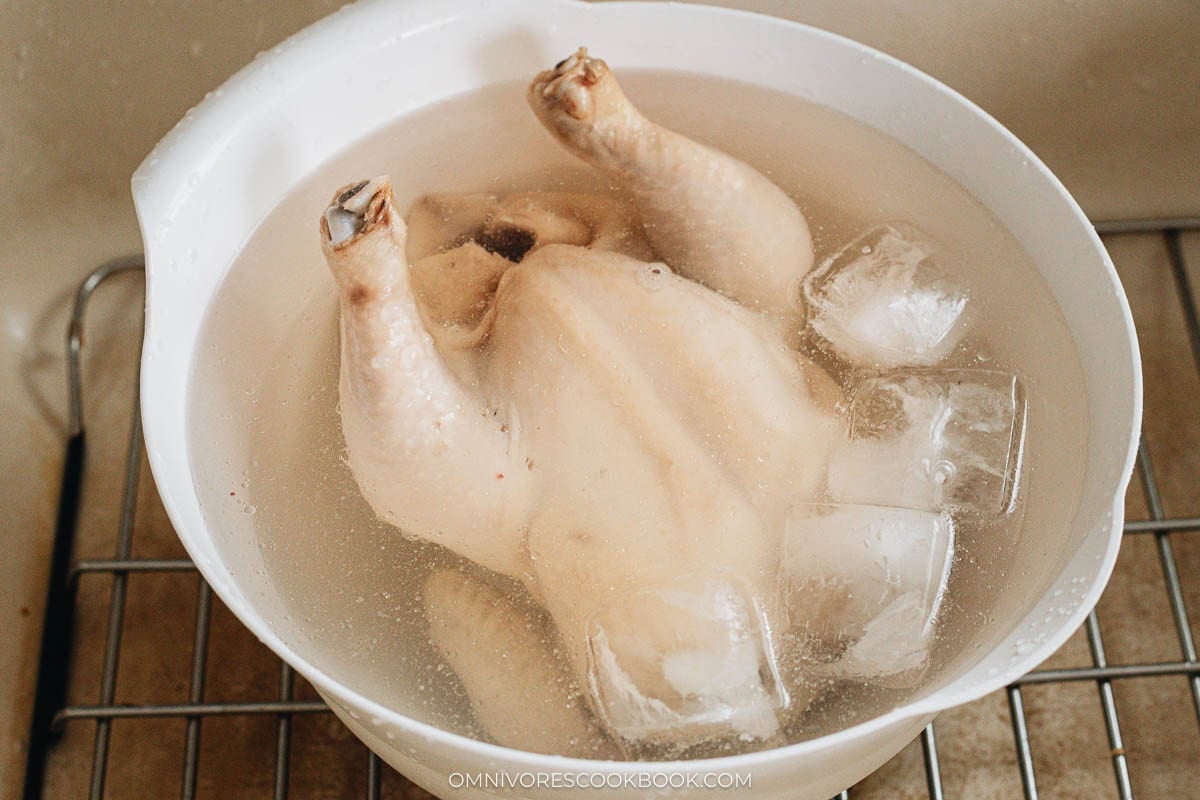
Prepare the ice bath: While the chicken cooks, fill a large bowl with ice water.
Shock and drain: Carefully transfer the cooked chicken to the ice bath and let it sit for 10 minutes. Move it to a wire rack or large plate to drain thoroughly, and reserve the poaching broth.
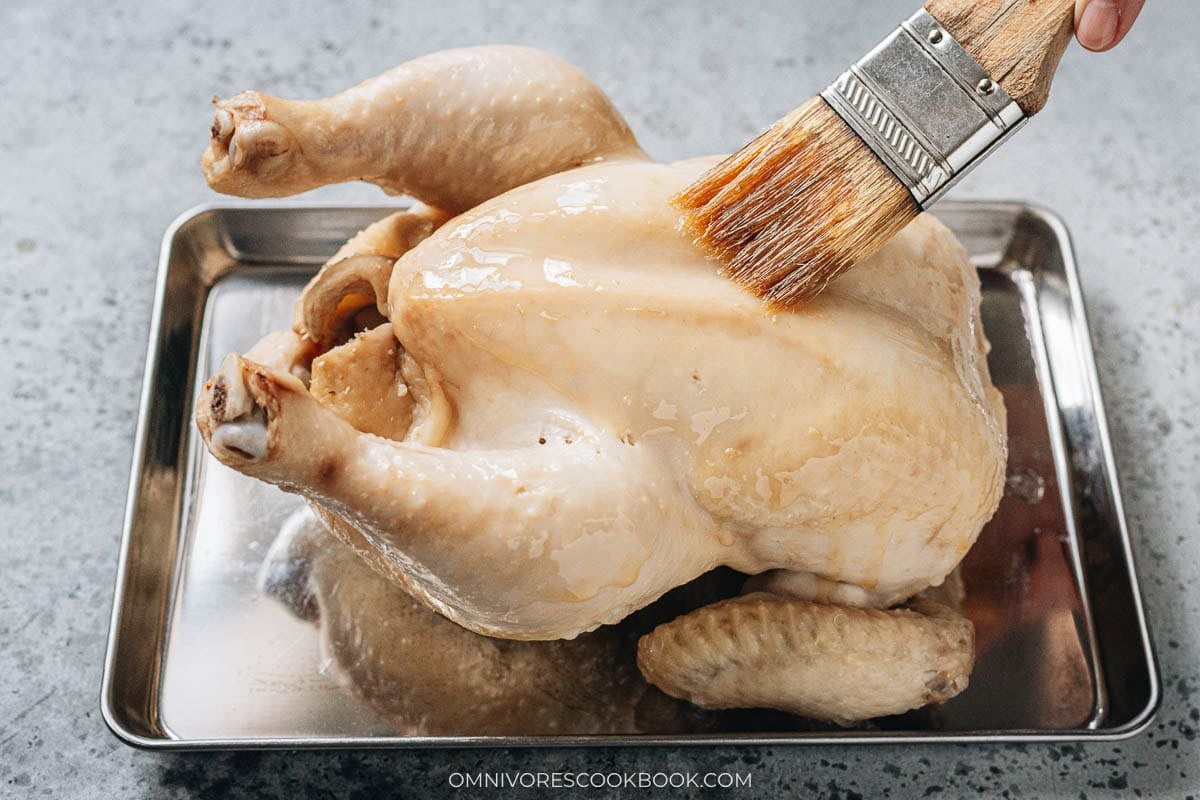
Oil the skin: Once the chicken has drained, rub the skin lightly with sesame oil. Set it aside until you are ready to carve and serve.
Make a richer soup (optional): Once the chicken is cool enough to handle, remove the breasts, legs, and thighs and set them aside for serving. Return the back and wing tips to the pot of broth and simmer for about 1 hour, until the broth reduces and develops a richer flavor. I season with salt to taste and garnish with sliced scallions before serving.
Cooking the chicken rice
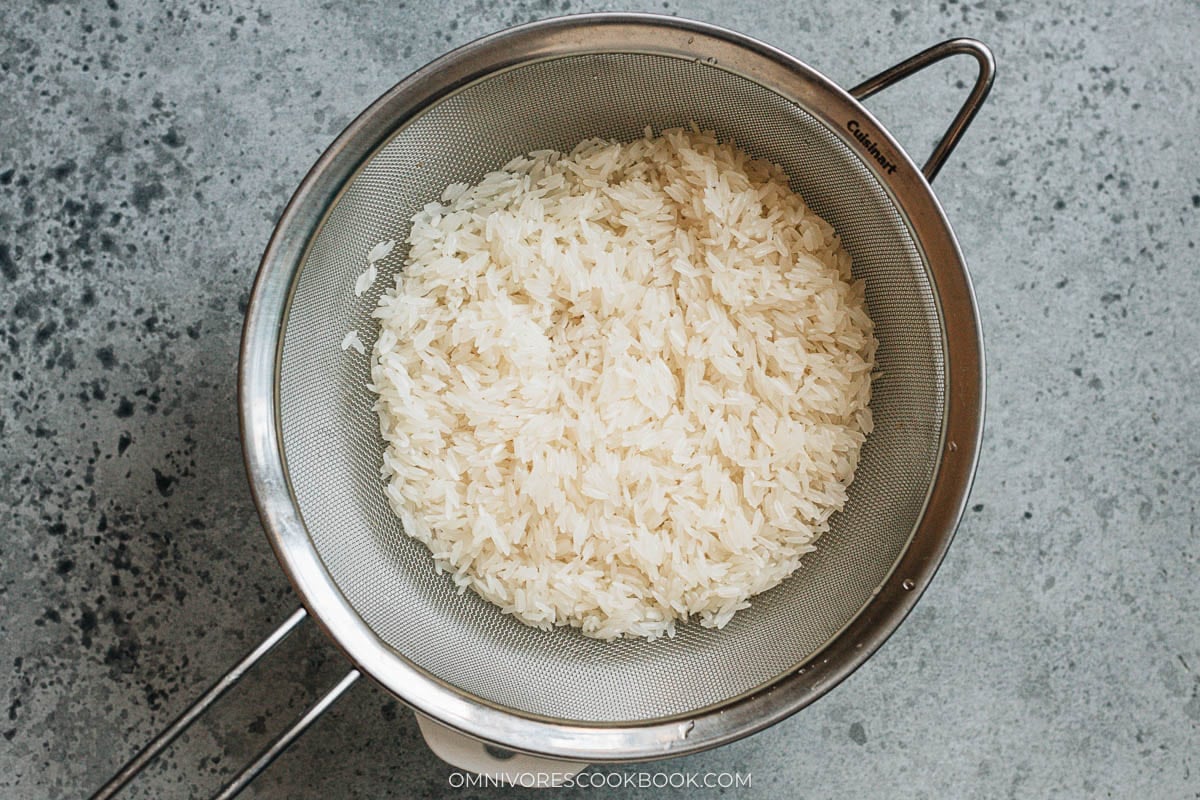
Rinse the rice: Place the jasmine rice in a bowl and cover with cold tap water. Swirl with your hands to rinse, then drain. Repeat twice more, then drain thoroughly in a colander.
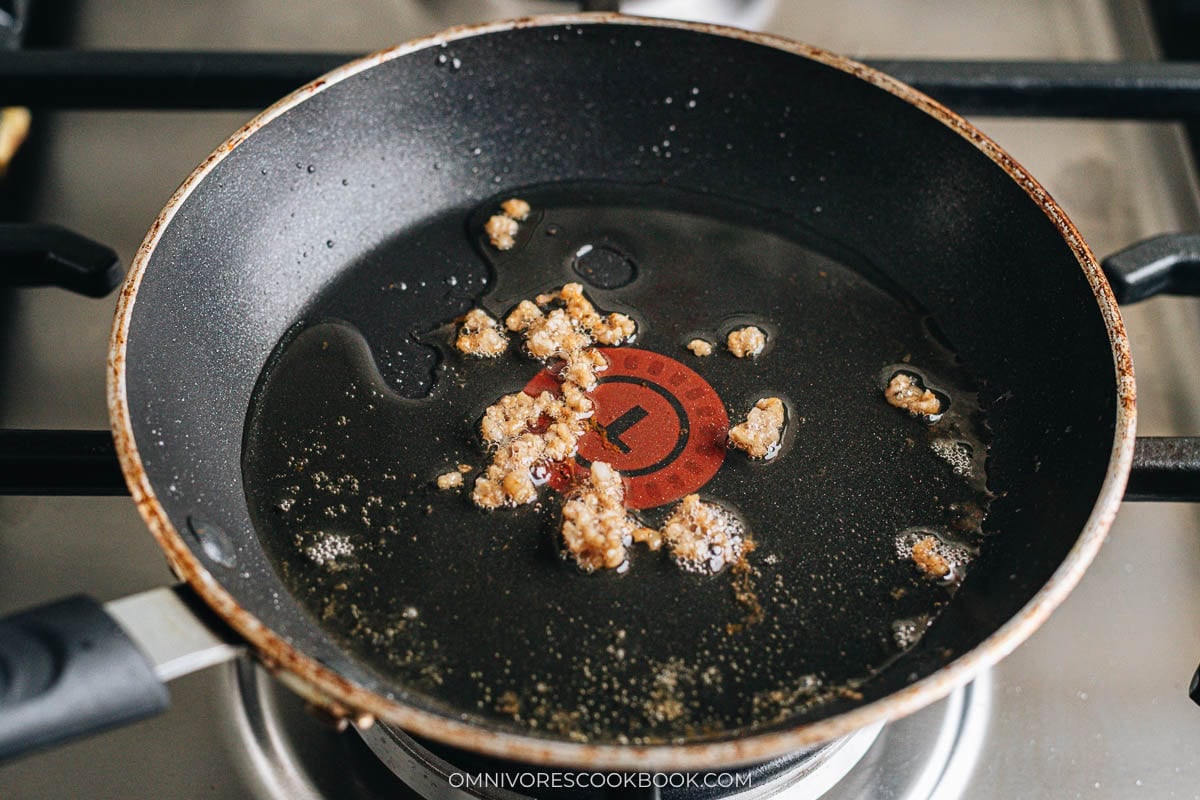
Render the chicken fat: Finely chop the reserved chicken fat and add it to a small skillet. Heat over medium, then reduce to medium-low once the pan is hot, and cook until the fat renders. Measure out 2 tablespoons of rendered fat, adding neutral oil if needed to reach that amount.
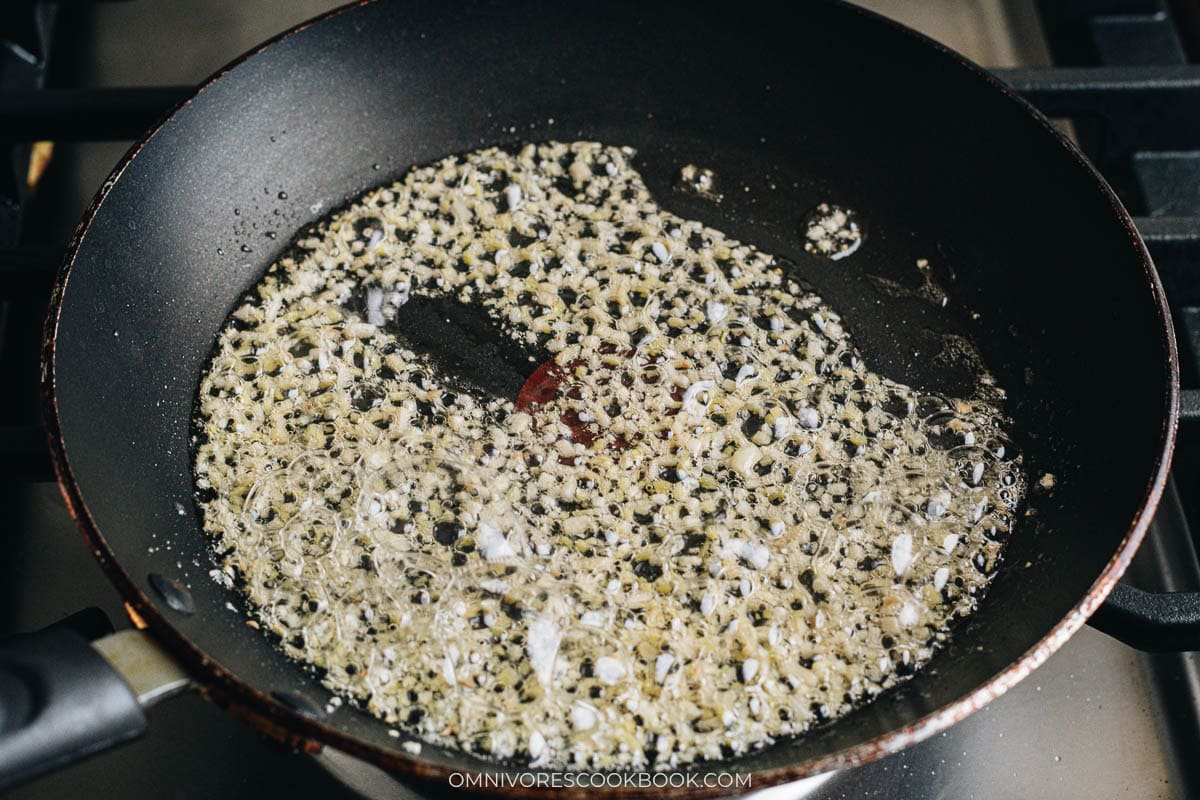
Fry the aromatics: Heat the chicken fat in a medium skillet over medium heat. Add the garlic and ginger and cook, stirring, until fragrant and lightly golden, about 30 seconds.
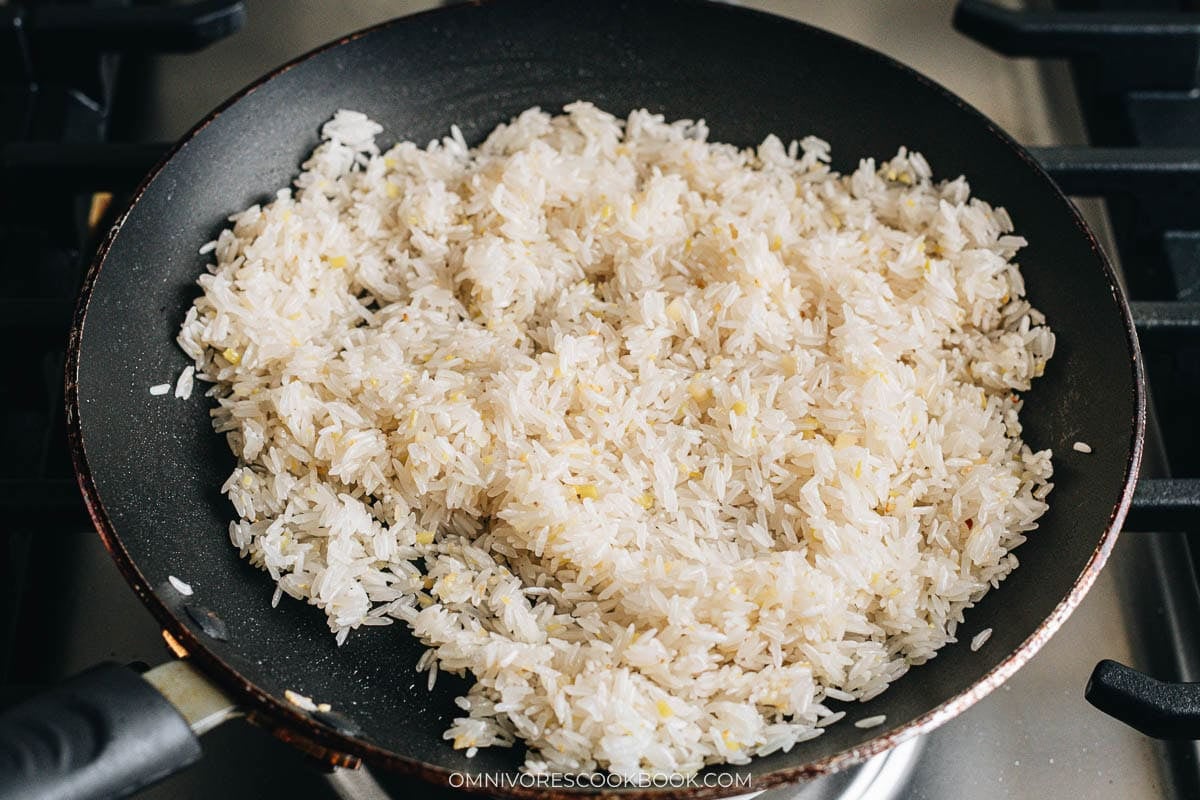
Coat the rice: Add the drained rice and cook, stirring frequently, for about 2 minutes, until the rice is coated in fat and smells fragrant.
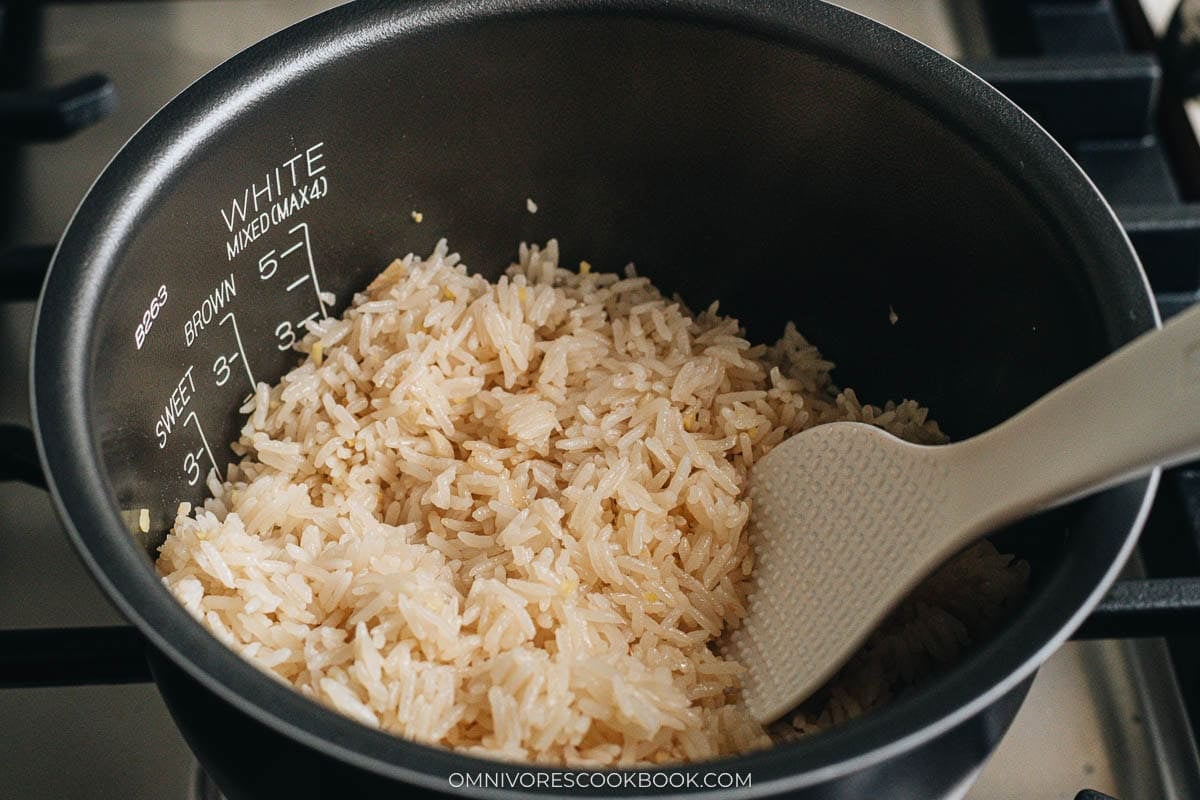
Cook: Transfer the rice to a rice cooker. Add the chicken broth and salt, stir to combine, and cook on the regular white rice setting.
Rest: Once the rice is done, let it rest in the cooker for 10 minutes before opening the lid. Fluff it with a rice paddle.
Preparing the sauces
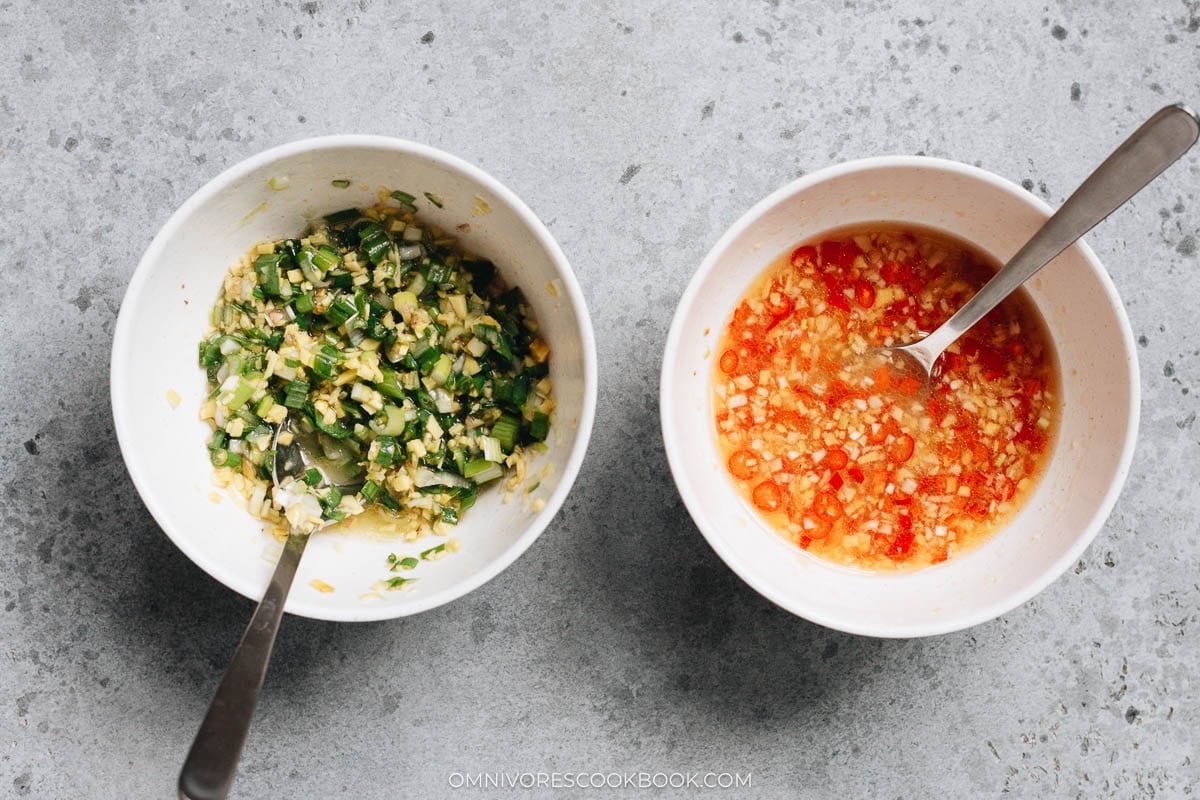
Chili sauce: Combine the bird’s eye chilies, garlic, ginger, lime juice, sugar, salt, and poaching broth in a small bowl. Stir well, then taste and adjust with more lime juice, sugar, or salt as needed. It should taste bright, spicy, savory, and slightly sweet.
Ginger scallion sauce: Combine the ginger, scallions, and salt in a small bowl. Add the warm poaching broth and sesame oil, stir, and let it sit for 5 to 10 minutes so the flavors come together.
Ready to serve
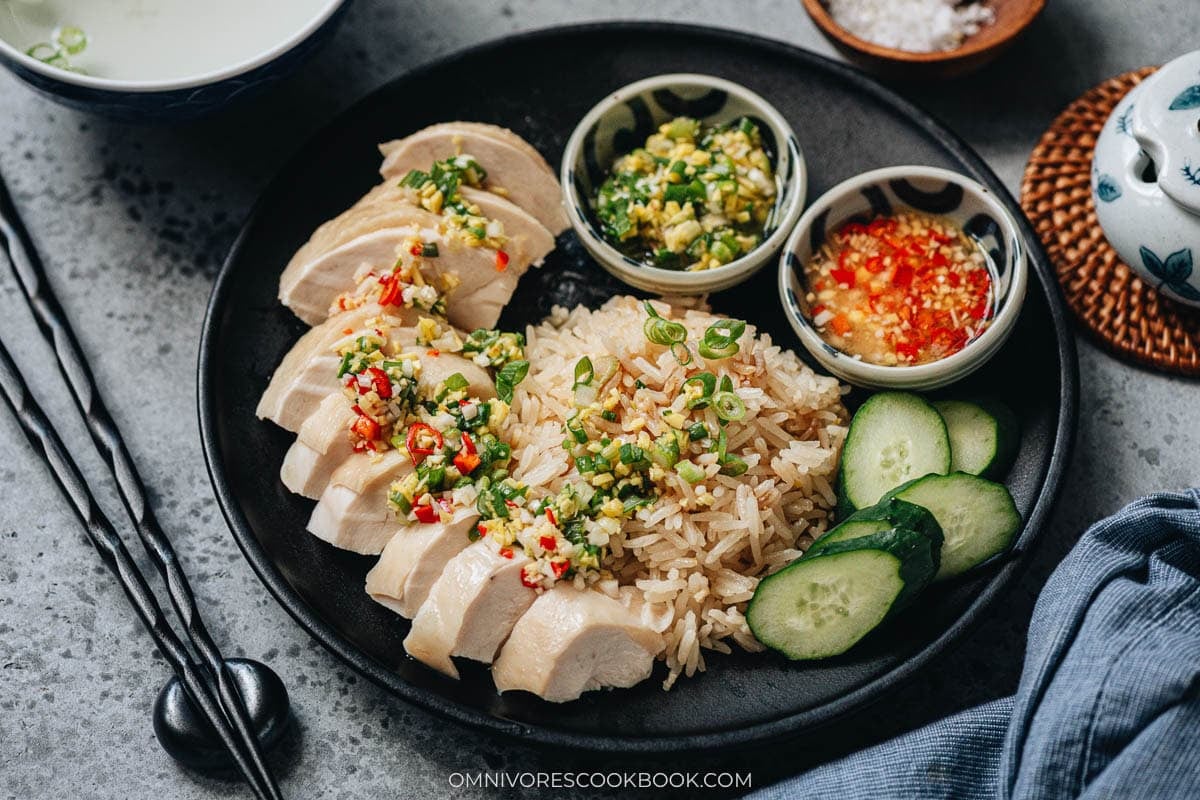
Carve: Cut the reserved chicken into bite-size pieces and arrange on a plate. Serve with the chicken rice, sliced cucumber, chili sauce, ginger scallion sauce, and sweet soy sauce on the side. Garnish with cilantro if you like.
Cooking Notes for the Best Results
Use the smallest pot that fits: I pick a pot just big enough to hold the chicken so I can use less water. Since I serve the poaching liquid as soup later, less water means a more flavorful broth. I use a tall 4-quart pot for a 3 pound bird.
Trust the thermometer, not the clock: Cooking time shifts with the size of the bird, so I check the thickest part of the thigh with an instant-read thermometer and pull the chicken at 165°F (74°C). Time alone or the color of the juices is less reliable than a real reading.
Drain the rice well: After rinsing, I shake the rice dry in a colander so no extra water clings to it. The rice cooker is set up for a measured amount of broth, so leftover rinse water throws off the texture and gives me softer rice than I want.
Save and render the chicken fat: I do not skip the rendered chicken fat if I can help it, because it gives the rice its amazing richness and fragrance.
My Favorite Way to Serve This
The last time I made this for my husband and me, I carried the whole plate to the table in pieces and let us put together our own bites. I carve the chicken, pile the rice beside it, fan out the cucumber, and put the chili sauce, ginger scallion sauce, and sweet soy sauce in little bowls so each of us mixes the plate to taste. That night I also had the optional soup going, so I ladled it into two bowls with a scatter of scallion, and we ate slowly with a bowl of broth between us.
of watercress stir fry or choy sum with garlic sauce adds some fresh greens without overpowering the delicate flavor of the chicken. For something refreshing, I also love serving wood ear mushroom salad, which adds a nice crunchy texture and tangy contrast to the meal.
More Chinese Chicken Recipes to Try
If you enjoy Hainanese chicken rice, here are a few other Chinese chicken recipes worth trying. My white cut chicken uses a similar gentle poaching method and is served with a flavorful dipping sauce. For something different, try my easy salt baked chicken, which has a rich, savory flavor and tender, juicy meat. And if you’re craving a comforting one-pot meal, my claypot rice is another favorite.
Frequently Ask Questions
Why is my Hainanese chicken dry?
Dry chicken almost always means it was cooked too hard or too long. A hard boil forces the meat to tighten and squeeze out moisture, so I keep the pot at a bare simmer the whole time. I also pull the chicken the moment the thigh registers 165°F (74°C) and drop it straight into an ice bath, which stops the residual heat from cooking it any further.
Can I use regular cooking oil instead of chicken fat for the rice?
You can, but the rice loses some of its signature richness. The rendered chicken fat is what gives Hainanese chicken rice its characteristic fragrance, so I use as much of it as the bird yields. If there is not enough fat, I top it up with neutral oil rather than replacing it entirely.
Do I need to make all three sauces?
You don’t need all three, but I highly recommend making at least one. Hainanese chicken is intentionally mild, and the dipping sauces are essential for bringing out its flavor. The chili sauce adds heat and acidity, the ginger scallion sauce brings a fresh, savory aroma, and the sweet soy sauce adds a rich, savory-sweet finish. You can choose your favorite, but serving all three gives you the full restaurant-style experience.
What is the proper way to store when you have leftovers?
Store the chicken and rice in separate airtight containers in the fridge for up to 3 days. The poached chicken is delicious served cold, straight from the fridge. For leftovers, I also like to give the chicken a quick pan sear to lightly crisp up the surface and bring back the tender texture. Reheat the rice in the microwave until steaming hot. The chili and ginger scallion sauces can also be stored in separate airtight containers in the fridge for up to 3 days.
Want to Save This Recipe?
Enter your email below & we’ll send it to your inbox. Plus get great new recipes from us every week!
This Hainanese chicken rice is a restaurant-style meal of tender poached chicken, jasmine rice cooked in chicken fat and broth, and two homemade dipping sauces. I make the whole plate at home with a simple poaching method and a rice cooker, no complicated techniques required.
Prevent your screen from going dark
Prepare the chicken
Remove any excess fat from around the chicken cavity and reserve it for the rice. Pat the chicken dry. Rub the salt all over the chicken, including inside the cavity. Let rest for 20 minutes or refrigerate overnight. (*Footnote 4) Tuck the wing tips under the wings.
Prepare a medium-sized pot that’s just large enough to hold the chicken. (*Footnote 5) Add 10 cups of water and bring to a boil.
Holding the chicken by the cavity, carefully lower it into the boiling water. Lift the chicken back out to drain any water trapped inside the cavity, then lower it into the pot again. Make sure the chicken is mostly or completely submerged, adding more hot water if needed. Add the scallions and ginger.
Once the water returns to a very gentle simmer, reduce the heat to low. Skim off and discard any foam that rises to the surface. Cook at a bare simmer until the chicken is cooked through, about 25 to 30 minutes for a 3 lb chicken, or 35 to 40 minutes for a 3 1/2 to 4 lb chicken. An instant-read thermometer inserted into the thickest part of the thigh, without touching the bone, should register 165°F (74°C).
While the chicken cooks, prepare a large bowl of ice water.
Carefully transfer the cooked chicken to the ice bath. Let sit for 10 minutes, then transfer to a wire rack or large plate to drain thoroughly. Reserve the poaching broth.
Once the chicken has drained, rub the skin lightly with sesame oil. Set aside until ready to carve and serve.
Continue cooking the chicken soup (optional, *Footnote 6)
Once the chicken has cooled enough to handle, remove the breasts, legs, and thighs, and set them aside for serving. Return the chicken back and wing tips to the pot of poaching broth.
Continue simmering for about 1 hour, until the broth has reduced considerably and developed a richer flavor. Season with salt to taste and garnish with sliced scallions before serving.
Make the chicken rice
Place the jasmine rice in a bowl and add enough cold tap water to cover. Swirl the rice with your hands to rinse, then drain. Repeat twice more, then drain thoroughly using a colander.
If using the reserved chicken fat, finely chop it and add it to a small skillet. Heat over medium heat, then reduce to medium-low once the pan is hot. Cook until the fat has rendered. Measure out 2 tablespoons of the rendered fat, adding neutral oil if needed to make up the difference. Transfer to a medium skillet.
Heat the chicken fat over medium heat. Add the garlic and ginger. Stir and cook until fragrant and lightly golden, about 30 seconds.
Add the drained rice. Cook, stirring frequently, for about 2 minutes, until the rice is evenly coated with fat and smells fragrant.
Transfer the rice to a rice cooker. Add the chicken broth and salt (*Footnote 7). Stir to combine. Cook using the regular white rice setting.
Once the rice is done, let it rest in the rice cooker for 10 minutes before opening the lid. Fluff gently with a rice paddle.
Make the chili sauce
Combine the bird’s-eye chilies, garlic, ginger, lime juice, sugar, salt, and chicken poaching broth in a small bowl. Stir well to combine.
Taste and adjust with additional lime juice, sugar, or salt as needed. The sauce should taste bright, spicy, savory, and slightly sweet.
Make the ginger scallion sauce
Combine the ginger, scallions, and salt in a small bowl. Add the warm chicken poaching broth and sesame oil. Stir to combine. Let sit for 5 to 10 minutes before serving to allow the flavors to meld.
Serving
Cut the reserved chicken into bite-size pieces and arrange on a plate. Serve with the chicken rice, sliced cucumber, chili sauce, ginger scallion sauce, and sweet soy sauce on the side. Garnish with cilantro if desired.
Ingredient Substitution Guide
- Kosher salt: I use 1 tablespoon of kosher salt for a smaller chicken, around 3 lb, and increase the amount to 1 1/2 tablespoons for a larger chicken.
- Chicken fat: If your chicken doesn’t have enough excess fat to yield 2 tablespoons, supplement it with a neutral cooking oil. Chicken fat gives the rice its characteristic richness and fragrance, so I recommend using as much as you can.
- Sweet soy sauce: Restaurants often drizzle a little sweet soy sauce over the chicken rice. I find that regular soy sauce works very well too, so feel free to use whichever you prefer.
- Salting the chicken: I highly recommend salting the chicken and letting it marinate uncovered in the refrigerator overnight. This gives the salt time to penetrate the meat, resulting in juicier, more tender chicken that’s seasoned throughout. If you’re short on time, a 20-minute rest will still work.
- Choosing the pot: Since the poaching liquid will also be served as soup, using less water helps create a more flavorful broth. Choose a pot that’s just large enough to hold the chicken without crowding it. I use a tall 4-quart pot for a 3 lb chicken.
- Making a richer chicken soup: This step is my personal preference rather than a standard practice. Because the chicken is poached in a relatively large amount of water for a short time, the resulting broth is quite mild. I like to return the chicken bones to the pot and continue simmering while preparing the rest of the meal. This gives the broth a richer chicken flavor and makes it much more satisfying to serve as soup.
- Chicken broth for the rice: Traditionally, the rice is cooked using the chicken poaching liquid. I prefer to get the rice started while the chicken is still cooking, so I use store-bought chicken broth instead. This saves time and gives the rice plenty of flavor.
- Preparing the sauces: You can use a small food processor to finely chop the aromatics for both the chili sauce and ginger scallion sauce. I prefer chopping them by hand because it gives me better control over the texture, although it does take more time.
Serving: 1serving, Calories: 639kcal, Carbohydrates: 51g, Protein: 61.5g, Fat: 18.9g, Saturated Fat: 5.6g, Cholesterol: 173mg, Sodium: 560mg, Potassium: 615mg, Fiber: 3.1g, Sugar: 0.8g, Calcium: 30mg, Iron: 4.7mg

Did you make this recipe?
I’d love to hear how it turned out for you! Please take a moment to leave a 5-star rating ⭐️ and share your thoughts in the comments further down the page. It really helps others discover the recipe too.
This recipe was originally published on January 21, 2014, and was completely redeveloped and updated in November 2026.



