
Published November 17, 2026 06:10AM
What you need to know:
- While AI-generated strength training plans for triathletes include beneficial exercises, they often lack appropriate periodization and fail to adapt to an athlete’s race season.
- An expert coach outlines effective strength training that includes progressive variation throughout the year with targeted dynamic warm-ups and explosive movements to support the average athlete.
- Triathletes are better served by individualized, human-designed programs, especially from a trainer or strength training expert who can monitor proper form for best results.
It’s not uncommon nowadays to ask AI to write your grocery list, design your kid’s birthday party invitation, and advise you on how best to taper before your next race, so we’re fairly certain there are a few triathletes out there asking Claude or Chat to draft a strength training program too.
Before you decide to do the same (or perhaps it’s too late and you already have), we thought we’d run an AI experiment where we ask a real human strength coach to assess the bot’s work to help decide how much of the plan is helpful for a multisport athlete, and how much would be a waste of time.
A Strength Routine Generated in 4 Seconds
We asked ChatGPT for a strength routine suitable for a triathlete, and about four seconds later it returned a two-day plan complete with sets and reps.
Day one covered the lower body and core: squats or goblet squats, Romanian deadlifts, reverse lunges, standing calf raises, dead bugs, and side planks.
Day two went after the upper body and posterior chain: dumbbell bench press or push-ups, rows, lat pulldowns or assisted pull-ups, single-leg Romanian deadlifts, glute bridges or hip thrusts, and Pallof presses. The prescription included three sets of 8-10 reps, for 40 to 50 minutes per session, to be followed for 8-12 weeks.
It all looked perfectly sensible and not too dissimilar to what many triathletes do in most strength workouts. But for a triathlete who’s already squeezing three sports into one week, strength workouts should really be periodized and designed to augment what’s happening in the triathlete’s sport-specific training life (and the off-season is the one time of year when it’s great to do more in the gym, not less).
So with this in mind, we handed the plan to strength coach Sam Hengehold, who works with triathletes of all ages and abilities at Kinesis Integrated Performance in Boulder, Colorado. “I’d argue it is not right, but it’s also not wrong,” she says. “The plan is general, but it is not beneficial.”
The Exercises Aren’t the Problem
Here’s the surprise: Hengehold wouldn’t strike a single exercise from the list.
“All exercises listed are actually great and could very well be integrated into a triathlete strength routine,” she says. “The limiter here is the lack of periodization and volume/load variables.”
Two of ChatGPT’s picks earn special praise:
Calf raises: “Many triathletes miss this integral exercise in their strength routine,” Hengehold says. “Lower leg injuries are extremely common with triathletes.” As a general rule, Hengehold wants athletes working toward calf raises at 1.5 times their body weight to build resiliency against injury in the calf, ankle, and foot.
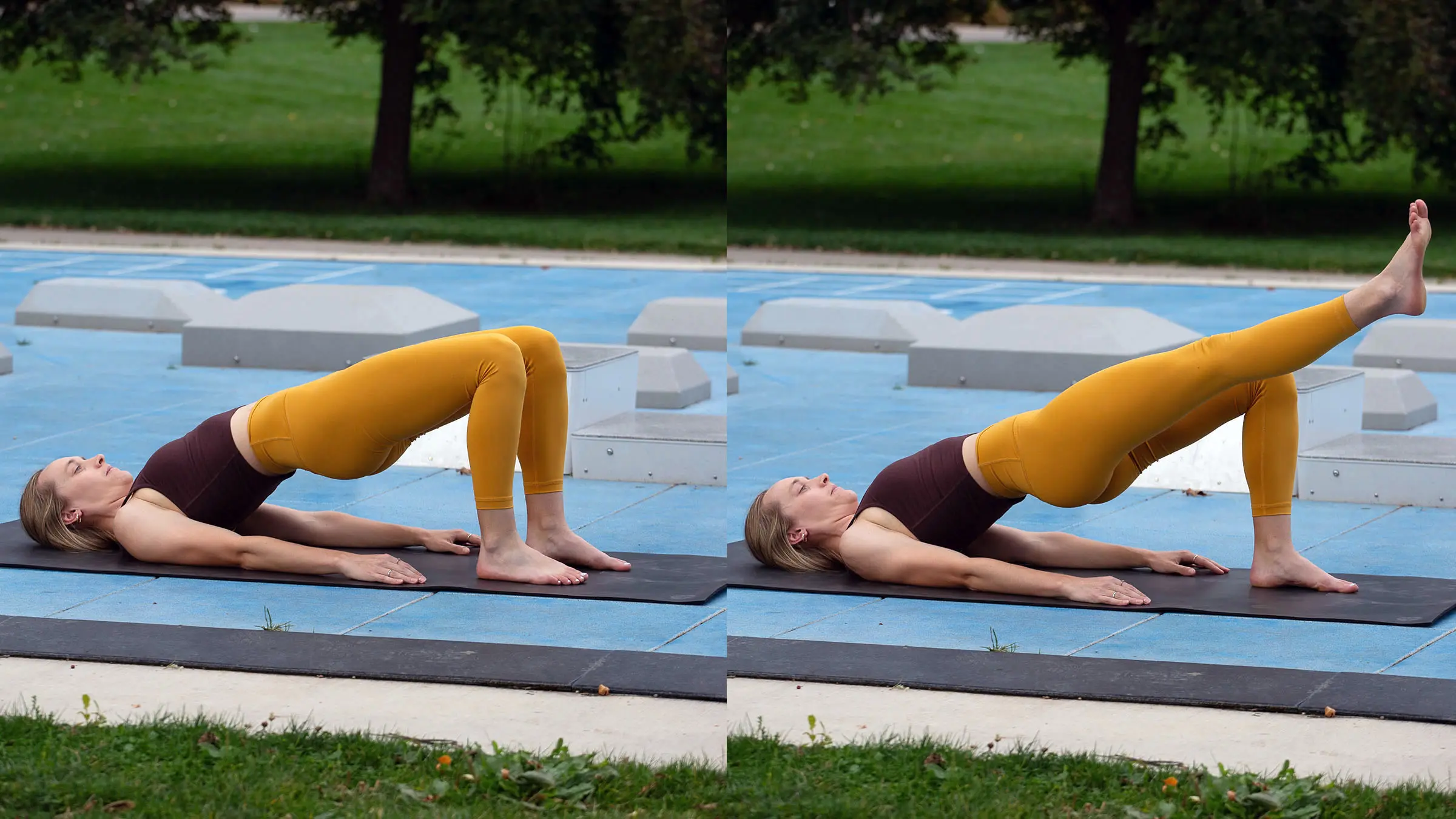
Glute bridges: “A safe way to build power for beginners in strength training,” Hengehold says. They mostly train the glutes and core, the muscle groups that underpin all three disciplines.
So if the exercises are fine, where does the wasted time come in? It’s in how the plan asks you to do them.
Three Ways This Plan Wastes Your Time
1. The Same Lifts, the Same Way, All Year
To its credit, ChatGPT suggests lifting less often as race day approaches and adding a little load once the sets feel solid. But the exercises, sets, and reps never change. Your swim, bike, and run training is built in cycles around your races, and Hengehold advises that your lifting should be too.
In the off-season, strength work can take priority and endurance training becomes the base. In race season, that flips: Lifting is there to support your swim, bike, and run, and to keep your body resilient. A plan that looks identical in January and July does neither job well.
“Over time, it will just be an energy suck of a session, causing more fatigue in the athlete with minimal benefit,” Hengehold warns.
2. Lifting Cold
ChatGPT’s warm-up gets one line: 5-10 minutes of easy cardio, mobility, and lighter practice sets. Hengehold wants something more deliberate, with activation work chosen to prepare you for the main lift of the day.
“Warm-up and activation encourages proper form and oils the muscles,” Hengehold says. “Typically, that would include some sort of dynamic stretching, mobility, or preparation exercise that will aid in the main lift goals of the session. Before squats, for example, that might mean 90/90 hip rotations for hip mobility and banded clamshells to wake up the gluteus medius.” This matters if you want to avoid injury and get the most from every rep.
3. Strength with Nowhere to Go
The big, complex lifts belong at the start of the session, when you’re fresh and can control your form. They also work better when paired with an athletic movement, Hengehold says, so the brain learns what the strength is for.
Follow loaded squats with box jumps, for instance, and you reinforce the power you need at toe-off on the run or when pushing watts on the bike. ChatGPT’s plan has no jumps and no explosive work at all.
“Neuromuscular understanding and adaptation is absolutely necessary for triathletes to maximize the benefit of strength training,” Hengehold says. Without it, you get some injury prevention and extra muscle mass, but not much else.
What to Do Instead
Hengehold named three categories of strength work that matter most for triathletes:
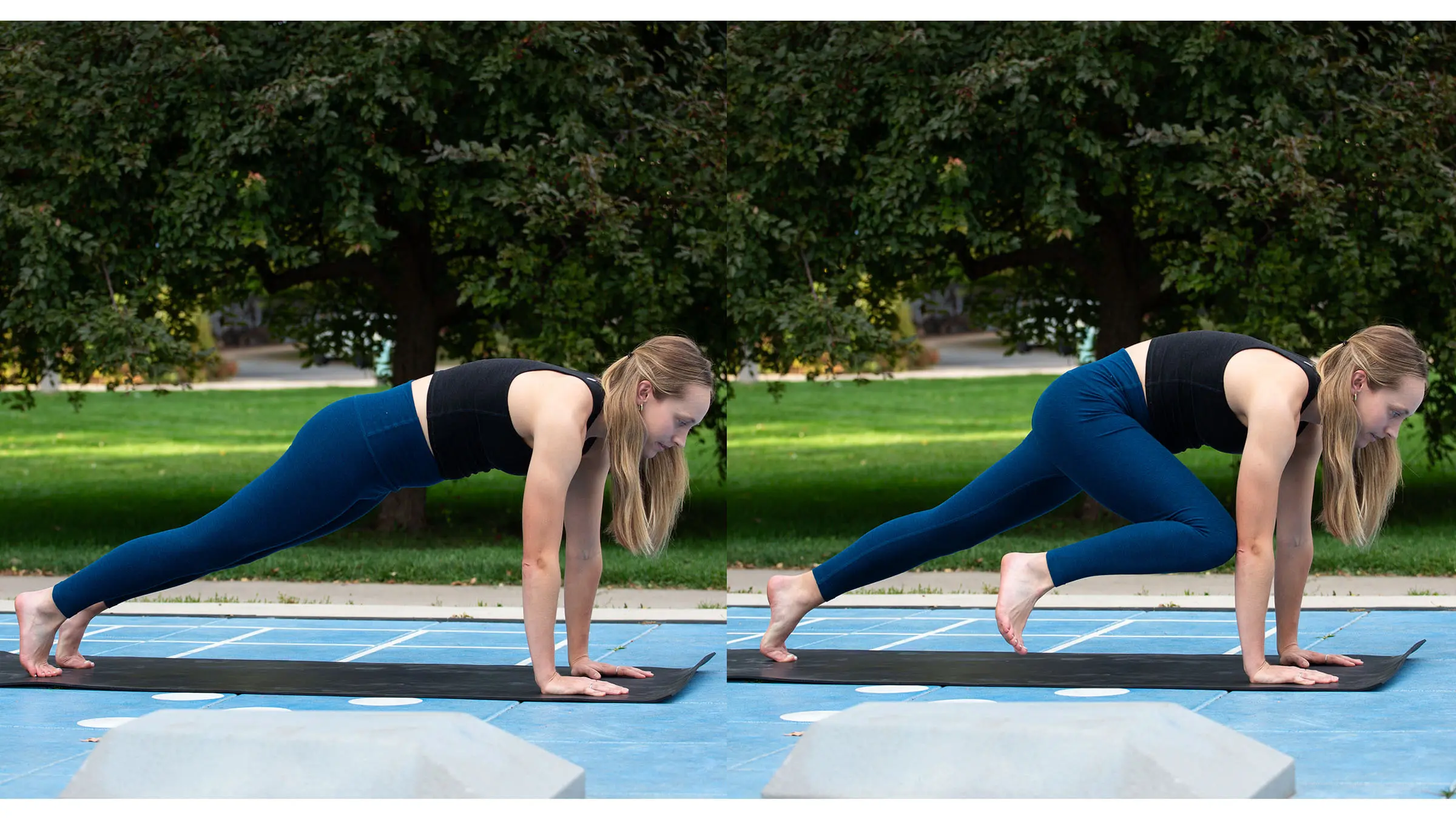
Core work: Think isometric holds and slow, controlled movements, with deep breathing throughout, to work the transverse abdominal muscles. Hengehold’s picks: planks with alternating shoulder taps, dead bugs, and bird dogs.
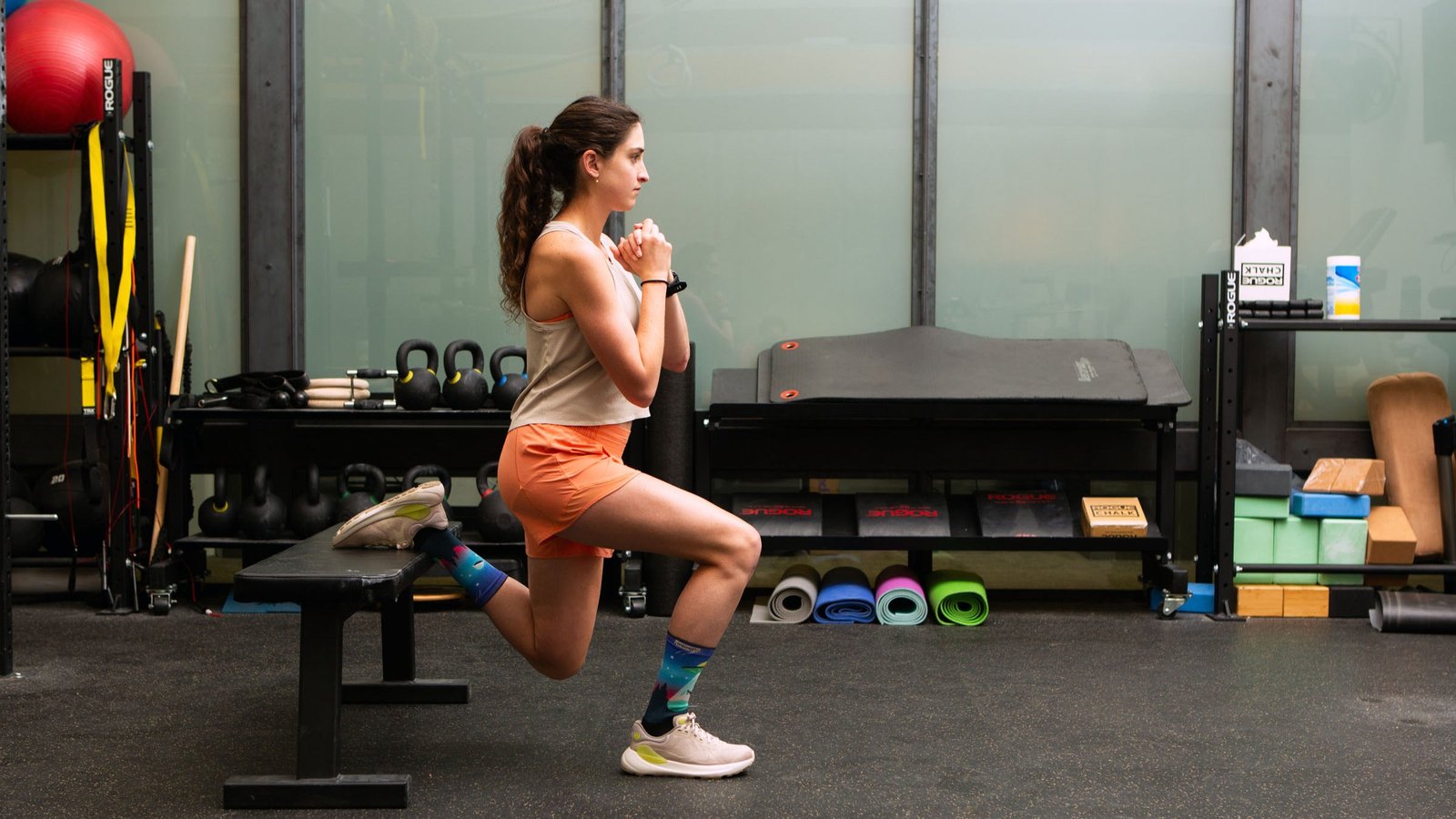
Unilateral movements: Single-leg Romanian deadlifts, Bulgarian split squats, front-foot elevated reverse lunges, and single-leg calf raises all make each side do its own share of the work. Swimming, biking, and running give a stronger side plenty of chances to cover for a weaker one, and these exercises help break those overcompensation patterns.
Squat variations: Isometric squats (holding the position) and eccentric squats (slowing the lowering phase) are a safe way to build resilience in the lower body and core. The squat is also endlessly adjustable, so it can be tweaked to target whatever you need most.
How It Changes Throughout the Year
What you lift, and how, should depend on how far you are from your next race.
Far from race day: This is the time for heavy strength training alongside base swim, bike, and run work. Make complex lifts the centerpiece. Hengehold likes the trap bar deadlift. Get the form and technique down first, then spend a block (typically four to six weeks) building a base with high reps and low weight. Take a deload week, then switch to low reps and heavy weight to build real strength and durability.
In race season: Triathlon training takes over, and strength work drops to maintenance. Unilateral exercises move to the front, scheduled closely around your key sessions and races. Reps and load should go mostly on perceived effort and how you’re feeling, physically and emotionally. Hengehold also stresses mobility work, foam rolling, and stretching during this period.
Seek Expert (Human) Input
One last thing no chatbot can do is look at your form. If you’re new to the weight room, Hengehold recommends having a gym friend or personal trainer check your technique early on: “Bad habits are hard to break and cause damage over time, and the same is true with your swimming, biking, and running.”
Yet technique is only part of what a generic plan misses.
“Triathletes are some of the most hardworking individuals on the planet and managing training, fatigue, and recovery requires extreme attention to detail,” Hengehold says. “The time, energy, and hard work need to be maximized to be worth it, which means a generalized strength plan will not meet the standard. Each athlete is a unique individual with individual needs that require an individualized plan.”
None of this is an argument against strength training — far from it. Hengehold calls it “absolutely essential to longevity in sport and health” and recommends it for every athlete. The argument is against spending your limited time and energy on a plan that wasn’t written with you in mind.



