
Published August 13, 2026 06:00AM
Liquid-Only Fueling for Triathlon
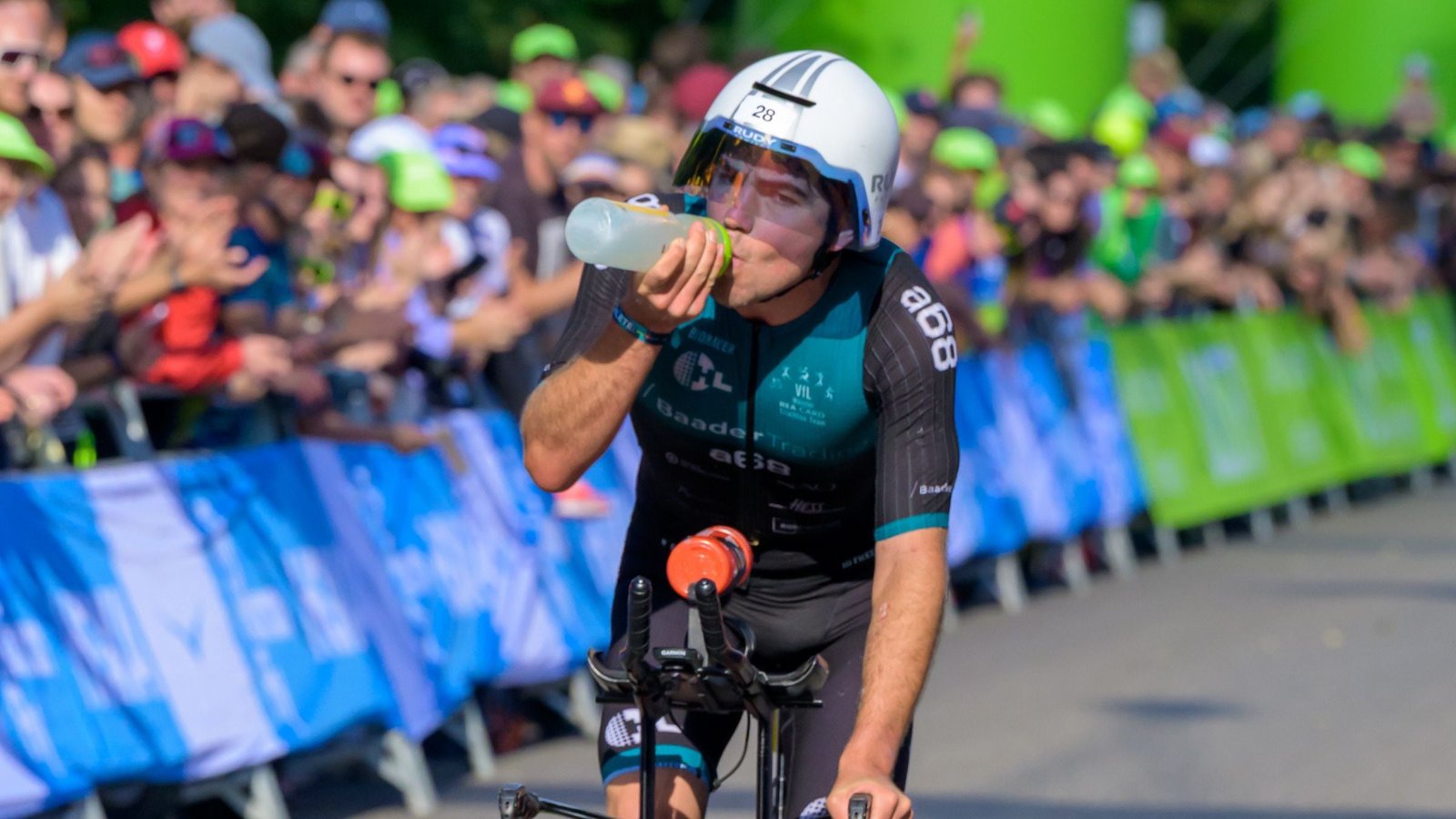
You may have noticed a trend where more of your peers are fueling their races with only liquids and saying sayonara to those sticky gels and anything that requires chewing. Liquid-only fueling has become increasingly popular among endurance athletes seeking predictable calorie intake and streamlined race-day nutrition logistics. Instead of juggling multiple energy sources including gels, bars, and chews, athletes rely solely on carbohydrate-rich drinks to meet their energy needs.
When done correctly, proponents say a liquid-only fueling approach can be efficient, effective, and even gut-friendly. When done poorly, however, it can be an express ticket to Bonkville. And doesn’t all that extra fluid mean more time-sapping nature breaks?
Let’s take a big gulp and look into the benefits, drawbacks, and must-know strategies for fueling exclusively with liquids – just don’t tell your dentist.
Advantages of a liquid-only nutrition plan for triathlon
Simplified logistics
“An all-liquid strategy simplifies fueling by providing carbohydrates, electrolytes, and fluids in a single bottle,” says triathlete Marni Sumbal, CSSD, MS, RD, owner of Trimarni Coaching and Nutrition and author of Essential Sports Nutrition. That means no more fumbling with wrappers, no chews stuck in between your teeth, and no sticky fingers.
“Combining fuel with the fluids needed to replace sweat loss removes guesswork and ensures you meet your individual needs,” says Sumbal, adding that sipping from a bottle every 15–20 minutes also simplifies execution in any terrain or weather, making it easy to replicate in training and to dial in specific needs. Let’s just say that everything seems so much easier when all the fuel you need is stashed in your bottles or hydration pack. No more carrying multiple items to get the energy required to push you to the finish line.
Faster energy
For the most part, liquids empty from the stomach more quickly than solids, reducing mechanical stress on the gut. Faster gastric emptying improves carbohydrate delivery to the small intestine, where absorption occurs. That means liquid carbs can get into your system quicker, offering a better way to maintain higher blood sugar levels, which can be critical to avoiding premature fatigue, and giving your muscles faster access to the sugar they crave when exercising hard.
Easier on the gut
“Research shows that digestion improves with more fluid in the gut, which is easily maintained by consistently sipping a sports drink,” Sumbal says. “Liquid calories reduce the risk of GI issues by leaving less unabsorbed carbohydrate in the gut, which ultimately improves hydration and fuel delivery to the muscles.”
In contrast, Sumbal says a major cause of GI issues is overloading the gut, which often occurs when consuming highly concentrated carbohydrates, like gels, chews, or bars, without enough fluid. This can draw excess water into the gut, causing diarrhea, bloating, cramping, and sloshing. None of that is any fun when you still have many miles to go. One small study found that the intake of solid fuel (bars) during intense cycling was more likely to lead to gut issues and higher perceived exertion compared to gels or sports drinks. And remember, as intensity rises, such as those threshold efforts, blood flow shifts away from the gut toward working muscles. The side effect of this is that solids become harder to digest.
Precise fueling
Perhaps you have a coach telling you to aim to take in 90 grams of carbs for every hour you are racing, but it can be easy to miss this mark when you are relying on multiple fuel sources. Solids introduce a degree of variability: gels get dropped, bites differ in size, calories get left in packages, and mid-race appetite changes. Liquids eliminate guesswork. With liquid-only fueling, it can be much easier to dial in your carb amounts and be more precise with how much you are getting. Stuffing 45 grams of carbs into two bottles and consuming these in an hour is an easy way to know that you are actually nailing your 90g goal, all without needing to chew.
Going higher carb
A 2026 review in Sports Medicine notes that high carbohydrate strategies (>90g/h) are increasingly used by elite endurance athletes. And these days, there are several companies offering sport drink mixes designed to provide a wallop of carbs per sip, minus the gut revolt. For instance, Tailwind High Carb Fuel supplies an impressive 90g of carbs in a 16-24 oz bottle.
“Sports drinks are engineered with optimal sugar ratios (such as maltodextrin/glucose to fructose) to maximize absorption and avoid overloading intestinal pathways,” says Sumbal. “So not only are athletes able to consume more carbohydrates per hour using only fluids to better fuel higher intensity efforts and longer duration activities, they can do so with minimal gut discomfort.” Sumbal reminds us that we now see bottles increasing in size (from the standard 20-24 ounce to the current 1L or 33 ounce bottle), and this helps keep the concentration in a range that optimizes stomach emptying. Better designed hydration vests also make it easier to bring along plenty of carb calories.
Maximize hydration
It makes sense that if you are relying solely on liquids for your fuel, you are going to have a better chance of maintaining improved hydration status, which means you’ll maintain better blood volume and more adequately regulate body temperature. Even relatively small degrees of dehydration can impair cognitive and physical performance, and increase the risk of heat-related illnesses.
When hydration and fueling are integrated, athletes often experience more consistent energy levels and suffer fewer dehydration-related performance dips. Just make sure the fluid you are sipping contains some sodium to lower the chances of developing hyponatremia, a potentially deadly condition where sodium levels drop too low, caused by drinking large amounts of sodium-free liquid.
Better for fueling the run leg
You may find other fuel sources like gels, chews, and bars are just as good as liquids when you’re on the bike, but things can change once you start running. This third part of the tri is more jarring on the body, which can make turning to liquids more comfortable and tolerable.
The disadvantages of liquid-only fueling
Relying on thirst
On days when thirst is not paramount, athletes need to remind themselves to keep drinking enough to consume enough energy. “If an athlete is planning to consume carbs from liquid calories and it’s colder out, there’s less of a thirst drive and overall hourly fluid needs will decrease,” explains Sumbal. “This can lead athletes to underconsuming carbohydrates if they aren’t drinking what they planned (and need) from the bottle.”
If your fueling plan requires 75 g carbs/hour, but you only drink half your bottle, you’ve just cut your energy intake from what you have trained for. Solids allow you to separate calories from hydration. Liquids do not. This is why liquid-only fueling requires an exact drinking schedule. If you find yourself drinking less during cooler races, you may need to plan for having more carb-dense bottles so that you’re getting the energy you want and need.
Making it too strong
If you mix your drink bottle too strong for what your gut is used to, you can create a hyperosmolar solution that pulls water into the gut instead of absorbing it. This can lead to sloshing, nausea, cramping, and diarrhea – none of which is conducive to standout performances. The upshot is that you need to follow mixing instructions from brands and practice with this amount to gauge tolerance.
Going hungry
Our bodies sense liquid calories differently than solid ones, and this can leave you feeling ravenous after hours of doing nothing but pounding liquid calories. On a side note, this is why drinking calories is so problematic in the general population: you get a bunch of sugary calories, but don’t feel satisfied, and that can lead to overeating.
“Athletes exercising for longer durations (at a lower intensity) may find hunger a distraction with only consuming liquid calories,” says Sumbal. “Despite consuming enough carbohydrates to fuel the demands of exercising, the stomach may ask for something more satiating than liquid calories.” Feeling hungry can add a stressor to a situation that is already demanding.
Losing your energy
We’ve all been there: you reach for your bottle only for it to slip from your grip and go missing in action. And just like that you’ve bid adieu to an hour worth of carbohydrates, fluids and sodium, and will be running on empty to the next transition. A scenario that is especially problematic if you don’t have any backup gels in your jersey pocket. The result can be significant energy deficits and a consequent bonk.
Taste fatigue
Mega-dosing sweet drinks can become overwhelming over long durations to the point where you may feel like you can’t stomach another sip of that sports drink. Solid foods provide taste variety and texture that liquids lack. The flavor blahs are another way that relying solely on liquids can lead to underconsumption and, subsequently, underfueling.
More bathroom breaks
For some athletes, liquid-only fueling can lead to more frequent pee breaks. While this can be a sign that you are maintaining good hydration, no doubt that it can also kill your race time. If you find yourself needing to drain your bladder often, it can be a sign that you are overhydrating or not taking in enough sodium to help with water retention. It can also indicate that you have an overactive bladder, which may necessitate the need to switch some calories from liquids to solids.
How to create your liquid-only triathlon nutrition plan
There are a few strategies to make sure that going only with liquids can work instead of being an epic fail.
Determine your targets
If an athlete wants to transition to consuming more liquid calories or a liquid calorie-only protocol, Sumbal stresses that it’s important to understand your individual sodium, fluid, and carb needs based on weather, intensity, and duration. You can do your own sweat testing, and here are targets she says athletes can aim for, based on your results:
| Sweat Rate | Low (20-24 ounce water per hour) Medium (24-28 ounce) Heavy (28-33 ounce) |
| Sodium based on sweat rate | Low (200-400mg) Medium (400-600mg) Heavy (600-1000mg) |
| Carb needs | Low intensity, 90 min workout or less (30-45g carbs/hr) High intensity, 90 min workout or less (45-60g carbs/hr) Low intensity, 90+ min workout (50-60g carbs/hr) High intensity, 90+ min workout (60-90g carbs per hour) |
You can then build your bottles or hydration bladders based on these goals. For example, if you need 60g of carbs and 400mg of sodium per hour of activity, you can mix this amount into a 20-24 ounce bottle if that bottle is what you are going to drink each hour.
Start slow
If you want to try an all-liquid race day nutrition strategy, make a cautious start. Going for mega-doses of liquid carbohydrate right off the bat is going to result in the exact GI symptoms you’re trying to avoid. That’s why it’s important to train your gut to absorb more carbs in liquid form, just like you train your legs to handle longer distances. To start, you could aim for 30 grams of carbs (plus some electrolytes) per 20 ounces of fluid, and monitor energy levels and gut tolerance. Dial up the carbohydrate concentration as needed and as the gut allows.
Switch it up
To help with flavor fatigue, which can lead to underfueling, Sumbal suggests varying the flavors in your sport drink to keep your palate fresh. “This can come from different products or different flavors of your favorite product.” So, perhaps one bottle holds a berry-flavored carb-mix, while your other bottle contains something in the citrus flavor profile.
Play the field
With so many brands offering sport drink mixes designed to provide liquid calories, there is no reason to settle on one that does not treat you well. It may take some trial and error to find a product that suits you best.
Have a backup plan
Even liquid-only athletes should carry some backup energy, like a stashed gel, just in case a situation arises where this is what is needed to keep you from zeroing out. Yes, bottle failure is not unheard of.



