
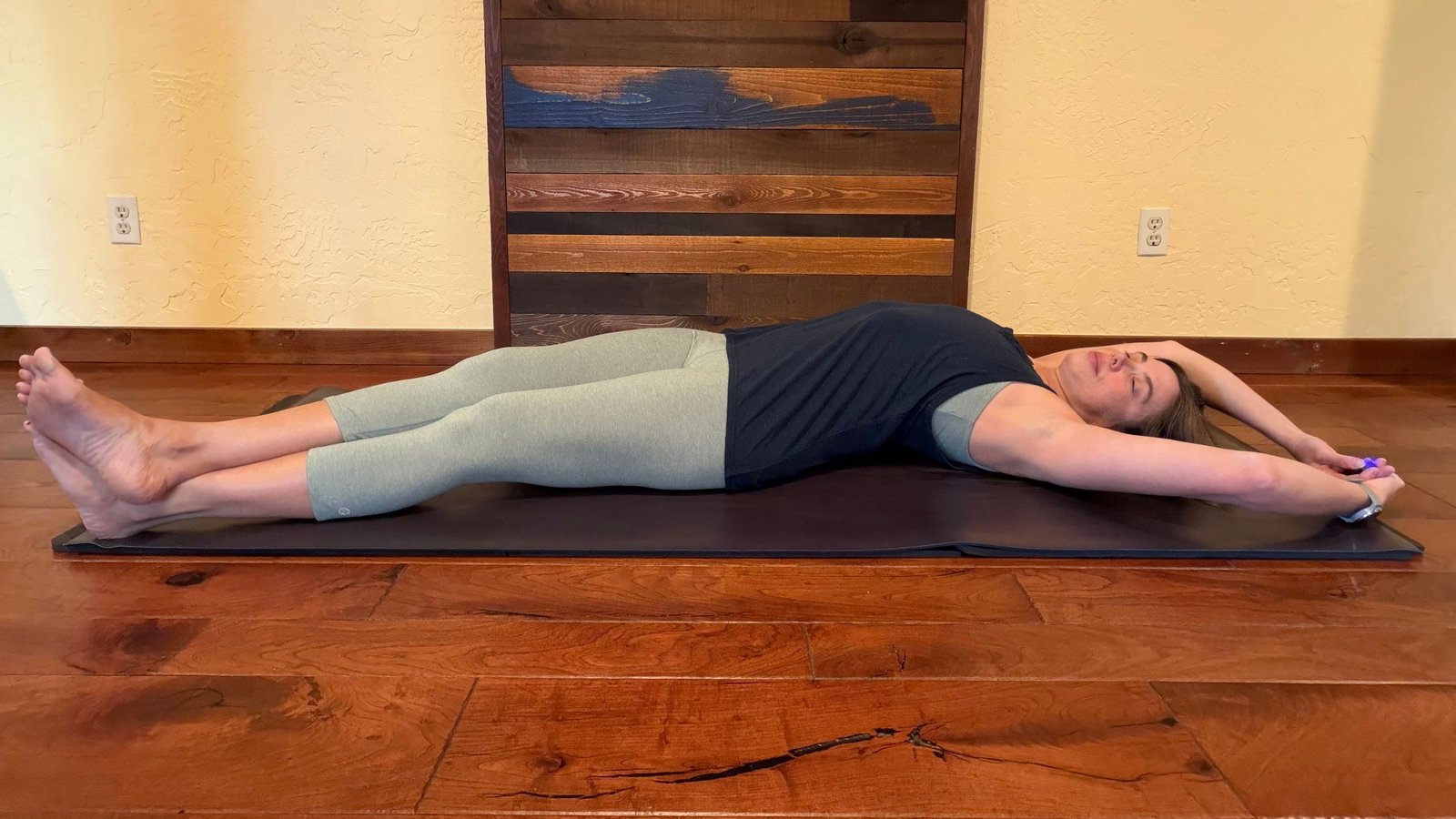
Improve your breathing efficiency in the water with Bananasana, a gentle yoga pose designed to expand rib mobility and release side-body tightness.
(Photo: Carrie Lehtonen/Triathlete)
Published October 23, 2026 06:06AM
SUMMARY:
- Improve swim breathing efficiency with the bananasana side stretch and supported side-lying yoga poses.
- These poses expand rib mobility, release intercostal tightness, and support three-dimensional breathing for swimmers.
- Relieving tension in the fascia and side body allows connective tissue to glide better, helping swimmers achieve more expansive breathing, especially as fatigue sets in.
Swimmers spend plenty of time working on stroke mechanics and building upper-body strength, but mobility of the side body, particularly the intercostal muscles between the ribs, can affect how freely you can breathe, especially as fatigue sets in.
Bananasana, a gentle yin yoga pose, stretches the side body. A supported side-lying pose, with blocks under the ribs and head, creates a more targeted stretch that can help expand your ribs for three-dimensional breathing.
How to do Bananasana
- Sit on your mat and bring your heels to the top left corner. If comfortable, cross your right ankle over your left.
- Lower your upper body down onto the mat to the left to create a banana (or crescent) shape with your body. Keep both hips and both shoulders down on the mat and reach your arms overhead in a loose diamond shape. If you experience any shoulder pain, or your shoulders can’t stay on the mat, rest your arms by your sides.
- Breathe into your right side. You may feel a stretch from your hip to your armpit, or down the outside of your leg, depending on where you have tightness in your body.
- Stay where you feel a stretch, but no pain. As you hold, you can move your feet or your shoulders further to the left, but only as far as you can keep both hips and shoulders on the mat. If you find yourself holding your breath, you may have gone too far.
- Stay for five minutes.
- To come out, unhook your ankles, roll into a fetal position on your left side. Stay for a few breaths, then push into your right hand to make your way back to seated.
- Set up for the other side, with your legs and upper body to the right. Breathe into your left side.
- After five minutes, unhook the ankles, roll into a fetal position on your right side, and stay for a few breaths.
- Roll onto your back and rest for a moment.
While Bananasana offers a relatively subtle lateral stretch of the obliques, intercostal muscles, and IT band, a supported side-lying variation increases the sensation and may help ease fascial tightness.
Fascia is a network of connective tissue that surrounds and connects muscles, nerves, bones, and organs. When fascia’s layers glide well, the body moves freely. However, training load, injury, prolonged postures, and other factors can contribute to stiffness or reduced mobility. Restriction in the rib cage and side body can make a full, expansive breath feel harder to achieve.
How to do a supported side-lying stretch
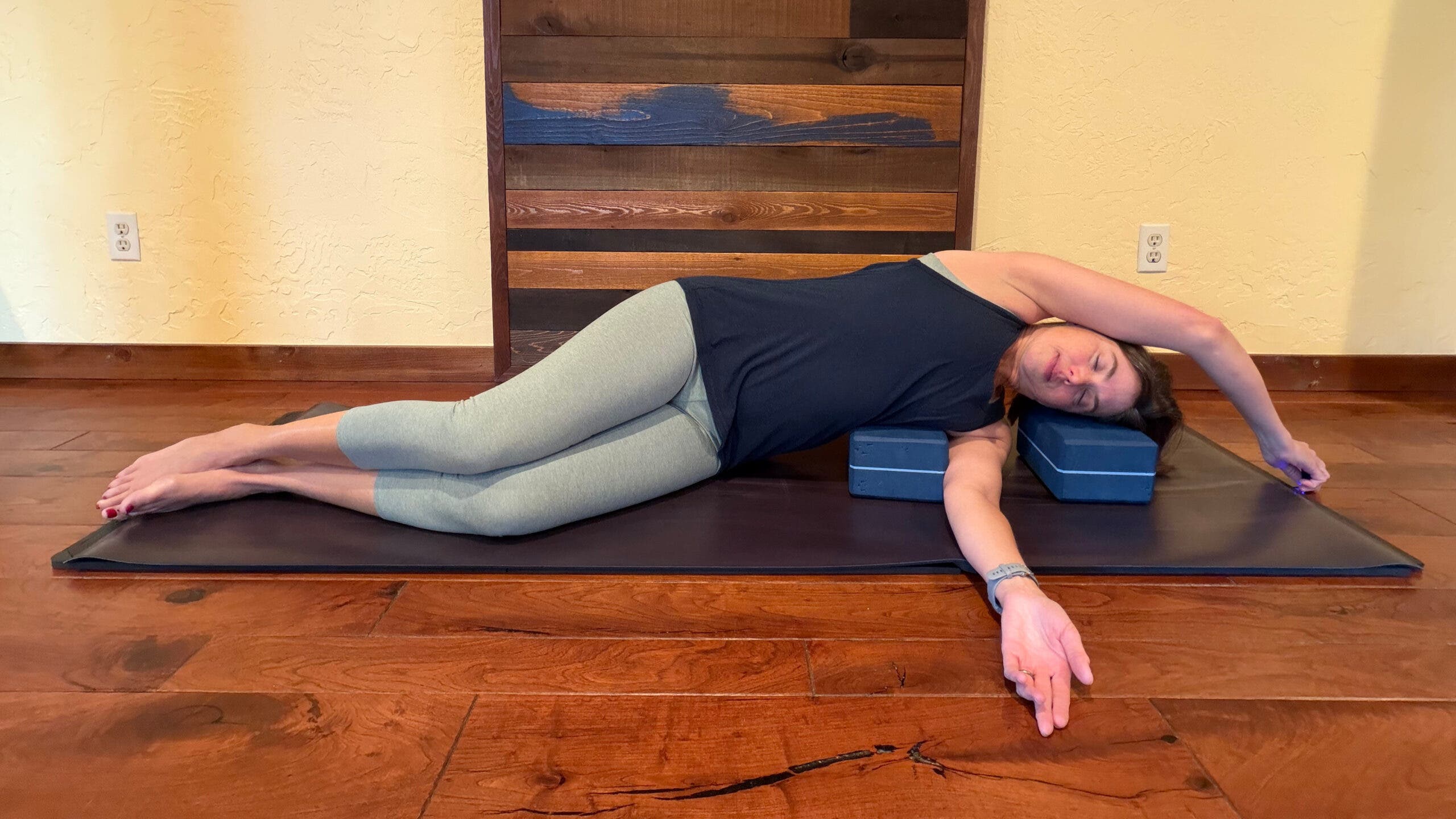
- Set up two yoga blocks horizontally on your mat, with enough space between them for your arm. Soft-sided blocks are recommended over harder or cork blocks, which may be too intense to get the optimal benefit. You can use a bolster in place of the block under your ribs for less sensation.
- Lie on your side with one block under your ribs and the other under your head, with your bottom arm stretched forward in between the blocks. Your top arm can reach overhead or rest on your side. Keep your legs straight or bent, whichever feels more comfortable.
- Start with the block fully under your ribs. You might lean a little forward or back to find the sweet spot, where you feel sensation without sharp pain.
- As you hold, you can move the block up closer to your armpit to target the upper ribs.
- Stay for three to five minutes, then push into your hand to lift off the blocks.
- Flip over to the other side and repeat for the same length of time.
- Press yourself up, move your blocks, and lie on your back. With your hands on your ribs, take a few deep breaths and notice the spaciousness in your rib cage.
Give your shoulders and lats attention, but don’t overlook your ribs and side body. Add these stretches to your regular mobility routine to build breath awareness and find more ease and efficiency in the water.



