
This article first appeared in South Jersey Climate News, a content-sharing partner of NJ Spotlight News.
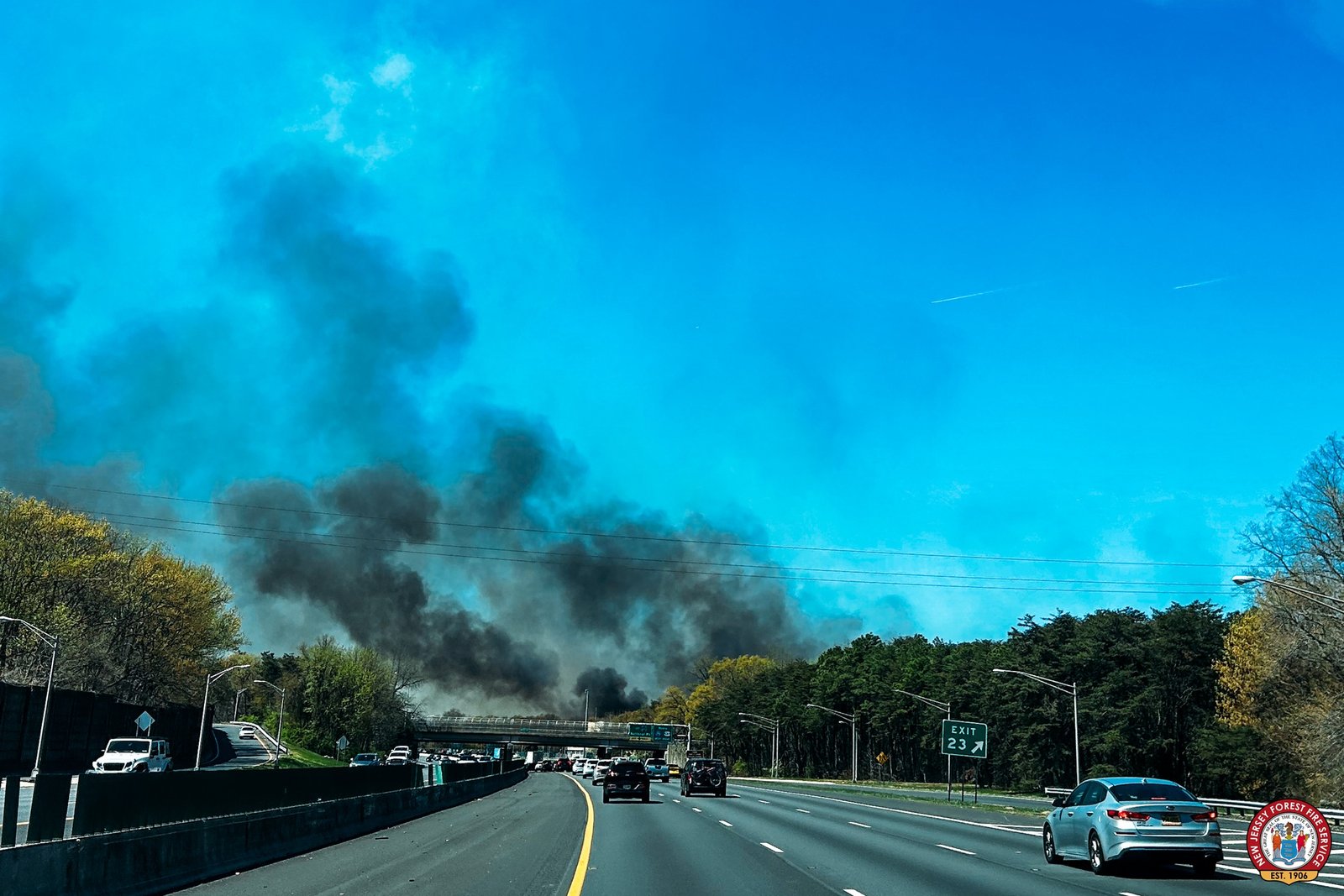
In mid-April, a 160-acre wildfire in West Deptford spread smoke and ash across the area. It took the state’s Forest Fire Service nearly seven hours to contain it. Months of dry conditions helped fuel the fire, about 15 miles south of Philadelphia, experts say.
New Jersey is under a drought warning, according to the state Department of Environmental Protection. In the last two years, the state received below-average precipitation in all but three months, and Gov. Mikie Sherrill has urged residents to cut back on water use.
The dryness raises concerns as the Garden State heads into summer, according to David Robinson, the state climatologist.

“If we don’t get a normal rainfall pattern pretty quickly, we’re gonna be in a war,” Robinson said. “We’re going have to worry about wildfires come May and June.”
Long drought periods and hotter temperatures due to climate change are making wildfires more not only more frequent and intense, but have also have extended wildfire season to five months from four. In preparation for wildfire season, the state in March opened the first fire tower in 78 years in Jackson Township. The state also announced $90,000 in grants to 22 communities for wildfire prevention.
Experts hope that the coming months bring some relief. Typically, humidity and moisture increase as summer approaches, according to Robinson.
“Grasses start greening up, and that puts moisture into the grasses, which reduces fire danger,” Robinson said. “Deciduous trees are coming into leaf, and therefore shading what we call the understory of the forest. And that keeps the forest floor moist longer, keeps it a little less hot.”
Weaker winds and heavier thunderstorms in the summer assist in preventing huge fire breakouts.
“But — and there’s always one big but — you still need to have rainfall to minimize the danger,” Robinson said.
Though North Jersey has been getting more water with each rainfall, South Jersey has not, making it more vulnerable. The amount of rain that falls on one day matters less than the frequency.
New Jersey inches closer to a drought emergency, and therefore a higher risk of wildfire, for every month without regular precipitation patterns.
“As we go into the summer — and if we get close to average rainfall and it falls in a timely manner — we’ll dodge this,” Robinson said. “Otherwise, we may have all types of problems.”



