
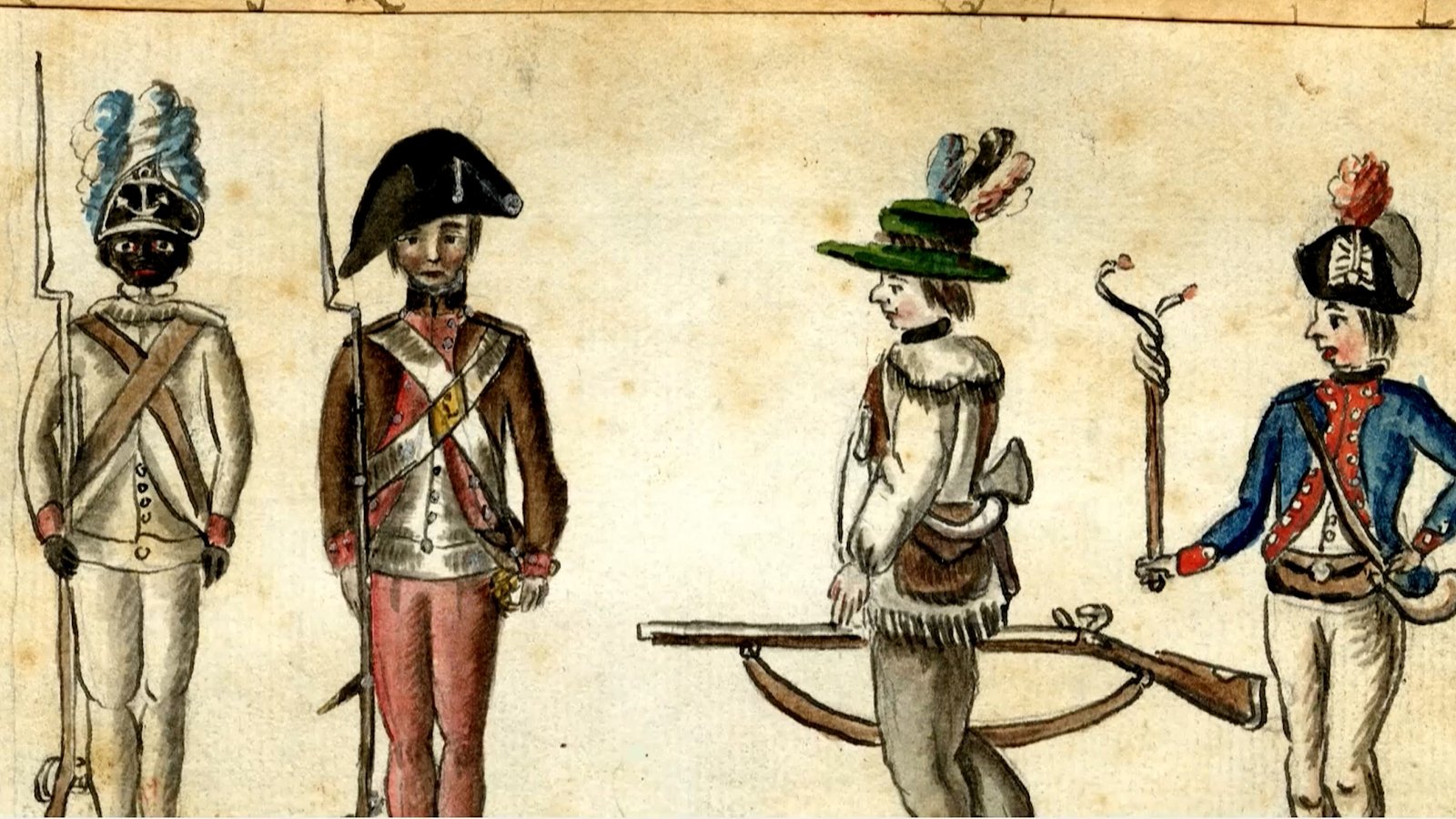
As the nation marks its 250th anniversary, historians are highlighting overlooked New Jerseyans who contributed to the split from the British monarchy.
“There were many people we often study history through the lens of white men — not understanding the role of women, the role of children, the role of the indigenous people, the role of the African Americans, who by far and large were enslaved during that time period,” said Linda Caldwell Epps, co-chair of the Revolution NJ advisory council, a group of scholars and public history practitioners that is assisting the New Jersey Historical Commission on 250th events. “All of those that I mentioned played a very active and very important role in, on both sides, whether you were a patriot or a loyalist.”
As many as 10,000 enslaved people, possibly more, played a role in the Revolutionary War, she says.
“The Battle of Monmouth alone had two people that we actually have names of. Cudja Benquante, who fought for the Patriots, was enslaved. He was a young man, but he enlisted in 1777, right after the Washington Army crossed the Delaware, and he served for the duration of the war, valiantly,” Caldwell Epps said.
Another is known only as Colonel Tye, a runaway slave who lived in Monmouth County. “He heard about Lord Dunmore’s British decree to free all men of African descent who fought on the side of the loyalists. So he made it on foot to Virginia where Lord Dunmore was, stayed there for two years,” Caldwell Epps said. “He came back to New Jersey with an interracial group of soldiers, incorporating guerrilla warfare into the fight in Monmouth County.”
The past’s context is important, Caldwell Epps says, to recognize that the message in the Declaration of Independence — all men are created equal — did not extend to all people.
We’re in this together.
For a better-informed future.
Support our nonprofit newsroom.



