
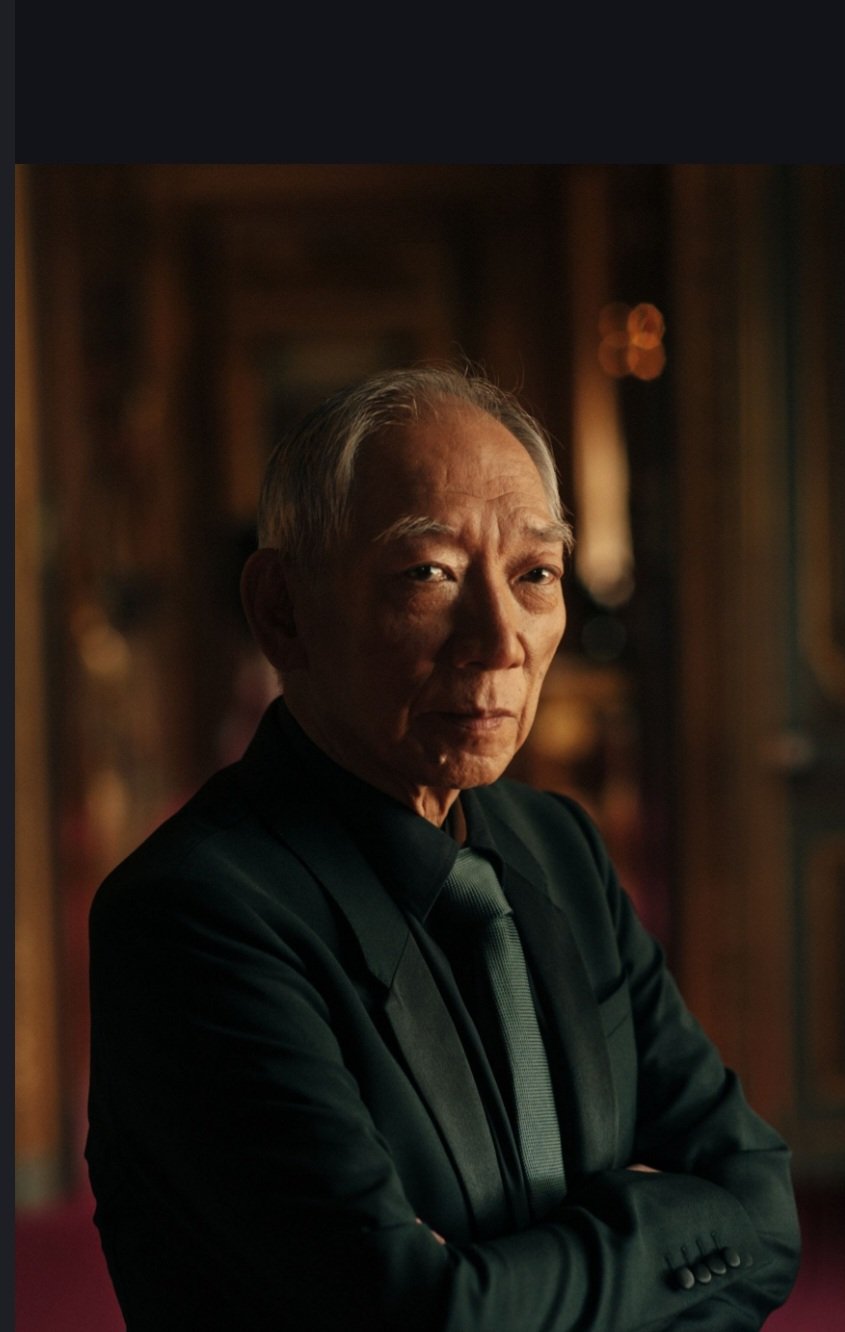
The 30th Bucheon International Fantastic Film Festival (BIFAN) opened with a figure whose career has helped define the very grammar of screen action: Yuen Woo-ping. The Hong Kong filmmaker and martial-arts choreographer’s “Blades of the Guardians” is the festival’s opening film, underlining BIFAN’s long-standing commitment to Asian genre cinema and action spectacle. The festival is also hosting a special event, “Master Class: Yuen Woo-ping, the Artistry of an Action Legend,” further positioning the director as one of the defining figures of its 30th anniversary edition.
Yuen’s presence is especially fitting for BIFAN, a festival built around genre cinema. Since its founding in 1997, BIFAN has positioned itself as a meeting point for cutting-edge genre films from Korea, Asia, and beyond. In that context, Yuen is not merely a guest of honour; he is one of the artists who made Asian genre cinema a global language.
At a press conference held on July 3 in Bucheon, Yuen reflected on both his new film and the changing nature of action cinema. He stressed that even in the age of AI, the essence of action cinema still comes from the actor’s body.
“AI technology has advanced a great deal, but at this stage there is still a clear difference between action created by AI and action created by real people,” he said. “From a director’s point of view, even small movements and timing are still lacking. Perhaps in three or four years, when AI has developed further, I may consider using it, but for now it cannot match the quality of action created by actual actors.”
“Blades of the Guardians” is a martial-arts action film set in the late Sui dynasty. Based on the comic of the same name, it follows the bounty hunter Dao Ma as he escorts a mysterious figure with a huge bounty on his head. Set against the desert, the film is marked by weighty action and realistic martial-arts staging. The film also marks Jet Li’s return to the screen after a 14-year absence.
“Unless a scene requires supernatural powers, I try not to use CG,” Yuen explained. “Action created by real actors with their bodies is my style and my signature.” He added that a truly good action film should remain enjoyable over time: “An action film that is still fun to watch 20 years later is a genuinely good action film.”
Yuen’s early directorial breakthroughs, including “Snake in the Eagle’s Shadow” and “Drunken Master”, both released in 1978 and starring Jackie Chan, were crucial in reshaping the martial-arts genre. They helped popularise a more comic, acrobatic, personality-driven form of kung fu cinema, moving away from solemn combat toward performance, rhythm, and character.
His later influence extended far beyond Hong Kong. As action choreographer on “The Matrix”, “Crouching Tiger, Hidden Dragon”, the Matrix sequels, and “Kill Bill”, Yuen became one of the key conduits through which Hong Kong action aesthetics entered global popular cinema. His style brought wirework, martial-arts rhythm, and stylised bodily movement into the Hollywood mainstream.
At the press conference, Yuen also reflected on how action cinema has changed. “In the past, the focus was often on showing spectacular movements themselves,” he said. “Now audiences want a greater sense of reality, where acting and action are naturally integrated.”
Yuen recalled the desert shoot of the “Blades of the Guardians” as one of the greatest challenges of the production. “The temperature was over 40 degrees and there were many days when strong winds delayed shooting, and we had to pay close attention to the actors’ physical condition,” he said.
Yuen also spoke about the distinct qualities of some of the major stars he has worked with. Jackie Chan, he said, was strong in flamboyant and comic action, while Jet Li brought out the beauty of traditional martial arts. Donnie Yen, by contrast, was especially suited to modern action. These differences, Yuen suggested, are central to the choreographer’s task: action must be designed not only for the scene, but for the performer.
His visit to BIFAN also opened the possibility of future collaboration with the Korean film industry. “Korea has many action actors and a strong film education system. If there is an opportunity, I would very much like to collaborate with the Korean film industry.” He singled out Lee Byung-hun, saying that the actor’s action work had left a strong impression on him and that he would like to work with him if the chance arose.
At 80, Yuen remains active and enthusiastic. “Film is both my hobby and my lifelong profession,” he said. “I have not set a time limit on how long I will continue making films. If there is a good script and good investment, I will keep making films. I will continue until the day I feel I can no longer do it.”
He described “Blades of the Guardians” as a film that combines realistic desert action with family love, friendship, and human emotion. “It is a film I can confidently recommend,” he said, encouraging audiences to experience it in cinemas.



