
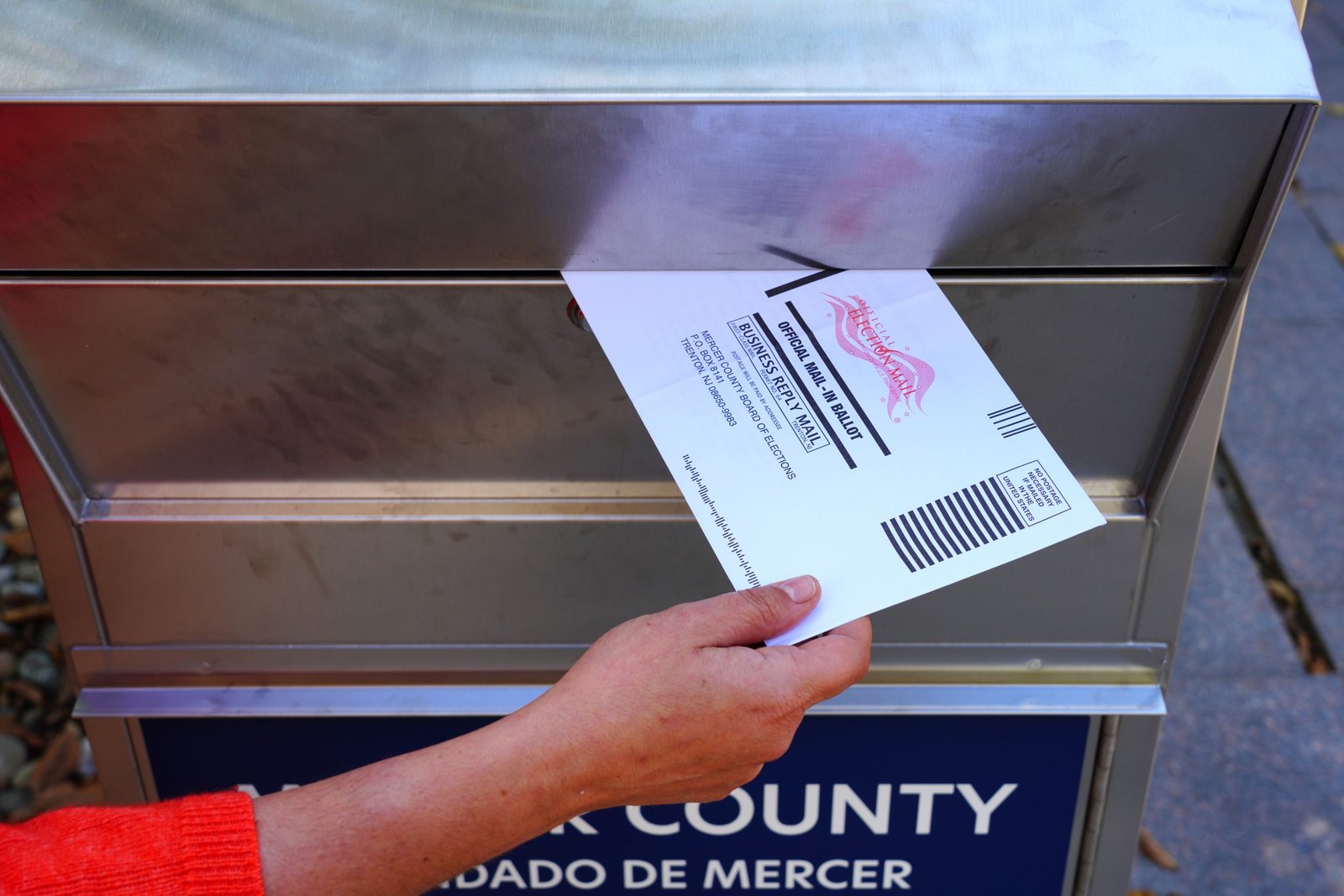
New Jersey and other Democratic-led states asked a federal judge on Thursday to swiftly strike down a Donald Trump executive order that would reshape the country’s mail-in voting processes, upping the legal pressure against the fledgling policy. But the states might face another opponent in the legal battle: a dozen conservative states looking to protect the policy.
The president’s executive order would overhaul mail-in voting policies and create state-based lists of eligible voters; the U.S. Postal Service would be barred from transmitting mail-in ballots belonging to people not on the citizens list, and would use a bar-code tracking system on mail-in ballots. Trump disavows mail-in voting, claiming without evidence that the system is used for mass fraud. The Constitution grants states and Congress the power to regulate elections, though, and his order faced near-immediate legal challenges.
New Jersey and almost two dozen other states initially sued over the executive order earlier this month. This week’s filing asks District Court Judge Indira Talwani, a Barack Obama appointee, to hasten the legal process with a summary judgment.
“The President derives power only from the Constitution or federal statute,” the Democratic states argue. “Neither source grants the President the authority to impose the EO’s requirements. That alone would be fatal, but the EO is even worse: it runs counter to numerous constitutional and statutory mandates. This Court should not let it stand.”
Attorney General Jennifer Davenport announced the filing on Friday, arguing the executive order violates the Constitution. If upheld, the order would require New Jersey’s elections officials to overhaul the mail-in voting process.
“States run elections — that’s what the Constitution requires. And those elections are free, fair, and secure — that’s what States ensure,” Attorney General Jennifer Davenport said. “The court should block the President’s meddlesome executive order without delay.”
Republican states have scarcely involved themselves in the wide-ranging legal battles between Democratic states and the Trump administration. But earlier this week, Missouri and 11 other GOP-led states asked for permission to intervene in the case to help protect the executive order.
“Plaintiffs claim the EO represents a federal intrusion on state authority over elections, but the Intervener States see things differently,” the Republican-led states wrote. “The EO is an example of cooperative federalism, whereby the federal government is offering optional resources that all States can use to protect their elections.”
But the Democratic states have argued the executive order is hardly optional. They point to a clause in the order directing the federal attorney general to prioritize the prosecution of election officials who issue a ballot to a resident ineligible to vote.
“Section 2 [of the executive order] creates a new federal program to define baseline voter eligibility for each State by requiring federal agencies to make and share inevitably flawed lists of citizen residents who are at least years old in each State. It also compels States to conform their voter rolls to that list on pain of criminal prosecution.”
On Friday, though, the Trump administration asked the judge to reject the GOP states’ attempt to intervene in the case. Instead, the Trump administration said the GOP states should be allowed to file an amicus brief.
“To the extent that Intervenor States have an interest in this matter, it will be adequately represented by the United States, which intends to vigorously defend this suit,” the Trump administration wrote.
The Trump administration must respond to the Democratic states’ motion for summary judgment by early May, and a hearing on the motion will be held in June.



