
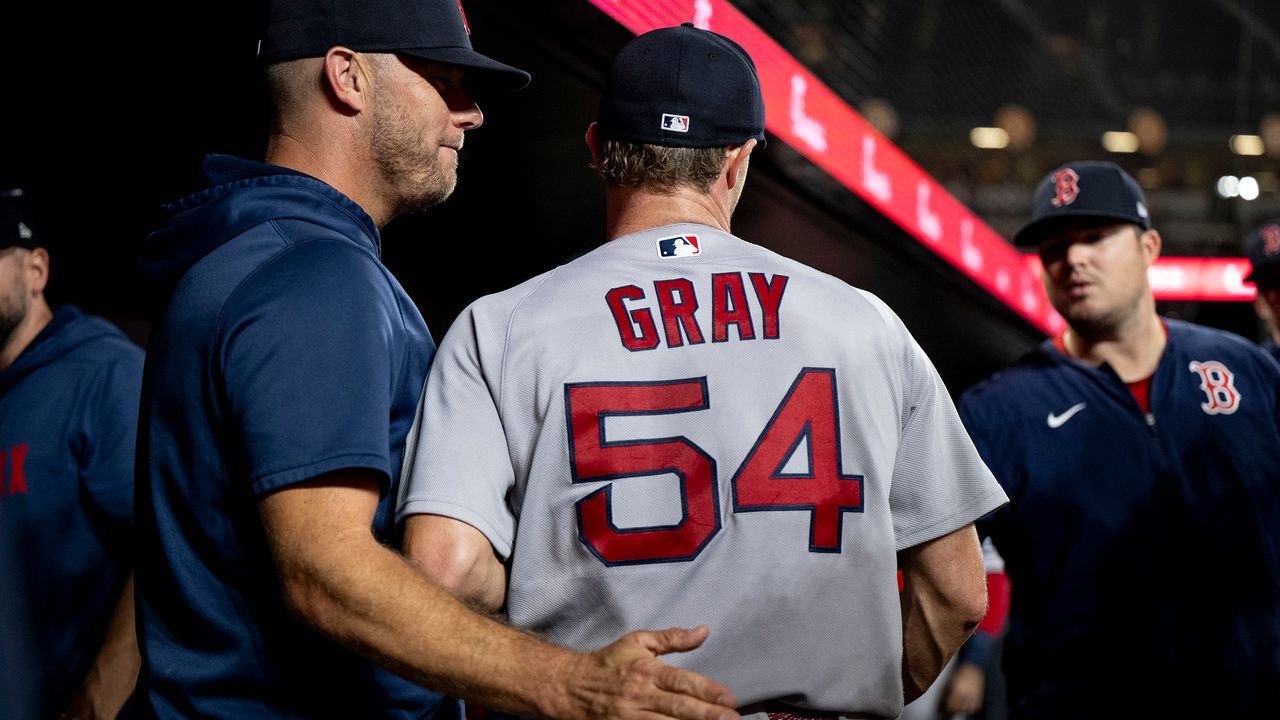
A reporter did ask one of the guys, Willson Contreras. He mimed zipping his lips. But he didn’t keep his mouth shut entirely. “It’s not enough when you have talent, or you have data or you have computers telling you what to do. This is baseball, and the data is here to help us,” Contreras said. “But, at the end of the day, you’re going to need experience and veteran guys to win games.”
Ornery guys who think the nerds have gone too far say this kind of stuff all the time. So do competitive athletes who’ve just lost big games. And, of course, not even the most dogmatic stat-heads believe that stats should be treated as immutable laws. What’s more, there were data-oriented factors that might have argued against bringing in Miller, too. (Most obviously: Bellinger was especially good at hitting sliders with runners on base, and Miller depended on his slider; plus, Miller had been rocked in a similar situation the night before, when he also relieved the night’s starter in a tight game and surrendered an immediate home run to Ben Rice.) You could argue that Tracy should have relied on data more, not less.
Their opponent, the Yankees, in fact, went in the other direction—no doubt guided by data of their own. They carried ten pitchers on their roster against the Red Sox, instead of the usual twelve or thirteen. And in Game One, instead of pulling Schlittler, who was throwing a gem, the team’s manager, Aaron Boone, left him on the mound for a hundred and seventeen pitches—the most by any Yankee in more than four years. Then Max Fried threw ninety-eight in Game Two. The Yankees have had the best rotation this season, and we’re likely to see some of their starters in relief as the post-season goes on. Starting pitching has been “the biggest strength for us throughout the year,” Boone said. “It sustained us.”
But Gray, the Red Sox pitcher, was making an emotional appeal as well as a statistical one. It was live or die, as Gray had said. It was about trusting the human side.
And why not? Sure, the goal of the game is to win, not to satisfy some ancient sporting code, and the insights delivered by the data revolution in sports have helped teams do that—including teams that didn’t have big payrolls. They’ve also improved our understanding of the game in myriad ways. They have unlocked new pitches and new approaches, and have engendered fantastic creativity. But the experiences of the humans playing and watching sports should matter, too. Otherwise, what’s the point?
For me, the highlight of the season so far has been watching Misiorowski, the Brewers’ ace, blaze fastballs across the plate over and over. Misiorowski was throwing seemingly every pitch a hundred miles per hour, if not a hundred and four. When I wrote about him back in May, I did it with a sense of urgency. I figured he couldn’t keep it up. He’d dial back the velocity, or his team would use him more sparingly to protect him for the playoffs, or his elbow would explode. No one had ever done what he was doing. And no one, I thought, would be allowed to do what he was doing for long.
I am very glad to have been wrong. Misiorowski finished with the best earned-run average in baseball, the most strikeouts, and the lowest average number of base runners allowed per inning. He didn’t pitch as many innings as someone like Verlander used to, which might be our loss. But he pushed limits of another sort. He threw more than a thousand fastballs over a hundred miles an hour—nearly five hundred more than anyone else. He made being a starting pitcher look heroic. And the Brewers, as it happened, finished with the best record in baseball.



