
WASHINGTON — President Donald Trump said Monday he had signed a ceasefire with Iran, moving the two countries one step closer to ending the war that began in February.
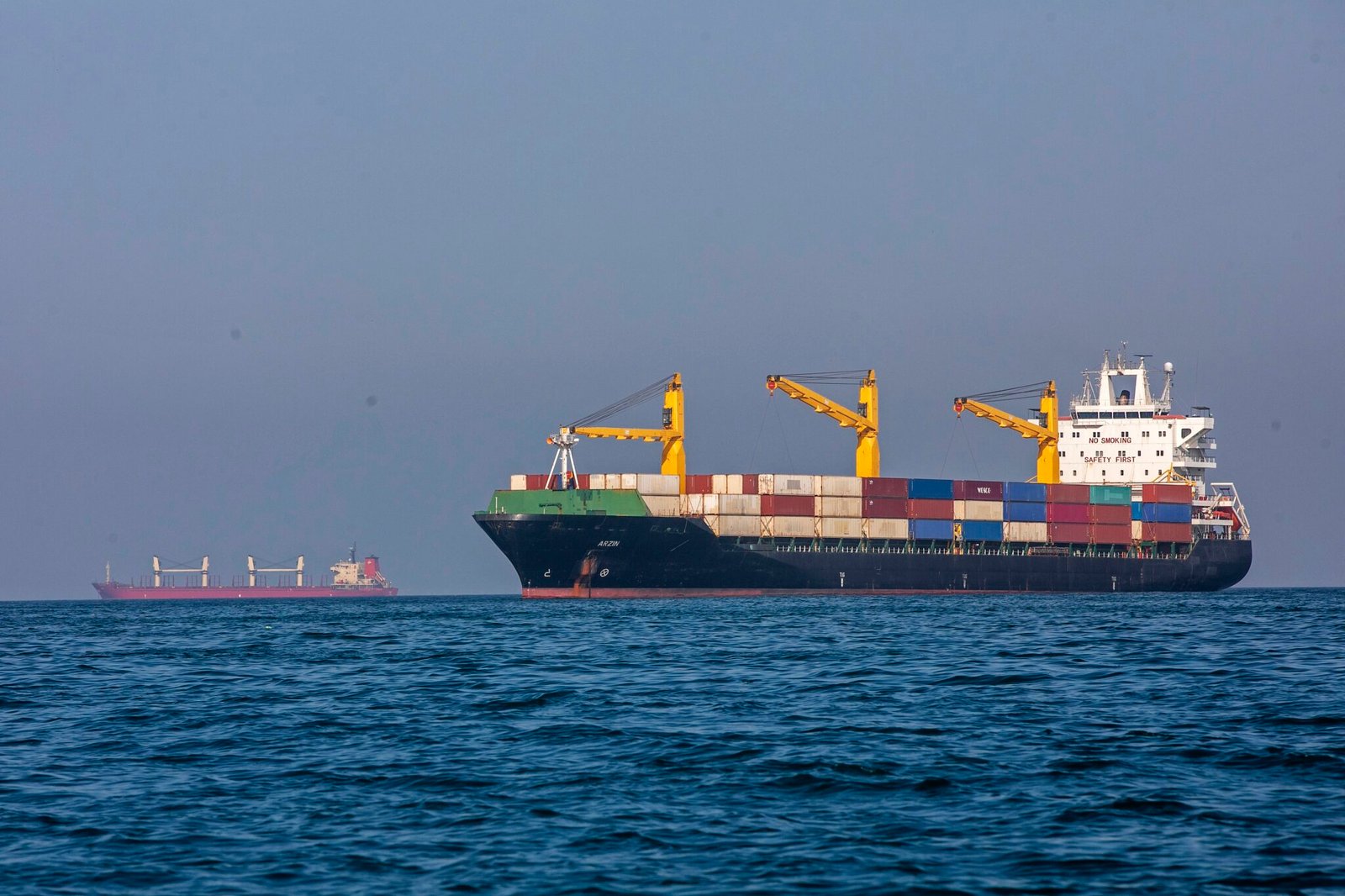
Trump, speaking from the G7 conference in Europe, said the memorandum of understanding ensures Iran cannot possess a nuclear weapon and clears the way for ships to move through the Strait of Hormuz without paying a toll.
Trump added he would like the U.S. and Iran to develop a more collegial diplomatic relation in the months and years ahead as additional details of the agreement are worked out.
“Hopefully it’s going to be a good relationship and we’re going to get along,” he said. “And if we don’t, we go back to where we started but I don’t think that’s going to be necessary.”
Trump said he expects the memorandum of understanding to pave the way for economic sanctions relief subject to several conditions. That document should be released publicly sometime after Friday, when Vice President JD Vance is scheduled to attend a ceremonial signing.
One potential obstacle to a longer-term deal could be the ongoing Israeli war in Lebanon, which Pakistani Prime Minister Shehbaz Sharif wrote in a social media post is part of the agreement between the U.S. and Iran.
“Both sides have declared the immediate and permanent termination of military operations on all fronts, including in Lebanon,” Sharif wrote.
He added that a ceremonial signing event had been scheduled for Friday in Switzerland.
“With the agreement now in place, mediators will facilitate a series of meetings this week,” Sharif wrote. “These pre-implementation discussions will lay the foundation for the technical talks and the official signing ceremony.”
Trump said from the G7 conference that he would look into ways to end Israel’s war in Lebanon, but didn’t say that is part of the United States’ agreement with Iran.
“We do want to see if we can straighten out the Lebanon thing because it just seems to just never end,” Trump said. “And that’s a mini version of what we were doing, but it should not be tough. So, Hezbollah we have to have a little talk with them.”
Israel not part of agreement
Israeli Prime Minister Benjamin Netanyahu said a couple hours after Trump spoke that he didn’t plan to withdraw troops from Gaza, Lebanon or Syria.
“I’d like to clarify, we will stay there in the security zone as long as it takes in order to protect our country,” he said, according to a translator.
Netanyahu added during his brief remarks that he believed the joint military campaign against Iran prevented that country from developing a nuclear weapon.
“The most important thing is that we saved the state of Israel from clear and present nuclear danger because Iran was running toward it,” he said.
But Netanyahu indicated his country’s military would not pull back in the days or months ahead, saying “the struggle has not finished yet.”
“Today after we achieved all of that, there are those who want to belittle it and cancel these achievements and I’m telling you we are about to achieve many more great things and to eliminate threats,” Netanyahu said.
The remarks were somewhat different from those posted earlier in the day by the Israeli minister of national security who appeared to oppose the agreement between the U.S. and Iran.
“Trump’s agreement does not bind us,” Itamar Ben-Gvir wrote in a social media post. “Israel is not subject to the United States, and we are an independent and sovereign nation!”
Israel and the United States began the war in Iran together, but the Israeli military has also struck targets and taken territory inside Lebanon during the past few months.
Framework for peace
Trump’s comments came just after two senior U.S. officials, who did not wish to be identified by name, told reporters on a call organized by the White House that Vance and Iran’s parliamentary Speaker Mohammad-Bagher Ghalibaf also signed the MOU.
That document, one official said, creates a framework for how both countries will operate during the next few months as talks over some of the more complicated aspects continue.
“The basic way it works is the more that the Iranians are willing to work with us on their nuclear program, on verifying that they’re not building a nuclear weapon, on not funding radicalism and terrorism in the region, the more that they’re going to be welcomed into the world economy through a combination of sanctions relief and other economic measures,” the official said.
That official said it would take some time for oil tankers and other ships to operate in the Strait of Hormuz the way they did before the war due to the mines Iran placed in those waters during the past few months.
“Some crews are ready to go now, and in fact, have been going over the last couple of weeks,” the official said. “Some crews want to see a little bit more stability for the next couple of days, maybe the next couple of weeks. But you will see a significant increase in traffic in the Strait of Hormuz.”
The official noted the relationships built between negotiators from both countries could lead to a new phase of diplomatic relations that hasn’t occurred since before the Iranian revolution in the late 1970s.
“One of the really cool things and interesting things about this entire process is that we actually have a direct relationship with a number of people at the highest levels of the Iranian government,” the official said. “That really hasn’t happened in 47 years of our relationship with Iran. And I think it’s one of the reasons why we’ve made significant progress and understood, you know, where they’re willing to give and where we still have some wood to chop.”
The official said the heightened U.S. military presence will remain in the region as negotiations take place over how exactly inspectors can ensure Iran doesn’t try to rebuild its nuclear program.
“The agreement contemplates the reduction of military forces in the region upon the agreement of a final deal, which again is the agreement that we assume we can make, so long as the Iranians make some concessions and give up some of their activities and some of their nuclear program,” the official said.
Sanctions and Iran nuclear program
The United States, so far, has not unfrozen any seized Iranian assets or lifted any sanctions, though that will likely change in the months ahead.
“The way that I think about this is, Iran’s nuclear weapons program has been systematically destroyed. In order to rebuild it, they need a lot of money, and this deal really has two pathways,” the official said.
“Option one for Iran is they don’t get any money, and so they don’t have the resources to rebuild their defense industrial base or the nuclear weapons program,” the official added. “Option two is they are invited into the world economy with all the prosperity that comes along with it, but only if they provide us the enforcement and verification mechanism to ensure they’re not going to rebuild that nuclear weapon.”
The second official on the call gave a faster timeline for releasing text of the memorandum of understanding than the president, saying it would be shared publicly within 24 to 48 hours.
“You’ll see in the MOU, we discussed the possibility of releasing frozen funds, sanctions relief, you know, a big $300 billion fund to rebuild their country,” the second official said. “And all of these things are going to be tied to performance.”
That second official added this is “just the first MOU” and that negotiators from the U.S. and Iran are going to begin “technical discussions later this week.”
The second official said that Israel withdrawing its troops from Lebanon “was not a condition” of the current deal between the U.S. and Iran.
“The deal is a ceasefire. And it will not be a one-way ceasefire, meaning that if Iran is not able to control Hezbollah, and if they attack Israeli positions or Israeli towns, Israel will have the right to defend themselves and respond,” the second official said.
There is hope within the Trump administration, the official said, that talks between Israel, Lebanon and Secretary of State Marco Rubio would also lead to a ceasefire in that war.
“The first point in the MOU talks about how Iran and its allies and America and its allies seek to have a ceasefire and end hostilities, end the war and hopefully have a final peace that hopefully will include a lot of these proxy groups,” the second official said. “And hopefully this will help us get the Israel-Lebanon normalization and peace done properly.”



