
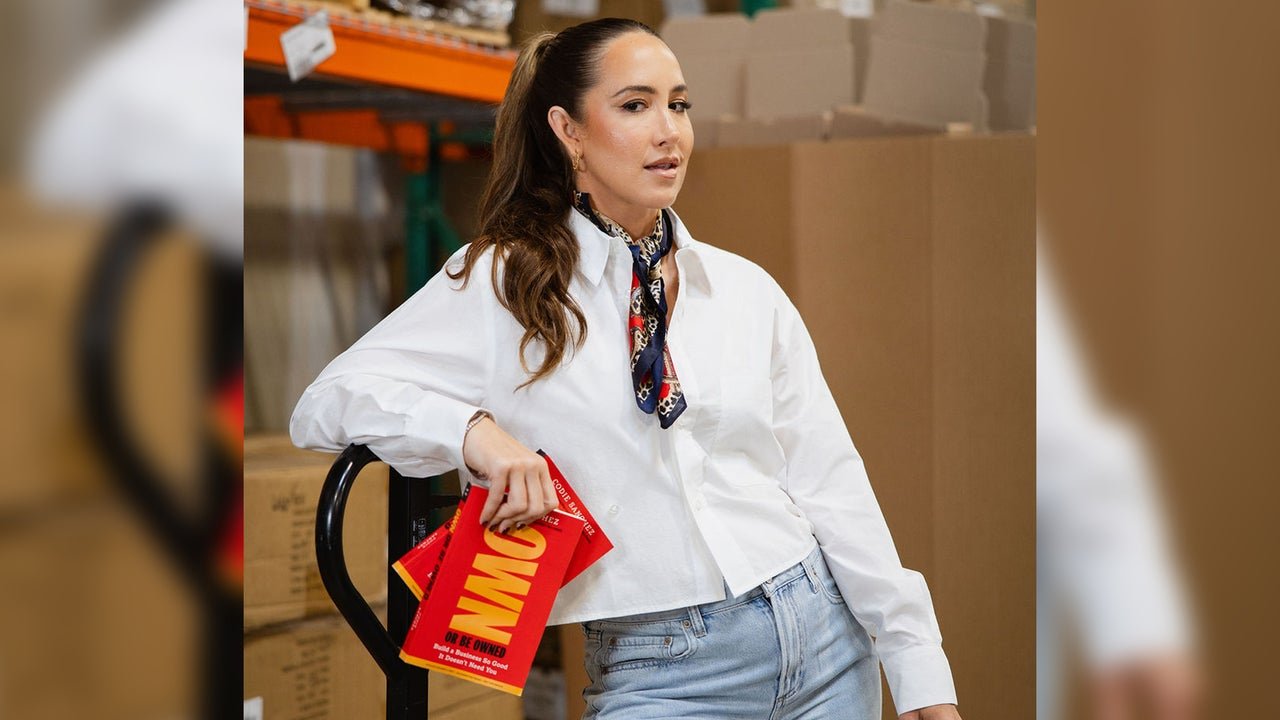
Own or be owned. That’s Codie Sanchez’s ultimatum for anyone serious about their financial future. The founder of Contrarian Thinking and author of the new book Own or Be Owned makes her most impassioned case yet for why buying a small business is the most reliable path to wealth that most people are too scared to take. She breaks down what “cowboying” your business is costing you, and why AI isn’t a shortcut for everyone, but instead an accelerator for what’s already inside you.
This is an abridged transcript of an interview from Rapid Response, hosted by the former editor-in-chief of Fast Company Bob Safian. From the team behind the Masters of Scale podcast, Rapid Response features candid conversations with today’s top business leaders navigating real-time challenges. Subscribe to Rapid Response wherever you get your podcasts to ensure you never miss an episode.
When you’re deciding where to invest your money and your time, but really your money, would you prioritize a business over, say, owning your own home or individual stocks? Although people have made a ton of money on stocks lately.
Yeah, you have to have a lot of money to make money in the stock market. It’s an incredible wealth accelerator once you have capital to invest. Ownership in a business is one of the very few things where you can actually trade your time for long-term dollars. I have a bias that I think more people should bet on themselves. They’ll figure out what they’re capable of and also be able to make more because of it. It’s also the only investment where, even if you lose, you win, because you can take some experience from it.
If you YOLO into Robinhood, OK, maybe you learn not to buy at the top or not to buy in market hype cycles, but what is your real learning experience? I think in businesses, you get that. As far as owning a home or not, I think that’s usually an emotional purchase, which I totally understand. It feels special to own it.
Because it’s such a core part of the American dream. You sort of feel like it doesn’t really need to be.
Yeah. It’s really just another liability that you have to pay for every single month, and that holds you to a job maybe that you don’t like or something that you are not sure you want to do. So when you have a lot of money, great, own houses, and I know that sounds elitist. But when you don’t have a lot of money, I would bet on yourself all day and increase your cash flow so nobody can own you.
You alluded to this when you talked about the motivation for this book versus the first book. Owning a business can trap you as easily as it frees you. I know the founders I talk to, and I’m sure you hear this all the time, say, “If I’d known how hard it was, I never would have started this.” Is it better sometimes not to know how hard it is?
Well, first, I think that we have all gotten sort of trauma-bonded over entrepreneurship. It doesn’t sound very fun if I come on here and say, “Actually, business is going pretty good. We’re making a lot of money. I’m having a good time. Things are going well.” It’s kind of gross. So it’s almost like the reverse of the casino. In the casino, they only tell you when they win. In business, they really only like talking about the difficulty or hardships, or when they’ve raised a bunch of outside venture capital. So I think for most small business owners, yes, it’s hard, but they kind of love the game. It’s an addictive game to play.
The problem is that they aren’t profitable. Everything’s more fun when you’re making money. If the average small business owner makes $65,000 a year, well, that’s less than minimum wage in California and less than even the median income in the U.S. So we’ve got to figure out how to have profitable businesses, because then the pain and difficulty are a lot easier to manage.
What are the mistakes or the traps that folks who are running their own businesses are falling into? It’s not that they’re not working hard. They’re not working on the right things?
Yeah. If you look at the dispersion of returns, basically the top 10% to 20% of companies are 30 times more profitable than the lower companies. What we’ve seen is that most business owners don’t run on systems, and even I see it in my business. I just had to let go of two employees, and the reason why, these are execs, serious people making hundreds of thousands of dollars a year, was because I couldn’t get them to use a system. They wanted to cowboy it, because cowboying it as a business owner feels good.
By cowboy it, you mean sort of just wing it. You make the decision based on what you’re feeling.
Exactly. If you don’t run on a system, you are not going to consistently be profitable. You won’t have the data to back it up. You won’t know why your decisions worked or didn’t, and that’s why private equity companies eat a lot of normal businesses’ lunch. What we call the 12 profit levers, the system that we’ve run for years, goes all the way from what you price, to the people you sell to, to the people you hire, to the products you sell, to how you pitch, to how you promote. Every single aspect of your business needs to be systematized. It’s not that hard, actually. The only hard part is that it’s more fun to wing it and riff on things.
That’s probably what made you an entrepreneur to start with. But do you want to make money or do you want to riff?
I’m curious how new tech affects new business owners. We’ve seen Sam Altman saying he expects a solo unicorn to emerge—one person building a billion-dollar enterprise using AI. Do you feel like we’re going to see a boom in one-person businesses that way? Or does that fall into the scaling versus the lifestyle categories that you have?
Yeah, I think there will be some crazy outliers. Those people probably would have built really big businesses without AI, too, so I don’t think it turns a normal person into a superhero. That’d be cool. I think it is an accelerator for what is already inside of you, one way or the other, which is actually a pretty dangerous game. In my mind, I don’t want to compete with the Elon Musks or the Sam Altmans or the Bill Gateses. Those guys are super technical. They’ve got billions of dollars in funding. I think the better play is, let’s go compete with the handyman down the street who’s 65, and then I can add just a little bit of AI on top of it. I can add a little bit of tech on top of it, and maybe some cool branding, and I can win. That is just a better game to play, in my opinion, than trying to play Russian roulette with a bunch of tech nerds who are really smart, obsessed with this, and probably don’t do anything else. I don’t think that’s the game I want to try to play.



