
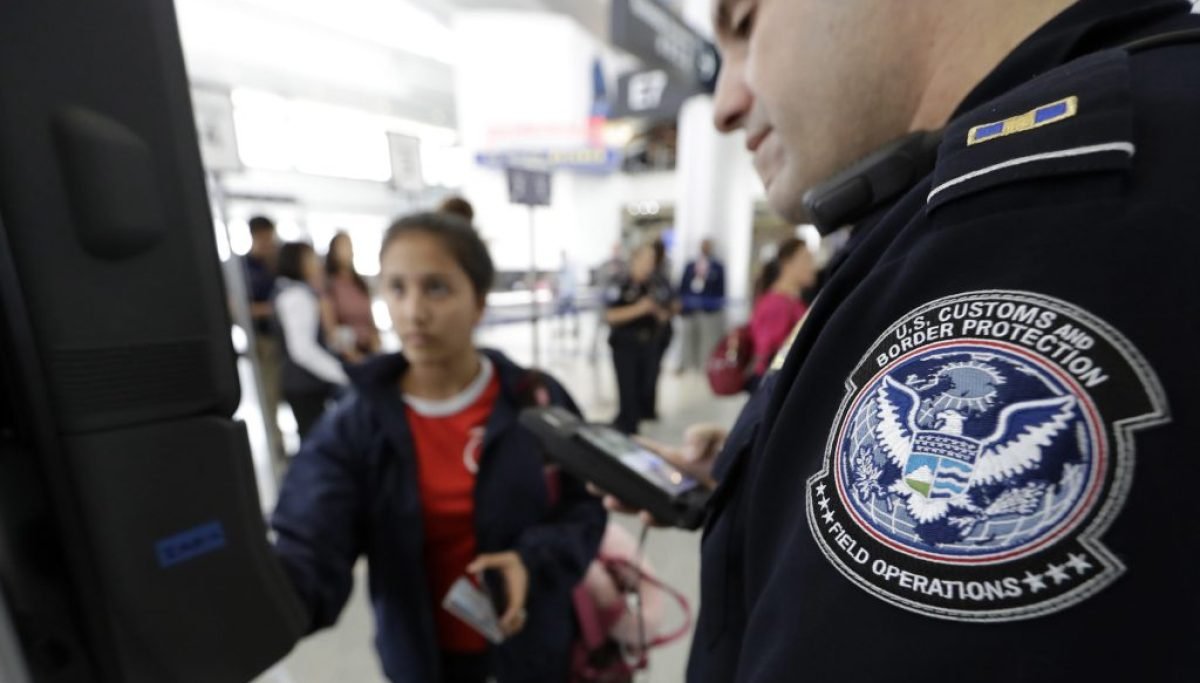
EXCLUSIVE — The federal agency that screens Americans and foreign travelers arriving in the United States on international flights is close to unlocking a seamless customs screening process where identification documents and inspection lines are a thing of the past.
Imagine returning from vacation abroad. As you step off the plane, you walk toward U.S. Customs and Border Protection, but instead of pulling out your passport or Global Entry Card or interacting with a federal officer, you simply walk up to a screen and have your picture taken. The machine clears you to continue on your way. You pick up your suitcase in baggage claim and walk out of the airport.
That reality is already being implemented at major U.S. airports, according to Diane Sabatino, a 28-year federal law enforcement officer who oversees the nation’s 328 land, air, and sea ports of entry for the Department of Homeland Security’s CBP.
In a sit-down interview at CBP headquarters in Washington, Sabatino described the future of international air travel as frictionless, contactless, and seamless. In some U.S. cities, the future is already here.
“In a few years … people with Global Entry are going to be walking through at all of our airports, unless a CBP officer wants to speak to that traveler,” Sabatino said. “They’re moving through without really any engagement that they perceive. It doesn’t necessarily mean that we haven’t thoroughly vetted them. It doesn’t mean that we aren’t monitoring or evaluating or looking at their luggage again because it’s come through and we’ve already seen the X-Ray, or that they don’t fall into kind of a category from a threat briefing that we want to talk to them, right?”
CBP is the nation’s largest police agency, comprised of more than 70,000 employees worldwide. CBP’s more than 35,000 Office of Field Operations officers are responsible for inspecting all people, goods, and vehicles that arrive at airports, sea ports, and land crossings with Canada and Mexico.
At airports alone, customs officers screen approximately 390,000 travelers daily, according to a CBP spokesperson.
In her role as executive assistant commissioner, Sabatino has focused on further enhancing security processes in revolutionary ways that greatly benefit the traveling public. All of this goes hand in hand with CBP’s newly announced strategy for 2026 through 2030, which prioritizes “shifting administrative burdens away from traditional, manual paperwork to digitized, touchless, and remote workflows.”
Even the private sector is buying into Sabatino’s vision. Marisa Von Wieding, vice president of operations for the forthcoming New Terminal One at John F. Kennedy International Airport in New York, said her leadership has helped “fundamentally change the relationship between CBP and airports.”
“Her vision has encouraged CBP and industry to rethink longstanding processes, embrace new technologies, and advance initiatives such as Enhanced Passenger Processing, International Remote Baggage Screening, and Global Entry modernization that strengthen CBP’s mission while delivering a better traveler experience,” Von Wieding said in a statement to the Washington Examiner.
The big picture on modernization
Sabatino joined what was then the U.S. Immigration and Naturalization Service in 1998. Prior to the creation of the DHS and CBP in 2003, INS oversaw primary processing and immigration enforcement. Once CBP was created, CBP officers at airports became responsible for enforcing more than 400 laws from 40 other agencies, related to trade, agriculture, supply chains, and more.
“What we would see when you arrived at [the initial screening checkpoint] back in 2003 were officers sitting static in booths … touching a lot of documents, spending a lot of administrative time, right, doing things, swiping documents, checking systems. Then individuals would go collect their bags, and those travelers would go to another checkpoint where they’d be cleared for customs purposes,” Sabatino said. “We’ve kind of taken that and consolidated that into kind of one-stop shopping with our officers.”
CBP is swapping old processes out for emerging technology capable of doing the administrative work that bogs officers down. In return, personnel are free to “do what they do best, which is to talk to people and determine intent,” according to Sabatino.
Over the past couple of years, CBP has pursued technological solutions and is now phasing in proven systems to modernize air travel through introducing biometric screening, which uses auto-capture facial recognition or fingerprints to identify and validate passengers.
The agency has rolled out phone apps that allow passengers to streamline customs by digitally sharing travel documents ahead of time, touchless processing that does away with physical handling of documents at checkpoints, and even a system that allows CBP officers in the U.S. to screen baggage before it arrives stateside.
Clearing passengers
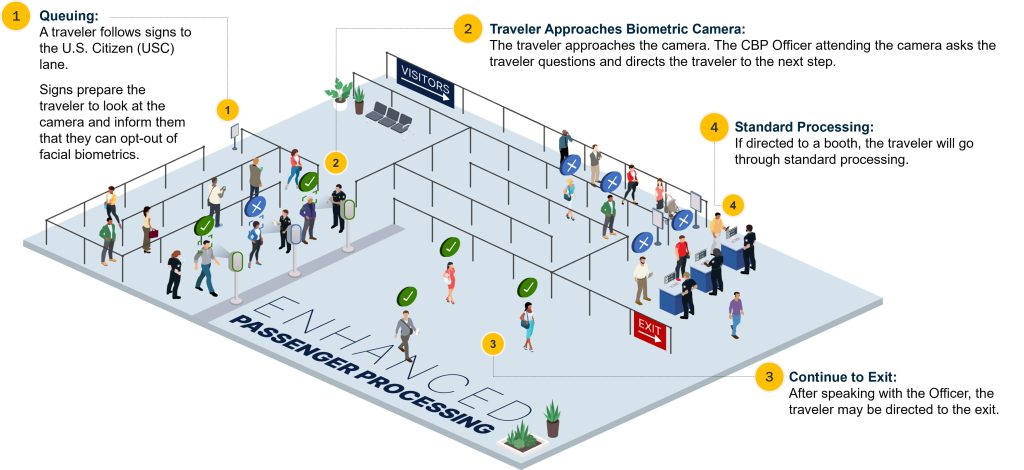
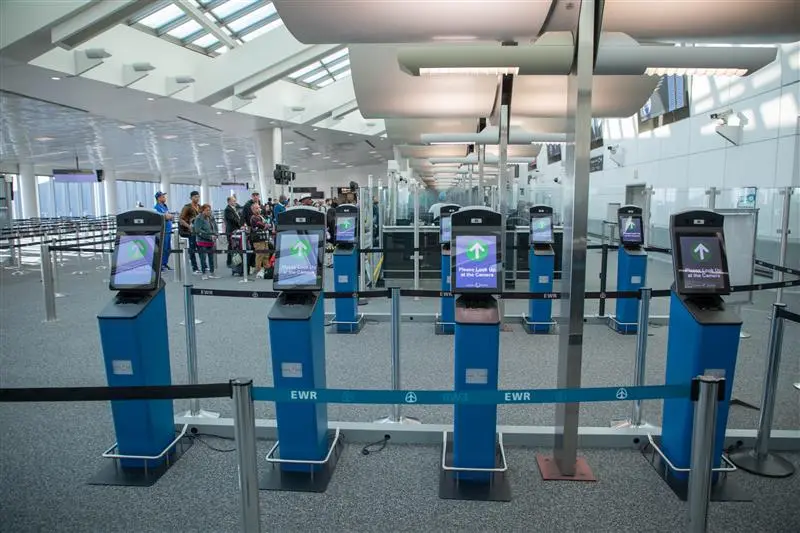
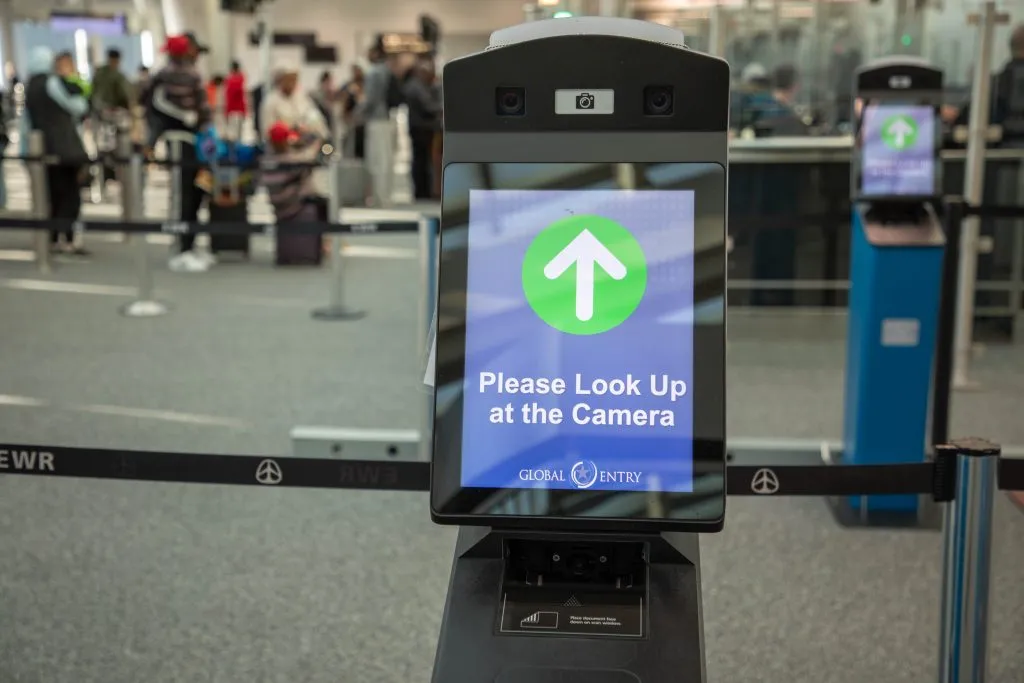
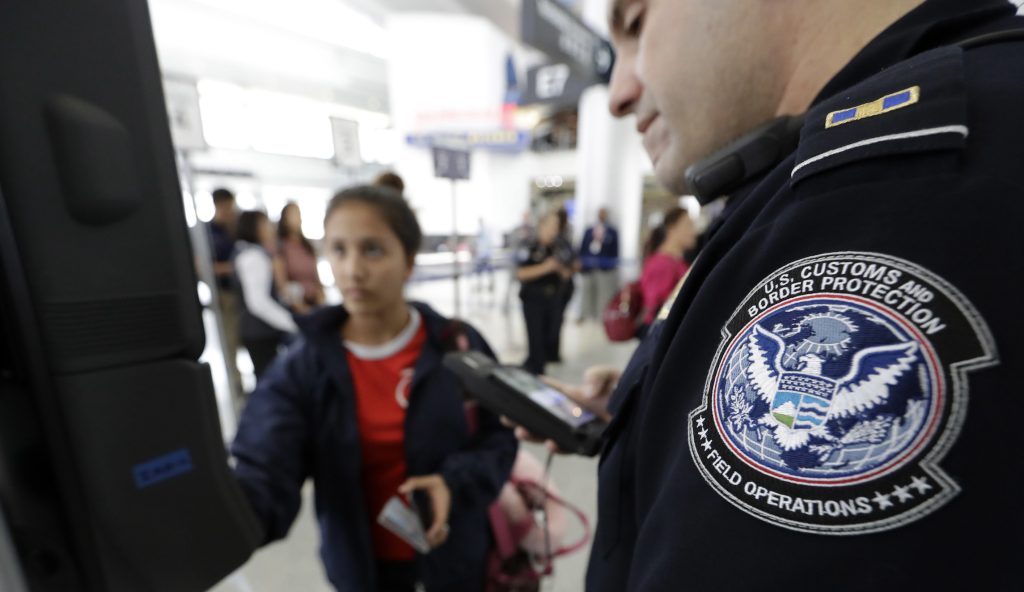
Kiosk cameras at CBP checkpoints in 238 airports take a picture of the passenger and instantly compare the image with existing government images of that person. This facial comparison technology was rolled out in May 2025 as part of CBP’s Enhanced Passenger Processing, a term for the tablets that U.S. citizens can walk up to and stand in front of for routine ID checks rather than going up to an officer.
Passengers are also increasingly able to complete inspections at certain foreign airports, alleviating the process after they land in the U.S.
EPP allows officers to focus their in-person encounters on people who are “unknown” — those who have never visited the U.S., those who CBP needs to talk to, as opposed to known travelers.
“We’ve seen wait times for all categories of travelers drop. The reason that we’ve seen that drop is because again we can focus our resources on those travelers where we need to do more work and spend, you know, less resources because they move more efficiently again,” Sabatino said. “Airlines are really thrilled about that because every minute that they spend in [CBP screening] is a minute against the time they have to meet to a connecting flight or time to their final destination.”
EPP is available to U.S. citizens at 33 airports, which includes Preclearance locations and nine seaports. Orlando International Airport (MCO), where many foreign tourists fly through to visit Disney World in Central Florida, is one of those locations.
The Orlando airport was the first in Florida to use EPP and saw a roughly 60% reduction in wait times for U.S. citizens passing through customs, according to an airport spokesperson.
“The impact has been significant. MCO has experienced substantial international growth during the past several years. While EPP directly streamlines processing for eligible U.S. citizens, those efficiencies benefit all travelers by freeing CBP officers and inspections to focus on foreign visitors and travelers requiring additional attention,” the airport spokesperson said. “This has contributed to a more than 20% reduction in wait times for foreign visitors, helping MCO accommodate continued international growth while providing a faster, more welcoming arrival experience for visitors to Central Florida.”
CBP’s Seamless Border Entry goes a step beyond Enhanced Passenger Processing. This second process was also rolled out in 2025 and allows travelers to complete screening digitally before stepping off the plane, allowing them to bypass the EPP kiosks. Some travelers may even be approved to bypass officers.
Travelers may also use “On the Move” technology within the Trusted Traveler Programs framework at select airports, which allows Global Entry members to move through the inspection process seamlessly with minimal interaction with a CBP officer, depending on officer discretion. Airports that use this technology include Los Angeles International Airport, Miami International Airport, Washington Dulles International Airport, Chicago O’Hare International Airport, Newark Liberty International Airport, George Bush Continental Airport, and Toronto Pierson International Airport in Canada. Some travelers may even be approved to bypass officers.
Travelers from the U.S. and other countries have the option to use a variety of apps from the Apple App Store or Google Play Store to digitally share their personal information with CBP, speeding up the screening process.
Even if you are not a part of TSA’s PreCheck or CBP’s programs, U.S. passengers and some others can use the Mobile Passport Control app to speed through preclearance checkpoints in 14 locations outside the U.S. and 53 entry points, meaning you will not have to go through a full customs check once your flight arrives in the U.S.
Visitors from Visa Waiver Program countries can download the Electronic System for Travel Authorization and submit applications online.
“MCO’s partnership with U.S. Customs and Border Protection is central to our ability to serve as a premier international gateway for Central Florida,’” said Lance Lyttle, CEO of the Greater Orlando Aviation Authority, which manages MCO. “Together, we are advancing smart and secure solutions—such as Enhanced Passenger Processing and biometric exit — that strengthen CBP’s mission and elevate the passenger experience by reducing wait times and creating a more welcoming arrival and departure.”
Baggage inspected while flying
For decades, passengers arriving in the U.S. from abroad have had to go through customs and pick up their suitcase, only to return to customs to have the bag inspected before they can leave the airport or see their bag sent to the Transportation Security Administration if they are continuing on to a domestic flight.
CBP is working with airlines to capture X-Ray images of baggage before flights depart from other countries. The X-Ray images are sent to CBP for officers to look over while passengers are 40,000 feet in the air through a process called International Remote Baggage Screening. The agency is testing ways that it can work with airlines to clear checked bags on certain international flights, such as from Sydney to Los Angeles.
Bags that are flagged by officers during virtual inspections will then be inspected by CBP once the passenger and bag arrive in the U.S.
“Today, essentially, if we clear that bag through the remote baggage screening system, that bag doesn’t even have to come into the federal inspection space,” Sabatino said.
CBP is looking into harnessing artificial intelligence and machine learning in the baggage screening process to identify anomalies in luggage, which would further alleviate work for officers.
“The future of that for travelers is that bag could ultimately be delivered anywhere they want it delivered to because it’s been cleared through the process,” Sabatino said. “It allows us to ensure the integrity and security of that that process, because again, things that come in bags, right, it’s not just narcotics, right? We deal with biological threats. We deal with agriculture threats. You know, certainly, information that moves in people’s luggage could be very important.”
This type of baggage screening will be rolled out at JFK’s New Terminal One when it opens next year, according to Von Wieding.
“Innovations such as Enhanced Passenger Processing, International Remote Baggage Screening, and Global Entry modernization have allowed us to design a terminal that will provide a markedly better experience for international visitors, helping us maintain a maximum 20-minute wait time, reducing unnecessary steps in the international arrivals journey, and creating a guest experience that we believe will be a true market differentiator,” Von Wieding said in a statement.
FAA LEAVES AIR TRAFFIC CONTROLLER RAISES IN LIMBO AMID MOUNTING STRAIN ON SYSTEM
These innovative programs make travel easier and faster for passengers, though Von Wieding noted that “their primary value is advancing CBP’s security and enforcement mission while allowing officers to focus their time and attention where it is needed most.”
When the New Terminal One opens in 2027, Von Wieding expects the new baggage screening system to reduce flight connection times up to 40 minutes, which also makes this specific airport terminal more appealing to travelers looking for a smoother customs experience.



