
To be placed in the same bracket as owners whose lack of ambition, lack of resources and/or incompetence has contributed to the longest trophy drought in Everton’s history, particularly 20 months into a reign that has accompanied the move to a glittering new stadium and the clearing of onerous debt, should be cause for considerable discomfort and embarrassment at The Friedkin Group (TFG) on Wednesday. The slight on Everton’s owner is neither unkind nor unfair. At least Farhad Moshiri had a go before the taps were turned off.
TFG may have restored financial stability to Everton after the near-ruinous chaos of Moshiri’s final years and his attempts to sell to 777 Partners but its reputation as “winners” – as the club’s chief executive, Angus Kinnear, labelled his American employers – has been shredded in the space of four days. The description always appeared generous given its approach to the summer transfer window, part two of Everton’s strategic rebuild according to Kinnear. But from accepting Nottingham Forest’s £35m bid for Harrison Armstrong on Saturday morning to Folarin Balogun walking away from a £40m move from Monaco on Tuesday night, and more in between, TFG has positioned itself as just another Everton owner unable or unwilling to realise the club’s potential and to give an expectant fanbase grounds for optimism.
Evertonians hoped for an overdue departure when TFG acquired the club in December 2024 and proceeded to refinance damaging loans and the long-term repayment costs of Hill Dickinson Stadium. The shambles of deadline day, however, was all too familiar and has caused serious damage to its standing among supporters.
David Moyes kept his counsel throughout pre-season as Everton spent £16.5m on Hayden Hackney, rising to £25m for last season’s Championship player of the year, £18m on each of Merlin Röhl and Tyrique George, who he had on loan last season, £7m on Christian Nørgaard and swapped Dwight McNeil for Brennan Johnson. The most Everton paid up front for a player all summer would prove to be £18m.
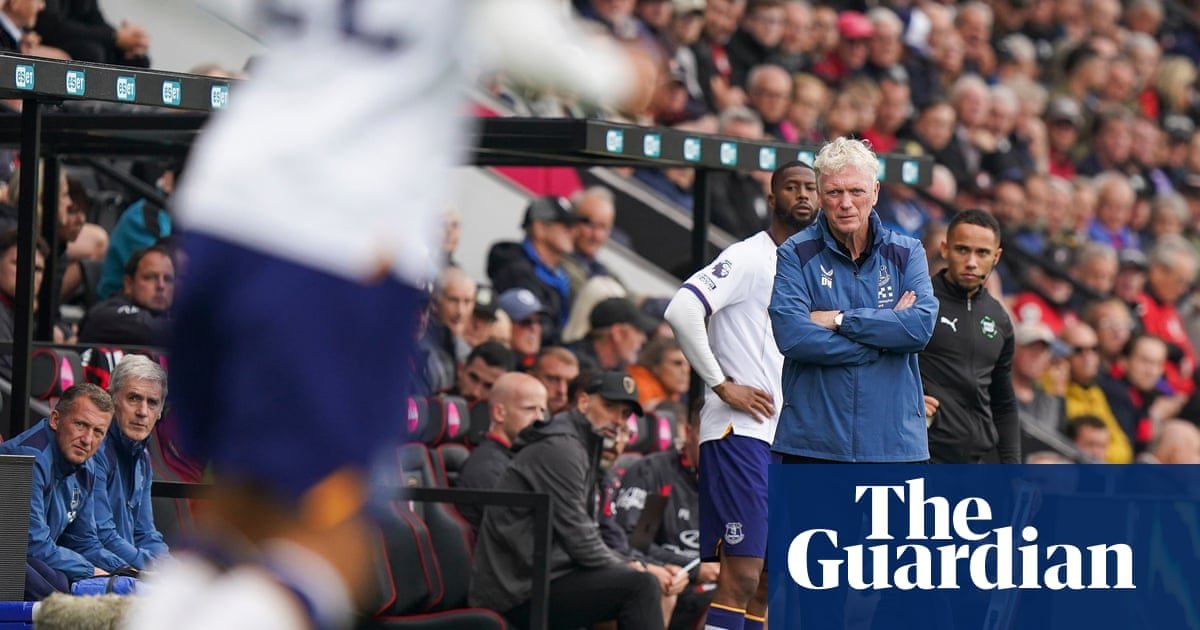
When Moyes did eventually speak in public it was to stress, repeatedly, the need for Everton to sign more players, more quality and to keep their best talents. At the end of last season he had 22 outfield players at his disposal. At the start of deadline day he had 20 outfield players at his disposal. By the end of transfer deadline day he had 18.
That total includes one striker, Thierno Barry, no back-up for either full-back and, strictly speaking, given that Ainsley Maitland-Niles did not start out in the position, no natural right-back. Everton sold their most creative asset, Iliman Ndiaye, to Manchester City in a below-market price £65m deal despite the Senegal international having three years on his contract. They sold Beto, their only striking alternative to Barry, before securing a replacement and were left desperately scrambling around for one when Balogun’s medical went awry.
Manchester United said no to a loan offer for Joshua Zirkzee that arrived a few hours before the deadline. Tammy Abraham said no to leaving Aston Villa. Finally Balogun, having arrived later than scheduled for his medical and seen Everton renegotiate the terms of his fee with Monaco, compounded the chaos by also saying no despite signing a deal sheet shortly before 11pm. Barry looked out of his depth for much of his debut season in the Premier League. Now he is the precious commodity that Everton can not afford to lose.
Kinnear, perhaps in response to Moyes raising concerns over Everton’s business for the first time, gave several local interviews two weeks ago that painted a rosy picture of the club’s finances, transfer strategy and ambition. Subsequent events have cost him credibility on every count. The chief executive also got his manager’s back up by claiming TFG regarded not qualifying for Europe last season as “a failure” and that the squad is better placed to sustain a European challenge while striving to end Everton’s 31-year wait for a trophy.
Moyes’s team face-planted during last season’s run-in, failing to win any of their last seven games when Europe was in reach. He has been challenged to go further with fewer resources. An added annoyance for Moyes and supporters is that Everton have started this season brightly, only to be surrounded by problems entirely of the hierarchy’s making.
It was Kinnear who implemented a new “senior leadership team” at Everton and the move away from a director of football model. The team consists of the technical director Nick Cox, director of scouting and recruitment James Smith, director of football strategy and analytics Chris Howarth and head of player trading Nick Hammond. Moyes is also part of the leadership team, although he has appeared to be on a different page this summer. There has been sensible, cost-effective recruitment for Hackney, Röhl and Johnson but the end to the window invites criticism of the leadership team’s effectiveness and expertise. It resembles a case of too many chiefs and no clear direction, especially given some of the targets Everton went for in the final days.
The collapse of the Balogun deal has caused turmoil at Everton but a player getting cold feet over a move or a medical jeopardising a deal can happen. It is events under Everton’s control, and decisions they have taken, that are of greater concern. TFG’s decision to accept Forest’s offer for Armstrong, the first academy prospect to graduate through the ranks and establish himself since Anthony Gordon six years ago, was the first indication that Everton were struggling to meet the new squad cost ratios. So much for a new financial era at Hill Dickinson. TFG merit some credit for listening to supporters over the proposed sale of Armstrong and pulling the plug. To then consider selling Ndiaye to Tottenham for £60m and spending £35m on Richarlison, however, was another alarming sign.
after newsletter promotion
Everton have been looking for a right-back since Moyes returned to the club in January 2025, and needed one before then. Moyes wanted Guéla Doué from Strasbourg but the 23-year-old was deemed too expensive. Doué joined Bayer Leverkusen on deadline day for £25.7m. At least five alternatives were explored before Everton, their £9m deal for Fulham’s Kenny Tete having fallen through, signed Maitland-Niles as the £4.3m answer to one glaring problem.
A bigger weakness lay up front. No Premier League club of serious intent would enter a second season with their striking options limited to Beto and Barry. An upgrade was essential. Instead, Everton downgraded. So much for the leadership team’s vision and the owner’s ambition.
Everton are the lowest net spenders in the Premier League over the past five years and, more by accident than design, ended this summer making a net profit of £25m on transfers. TFG committed £78m on signings in a summer where, by the calculations of the football finance expert Kieran Maguire, the average spend per Premier League club was £181m. Everton’s outlay does not include the significant cost of re-signing Jack Grealish on loan.
TFG’s frugal spending and efficiency drive – redundancies were made behind the scenes at Everton this summer – has fuelled talk of Dan Friedkin and co looking to sell the club. However, the owners have allocated £40m to cover the compensation payable to Burnley should Everton fail in their appeal against the outcome of a profitability and sustainability breach case, and are investing almost £14m in infrastructure projects at Hill Dickinson, Goodison Park and Finch Farm training ground.
What is certain is the anger TFG would face if they attended Sunday’s home game against Manchester United. Dan Friedkin has yet to attend a match at Hill Dickinson, where some season ticket prices were increased by up to 10% this season. The Everton fans’ forum and Everton fan advisory board issued statements on Wednesday criticising the club’s amateurish, unambitious approach to the transfer window. The 1878s, the group of volunteers responsible for the impressive tifos and banners at the stadium, has withdrawn its support for the foreseeable future. “We do not feel that our fanbase’s ambitions and the club’s ambitions align right now – what happened yesterday has proved that even more,” the group said.
It looks a long road back to acceptance for TFG, Kinnear and Everton’s senior leadership team.



