
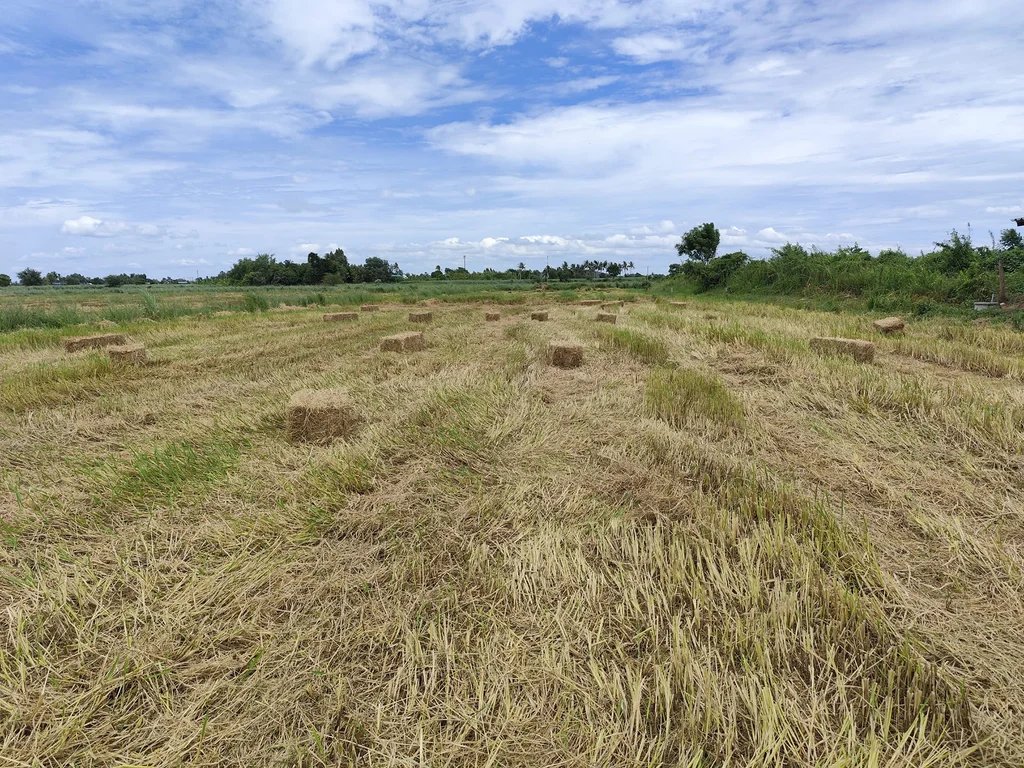
Over the past decade, bamboo toilet paper started to go mainstream as an alternative to turning trees into something we flush down the drain. A startup called Paddy Paper now wants to use a more unusual alternative material: rice straw, a byproduct of rice farming.
The project started on a trip to Bangkok in 2022, when cofounder Matt Dye was struck by the high levels of air pollution. He learned that the problem wasn’t coming only from traffic exhaust or factories, but from farms outside the city that were burning millions of tons of straw left after harvesting rice. “All the smoke from the fields was just drifting over to Bangkok,” he says.
The city is sometimes so polluted by smoke from farms that schools shut down and people have to work from home. The problem isn’t limited to Thailand: globally, 450 million metric tons of rice straw are burned each year, creating both air pollution and climate emissions.
Farmers burn the straw because it doesn’t have economic value. But Dye, who was working at a biomaterials startup at the time, started to wonder if something could be made from it.
The case for rice straw
The biggest opportunity he saw: turning it into toilet paper, and tackling two problems at once. Right now, most toilet paper is made from wood pulp. “We grow trees now for decades and then we use them for seconds,” Dye says. Mainstream manufacturers like Procter & Gamble source fiber from Canada’s boreal forests, where more than a million acres of trees are clear-cut each year, according to the nonprofit NRDC. Paper towels are made the same way, and offered another opportunity.
Other alternatives are quickly growing. Brands like Who Gives a Crap, Caboo, and Reel Paper all have found success using bamboo. Still, there’s a risk that as bamboo production scales up, it could also displace forests or farmland. “Is it really our best use of resources and land to use good land to grow more bamboo?” says Dye. “We really think that environmentally, using what’s left behind is better than growing more.”
There also might be some advantages compared to recycled paper. Right now, because receipts are mixed into the recycled paper stream—and receipts are made with the hormone-disrupting chemicals BPA and BPS—those chemicals can end up in recycled toilet paper. Rice farming uses pesticides, but Dye says that the pulping process breaks down any pesticide residue.
Turning waste into something useful
The founders discovered a company in Thailand that was producing takeout boxes from rice straw. It hadn’t made toilet paper or paper towels in the past—and no one was sure that it was possible. But it partnered with the startup on the R&D.
Rice straw fibers are stiffer than wood pulp, making them harder to work with. “We had to develop a pulp and tissue-making process that made those fibers flexible enough to form a soft sheet and bond strongly enough to hold together,” says Dye. After the pulp producer reached certain technical specs, the startup went through long trials with a tissue manufacturer to tweak other parts of the process, from refining and enzyme treatments to how the sheets were formed. “That was really where the breakthrough was,” he says.
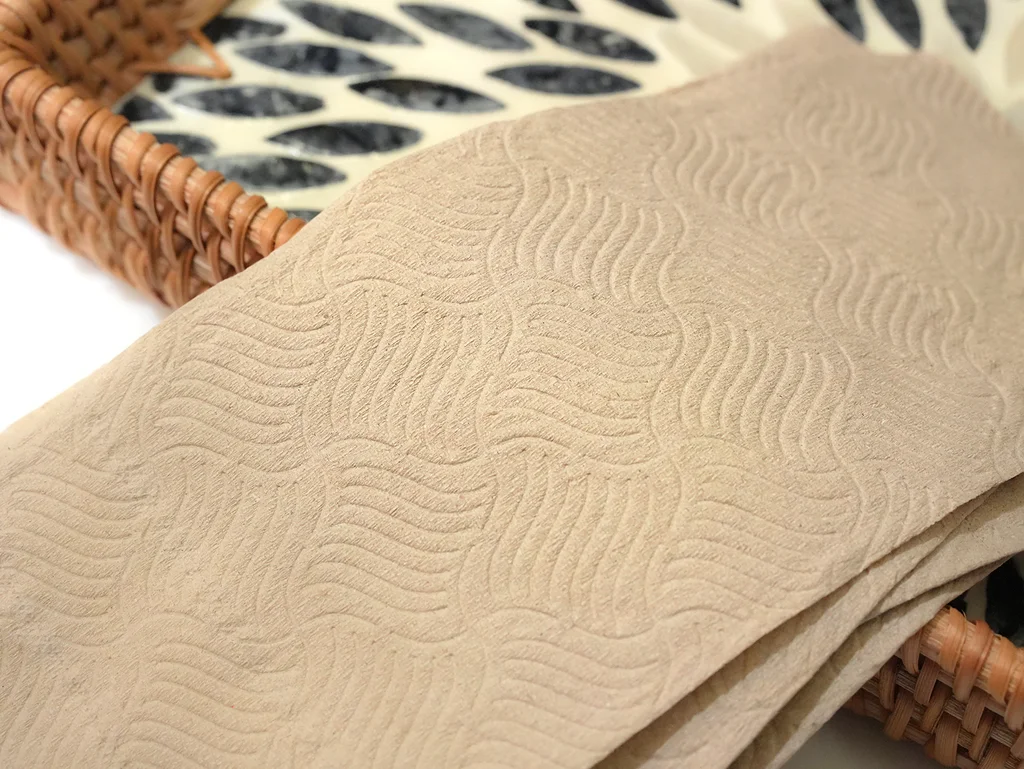
The first product is undyed, and the natural color may be a hard sell for some consumers. (The company doesn’t want to use bleach, but says it’s exploring other ways to lighten the color in future product runs). The sample I saw was also a little rougher than I expected. In its current state, its paper towels might find a wider market than the toilet paper.
It’s worth noting that it can be cheaper than bamboo. In a limited launch now with an introductory discount, the company is selling a box of 12 rolls of 3-ply toilet paper for $14.99. (A similar box of bamboo toilet paper can cost around twice as much.) The rice-based paper towels start at $11.99 for a pack of six. The startup says that it will use feedback from the initial launch to continue to improve the products.
If the company can get the products right, there’s also plenty of material to use as it scales up—enough, Dye says, that it would be possible to fully replace trees in toilet paper. “Rice is the third most produced crop in the world, and for every one kilogram of rice harvested, roughly one kilogram of the rice straw remains in the field,” says Dye. “The world has 1.6 to 2 trillion pounds of rice straw available [every year]…This could be a complete replacement just because of the availability of the rice straw to replace tree pulp fiber in the future.”



