
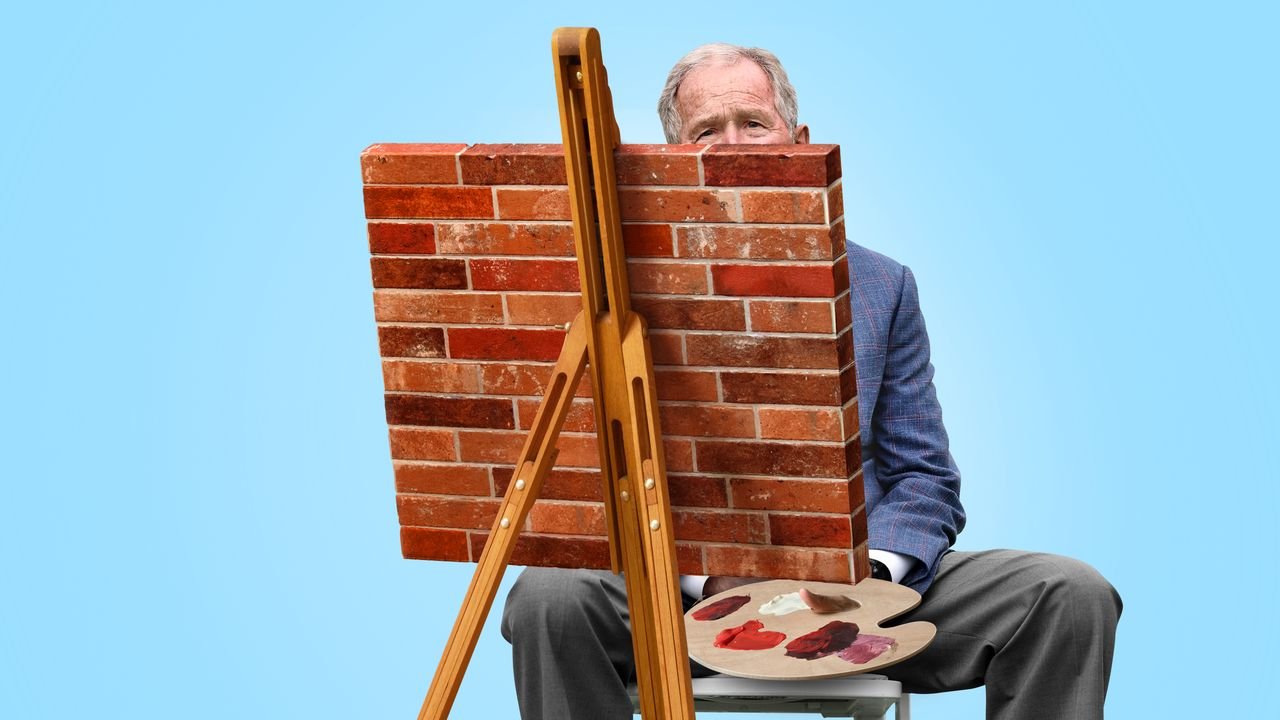
With such comments, Bush is referring to a tradition that former Presidents don’t criticize those who follow them. After leaving office, in 1797, George Washington returned to Mount Vernon and refrained from speaking in public about John Adams. Washington’s refusal to seek a third term and his political aloofness for the remaining two years of his life helped establish healthy norms around American Presidential transitions. A former President’s return to private life gives his successor freedom to govern, prevents cults of personality from forming around ex‑leaders, and underpins the peaceful transfer of power.
But the precept that former Presidents should abstain from politics is a pretty soft one. As President, George W. Bush had a natural fascination with John Quincy Adams, the only other son of a President to be elected to the White House. After leaving that office, the younger Adams served for seventeen years in the House of Representatives, where he advocated against slavery and frequently derided his successors Andrew Jackson, Martin Van Buren, John Tyler, and James K. Polk. Given Bush’s identification with Adams and Trump’s identification with the populist‑nationalist Jackson, the parallel is especially apt. Adams declined to attend Jackson’s Inauguration, in 1829, and was the leading voice of opposition to the Jacksonian spoils system, the policy of Native American removal, and the annexation of Texas.
In the twentieth century, any remaining practice of post‑Presidential reserve mostly fell away. Theodore Roosevelt ran against his own chosen successor, William Howard Taft, as a third‑party candidate, in 1912. Herbert Hoover publicly opposed F.D.R.’s New Deal. Jimmy Carter kept up a more or less running commentary on his successors, including Bill Clinton, whom he accused of “not being truthful” to a grand jury in the Paula Jones case, and George W. Bush, whom he continually denounced. “I have been disappointed in almost everything he has done,” Carter told a Georgia newspaper, of Bush. He described the Iraq War as a “completely unjust adventure based on misleading statements” and, in 2007, said that “as far as the adverse impact on the nation around the world, this administration has been the worst in history.”
Carter, Bill Clinton, and Barack Obama all criticized Trump during his first term. Obama accused him of fomenting division and undermining democracy; he called Trump’s COVID‑19 response “an absolute chaotic disaster.” During Trump’s reëlection campaign in 2020, he made it even more personal. “Donald Trump hasn’t grown into the job, because he can’t,” he said. “This is not a reality show—this is reality.” And, of course, Trump assailed his own successor, Joe Biden, with singular viciousness during the latter’s Presidency.
In other words, the tradition of post‑Presidential restraint isn’t Bush’s reason for not criticizing Trump. It’s his excuse.
So why won’t Bush condemn Trump, really? Friends and advisers, none of whom were willing to speak on the record, cite a constellation of reasons: self‑protection, temperament, and his family. Bush doesn’t want Trump to come after him; it’s like baiting a bear or wrestling with a pig. He’s protective of his family, especially his daughters, who no longer have Secret Service protection to safeguard them from Trump‑inspired fanatics. Nor does he want to undermine the career of his pro‑Trump nephew, George P. Bush, who operates in the MAGA-fied world of Texas politics. One friend says the former President is just lazy and can’t be bothered.
All of those factors contribute. But there’s also something else: Bush has become paralyzed by concern for his historical reputation. He left office in January, 2009, deeply unpopular, amid a global financial crisis, two ongoing wars in Iraq and Afghanistan, and the aftermath of Hurricane Katrina. He ended his second term with one of the lowest Gallup approval ratings ever recorded for a departing President: thirty-four per cent. (The number for Clinton was sixty-six per cent; for Obama, fifty-nine per cent.) In 2009, the C‑SPAN Historians Survey of Presidential Leadership ranked Bush thirty‑sixth out of forty‑two Presidents. To criticize Trump wouldn’t just make Bush the antagonist in Trump’s war on the old Party establishment. His presence as a political actor would remind people of his humiliating failures, especially the war in Iraq.



