
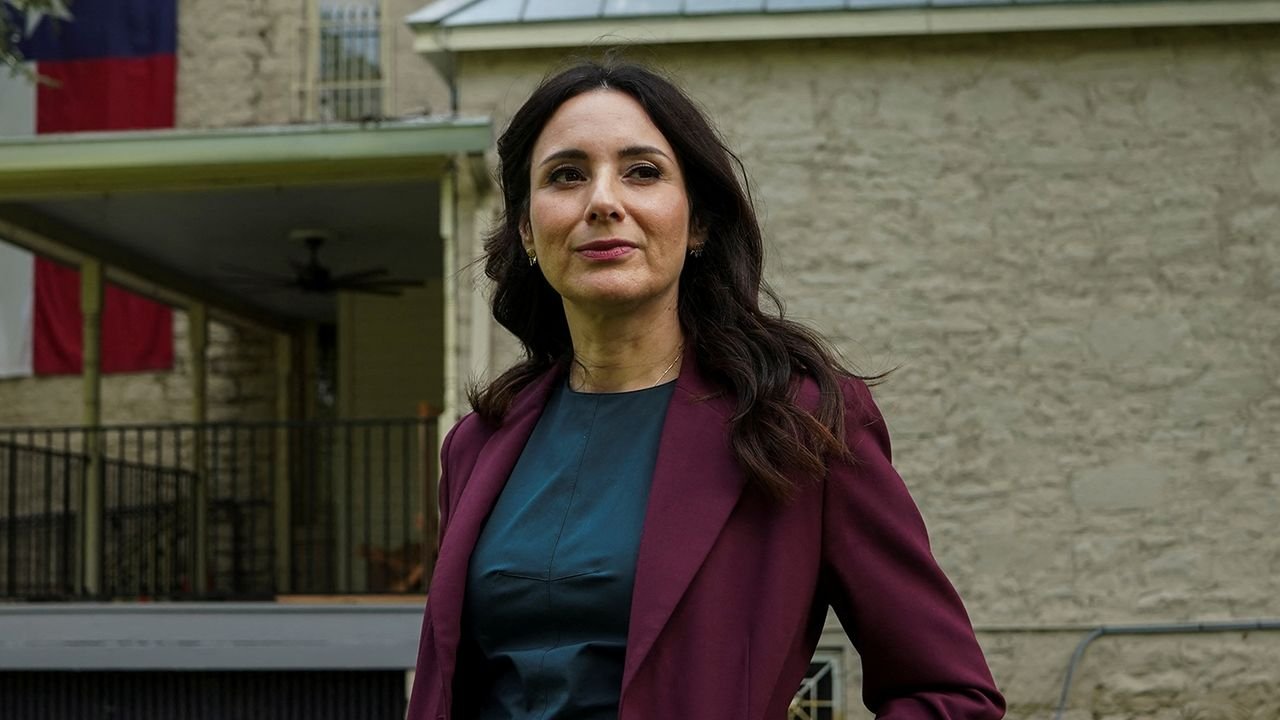
Republicans in rural areas staunchly opposed vouchers, and Hinojosa saw a point of commonality. She noted that children in more than a hundred and eighty Texan school districts were attending class only four days a week. Schools across the state were struggling to retain teachers, while programs led by A.I. were making inroads. To reach disgruntled Republicans, Hinojosa often talks about her fight to protect her son’s elementary school, which was threatened with closure by state budget cuts. “What I want is what MAGA moms want,” she said. “They want a great teacher in the classroom, they want smaller class sizes, they want a good school in the neighborhood.”
Chuck Rocha, a Democratic consultant who is working for both Hinojosa and James Talarico, the Democratic candidate for Senate, said that he kept running into the same questions from voters: “If we’ve got enough money to drop bombs in other countries, why don’t we have money for our schools? If we have enough money to make Donald Trump a billion more dollars, then why don’t we have money to bring down the cost of carne asada?” He added, “I’ve never seen folks this angry.”
Yet Rocha, who has worked in Texas politics for nearly forty years, had a word of caution for Democrats. “These folks aren’t running to the Party and our nominees because they’re now in love with all things Democrat—they’re doing it because they’re mad at Republicans,” he said. “We still have two more years to make our case about why they should be with us in the Presidential, which we’re nowhere near. This is what I call an opportunity election: we have an opportunity for these folks to come back, but whether they stay is still left on us.”
Recently, I sat in on two focus groups with Latino voters led by the polling firm Equis. Its co-founder, Stephanie Valencia, was seeing signs of defection from Trump in Texas, which is home to the country’s second-largest number of registered Latino voters. In 2024, Trump carried the state with a fourteen-point lead, winning more than fifty per cent of the Latino vote. Now, Valencia said, Hinojosa was leading Abbott 56-40 among Latinos who are likely to vote.
Almost all the women in the focus groups had voted for Abbott in the last election. They said that Texas had thrived for years under his leadership: the economy boomed, and gas rarely cost more than two dollars a gallon. What changed, in their view, was the Governor’s alliance with Trump. Vast sums of money had gone into projects the state didn’t need, such as the border wall. Meanwhile, Abbott had opposed the expansion of key programs, such as Medicaid. When participants were asked if they felt the country was headed in the wrong direction, all the women raised their hands.
At one point, the groups’ moderator played an ad from Hinojosa’s campaign: in it, the Democratic candidate talks about her decision, more than twenty years ago, to carry a pregnancy to term, despite being given a diagnosis of a deadly fetal anomaly. “My husband and I were overjoyed expecting our first,” Hinojosa says, as photos of their wedding appear onscreen. “The doctor said, ‘I need you to understand she’s not gonna live.’ ” Fighting back tears, Hinojosa adds, “I did understand, but I was making that choice. I chose her.”
The women found the ad persuasive. “The people in power are governing from a position of opulence,” one said. “They have no idea what low-income folks are going through.” Not everyone was familiar with Hinojosa’s trajectory, but they all agreed that Texas needed a change. “She has a purpose—and knows what she wants to achieve,” another participant said.



