
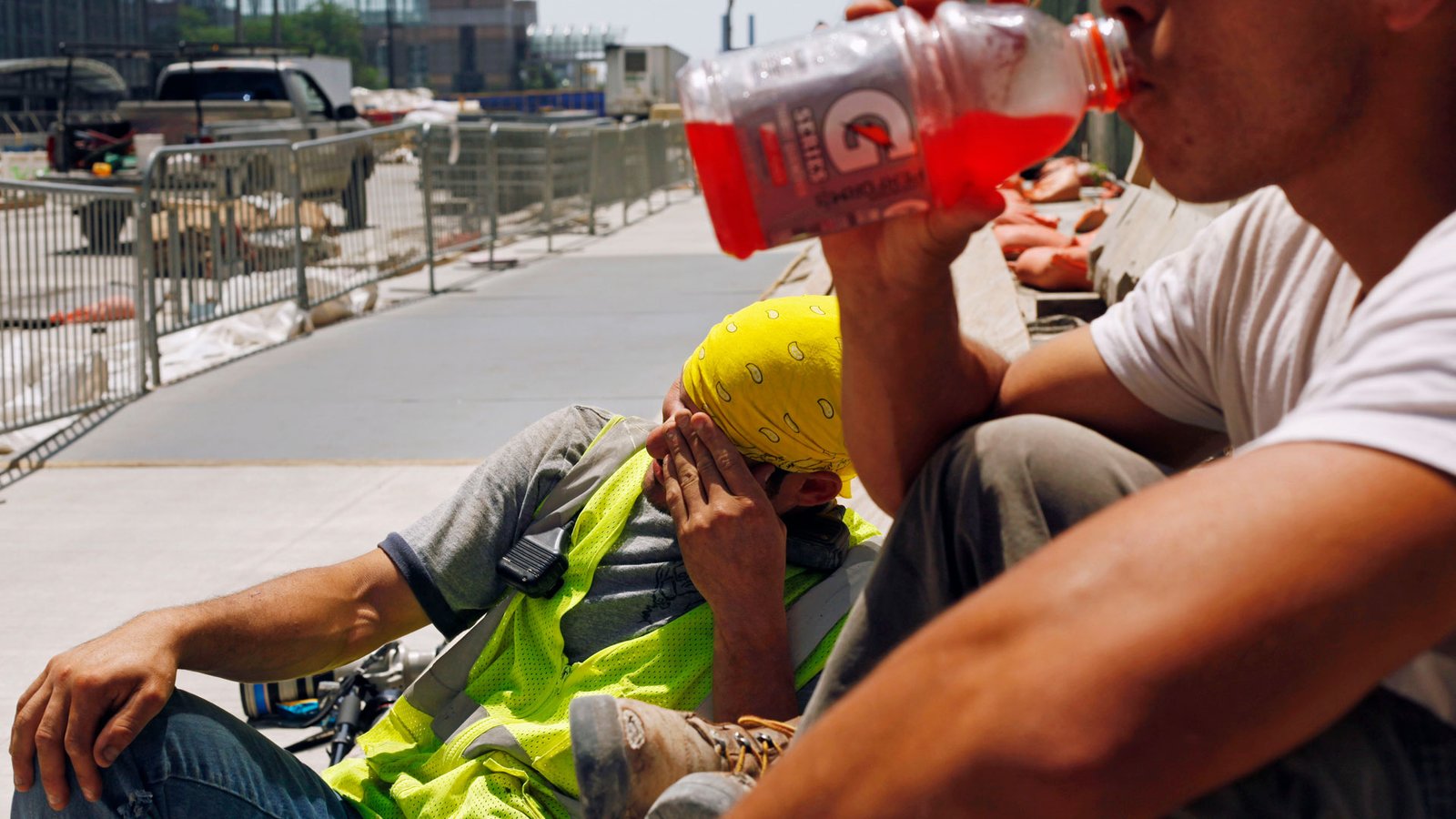
Twenty-nine New Jerseyans suffered what are believed to be weather-related deaths during a multiday heat wave as temperatures reached as high as 108 degrees.
“We know for sure that at least nine of them were unhoused,” said Connie Mercer, CEO of the New Jersey Coalition to End Homelessness. “And that another three or four of them were in cars, but probably living in their cars, also died a horrible, tragic, avoidable death.”
As another wave grips the state this week, Newark, the state’s most populated city, is under a Code Red order by Mayor Ras Baraka. Through 9 p.m. Wednesday, the city is encouraging residents to seek relief at air-conditioned libraries, recreation centers and other sites, and to summon help for unhoused people in distress.
Mercer, in an interview with NJ Spotlight News, called on Gov. Mikie Sherrill to take statewide action to prevent heat-related illnesses, which can be fatal for people who are elderly or medically frail.
“The governor could declare a state of emergency immediately,” Mercer said. “There could be some changes so that shelters could be allowed to take in 20% to 30% more people during the state of emergency.”
Rise in homelessness
Sherrill, a first-term Democrat who took office in January, established a heat safety dashboard to help people identify weather-related illness. Advocates say that is not enough.
“There are no penalties for a municipality or a county that doesn’t adequately provide during an emergency,” Mercer said.
Mercer said the deaths over the July 4 holiday weekend follow the increase in New Jersey’s unhoused population in the last several years.
“They died because there is a homelessness crisis in New Jersey that has been precipitated by the increasingly impossible cost of housing and all of the other expenses that have gone up,” Mercer said. “There has been a 70% increase in homelessness in New Jersey over the last four years.”
The federally mandated annual Point-in-Time count logs the number of people living in emergency shelters, transitional housing programs and on the streets during a single night in January. The 2025 report revealed 13,748 unhoused individuals, an 8% increase over 2024, according to Monarch Housing Associates, the Cranford-based nonprofit that has coordinated New Jersey’s count for over a decade.
While 2026 data have yet to be published, advocates said it is likely that New Jersey’s unhoused population grew.

We’re in this together.
For a better-informed future.
Support our nonprofit newsroom.



