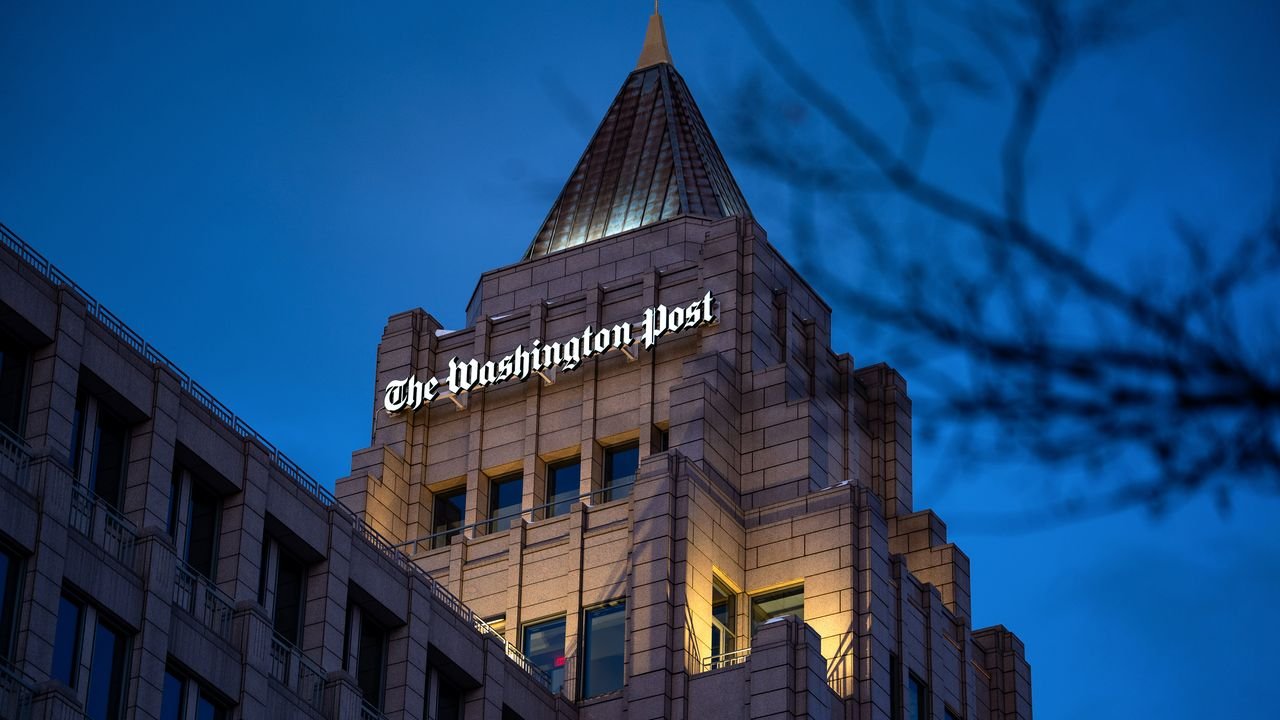
At one point, as we talked about the transformation of the Post, Kaiser stopped himself. “I’m going to cry,” he said, and paused. “Oh, God, it’s killing me.”
Bezos may be tiring of the Post, but he has not seemed inclined to sell the paper. Nor is it clear that would be a better, or at this point even feasible, outcome. Newspapers across the country are being bought up by private-equity firms that are essentially selling off the valuable parts. But there is another model for Bezos to consider: turning the Post into a nonprofit, endowed by Bezos but operating independently of him. For Bezos, this would reduce the role of the Post as a headache and a threat to other, more favored endeavors, such as his rocket company, Blue Origin. For the Post, assuming the endowment is sufficient, it would provide that continuing runway.
There are models for this approach. In Philadelphia, the late cable-television tycoon H. F. “Gerry” Lenfest purchased the Inquirer, the Daily News, and Philly.com in 2015, and the following year donated the publications to a charitable trust. “What would the city be without the Inquirer and the Daily News?” asked Lenfest, whose contribution to the endeavor has been valued at almost a hundred and thirty million dollars. In Utah, the investor Paul Huntsman bought the Salt Lake Tribune from the hedge fund Alden Global Capital in 2016; three years later, he transformed it into a nonprofit, supported in part by tax-deductible contributions from readers.
Writing in the Columbia Journalism Review in 2024, Steven Waldman suggested that Bezos follow a similar course. “ ‘Nonprofit’ does not mean ‘losing money,’ ” Waldman wrote. “Nonprofit news organizations can sell ads, offer subscriptions, and take donations. Done well, it is an especially strong business model, because it provides an extra revenue stream (philanthropy) and is deeply embedded in serving the community.” My quibble with Waldman’s pitch is that he asked Bezos to ante up a paltry hundred million. When Bezos purchased the Post, his net worth was about twenty-five billion; it is now an estimated two hundred fifty billion. Why not one per cent of that for the Post, enough to sustain the paper indefinitely? A pipe dream, I know, but this arrangement would make Bezos the savior of the Post, not the man who presided over its demise.
In the 1941 movie “Citizen Kane,” Charles Foster Kane, a newspaper publisher who, like Bezos, is one of the richest men in the world, is confronted by his legal guardian, Walter Thatcher, about the folly of funding his paper. “Honestly, my boy, don’t you think it’s rather unwise to continue this philanthropic enterprise, this Inquirer that’s costing you a million dollars a year?” Thatcher demands. “You’re right, Mr. Thatcher. I did lose a million dollars last year,” Kane replies. “I expect to lose a million dollars this year. I expect to lose a million dollars next year. You know, Mr. Thatcher, at the rate of a million dollars a year, I’ll have to close this place in sixty years.” Update Kane’s outlays to assume losses of a hundred million annually, in perpetuity. By that math, Bezos would have more than two millennia before needing to turn out the lights. ♦