
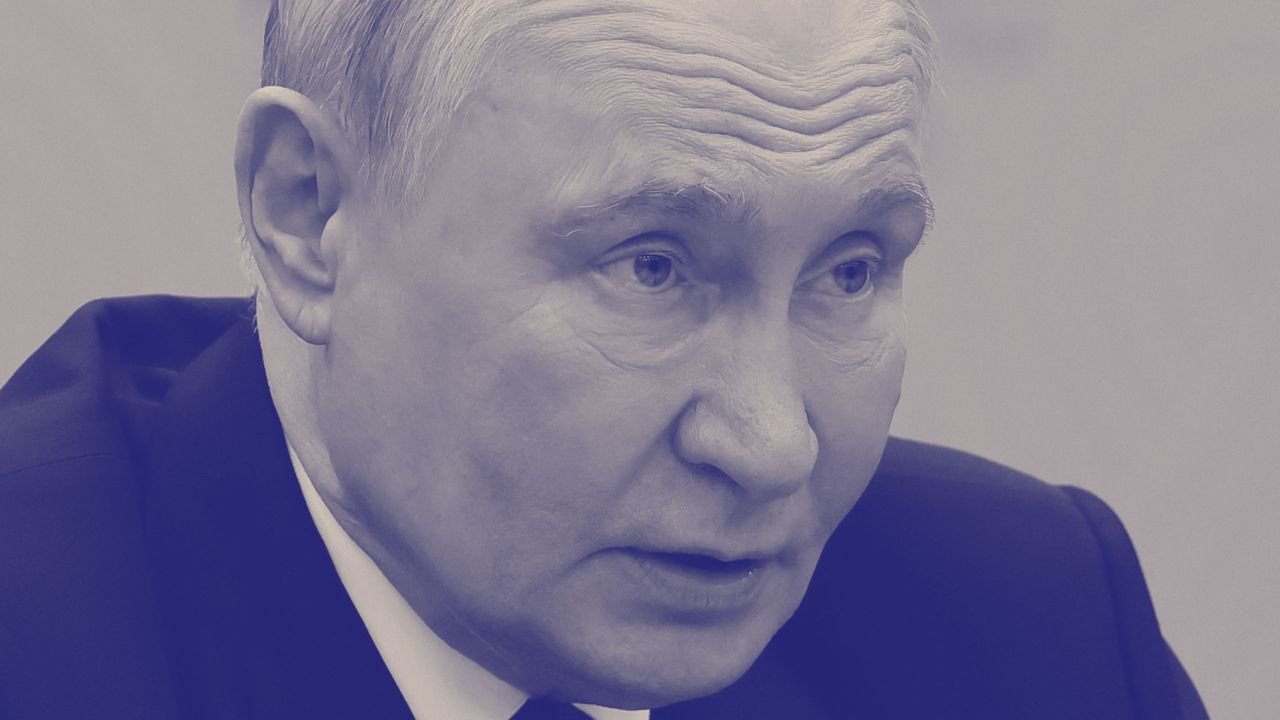
Another question is what constitutes a positive deal. Right now, any end to the war, provided it is not a military defeat, would be welcomed by a major part of society and the élites. The problem is that Putin, regardless of all the domestic pressures—the growing budget deficit, rising discontent among the public, conflict fatigue, and economic slowdown—needs a “decent deal,” or one that implies major sacrifices from Ukraine.
Putin launched this war because he sees it as existential for Russia, a last resort tied to what he perceives as Russia’s survival over the, say, next thirty to fifty years. And I believe that Putin will go to his grave convinced that he must secure a real deal. Broadly speaking, it would imply guarantees that the West would not resume using Ukraine as an “anti-Russia project.” This means a neutral status for Ukraine, no NATO presence, including no military presence from NATO member states, a reduced Ukrainian Army, as well as a number of political demands aimed at securing a pro-Russian presence inside Ukraine, including the influence of the Orthodox Church of the Moscow Patriarchate, rights for the Russian-speaking population, the possibility for pro-Russian forces to participate in elections, restrictions on Ukrainian nationalism, and so forth.
Today, this appears entirely unrealistic. That is the core problem: Putin wants something that he is unlikely ever to obtain, and there is little indication that he will change his mind regardless of the price he may have to pay. But, on the other hand, he may also prove more flexible on territorial issues, which some ultra-nationalist or hard-line-conservative forces in Russia could interpret as a bad deal, while continuing to insist on the geopolitical demands that form the basis of the war.
You wrote, “And, anyway, the regime possesses sufficient instruments and institutional capacity to generate the required public response.” What did you mean by this?
The Kremlin controls the media, can shape public narratives, and can suppress virtually any form of opposition or dissent. There is little concern about the far-right or pro-war community, which may be vocal but remains politically harmless. It is hardly organized, and much of it is inherently pro-state and would support the authorities in any case, while the more radical elements can be prosecuted if necessary.
Who are these ultra-nationalist figures you mentioned now? How important are they? What do we know about Putin’s attitude toward them?
They may be described in various ways: the far right, ultra-nationalists, ultra-patriots, or similar labels. What unites them is a deeply anti-Western and anti-liberal belief system, as well as a vision of Russia as a great power and, in some cases, a restored superpower with imperial ambitions.
This constituency is far from homogeneous. Some are relatively pragmatic and understand the political rules of the game, as well as the Kremlin’s calculations. Others are ideological fanatics, while some have effectively turned this world view into a profession.
These are the people who want Russia to take Kyiv and advance further into Europe. Many advocate nuclear escalation. In their view, a substantial part of the government constitutes a “fifth column” working discreetly in the interests of the West.
This milieu includes the pro-war community on social media, particularly those who cover the war on Telegram; conservative figures such as Konstantin Malofeev, with his media assets and connections to parts of the élite, including members of the government establishment; and many individuals within the security services themselves. The latter are often associated with what might be termed the silovaya ideologiya—a security-state ideology that emphasises a strong state, the primacy of state interests over private interests, great-power status, and strict domestic order. This world view frequently overlaps with Russian nationalism.
It is a natural part of Russian society and the élite. It is not dominant, but it is clearly present. The war has given these groups an opportunity to become more prominent. Some remain deeply oppositional, while others support the state on principle, regardless of circumstances.
For Putin, the key criterion in determining his attitude toward them is their intentions. They can be regarded as genuine patriots if they are assumed never to turn against the state. In that case, they may remain allies of the Kremlin, albeit under close surveillance. Others, however, who seek to position themselves in opposition, are deemed either manipulated, misguided, or acting on behalf of particular interests, and are therefore considered a matter for the government to address.
If politics is reasserting itself in Russia, what does that potentially mean? If Putin or his regime is under threat in any way, who is he under threat from?
I do not see politics reasserting itself in Russia. There is a shift in public mood, and there are changes in perceptions and attitudes, but these are more psychological than practical. There are no players besides Putin who can be considered actors or subjects with their own agency in the decision-making process.
Everything that remains politically “alive” exists outside the decision-making process. Those who are inside it are implementers, interpreters, executives, and yes-men.
There are no meaningful coalitions and no well-functioning horizontal interactions. The élite is highly atomized. People around Putin cannot afford to step outside their sphere of responsibility or encroach on someone else’s interests (with some exceptions in the military and security services). There is a great deal of fear, as everyone is isolated within the system and exposed to the constant risk of surveillance and prosecution.



