
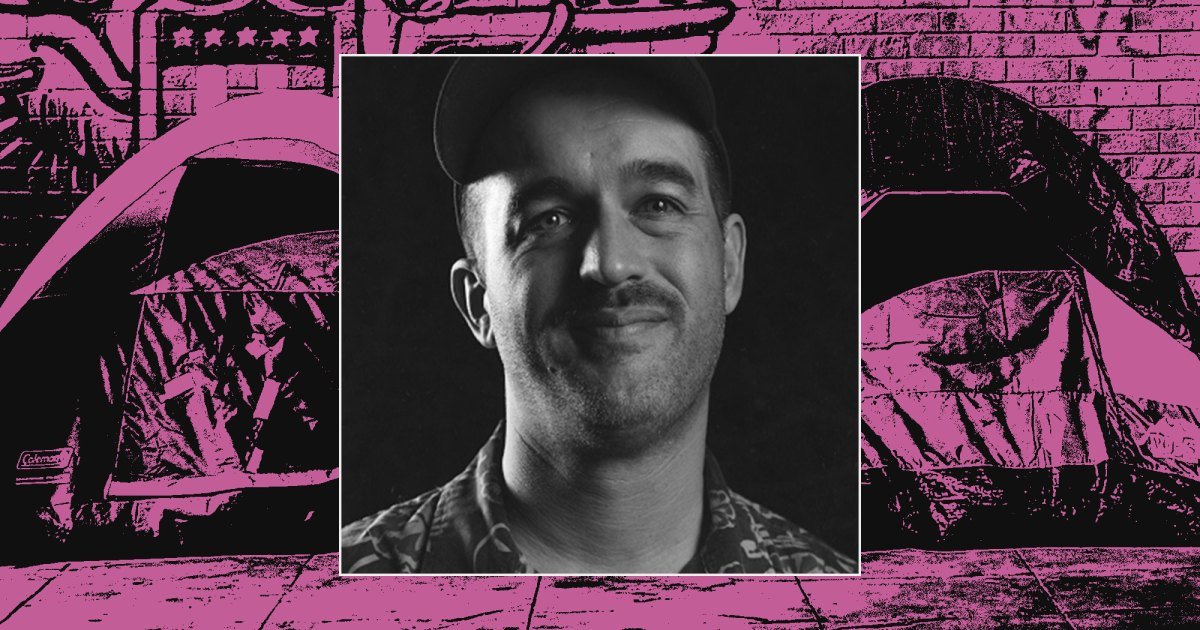
Mother Jones; Josh Guim; Frederic J. Brown/AFP/Getty
I grew up in a highly insular environment, never knowing—let alone interacting with—the outside world, in part due to my family’s history with war and struggle in Vietnam.
I can’t fully understand their experiences, but knowing the world often meant witnessing the violence of military personnel from France, Japan, the United States, and and other countries. They have told me stories of girls and young women covering themselves in mud to try to avoid rape by French soldiers during colonial rule, and people leaving Vietnam by sea in small boats in hope of a life beyond figuring out how to eat that day. My family understandably doesn’t talk about much of it now. Many may have felt like they could only manage to look after themselves and, if they’re lucky, immediate family members.
The result: a geopolitical history of trauma that reverberates with my own.
Music, movies, and television cracked my window a bit, and continue to serve as a way for me to try to peek into the experiences, feelings, and dreams others share with the world. Roger Ebert’s concept of a movie as a “machine that generates empathy” guided me into politics, and eventually to a job writing about it.
The noise rock and metal of the band Chat Pile is one of those bodies of art. Chat Pile makes art that pushes us to confront our world. The band’s 2022 single “Why” was a breakthrough, with the direct opening lyrics of “Why do people have to live outside / In the brutal heat or when it’s below freezing?” The band’s previous album, 2024’s Cool World, is an antiwar record—the track “Shame” decries the ongoing Gaza genocide and the shame of all wars.
Who Loves the Sun, Chat Pile’s latest album, came out Labor Day weekend. The cover art is a photo taken by bassist Stin of a charred building and a tent, with the 50-story corporate headquarters of the oil and gas producer Devon Energy—which is set to move out of Oklahoma City, where the band is from, to Houston, putting local jobs and the future of the building into question—looming in the background. The album challenges apathy to atrocity through tracks on climate change and labor struggle among imagery of vampires and masks.
Chat Pile’s closer suggests that in the event of human collapse, the natural world will continue, even if forever damaged.

But we’re still here now, so I spoke to the band’s lead vocalist, Raygun Busch—who also loves movies—about how we can resist.
I’m curious if you saw that the Oklahoma City Council renewed its contract for Flock cameras, and that N’Kiyla Jasmine Thomas, a more progressive candidate, won the Democratic nomination for Senate in Oklahoma.
The news about the Flock renewal happened while we were on tour. I am completely disappointed in our mayor, David Holt. If I have anything to do with it, he won’t be our mayor for long. I’d love to see him get voted the hell out of office forever. My good friend James Cooper on city council voted against it. He was one of the few.
Flock is so nakedly dystopian, scary, 1984. I can’t believe—I mean, I can believe that David Holt would be spineless and just mask off. He’s a fascist. He will go with the fascist people. He wants the totalitarian government that watches our every move, run by the billionaire class. He’s all in on that, and I’m not. I’m very against that.
As for the primaries, shamefully, I need to lock in, engage with what’s going on. I’m sure whoever’s running Democrat won’t be left enough for me, but it doesn’t pay to be pessimistic. We’ll see what happens. We keep saying we can’t do much worse, and then we do a little bit worse.
I think your music makes an attempt to reckon with the political moment we’re in. How do you approach that?
I feel like in terms of art, not being political right now is insane. I can’t believe every band doesn’t have one political [song]. You don’t have to be like the Dead Kennedys, but even “99 Red Balloons” is about world politics.
[I’m] thinking about literacy rates and stuff like that. I don’t have children. I’m not involved in that kind of stuff. Personally, I don’t do enough. It’s hard to live your life and do everything. Got to try your best.
In terms of trying your best, every artist, top to bottom—especially bands at my level—should be talking about politics. Even if I don’t agree with their politics, there should be some reflection of the world we live in now. People need to open their eyes and react and say things.
It’s not like I’m going to write a song that’s going to change the world—that’s not what the point is. We need to all be talking about this stuff to initiate action and change. Clearly, the powers that be want us all to fight each other [but] we’re not each other’s enemies, even though we may disagree about something. We need to focus on these people that are fucking destroying the planet, sucking everybody dry of resources and wealth.
How did you get into framing politics as something you need to participate in, and has that changed over time to where you’re now making music about politics? I ask this because my pathway into politics was through art.
Absolutely, dude. I definitely grew up in a house where CNN and NPR are on all the time. So, in a way, I kind of resented politics.
And if I’m trying to find common ground with my dad, it would be learning about stuff like that and watching movies like JFK—Oliver Stone, political intrigue, was like a big deal in our house for sure. My dad loved that Clint Eastwood movie In the Line of Fire.
Aside from that, music for sure. Like Dead Kennedys, The Clash, Propagandhi was a new band. I’m 41, so Today’s Empires, Tomorrow’s Ashes came out when I was in high school. In that time, Michael Moore was a huge deal, so I’m reading his books. I’m reading Crashing the Party by Ralph Nader. I’m pretending I’m reading A People’s History of the United States by Howard Zinn—getting into leftist politics.
Here’s what activated it completely: 9/11 happened. I’m 17. And then we invaded Iraq when I was 18. I was taking a bunch of history classes, and I was like “I don’t want to fight in Iraq.” People were getting recruited at my school, and [they were] clearly preying on lower-class kids by giving free college and all this shit.
What was getting into music in Oklahoma City like, and did it speak to the politics that you were seeing?
When I first moved here in 2004 [from Ponca City, Oklahoma], we had our own fake Godspeed You! Black Emperor band. They were called Radio Reception, and they would go on full rants about like “fuck George Bush, fuck war, no blood for oil.” They were radical. It was cool. That was a normal thing. We lived in a bubble, but in the underground, it wasn’t a big deal to be political. We had a band called American Hate. There was even surface-level politics versus what I feel like is nothing now—it’s inscrutable.
We did our song “Why” [in 2022] where I was like: “I’m not going to be artistic with this at all. I’m going to be as blunt as possible, all the way to the back, no mistaking.” There’s no metaphor, analogy, no poetic coding on this. It was sort of a reaction to, if there are politics in music right now, I don’t hear them. I don’t have time to sift through poetry to find what you’re saying. I’d love to see it more while we still can.
Are you always talking politically to a small group of people in the underground? Or to reckon with the political moment, are you engaging with other people who are not in, or oppose, that niche community—especially given how much you all have grown in popularity as a band?
I mean it is scary, the more you get perceived and stuff. I don’t know how well or how much I want to deal with it. Everyone will be a coward at some point in their life. Sometimes you run into people, and it’s like “All right, man, I’m not gonna sit here and argue with you.”
Sometimes I just don’t want to fucking sit and talk when it comes to face-to-face interaction like that, but at the same time, if I have a mic in my hand and I’m in a big room and I don’t say “free Palestine, free Yemen, free Sudan, fuck war, fuck genocide, fuck AI,” what kind of person am I? I’m afraid, of course, of being beaten up, but I feel like everybody top-to-bottom should be able to speak their mind. There’s been some major celebrities that have said things, which is great.
Shout out to Dave Matthews, my king.
If someone becomes interested in politics through music or anything else, what happens after that? How can we actively do something to help our communities?
You’ve just got to do what you can. It’s like reading, studying, going to the gym: Those who show up and do a little bit will always be ahead of the people who do nothing and never go, never do—even if that’s not enough.
We feel like we’re just so imprisoned by our phones—I am too. We’ve lost our sense of identity and just being in the world and recognizing the things around you.
I need to do more, personally. What we do in our band, for instance, in a few weeks we’re going to do this benefit show [benefit show happened over the weekend] where we’re going to give all the proceeds to this identity-inclusive youth shelter called Sisu [in Oklahoma City]. So, it’s doing your best.
Are you “raygun busch” on Letterboxd?
Is it Leprechaun? [The 1993 movie] Leprechaun is my icon.
Yeah, it’s the Leprechaun!



