
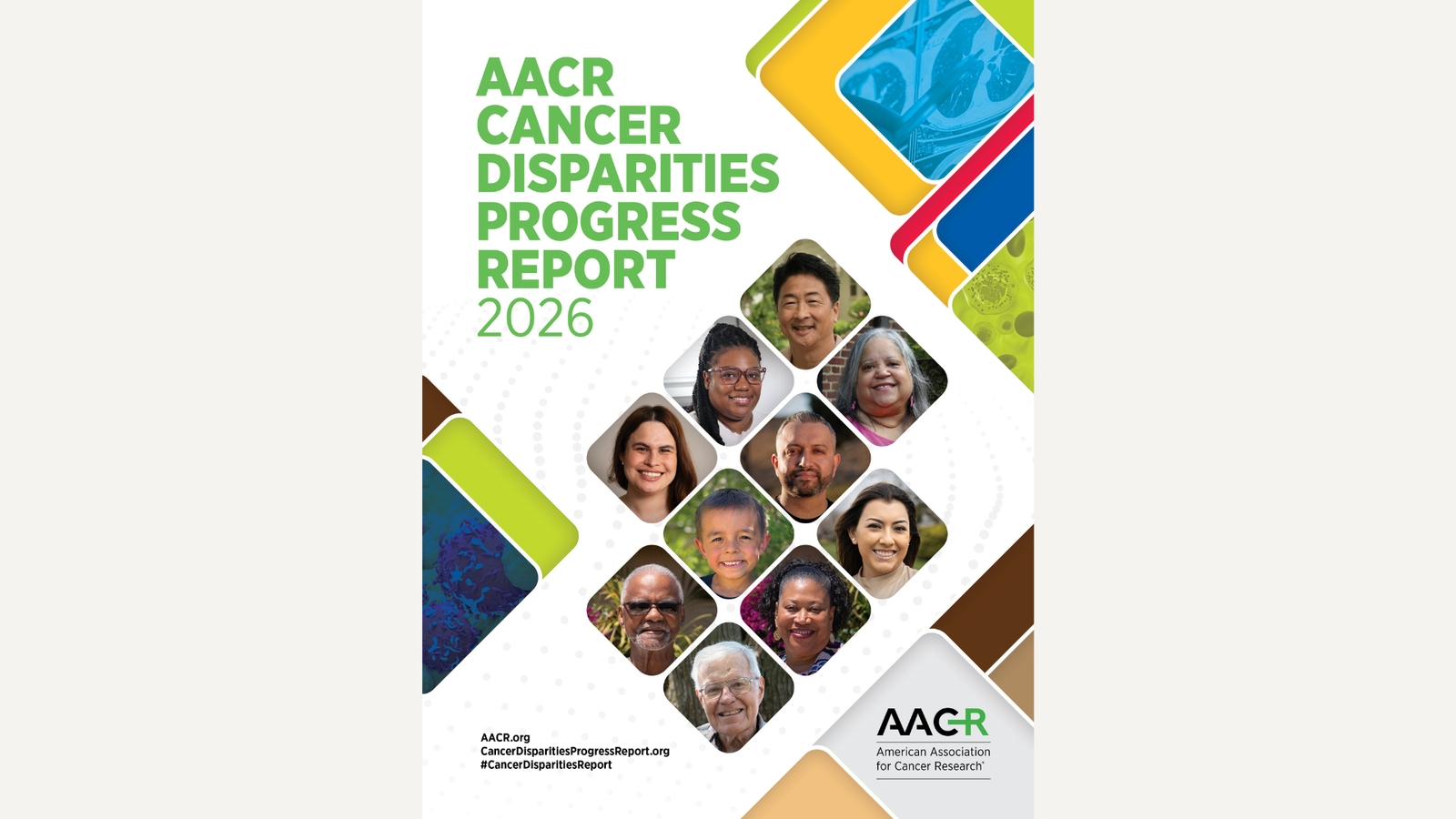
Three faculty members from the Keck School of Medicine of USC’s Department of Population and Public Health Sciences played key leadership roles in the newly released AACR Cancer Disparities Progress Report 2026, published by the American Association for Cancer Research (AACR) on June 24, 2026.
Mariana C. Stern, PhD, professor of population and public health sciences, Ira Goodman Chair in Cancer Research, and associate director of population science at the USC Norris Comprehensive Cancer Center, served as chair of the report’s steering committee. Jennifer Tsui, PhD, professor of population and public health sciences, served as co-chair, and Kimberly Miller, PhD, MPH, associate professor of population and public health sciences, served as a steering committee member.
The biennial report, first published in 2020, offers a comprehensive look at the unequal burden of cancer in the United States, examining disparities across racial and ethnic groups, sexual and gender minorities, rural communities, and persistent-poverty regions. It also features 10 personal stories from cancer survivors, highlighting the human impact of health inequities.
The report documents both progress and persistent challenges. Since 1991, the overall U.S. cancer death rate has dropped by 35%, translating to more than 4.8 million fewer cancer deaths. The disparity in overall cancer mortality between Black and White populations has narrowed from 34% higher among Black individuals in 1991 to 9% higher in 2024. However, significant gaps remain: Black and American Indian or Alaska Native individuals still have the highest overall cancer death rates in the U.S., and residents of rural counties are 17% more likely to be diagnosed with colorectal cancer and 27% more likely to die from the disease compared with urban residents.
“These cancer disparities contribute to the high national cancer burden and slow the overall progress against cancer, with costs and consequences that impact the entire country,” said Stern in the report. “The progress to date demonstrates what is achievable when we invest in understanding and addressing the root causes of cancer disparities.”
The report also raises urgent concerns about federal funding. A survey of cancer disparities researchers found that 93% have been affected by recent federal policy changes, and 56% have partially shifted or are considering shifting away from disparities-focused research as a result. The AACR calls on policymakers to sustain investments in the National Institutes of Health, the National Cancer Institute, and the Centers for Disease Control and Prevention, and to ensure equitable access to cancer prevention, screening, and treatment.
Stern presented the report’s findings and call to action at a congressional briefing on Capitol Hill on June 24, 2026. Read the full AACR Cancer Disparities Progress Report 2026 here.



