
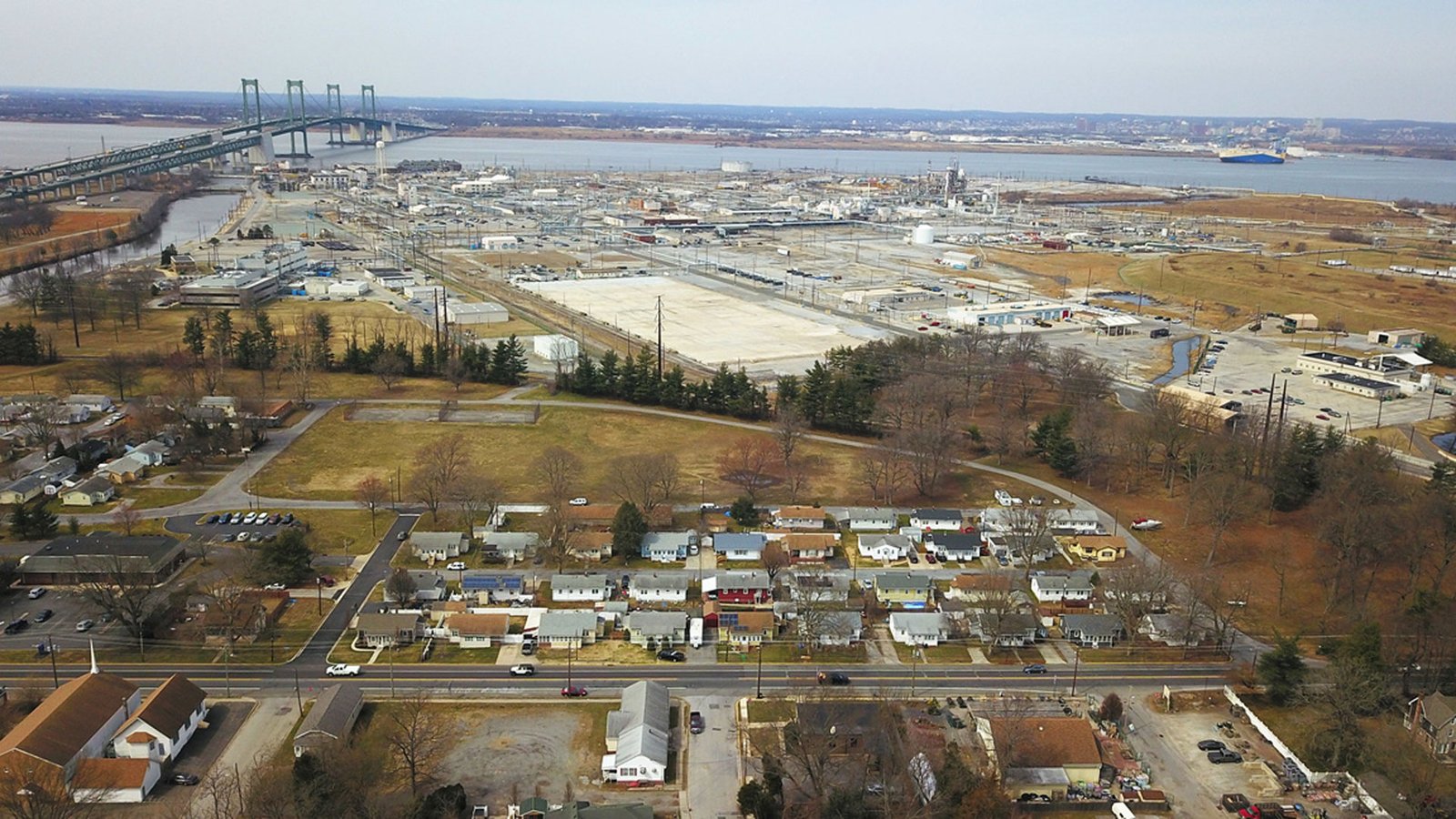
 WASHINGTON — The chemicals manufacturer Chemours will pay to test drinking water and provide a treated or otherwise clean supply to residents in a Salem County town polluted with toxic substances, under a pending legal agreement.
Chemours agreed to pay a $22.5 million civil penalty to settle alleged violations of federal pollution and water laws at sites across three states: New Jersey, North Carolina and West Virginia. The New Jersey site is in Deepwater, part of Pennsville Township, about 35 miles south of Philadelphia.

The company will also conduct a $90 million program to limit the discharge of PFAS, or per- and polyfluoroalkyl substances, commonly called forever chemicals because they do not naturally disintegrate. Chemours, based in Wilmington, Del., was spun off from DuPont in 2015 and has since run the plant. In a statement, Chemours, worth $2.73 billion, said it would pay its penalty in annual installments in the next three years.
Filed in federal court in West Virginia, the proposed deal requires court approval and is open to public comment until July 29.
“Through this commitment, Chemours will better control PFAS at its plants, allowing the company to continue its manufacturing operations while protecting communities in North Carolina, West Virginia, and New Jersey from PFAS exposure,” Adam Gustafson, principal deputy assistant attorney general for the Justice Department’s environment and natural resources division, said in a statement.
Built in the late 1880s, the New Jersey site hugs the Delaware River. It is where DuPont accidentally discovered Teflon, the oldest chemical type within the PFAS family. Today it is a roughly 1,455-acre manufacturing campus called Chambers Works.
3M settlement
The proposed settlement stands in contrast to the $450 million settlement New Jersey secured with chemical company 3M last year, a deal that also concerned Chambers Works. 3M supplied a type of PFAS chemical that DuPont used on site.
A class of human-made chemical compounds found in household goods, kitchen tools, cosmetics, stain-resistant carpets and nonstick pans, PFAS are ubiquitous in industrialized life. PFAS are linked to blood disorders, kidney cancer, liver damage, development delays for children and weakened immune systems. The EPA in 2024 set the first-ever drinking water limits for PFAS compounds, a standard that the agency is unwinding in the second Trump administration.
Managers at the three sites “have released, and continue to release, significant quantities of PFAS into the environment,” the proposed deal reads. These discharges, it says, “have affected the drinking water of tens of thousands of people in the areas” nearby.
Officials at the New Jersey Department of Environmental Protection and the Environmental Protection Agency have documented PFAS discharged into the Delaware River.
Samples of surface water expelled from the plant in 2003, and 2005 and from 2007-2020 “consistently detected PFOA and PFOS,” two common PFAS types, according to court papers. Chemours frequently released “unauthorized discharges” over the past decade, in violation of federal water permits, according to the consent decree.
Spokespeople for Gov. Mikie Sherrill, a first-term Democrat, did not immediately respond to requests for comment.



