
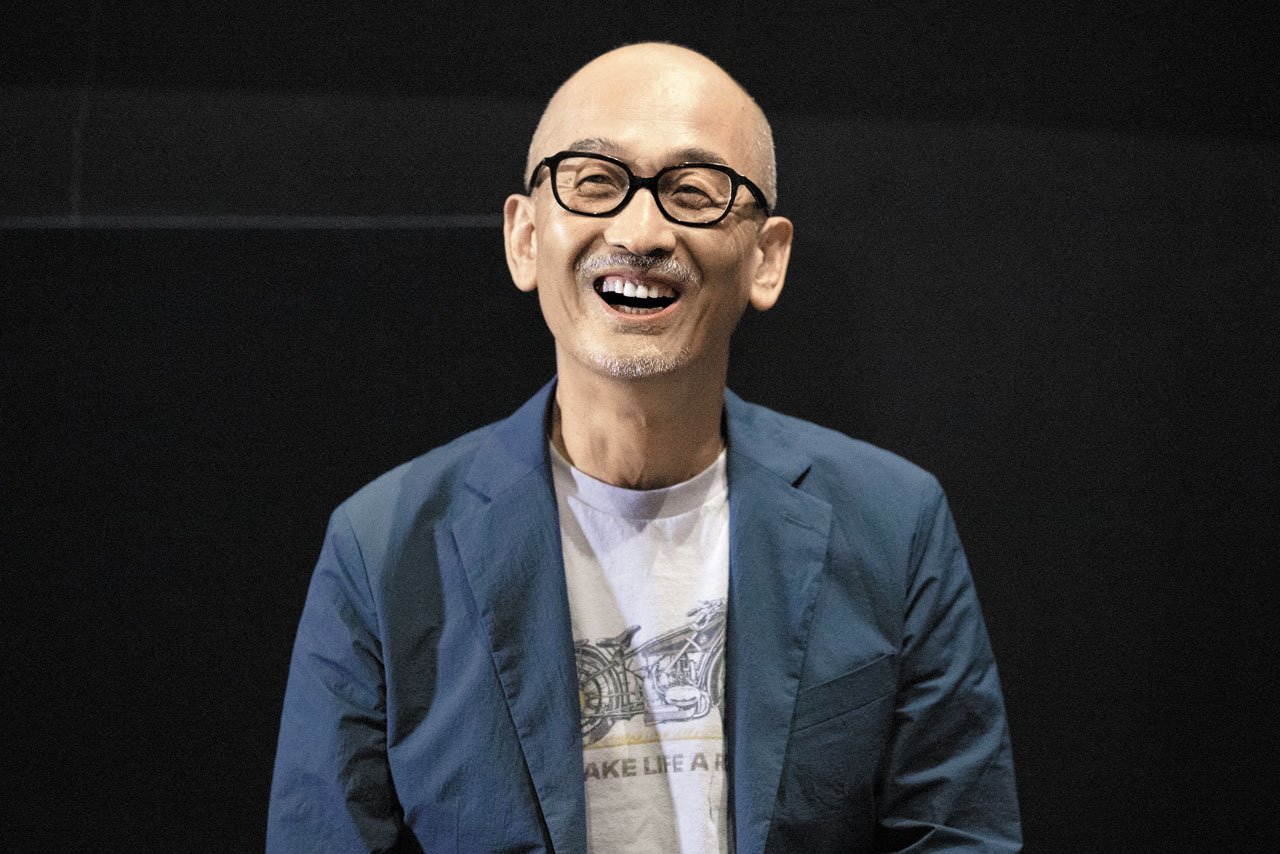
Lee Joon-ik has established himself as one of the most recognizable directors in contemporary South Korean cinema, managing to combine popularity, artistic quality and box office success through works such as “The King and the Clown”, “Radio Star”, “Hope”, “The Throne”, “Dongju: The Portrait of a Poet” and “The Book of Fish”. Although he has experimented with a variety of themes and genres, including comedy, music, queer cinema and contemporary drama, his name has become particularly connected with historical productions.
Nevertheless, Lee’s relationship with history is quite different from that of many directors working within the genre. His period movies frequently avoid narratives built around national glory, heroic sacrifice and political power. Instead, he focuses on individuals caught within systems larger than themselves, whether these are monarchies, colonial governments, rigid class structures, family hierarchies or social expectations. Even when his protagonists are historical figures, Lee is less interested in turning them into monuments than in exploring their weaknesses, emotions and personal relationships.
A strong antiwar perspective also permeates much of his historical work. In “Once Upon a Time in a Battlefield” and its sequel, “Battlefield Heroes”, those who suffer most from war are not the kings, generals and politicians who initiate it, but the ordinary soldiers and civilians trapped between competing powers. In “Anarchist from Colony”, Lee largely avoids the nationalist tendencies that can easily emerge in stories about resistance against the Japanese occupation. Instead, the narrative revolves around the personal convictions and relationship of Park Yeol and Kaneko Fumiko.
Lee also repeatedly challenges popular interpretations of Korean history. “Once Upon a Time in a Battlefield” rejects the romanticized image of General Gyebaek’s decision to kill his own family before battle, presenting the act as the product of his arrogance and authoritarianism. At the same time, the collapse of Baekje is not attributed to familiar legends about King Uija and thousands of palace women, but to political mistakes, corruption and division among the ruling classes. Similarly, “The Throne” moves away from simple interpretations of King Yeongjo and Prince Sado, instead presenting both men as complex individuals destroyed by the institution surrounding them.
His career, however, did not begin with immediate success. After leaving Sejong University, where he had studied Oriental painting, Lee worked in magazine design and advertising before entering the movie industry. He spent years running a marketing company involved in poster design and other promotional work. His directorial debut, “Kid Cop”, was released in 1993 but failed commercially, attracting fewer than 50,000 viewers in Seoul. Although the production later found a degree of popularity through home video, its theatrical failure pushed Lee toward producing, importing and distributing movies.
As a producer, Lee participated in projects such as “The Spy”, “Anarchists”, “Ghost Taxi” and “Hi! Dharma!”. The latter became a major commercial success, attracting approximately 3.7 million viewers and providing him with the opportunity to return to directing. After a ten year absence, he made his comeback with “Once Upon a Time in a Battlefield” in 2003. The historical comedy attracted around 2.78 million admissions, setting the stage for the movie that would transform both his career and the South Korean box office.
“The King and the Clown” was one of the highest grossing domestic movies in South Korea and, upon release, became the most commercially successful Korean production in history until “The Host” surpassed it a few months later. This was particularly impressive for a relatively low budget production that did not feature established A list stars and tackled a controversial subject. Adapted from the stage play “Yi”, the movie attracted more than 12 million viewers and received the Grand Prize in the movie category at the Baeksang Arts Awards.
Jang-saeng and the effeminate Gong-gil are members of a troupe of street performers in fifteenth century Joseon, specializing in lewd sketches and acrobatic routines. Gong-gil is frequently offered to wealthy customers by the troupe’s leader, something Jang-saeng cannot accept, and an incident eventually forces the two to flee to the capital. There, they join another group of performers and begin staging sketches that mock the king and life inside the Royal Palace. News of the performances reaches the cruel King Yeonsan, who summons the troupe and becomes particularly fascinated by Gong-gil.
Lee successfully creates a world of beauty, colour and affection, driven by the equally beautiful, colourful and affectionate people who inhabit it. While homosexuality is a theme that runs throughout the narrative, it is never explicitly stated whether Jang-saeng loves Gong-gil in that way. Therein lies the title’s true strength, since it carries the emotional core of the characters’ feelings without having to define them. Kam Woo-sung is excellent as Jang-saeng, Lee Joon-gi breathes life into Gong-gil, and Jung Jin-young steals the show as the tyrannical King Yeonsan. Meanwhile, the grand sets and colourful costumes are beautifully captured by cinematographer Ji Kil-woong, while Lee Byung-woo’s score elevates the scenes of performance both on the streets and within the palace.
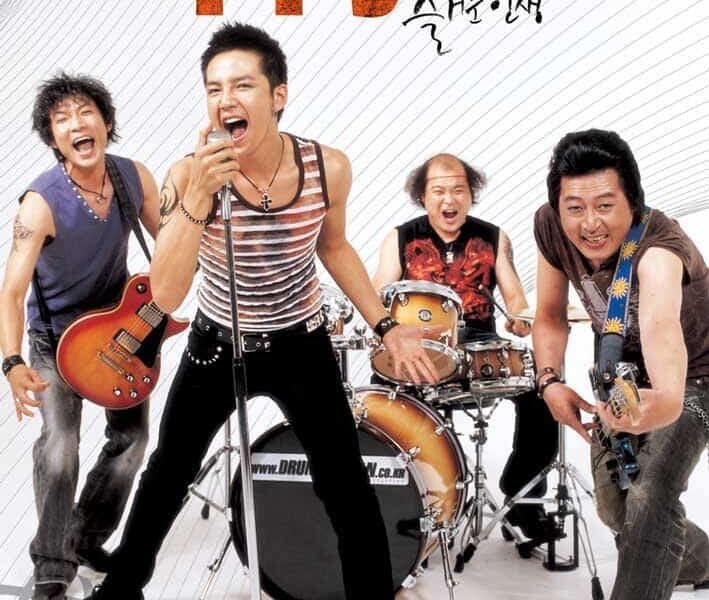
Following the success of “The King and the Clown” and “Radio Star”, Lee continued his exploration of music with “The Happy Life”. The production became part of an informal trilogy in which music allows individuals to express emotions they cannot otherwise communicate. With actors such as Jung Jin-young, Kim Yoon-seok and Kim Sang-ho, the result seemed destined to be highly entertaining, a prediction it fulfilled utterly.
Gi-yeong is an unemployed man who owes money because of unsuccessful investments and has become financially dependent on his wife. When Sang-woo, the leader of his university band, dies, a drunken reunion at the funeral gives him the idea of reforming Active Volcano. Former bass player Seong-wook works two jobs to satisfy his family’s financial demands, while drummer Hyeok-su must pay for his wife and children to live in the United States. Gi-yeong eventually persuades them to reunite, and when Hyun-joon, the son of their deceased singer, joins them, they finally have a band worth listening to.
Lee Joon-ik’s biggest achievement is that he manages to combine elements of comedy, drama and social commentary with notions of nostalgia and male bonding. He presents them through the almost omnipresent rock music that permeates the movie and sets its tone. Jung Jin-young plays the seemingly carefree Gi-yeong, Kim Yoon-seok portrays the constantly frustrated Seong-wook, and Kim Sang-ho can provoke laughter through his appearance alone, while remaining competent during the dramatic scenes. With the obvious message that being a father, husband, provider and rock star is far from easy, “The Happy Life” is a convincingly grounded slice of middle aged life that avoids both excessive melodrama and the conventional underdog formula.

“Hope” marked Lee Joon-ik’s return after a brief hiatus following “Battlefield Heroes” and won Best Film at the 34th Blue Dragon Film Awards. The screenplay is based on the real case of an eight year old girl who was brutally assaulted by an intoxicated adult. Instead of approaching the subject as a revenge thriller or courtroom drama, Lee concentrates on the child’s recovery and the efforts of her family to rebuild a life that has been permanently altered.
The story begins with an ordinary family living in a small town and operating a grocery store named after their daughter So-won, whose name means hope. Her father, played by Sol Kyung-gu, and mother, played by Uhm Ji-won, are heavily overworked, meaning their cheerful and independent daughter is frequently left on her own. One morning, while walking to school, So-won is followed and attacked by a drunken man. She is rushed to the hospital, leaving her parents to cope with her physical and emotional suffering as well as the legal process of seeking justice.
“Hope” is not a movie for everyone because of the cruelty of its subject, but Lee presents the material with a gentle approach, avoiding unnecessarily graphic images and respecting So-won during her most vulnerable moments. Despite the devastating sadness, he includes cheerful and joyful scenes that allow the audience to cope with the family’s distress. Lee Re gives an unforgettable performance, while Sol Kyung-gu delivers one of his finest career turns as a father struggling to reconnect with a child who has become afraid of men. Screenwriters Kim Ji-hye and Jo Joong-hoon combine the pain and joy of human suffering in a story about emotional healing and family bonds, while Lee’s gentle pacing builds almost imperceptibly and delivers the tension exactly as required.
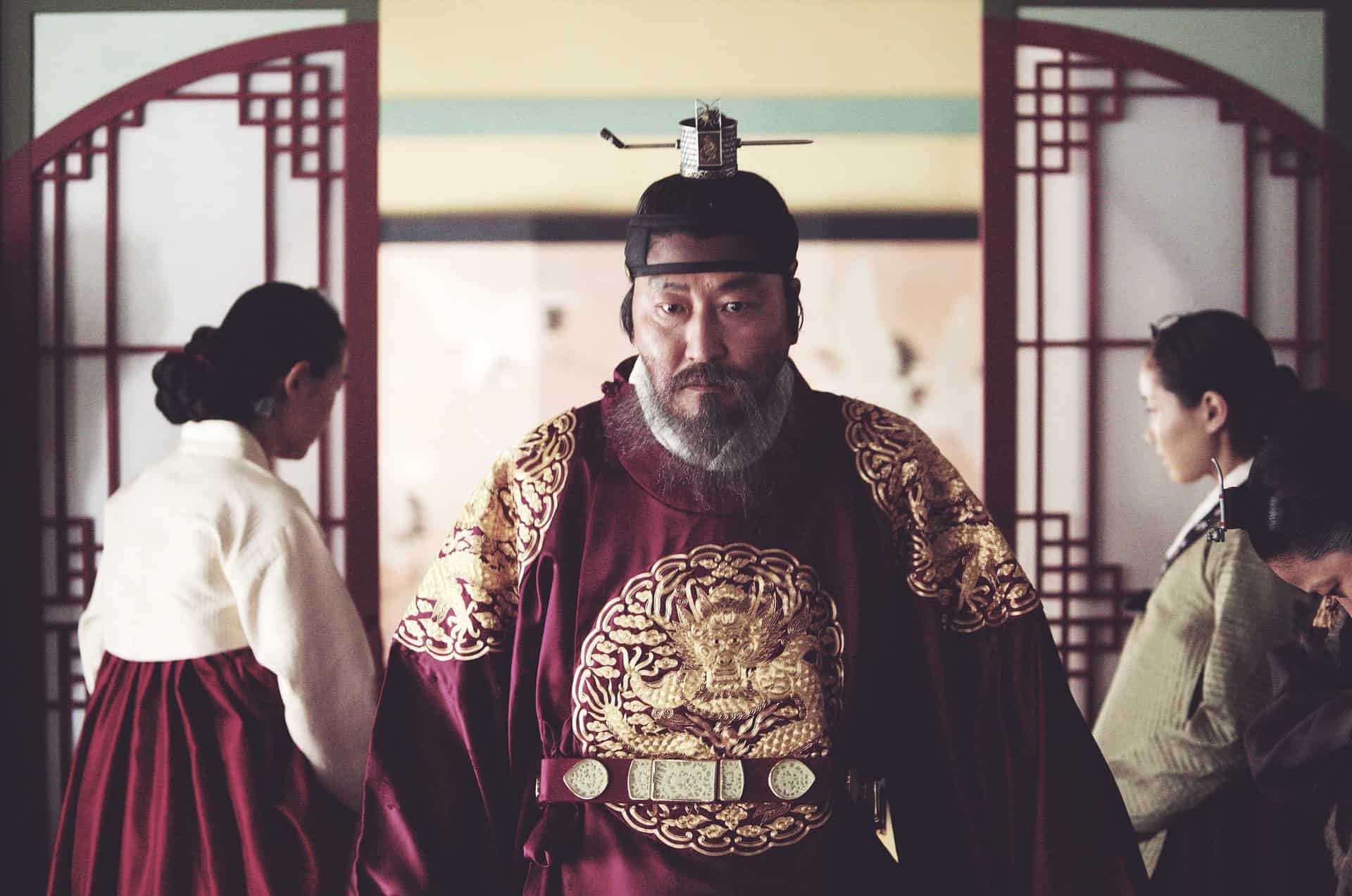
“The Throne” was selected as South Korea’s submission for Best Foreign Language Film at the 88th Academy Awards, although it did not receive a nomination. The production brought Lee back to the Joseon era and one of the most tragic episodes in the history of the royal family. With elaborate sets, detailed costumes and a major cast led by Song Kang-ho and Yoo Ah-in, the movie confirmed that the historical genre remained the one that suited Lee best.
The story is based on the relationship between King Yeongjo and his son, Crown Prince Sado. Yeongjo suffered from an inferiority complex because he was the son of a royal concubine who was not of noble birth, and consequently spent his life attempting to achieve perfection. He demanded the same discipline from Sado, who showed greater interest in painting and archery than in becoming the ruler his father envisioned. Their continuous conflict eventually resulted in the king ordering Sado to enter a wooden rice chest, where he remained for eight days until his death.
Lee centers the narrative around three equally tragic axes: the life of Prince Sado, the relationship between father and son, and the constant intrigues taking place within the court. Tension permeates the entire movie, while the chronological shifts remain understandable due to the excellent editing by Kim Jae-beom and Kim Sang-beom. Song Kang-ho portrays a character who is almost perpetually angry or dissatisfied, but does so with remarkable dignity, while Yoo Ah-in plays Sado with excess and considerable theatricality. Their radically different approaches create excellent chemistry, particularly in the opening scene and the sequence in which the king speaks to his son inside the chest. Moreover, the costumes, makeup, sets and scenery demonstrate both the large budget and the skill of the crew, resulting in an audiovisual poem that benefits enormously from its acting and production values.
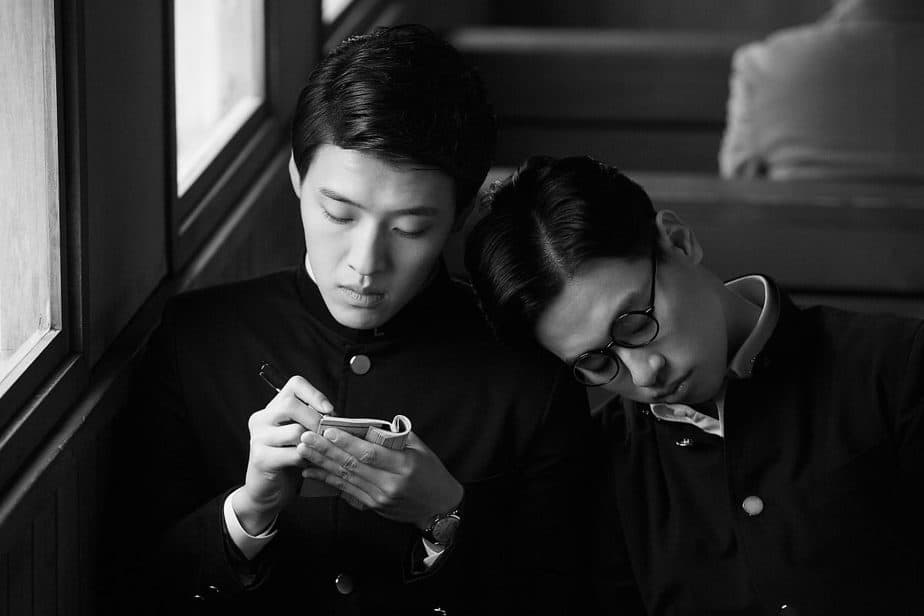
Following the large scale production of “The Throne”, Lee turned toward a much smaller black and white project with “Dongju: The Portrait of a Poet”. Despite its limited budget and lack of conventional spectacle, the movie attracted approximately 1.17 million viewers and became both a critical and commercial success. Its focus on poetry, friendship and colonial oppression also demonstrated Lee’s ability to approach historical material through restraint rather than grandeur.
The movie tells the tragic story of poet Yun Dong-ju and his cousin and closest friend, Song Mong-gyu. During their university years, both write poetry, although Song is recognized first and gradually becomes involved in political activism against the Japanese occupation. The two later move to Japan, where Yun continues to write and Song becomes one of the leaders of the resistance. The narrative begins and ends with both men imprisoned and interrogated by the Japanese authorities.
Lee directs a movie that moves along two axes. The first takes place during Yun’s interrogation, while the second unfolds in the past and describes the events leading to the arrests. The two axes mirror each other, with Yun’s poems narrated alongside the corresponding events, and the synchronization of these elements emerges as one of the movie’s greatest achievements. Kang Ha-neul portrays a timid individual who relies heavily on his friend despite possessing obvious talent, while Park Jung-min presents Song as a genuine force of nature. Their chemistry is excellent, and Choi Yong-jin’s black and white cinematography is a thing of beauty that fits perfectly with the general aesthetic. “Dongju: The Portrait of a Poet” is a great movie in all aspects and remains one of Lee Joon-ik’s finest achievements.
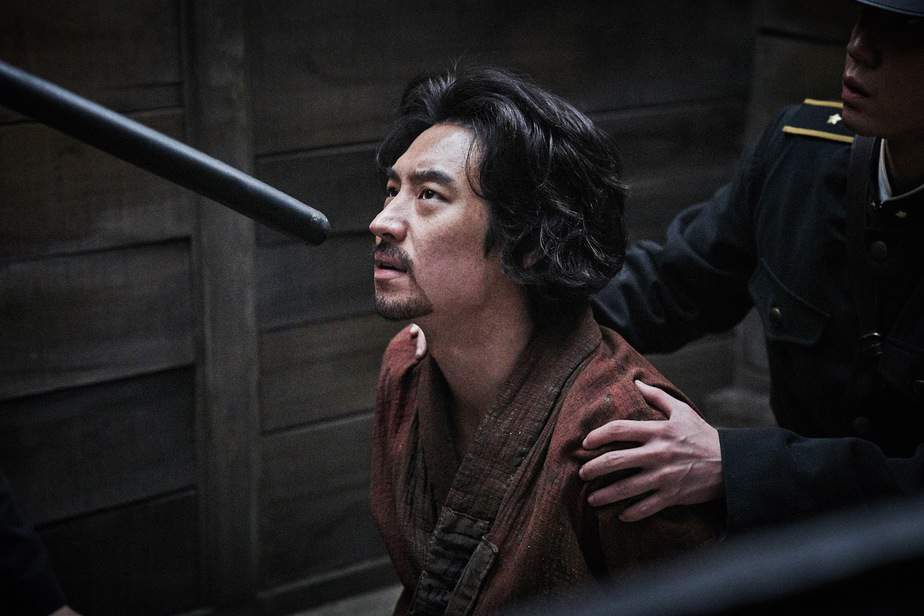
Following “Dongju: The Portrait of a Poet”, Lee Joon-ik continued exploring the Japanese occupation with “Anarchist from Colony”, based on the true story of Korean anarchist and independence activist Park Yeol. Starring Lee Je-hoon as Park and Choi Hee-seo as his Japanese partner Kaneko Fumiko, the production allows Lee to address colonial oppression while largely avoiding the nationalism usually associated with stories about Korean independence fighters.
The story begins in Japan in 1923, where Park has formed an anarchist group comprising both Koreans and Japanese. Kaneko is drawn to him through his writings and eventually joins the group, becoming both his political partner and lover. Their situation changes after the Great Kanto Earthquake, when false rumours encouraged by the government and press result in the massacre of thousands of Koreans. The Japanese authorities subsequently attempt to use Park as a scapegoat to distract international opinion from the pogrom, while Kaneko insists on sharing his fate. However, neither is prepared to face interrogation and trial without fighting back.
Lee uses a very interesting and quite unusual narrative style for such a subject, retaining a happy go lucky tone throughout much of the movie. Impressively, he maintains this approach even during the most dramatic moments, including the violence against Koreans, the interrogations, the trial and the ending. The ironic theatricality of Lee Je-hoon and Choi Hee-seo’s performances fits the overall aesthetic particularly well, while Park Sung-joo’s cinematography, Kim Jung-hoon’s editing and the jazzy soundtrack further strengthen the production’s combination of historical drama, noir and comedy. The result is both entertaining and politically pointed, without losing the gravity of the actual events.

Lee returned to a contemporary setting with “Sunset in My Hometown”, reuniting with Park Jung-min after “Dongju: The Portrait of a Poet”. The production also continued the director’s interest in music, although rap replaces the rock performances of “Radio Star” and “The Happy Life”. Rather than simply functioning as entertainment, the songs become expressions of the protagonist’s history, frustrations and unresolved relationship with his hometown.
Hak-soo, played by Park Jung-min, has appeared on the television competition “Show Me the Money” for six consecutive years but repeatedly fails to overcome the final obstacles. After stumbling when asked to freestyle about his late mother, he receives a telephone call informing him that his estranged father has suffered a stroke. He returns to Buan and discovers that the call was made by his former classmate Seon-mi, played by Kim Go-eun. A wrongful arrest forces him to remain in town, where former friends, romantic interests and enemies confront him with the past he attempted to leave behind.
“Sunset in My Hometown” includes many familiar elements associated with stories about people returning from large cities to their hometowns. Perhaps Lee and screenwriter Kim Se-gyeom are commenting on how little changes within small towns, since the characters remain trapped in relationships formed during high school. Through revisiting them, Hak-soo relearns much about his past and becomes more comfortable with the person he is in the present. As he wanders and wonders, the soundtrack formed by his future raps summarizes the story and his emotional state. The production offers enjoyable music, effective comedy and some physical confrontations, although an excess of familiar situations and melodrama makes this particular sunset slightly cloudy.

After the urban storytelling of “Sunset in My Hometown”, Lee returned to history with “The Book of Fish”. The production focuses on Jeong Yak-jeon, the elder brother of the more famous scholar Jeong Yak-yong, and the process through which he wrote an encyclopedia of marine life while living in exile. Entirely in black and white, the movie combines the biographical form with questions concerning class, education, social rank, religion and the limitations of Confucian society.
Following the death of King Jeongjo, the young King Sunjo ascends the throne and the Queen Dowager becomes the effective ruler of Joseon. An attack on Catholics leads to the execution of Jeong Yak-jong and the exile of his brothers, with Yak-jeon being sent to Black Mountain Island. There, he encounters Jang Chang-dae, an educated fisherman who possesses extensive knowledge of marine animals and plants but lacks the books and teachers necessary to progress. Although Chang-dae initially regards the exiled scholar as a traitor, the two eventually realize they can benefit from each other, and a relationship between teacher and student begins to develop.
Lee Joon-ik’s choice of subject is particularly interesting, since most storytellers would probably focus on Jeong Yak-yong rather than his less celebrated elder brother. Through Yak-jeon, Lee tells a story about class and social rank and how profoundly these categories shaped careers and lives during the Joseon period. Sol Kyung-gu immerses himself completely in Yak-jeon, while Byun Yo-han portrays Chang-dae as a man determined to improve himself after repeatedly being denied opportunities. Nevertheless, “The Book of Fish” will most likely be remembered for Lee Eui-tae’s stunning cinematography. The monochrome images of fog covered mountains, waves crashing against the shore and people fishing resemble scenes from a Chinese ink painting. Visually memorable and competently acted, the production is easily among Lee Joon-ik’s best works, even if its final act is less consistent than what precedes it.
People Before Institutions
Across a career spanning historical epics, musical comedies, family dramas and intimate biographies, Lee Joon-ik has repeatedly returned to individuals whose identities come into conflict with the roles assigned to them. His characters include clowns trapped inside a royal court, middle aged fathers attempting to recover their dreams, a traumatized child rebuilding trust, a prince destroyed by the expectations of succession, poets resisting cultural erasure and scholars confronting the limitations of the philosophy that shaped their lives.
Performance and artistic expression are frequently essential to this struggle. The clowns of “The King and the Clown” use theatre to mock political authority, while the musicians of “The Happy Life” reclaim parts of themselves through rock. Yun Dong-ju preserves his identity through poetry, Hak-soo uses rap to confront his past, and Yak-jeon records knowledge excluded from official history. For Lee, artistic creation is not simply a profession or pastime, but a means of resisting the identities imposed by society.
His historical productions are also distinguished by their skepticism toward nationalism, political authority and heroic mythology. Kings, activists, poets and scholars remain complicated individuals whose contradictions are as important as their accomplishments. At the same time, Lee has demonstrated an unusual ability to combine these concerns with popular entertainment, moving from broad comedy to intimate tragedy without abandoning his focus on the people inhabiting those forms.
For Lee Joon-ik, history is not simply a collection of battles, rulers and major events. It is the accumulation of relationships, compromises, humiliations, aspirations and acts of expression that official accounts frequently overlook. His cinema continually looks beyond monuments and national myths to find the human beings concealed behind them.



