
In an episode from the fifth season of Grey’s Anatomy, Miranda Bailey, played by Chandra Wilson, orchestrates an ambitious 12-person paired kidney transplant surgery. Six living donors each give one of their kidneys to a stranger and six recipients receive one in return. While the show, which is still on the air almost 18 years later, often blurs the line between fact and fiction, this particular form of kidney transplant, called a paired kidney exchange chain, has become increasingly common in the United States.
- Kidneys and livers, two organs that a living donor can donate, account for more than 90 percent of the demand on the US organ waiting list.
- More living liver donors could help close a critical gap, just as they did for kidneys.
- We currently don’t have systems in place, such as a national registry, to implement a strong living donor liver transplant system.
- New organ preservation technology, universal protections for living donors, and broader surgical training could help us change that.
Rewatching the show (sue me), I wondered if such donation chains are viable for other organs (or tissues) that can be donated by living donors. The liver, the only organ that can regenerate itself over a span of six to eight weeks, struck me as a particularly notable candidate. As with any surgical procedure, donating part of one carries some risk, but in most cases a person can safely continue to lead a healthy life afterward. And the need for them far exceeds what deceased donors can provide. Right now, there are more than 100,000 people on the waitlist for organs.
Over the past decade, using organs from living donors to meet organ demand has emerged as a particularly effective strategy.
In 2025, around 24 percent of kidney transplants used living donors, according to preliminary data from the Organ Procurement and Transplantation Network (OPTN), the public-private partnership responsible for maintaining equitable organ allocation policies. Infrastructural advances, such as the establishment of the National Kidney Registry (NKR) in 2007, have helped reduce wait time for kidneys, provided financial support for donors, and facilitated close to 11,000 paired exchange kidney transplants. In a paired exchange, two patients who each have a willing but incompatible organ donor simply swap donors — my donor gives to you, yours gives to me. Ultimately, both of us receive a kidney that our bodies are more likely to accept.
By contrast, only about 6 percent of the roughly 12,000 liver transplants performed in the US last year used living donors.
This is not the case around the world. Countries that face a shortage of deceased liver donors rely almost entirely on livers from living donors. In 2022, India placed third, behind the US and China, in terms of the overall number of liver transplants but performed the most living donor liver transplants in the world — 81 percent of all liver transplants there were from living donors.
While the number of living donor liver transplants has trended generally upwards over the last decade, the success of living kidney donation suggests that a similar path might be possible for the liver here, too. The US already has what it takes — a potentially lifesaving supply of living donor livers — but it lacks the infrastructure to turn willing liver donors into transplants at scale. That may actually be starting to change, as surgeons around the country are working to build out the interconnected systems and standards that they need to do their work.
Why parting with part of your liver makes all the difference
Organ access is a multifaceted problem in the US. While the country has largely drawn on organs from deceased donors to meet organ demand, living donors grow more important by the day. A patient’s position on the liver waitlist is determined by their Model for End-Stage Liver Disease (MELD) score. It is a number between 6 and 40 that helps doctors decide how soon the patient needs a new liver. Sometimes, if a patient gets too sick, surgery is unsafe, or if they have problems with substance abuse, they are no longer transplant eligible.
Living liver donors are especially important because transplantation is the only treatment for end-stage liver failure — there are no alternative options. For patients in end-stage kidney failure, a dialysis machine can artificially take over the function of a kidney, and temporarily help manage their condition as they wait for an organ match. But a person experiencing liver failure has no such interventions available to them. They continue to get sicker and sicker the longer they hold on. Around one in five liver transplant candidates die waiting for a new liver.
Living liver donors go through extensive health screens to ensure that their liver quality is good for transplant. Research indicates that the resulting donated organs lead to equal or better overall survival, compared to deceased donors. A transplant surgery with a living donor can also be scheduled, unlike those that rely on deceased donors, which are based on when an organ becomes available. This means that living donor livers usually don’t have to be transported long distances (since the donor can travel to the recipient before the surgery) and the amount of time the liver is without blood and has to be artificially preserved is very short — an important metric in donor organ viability.
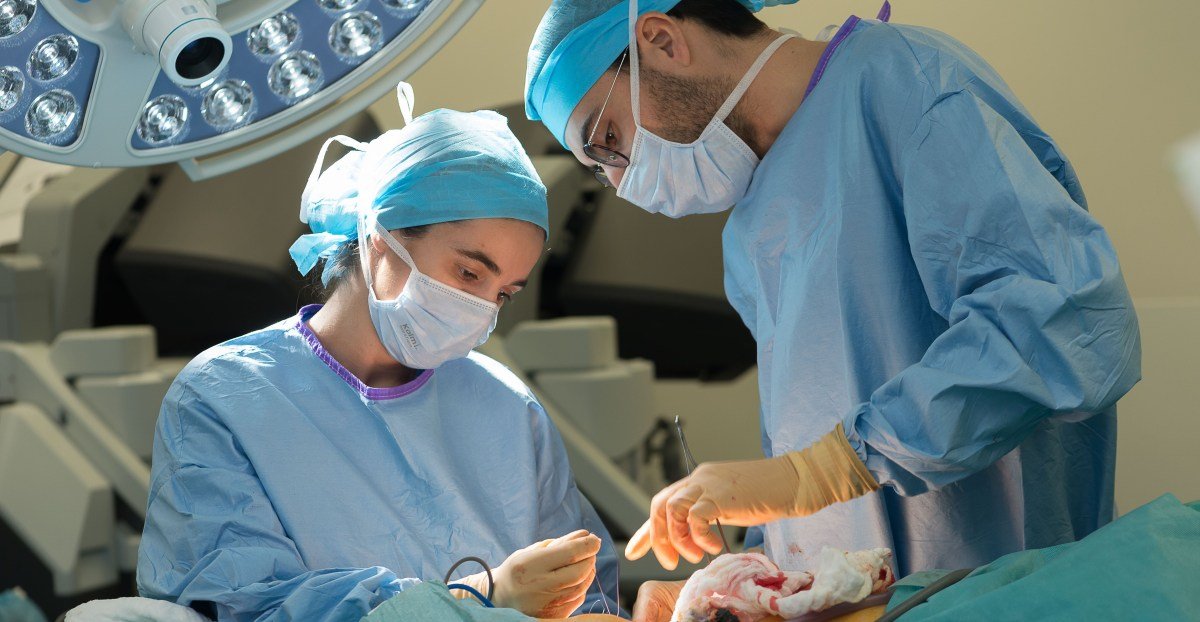
Earlier this year, doctors at the University Health Transplant Institute in San Antonio performed a seven-pair living donor liver exchange, the largest such chain in the country. Over a period of six weeks, the liver transplant surgeons matched seven people willing to donate a portion of their livers to seven other recipients who needed the life-saving transplant. Like most of these paired exchange chains, the logistically complicated process was set into motion by a non-directed living liver donor — someone who was willing to donate a liver to a stranger.. Other donors in the chain, by contrast, had a specific person they hoped to donate to with whom they weren’t immediately compatible.
Blood type and liver size are two main considerations when doctors match donor livers to recipients. Individuals with Type O blood usually have the longest wait times for donor livers because they can only receive them from others with the same blood type. In other cases, the size or anatomy of the donor liver can be incompatible with the recipient.
An estimated 2 percent to 17 percent of living liver donors are rejected from donating to their intended recipient because of blood type, size, or anatomical incompatibility of the system of bile ducts. A major benefit of living donation is that if someone wants to donate their liver to a specific person, but they are not a match, both the donor and the recipient can participate in liver paired exchange programs — two or more incompatible donor-recipient pairs can swap donors.
“For each living donor transplant that you do, you are actually doing two transplants,” said Dr. Jonathan Cullen, a liver transplant surgeon who participated in the liver paired exchange at University Health Transplant Institute.
By that, he means that any time a living donor provides a liver, they also free up an organ on the deceased donor list for someone who might need it more. If we had more living donors, we could save even more lives — especially of those lower on the waitlist — but we need to overcome a few barriers first.
Growing the donor pool isn’t enough
If living donor liver transplants have so much potential, why are they still so underutilised? The answer depends on whom you ask.
When medical researchers from Weill Cornell Medicine and the University of Colorado Denver surveyed 99 liver transplant programs in the country, surgical and medical directors identified different barriers to living donor liver transplants based on whether their program already performed such procedures. Out of the 83 that responded to the survey, around 60 percent of the centers performed living donor liver transplants. Notably, 34 percent of the responses from centers that don’t perform living donor liver transplants cited institutional issues such as lack of financial support or a lack of surgeons trained in living donor procedures, which are meaningfully more complex than kidney transplants.
“Center expertise is very important when it comes to living donations. You want to obviously have your operation done at a center that’s done a lot of these,” said Alyson Kaplan, a transplant hepatologist at Tufts Medical Center and lead author of the study. “Not every transplant center has a living donor program — and so, as you can imagine, not every transplant fellow is going to get exposed to living donation.”
The surgeries are also resource intensive, especially when they are paired exchanges. In the seven-paired liver exchange at the University Health Transplant Institute in San Antonio, two attending faculty surgeons were required for every donor operation and two to four of the same for the recipient surgeries, according to Cullen.
Plus, many of the steps in the liver transplant process are not standardised. There doesn’t yet exist a central organ matching organization for living donor livers along the lines of the National Kidney Registry, and there are no formalized protocols for how living livers are chosen and allocated, or how potential donors are screened. These procedures can differ from center to center, which can complicate attempts to collaborate or share resources.
With living kidney donation, by contrast, the NKR partners with transplant centers and helps them standardize their processes, said Kaplan. The majority of certified kidney transplant centers in the US perform living donor transplants. That combination of shared standards and widely available surgeons makes it easier for one team to procure the organ from the donor and another to perform the recipient transplant, even if the donor-recipient pair is geographically separated.
Donor kidneys can be matched efficiently to recipients thanks in part to the work of American economist Alvin Roth, who won the Nobel prize in 2012 for the theory of stable allocations and practice of market design. His work increased the efficiency and speed of several matching processes, including paired donor-recipient kidney allocations and residency matching for medical students.
”The kind of algorithmic help that people like me can give is very, very similar,” said Roth on whether his work can be applied to liver transplants too. “Almost the same software works. What changes is the compatibility matrix.”
For now, individual institutions that perform paired exchange living donor liver transplants usually do the matching in-house, manually comparing donor-recipient profiles and screening for risks. Kaplan’s study found that 92 percent of living donor liver transplant programs that had never performed this surgery would consider conducting it.
But without enough funding, Kaplan said, a big infrastructural boost like this one is hard to execute on a national scale.
Both infrastructure and funding are necessary to scale living donor liver transplants nationwide. However, without a large pool of willing donors, these resources alone are insufficient.
But building a bigger pool of donors is difficult, partly because becoming a living donor is difficult.
Living liver donors often have to travel to their recipients, pay for associated lodging, and take weeks off work for both the operation and the recovery. The cost of donor screenings and transplant surgeries is usually taken on by the recipient’s insurance, but many programs recommend that the donor plan for any additional expenses, including follow-up appointments, continued medications, and caregiver expenses.
How to be a living liver donor
Any healthy person over the age of 18 can be a living liver donor. The first step of the process is to contact a transplant center that has a living donor program. If you are donating to someone you know, you can ask them to put you in touch with their care team but you can also contact their hospital directly and let the transplant staff know if you prefer to get tested for a match before telling your intended recipient.
If you wish to donate to a stranger, the new non-directed living donor network started by the American Liver Foundation is a good starting point. They can help connect you with a transplant center for further testing if you pass their initial online health questionnaire.
Nonprofits like the National Living Donor Assistance Center (NLDAC) can help living liver donors subsidize costs, but only if the recipient’s household income is 350 percent below the federal poverty guidelines. For a household of two in the 48 contiguous states, that is an annual income of $75,740. Some states also provide income protection for living donors who have to take time off work, but others don’t. In the absence of more universal protections and other forms of support, building the donor pool may be a bottleneck for also building out broader living liver donation infrastructure.
“Donors should never have a penalty to be a donor. They are definitely the national heroes, and they should have all the protections that they deserve. Nobody should have to go into debt to be a donor, for goodness sakes,” said Dr. Julie Heimbach, director of the Transplant Center at Mayo Clinic. The center performed its first paired living liver transplant in 2024.
Moving the needle — and the organs
One major roadblock in establishing national collaborative programs for living liver transplants comes down to what’s called the organ’s cold ischemia time. This is the time between organ procurement and transplantation, during which the organ is kept cool, and no blood flows through it.
Kidneys can hold on for longer than livers, which means that they can be transported across significant distances without the quality of the organ deteriorating. With livers, it becomes all the more important to quickly procure and transplant them because they can’t stay on ice too long.
This limits how far a liver can be transported. A liver from a living donor across the country might not be viable by the time it reaches the recipient and is transplanted — and even if it could be, a transplant surgeon may not be willing to take a risk on it.
In 2023, when United Network for Organ Sharing (UNOS) Labs, the innovation arm of the private non-profit that manages the organ transplant system in the US, attempted to pilot a nationwide liver paired donation program, this proved to be one of the biggest stumbling blocks. The program was anonymously funded by a private benefactor and involved 15 transplant centers across the US. However, the program shut down less than a year later. Even though one recipient-donor pair was enrolled for a liver paired exchange, the transplant surgeries were ultimately not executed. Many of those I spoke to for this story — transplant surgeons from centers that participated in the pilot — said that the funding dried up before the challenges of a collaborative liver paired exchange surgery could be resolved.
“One of our key learnings was that moving donors, rather than organs, created major barriers. Donors are connected to their care teams and support systems, and asking someone to relocate for surgery and recovery is difficult,” Dr. Benjamin Samstein, the lead on this pilot and chief of liver transplantation at NewYork-Presbyterian and Weill Cornell Medicine, said in an email.
He believes that there is still potential to revisit the concept, this time with a focus on moving organs instead of donors and exploring regional hub models.
As Vox reported earlier this year, some transplant surgeons now rely on a new method of organ preservation where an external pump is used to circulate oxygenated blood or other fluids through an organ after it is procured from the donor. This keeps the donated organ viable for much longer and has been shown to outperform standard “icebox” preservation where the organs are cooled on ice. That could, transplant surgeons say, spare living donors the obligation of traveling to their recipients.
While this technology, which is also revolutionizing the use of organs from deceased donors, may eventually reduce the pressure to recruit living donors, Dr. Jason Hawksworth, Director of the Robotic Liver Surgery Program at New York-Presbyterian/Columbia University Irving Medical Center, doesn’t think that it will diminish their importance.
The MELD score used to prioritize patients on the liver transplant waiting list does not capture all clinical symptoms. Patients with low MELD scores can also face life-threatening complications of liver failure such as abnormal buildup of fluid in the abdomen. Such patients benefit most from living liver donations because they don’t have access to machine-perfusable organs usually reserved for those higher on the waitlist, said Hawksworth.
To meet at least some of the need, the American Liver Foundation launched the first-ever non-directed living liver donation network to connect those who would like to donate to a stranger to transplant centers who can access this network free of charge. While the network has already saved two lives as of June this year, it remains to be seen if the program will run into the same issues as its more ambitious UNOS counterpart.
Ultimately, optimizing the field of organ procurement and transplant is both a medical problem and an infrastructural one. OPTN data shows that 95 percent of those on the organ waitlist are in need of a kidney or a liver — the two organs a living person could give. Kidney donation has already been transformed by a combination of smarter algorithms, better standards, and trained surgeons. While living liver donation presents more challenges, there’s a real possibility to revolutionize the process and save lives.
”If these particular barriers were not an issue,” Kaplan said. “I think everyone would be interested in it.”



