
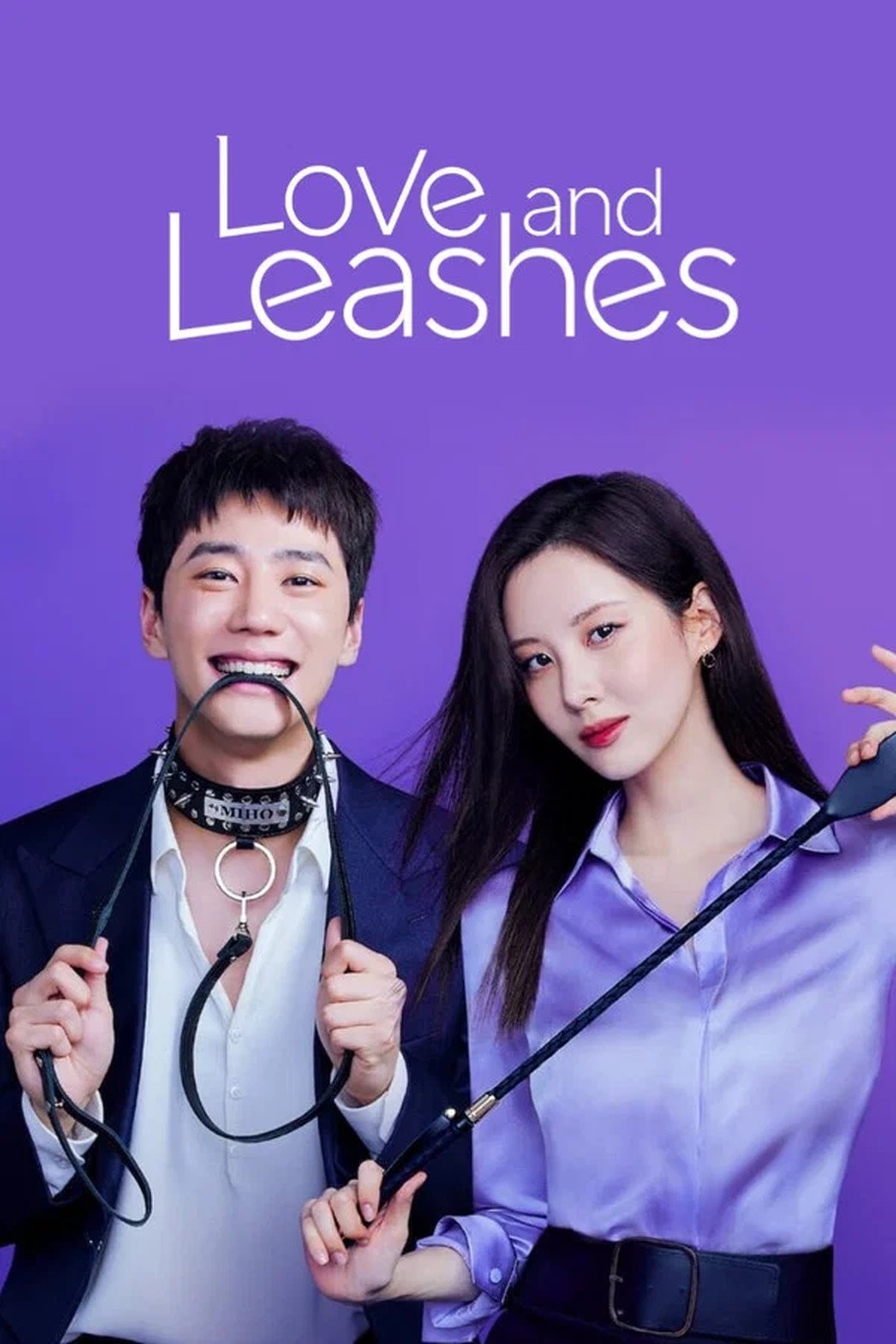
Every so often a premise arrives with just enough transgression to promise something genuinely different, and then spends its running time apologising for it. “Love and Leashes”, Park Hyun-jin’s 2022 Netflix romantic comedy adapted from the webtoon “Moral Sense” by Gyeoul, is one such case. It builds a mainstream Korean office romance around a dominant and submissive relationship, and then files that relationship down until almost nothing sharp is left.
Click on the image below to follow our Tribute to Netflix
Jung Ji-woo, a capable public relations manager forever undermined by the men around her, takes delivery of a parcel meant for a colleague with a near-identical name, Jung Ji-hoo, and finds a collar and leash inside. Ji-hoo, poised and successful but privately ashamed of his desires, mistakes her brisk, bossy manner for a confession of dominance and asks her to become his mistress. After some hesitation, the two sign a three-month contract, she as the novice dom, he as the willing submissive, and the story follows their arrangement as it edges, inevitably, toward something more tender.
There is a version of this material that knows exactly what it wants to be, and Park never quite locates it. The kink at the centre is kept remarkably chaste, little nudity, no sex to speak of, the whole subculture rendered so gentle it could screen on daytime television. That restraint could be a choice, even a charming one, if the direction leaned into the oddness of what it has. Instead, everything is pitched in the same soft, reassuring register, and the two halves of the premise, the provocative and the wholesome, are never allowed to fuse into anything knowing or pointed.
The leads do what they can. Seohyun, in her first leading role for the cinema, brings a bright, watchful energy to Ji-woo, and Lee Jun-young makes Ji-hoo’s fragility sympathetic rather than pitiable. They are amiable together and clearly game. Yet the cutesy mugging, the twinkly comedy and the greeting-card sentiment they are asked to play belong to a blander picture than the one the premise promises, and their charm is left carrying far more weight than it can bear.
On a craft level, the production is smooth and unremarkable. The cinematography of Lee Hyung-bin keeps everything clean, bright and glossy, the editing of Lee Young-lim moves at an unhurried, televisual pace, and the score by Lee Jin-hee and Kim Hong-jip nudges each beat with the same soft, sweetening touch. It all works, and none of it takes a single risk, which slowly becomes the trouble.
At almost two hours, there is nowhere near enough story to fill the running time. The novelty of the setup has faded by the halfway mark, and from there the padding starts to show, the same gentle exchanges circling characters drawn too thinly to sustain them. Somewhere inside this premise sits a braver work, one that either commits fully to comedy or takes the relationship seriously enough to unsettle, and “Love and Leashes” settles for neither.
The result is oddly toothless, a story about desire that seems faintly embarrassed by it. There is real warmth in the central pairing, and a welcome, unshaming curiosity about a stigmatised subculture, and for some viewers, that sweetness will be enough. But two willing leads can only do so much for a picture this unsure of its own nerve, and the sharper film it might have been keeps drifting into view, just out of reach.



