
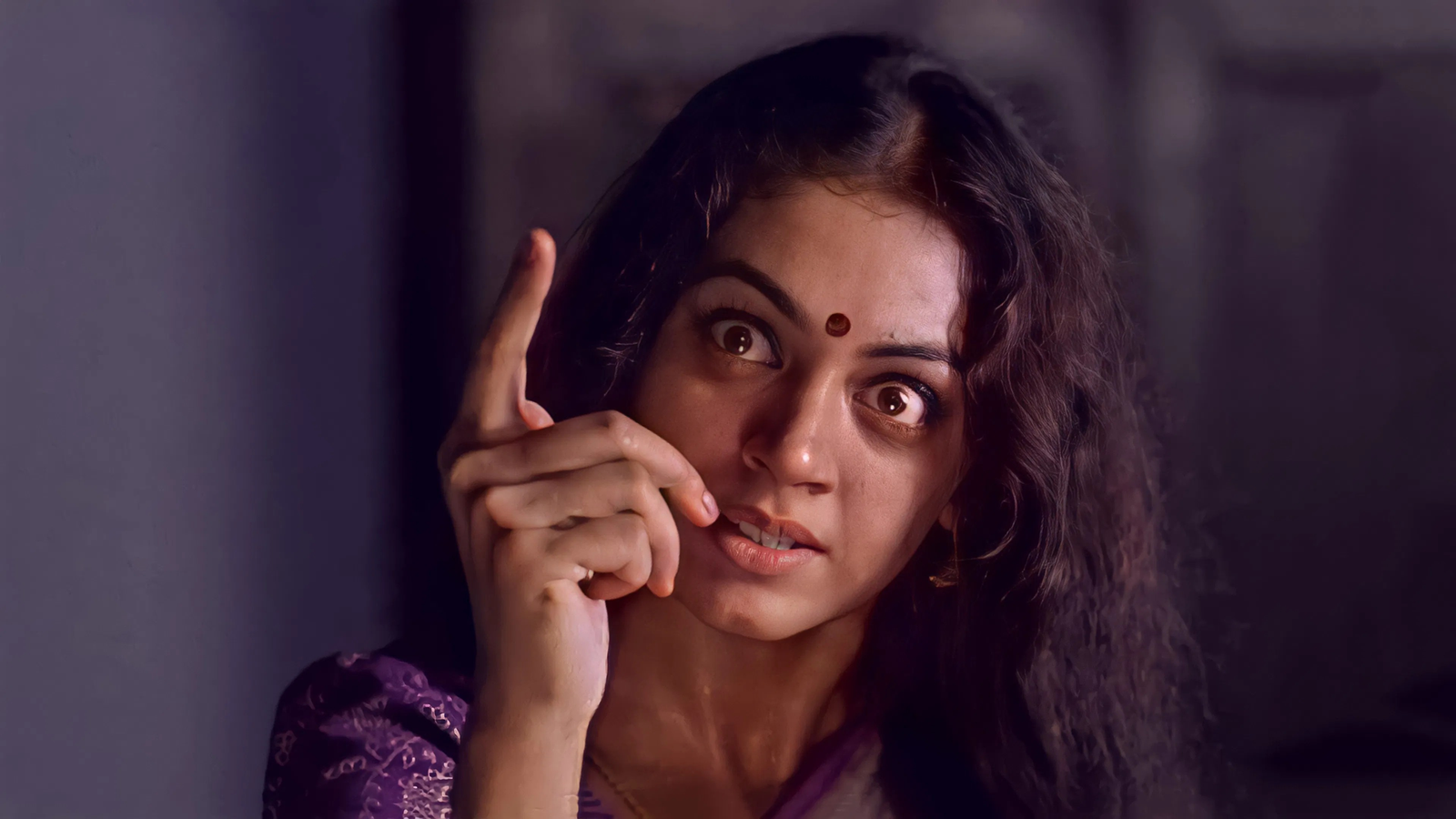
One of the most popular movies in the Malayalam genre industry, Fazil’s celebrated psychological horror film “Manichithrathazhu” still retains most of its power and impact due to a slew of positive factors that make for a great time. With its enormous popularity upon release well earned, the acclaim still evident today and responsible for bringing plenty of talent into the industry with their first credits, there’s still plenty about this one that holds up as an all-time classic.
Follow Our Tribute to Malayalam Cinema by Clicking in the link Below
After they decide to take a vacation, Nakulan (Suresh Gopi) and his wife Ganga (Shobhana) arrive at Nakulan’s ancestral village in Kerala. Despite warnings from elder family members, Nakulan insists on staying at his ancestral home, the Madampalli Tharavad, which is apparently haunted. The rest of the family, Thambi (Nedumudi Venu), his wife (Kuttyedathi Vilasini), and their children Sreedevi (Vinaya Prasad), Jayasree (Vaijayanthi), and Chandhu (Sudheesh), as well as Nakulan’s maternal aunt Bhasura (K. P. A. C. Lalitha), her husband Unnithan (Innocent), and daughter Alli (Rudra), joins them, not willing to leave them alone there.
The couple is cautioned to avoid certain parts of the house, particularly the “Thekkini,” a locked room. When they inadvertently open the locked room and release the spirit inside, which causes Ganga to start acting weird, they call upon Dr. Sunny Joseph (Mohanlal), a psychiatrist from America, to help cure Ganga’s personality disorder.
“Manichithrathazhu” remains one of the most sophisticated and enduring entries in Malayalam genre cinema. Writer Madhu Muttam crafts a brilliant narrative foundation, eschewing a traditional historical prologue in favor of a slow-burning discovery. As Nakulan and Ganga move into the ancestral Madampalli mansion, the family’s oral history serves as the primary vessel for the lore. The legend of the vengeful dancer Nagavalli, locked away in the Thekkini after her lover was murdered by a jealous feudal lord, is introduced with a localized flavor that makes the house itself feel like a living, breathing character.
The film truly excels in its mechanical subversion of the possession trope. Rather than relying on standard exorcism clichés, the haunting manifests through a series of “glitches” in reality—objects breaking, unexplainable fires, and subtle shifts in personality. The arrival of Dr. Sunny introduces a fascinating tension between psychological science and ancient tantric tradition. By framing the “possession” as a potential dissociative identity disorder, the film moves beyond simple scares into a high-stakes race to identify the afflicted individual. The climax, featuring an elaborate ritual designed to offer “closure” through psychological trickery and colorful ceremony, remains one of the most creative resolutions in horror history.
However, even a masterpiece like “Manichithrathazhu” has minor structural indulgences. The movie’s primary flaw is its heavy reliance on a narrative red herring involving Sreedevi. The script goes to great lengths to paint her as the vessel for Nagavalli’s spirit, but the logic falters because Sreedevi’s character is underdeveloped and her connection to the “target” of the revenge is murky. While this deviation is intended to keep the audience guessing, it occasionally feels like wasted screen time that could have been better spent fleshing out the secondary cousins or streamlining the pace.
Additionally, the film suffers from some typical tonal fluctuations of its era. A few comedic subplots—particularly involving a kooky neighbor with an exaggerated personality disorder—feel disconnected from the mounting dread in the mansion. Similarly, the deep dives into the historical backstory of Ramanathan and the Karnavar occasionally stretch the runtime, causing the middle act to feel slightly overlong. Yet, these are minor gripes in an otherwise airtight psychological thriller.
“Manichithrathazhu” is a definitive pillar of the genre, successfully blending folklore, music, and psychiatric theory into a cohesive whole. Its ability to maintain a “supernatural vibe” while grounding its resolution in human psychology is a masterstroke. For those looking to explore the roots of Indian psychological horror, this is an essential, high-water mark that survives every re-watch.



