
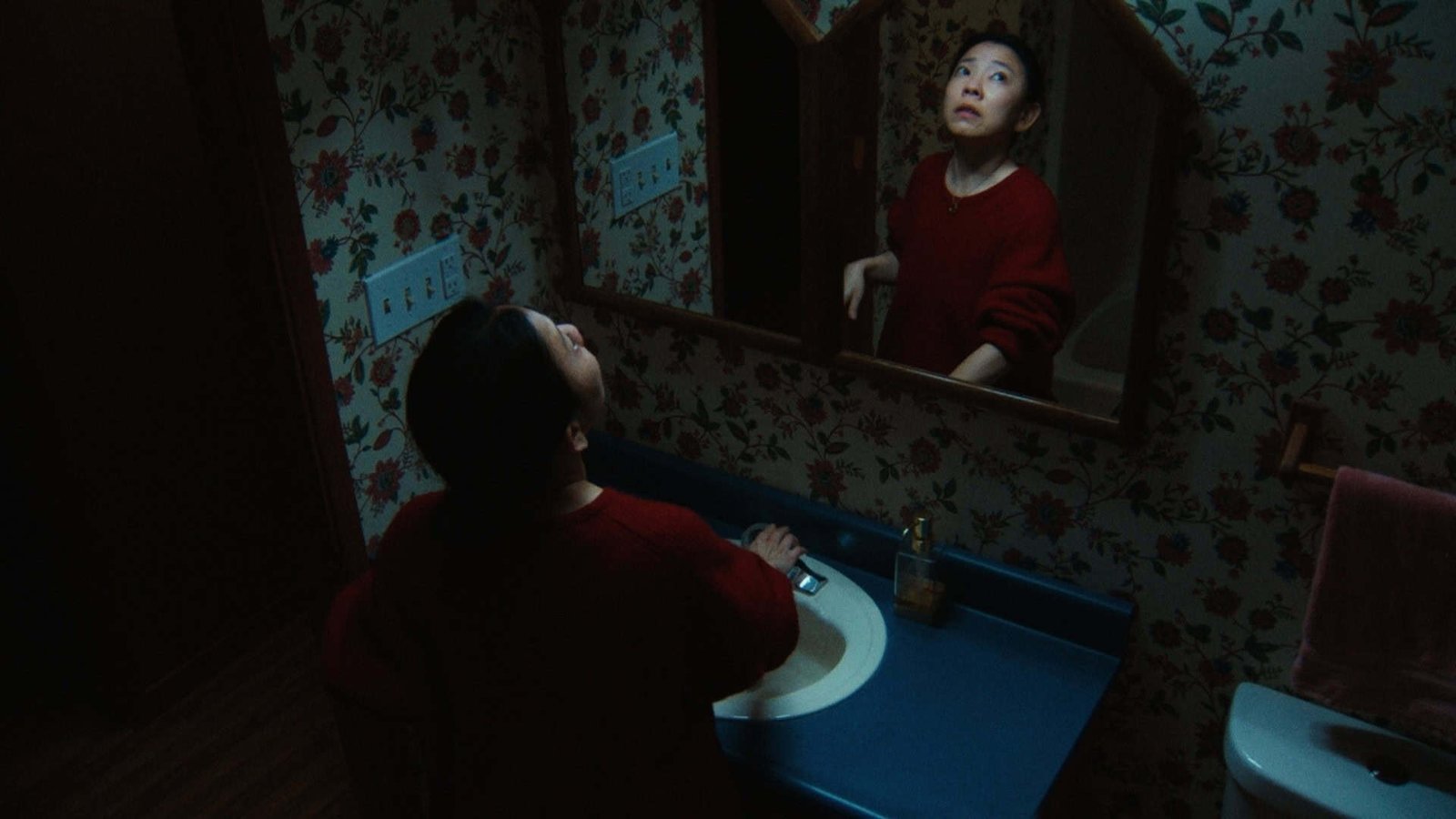
Written and directed by Josh Park, a Bay Area filmmaker of the Korean diaspora whose work has screened at festivals including the Boston Asian American Film Festival, Philadelphia Asian American Film Festival, and Buffalo International Film Festival, “Mary Kwon, Mary Kwon” makes its world premiere at the Asian American International Film Festival as an atmospheric psychological mystery that lingers long after the credits roll.
Working as an English professor at a community college, Mary Kwon (Cat Kim) drops her classes mid-semester and journeys to an isolated house in the woods where, decades ago, her mother was arrested and vanished. As Mary attempts to do some self-healing and creative writing, she notices odd noises inside the home and surrounding forest. At night, two mysterious hikers, Terrence (Tyler Aguallo) and Granger (Madison Mendez), drop in, and Terrence suffers a sudden psychosomatic illness. Mary uses her resourcefulness to help him recover, but as the night continues, things around them get stranger by the hour.
Overall, “Mary Kwon, Mary Kwon” is a lot of fun with plenty going for it. The straightforward storyline by writer/director Park offers a solid mix of psychological unease and genuine supernatural tension. The picture opens with Mary arriving at the cabin and trying to smooth over her colleagues’ surprise at her sudden departure. Leaving everything behind creates a strong starting point that establishes her fragile mental state once she finds herself alone. When Terrence and Granger arrive, giving her a chance to engage with company, there is a marked shift in tone. Their interactions take on a far more intense and personal edge, as breaks in her mental state instill the belief that something is wrong and must be resolved. This is slowly revealed to tie into her mother’s past through surreal, distorted black-and-white flashbacks showing interactions in the woods and conversations with a psychiatrist, which help explain the unhinged psychological nature of the ordeal.
With the flashbacks filling in the gaps of Mary’s fractured mindset, “Mary Kwon, Mary Kwon” takes an entertaining twist by linking her situation directly to her mother’s fate. As the flashbacks show a devious psychiatrist manipulating her mother into giving up Mary to satisfy traditional roles, the movie establishes a logical origin for Mary’s psychological condition. The narrative focuses heavily on why the mystery of her parents’ disappearance has hung over her so heavily, and the subsequent uncovering of trauma provides a fresh spin on her identity and purpose at the cabin. With early clues suggesting Terrence and Granger are up to no good, this shifts into a wholly different exploration that makes for an engaging viewing experience.
There isn’t much to dislike, but “Mary Kwon, Mary Kwon” has a few factors holding it back. The major issue is the sluggish first half. Setting up Mary’s mental state through her departure from school, sorting through her mother’s belongings, and dealing with professional ramifications adds depth to her unraveling, but it comes at the expense of momentum. Too much of this section relies on following her around the cabin as she looks through old books, remembers interactions with her mom, or simply wanders, leaving very little compelling activity. Furthermore, the psychological focus of the picture means there is minimal physical action overall. The flashbacks and unraveling mystery remain quiet and low-key while dealing with her fractured memories, keeping the pacing muted for most of the runtime.
While it features strong psychological elements at the expense of visceral action, “Mary Kwon, Mary Kwon” offers enough compelling material to counter its slower moments. Viewers who appreciate an atmospheric, character-driven approach to genre cinema will find plenty to enjoy.



