
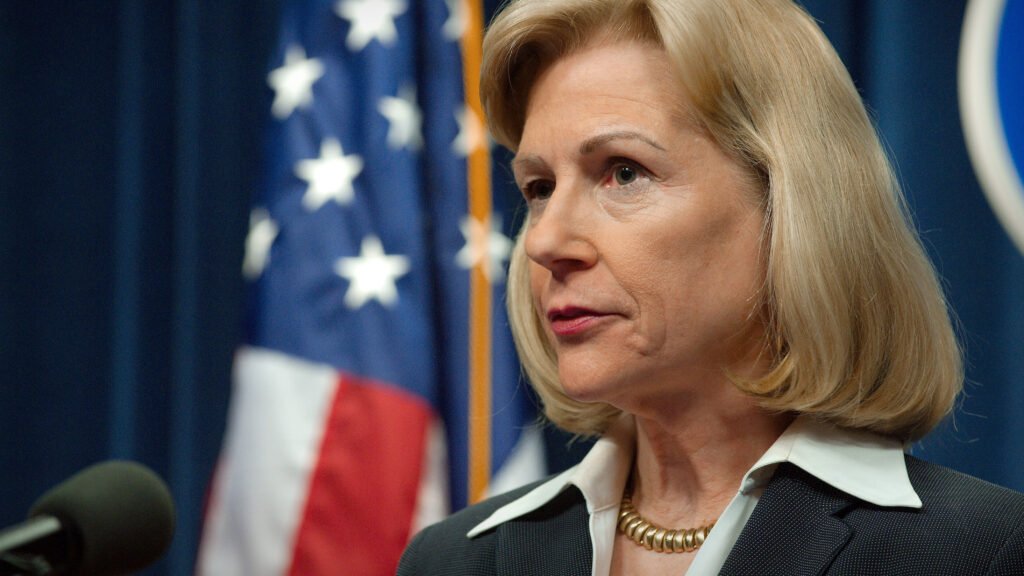
Nancy Cox, who for decades was a global leader in influenza research, has died. Cox headed the influenza team at the Centers for Disease Control and Prevention for 22 years, shepherding it from a branch of 14 people to a division of over 100. She was also director of the World Health Organization’s Collaborating Center for the Surveillance, Epidemiology, and Control of Influenza at the CDC.
Cox died Thursday from glioblastoma, a cancer of the brain. She was 77.
A virologist, Cox led the CDC’s efforts to respond to seasonal flu and prepare for pandemic influenza. But she was at least as well known for her work fostering global efforts to enhance monitoring for the evolution of seasonal flu viruses and spot emerging viruses with pandemic potential.
“She was a critical component of connecting countries all around the globe,” said Daniel Jernigan, who served as deputy director of the flu division under Cox, taking over when she retired in 2014. “Because of her vision, we are better prepared for pandemics and providing better prevention of influenza illness and death.”
Cox and the team she led contributed substantially to the current surveillance system that underpins the annual updating of flu vaccines.
“She was central to the integration of modern technologies into vaccine strain selection and pandemic preparedness activities and was always the first to remind everyone what was at stake, the health of millions,” said Richard Webby, head of the WHO Collaborating Centre for Studies on the Ecology of Influenza in Animals and Birds at St. Jude Children’s Research Hospital, in Memphis.
Scientists who worked for and collaborated with Cox were quick to praise her dedication, her diplomacy, and her efforts to expand global flu surveillance.
“There are a lot of really great scientists involved in influenza. … But nobody had the kind of respect and breadth and reverence that Nancy had. And it was really clear why,” said Keiji Fukuda, who was chief of influenza epidemiology under Cox before moving to the WHO’s influenza program in 2005.
“Part of it is that she just knew so much about influenza — the science, the history, the contemporary milieu. Part of it was because she was kind of at the nexus of science and public health. But I think a lot of it was just because of how she was.”
People who knew Cox describe a scientist who was deeply knowledgeable about influenza but also a strong and supportive leader. Arnold Monto, a veteran flu researcher and professor emeritus at the University of Michigan, said it was important to Cox to help junior colleagues expand their skills, “so that they really developed and flourished.”
She was a terrific boss, said Fukuda, who is now retired.
“She could be goofy. She could be funny. She could be girlish. And she could be very stern when she was upset,” he said. “But what you knew is that she was always attentive, and she was fair, she didn’t micromanage, and she expected you to work hard. And when you looked at her as an example, you just were working for somebody that you wanted to work hard for.”
Born and raised in rural Iowa, Cox received a bachelor’s degree in bacteriology from Iowa State University. She then attended the University of Cambridge, in the United Kingdom, on a Marshall fellowship, where she received a doctorate in virology.
She joined the CDC in 1975, and was named head of the influenza branch in 1992.
Interest in her field exploded in the late 1990s and again in the mid-aughts when the H5N1 bird flu virus began infecting and killing mass numbers of poultry in China and other parts of Southeast Asia — and infecting and killing some people as well. There was enormous concern the world was on the verge of what would have been the first flu pandemic in more than three decades, with all signs at the time pointing to the possibility it might be extraordinarily severe. In the early days of detection of human H5N1 infections, roughly half of confirmed cases died.
Cox and others aggressively promoted the need for pandemic preparedness.
“She was the focal point of influenza response, surveillance, and research in this country,” said Anthony Fauci, former head of the National Institute for Allergy and Infectious Diseases at the National Institutes of Health.
“She was very, very, very well respected by colleagues at NIH, including me.”
In 2006, Cox was named Federal Employee of the Year by the Partnership for Public Service, a nongovernmental organization that promotes excellence in government employees. The same year she made the Time Top 100 list in a class that included Oprah, Bill and Melinda Gates, Hillary Clinton, and then President George W. Bush.
Despite the fact that H5N1 continues to this day to wreak havoc on poultry operations and infect an astonishing array of mammals — including the occasional person — it has not triggered a pandemic. In an article STAT published in 2019, Cox warned against complacency towards this virus.
“We don’t know how the story’s going to end,” she said.
After the startling 2024 discovery that H5N1 was infecting dairy cows in the United States, Cox marveled at how it continues to rewrite influenza dogma. “It seems that these viruses must have some kind of ‘special sauce’ that has allowed them to find ways to persistently spread, evolve, and cause what appear to be increasingly serious problems in both wildlife and domesticated animals,” she told STAT in an email.
Influenza is a famously mercurial virus. Cox often said: “If you’ve seen one flu season, you’ve seen one flu season.” Still, influenza scientists were taken by surprise in 2009 when instead of the feared bird flu pandemic, the world was hit with a pandemic caused by an H1N1 virus that had evolved in pigs. Though the virus was thought to have emerged in Mexico, the first two confirmed cases were children in California who had no connections to pigs or to each other. The CDC was at the center of figuring out what was happening.
Richard Besser, CEO of the Robert Wood Johnson Foundation, was acting CDC director at the time. He recalled his many interactions with Cox that tense spring. “In briefings to the public, she gave the country confidence that we were doing all that we could to protect the health of people here and around the world. She modeled what it was to be a true public servant,” he said.
As she and her team were racing to trace the origins of the virus and how far it had spread, Cox suffered a personal tragedy. Her house was struck by lightning and burned to the ground. Fortunately no one was hurt.
She was reported to have been back at work the next day in clothes that smelled of smoke. “It was devastating,” she said. “But I flipped a switch in my mind to concentrate on what we thought might turn into a pandemic.”
During her time at the helm of the CDC’s flu operations, global sharing of influenza viruses was an ongoing challenge — one that Cox tackled relentlessly. Kanta Subbarao, who worked under Cox as section head for molecular genetics for a time — and later headed to Australia to run a WHO flu collaborating center there — said Cox worked hard to build relationships with influenza scientists in a number of countries, including China, and to help them increase their scientific capacity.
“We had Chinese scientists [training at CDC] and we had collaborations and co-authorships and so on. So I think she worked very hard to try to bring them into the global umbrella of influenza surveillance,” said Subbarao, who is now in the department of microbiology and immunology at Laval University in Quebec City.
Jernigan said Cox’s diplomatic skills served the world well. “She recognized that you don’t compel sharing, you really invite it,” he said. “And you do that through opening up and providing something and bringing something to the table.”
Cox is survived by her husband, Evan, a daughter, a stepson, and four grandchildren.



