
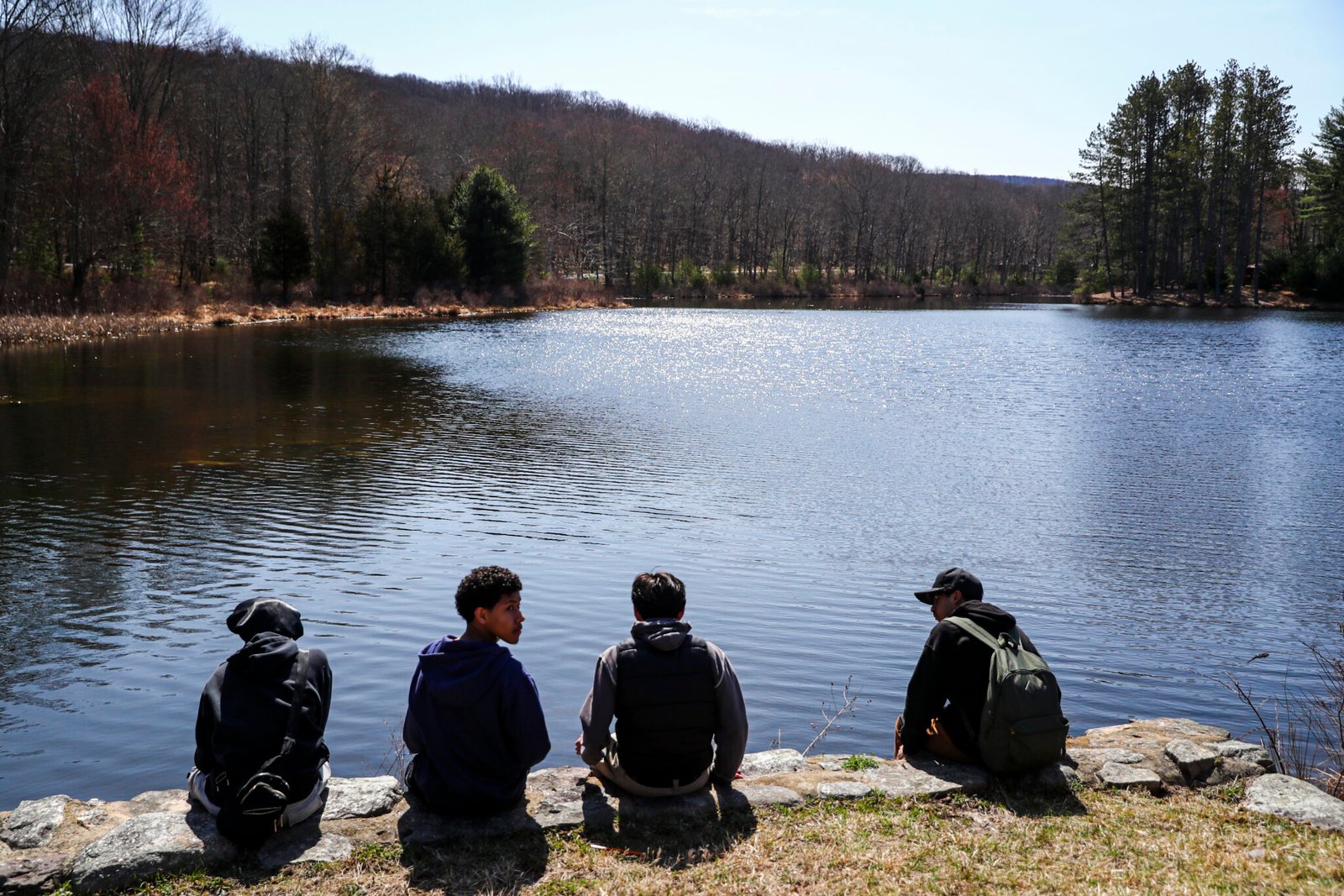
A state-owned environmental school that has long teetered on the brink of permanent closure as its state funding fell now has a brighter future, with lawmakers making it eligible for state preservation grants to cover its capital needs.
The New Jersey School of Conservation got $1.3 million in the $60.7 billion state budget lawmakers recently approved for the current fiscal year, which falls short of the $3 million the Sussex County school had sought to support its $1.6 million annual operating expenses and millions more in needed repairs.
But Kerry Kirk Pflugh, the school’s executive director, said fundraising will close the $300,000 gap in operating funds. The school expects to bring in $500,000 this fiscal year through donations, fees, and grants.
Gov. Mikie Sherrill also inserted language into the budget that enables the school, nestled in Stokes State Forest around Lake Wapalanne, to apply for state preservation funding to fix crumbling cabins and other structures that have fallen into disrepair since the school’s 1949 founding. The 240-acre school is the oldest year-round residential environmental education center in the country, with nearly 3,900 students and teachers — half from high-poverty school districts — participating in its programs last year.
State law requires nonprofits to come up with a 50% match to access state preservation funds, and the school is managed by a nonprofit, which historically has kept preservation funds out of its reach. Sherrill’s budget created a new carveout, at least for this year, for nonprofits looking to improve, repair, or develop state-owned land and buildings.
Several legislators separately introduced a bill that would codify that change, so that the school and other similarly situated nonprofits can access state preservation funds beyond this fiscal year. The bill passed the Senate unanimously last week before legislators recessed for the summer; the Assembly’s version of the bill awaits a hearing in that chamber’s environment committee.
The lawmakers’ actions came after intense advocacy, with Pflugh estimating that supporters sent nearly 11,000 emails to Sherrill’s office and legislative leaders to demand state funding.
“That is going to take a huge, huge, huge burden off of us, in terms of being able to operate our programs and fix the buildings,” Pflugh said. “It’s going to help us tremendously.”
Worsening facility and infrastructure conditions have been the school’s biggest financial challenge, she added.
“We inherited buildings that are 90 years old, by and large, and that had been neglected or deferred maintenance for many years,” she said. “Almost every one of our buildings needs roofs replaced. We have to upgrade our plumbing and electric; our whole electric system throughout the campus needs upgrading so we can accommodate the voltage that’s required for the modern equipment that we’re using and Wi-Fi.”
The school also has a historic dam on site that needs $3 million in repairs. Workers from the Civilian Conservation Corps, the work relief program under President Franklin D. Roosevelt, built the dam in 1932, as well as the camp itself that eventually became the School of Conservation.

The school is working to develop more funding sources beyond the state to cover the dam repair and other costs, expanding fundraising efforts and seeking support from businesses and community groups, Pflugh said.
State funding for the school has steadily shrunk in recent decades, driving Montclair State University, which had managed it since 1981, to close it in 2020.
The school reopened in 2021 under the management of the nonprofit founded to save it, the Friends of the New Jersey School of Conservation. The group signed an agreement in 2023 to manage the site for 20 years.



