
 WASHINGTON — The Trump administration issued waivers to a New Jersey energy company allowing it to operate two of its power plants out of compliance with a federal rule to limit air pollutants including highly toxic mercury.
The Environmental Protection Agency granted these exemptions to the rule, a regulation finalized in 2024, to Morristown-based Olympus Power LLC. Formally called the Mercury Air Toxics Standard, or MATS, the rule was in force until its February repeal by the Trump administration. Prior to that, companies had typically had complied by installing pollution-control devices.
In March 2025, Olympus asked for exemptions — waivers not offered to the wider industry — for its Northampton Generating Station in Northampton, Pa., and at a plant near Toledo, Ohio, according to emails that the Environmental Defense Fund, a legal and environmental organization, obtained through public-records requests.
“The exemption represents an extraordinary form of relief that had never been granted in the history of the statute before this administration,” Sen. Sheldon Whitehouse, a Democrat from Rhode Island, wrote Olympus president and CEO Richard Vicens on May 14. “The American public is forced to pay for these exemptions and this additional risk, with their health and with their wallets.”

Olympus is among 17 companies that received presidential exemptions from the toxics standards, according to Whitehouse, the top-ranking Democrat on the Senate Environment and Public Works Committee, which has jurisdiction over air pollution laws and regulations. Whitehouse has an ongoing investigation into those 17 companies. Spokespeople for the senator did not say whether Olympus had turned over records the senator requested.
Olympus did not respond to a request for comment from NJ Spotlight News. Vince Brisini, director of environmental affairs at Olympus when the company asked for its exemptions, said the company requested partial waivers for both facilities.
In an email Tuesday, Brisini criticized changes to the latest version of the MATS rule, in particular how EPA assembled its data to justify the regulation, the way a company could comply and the time for “demonstration of compliance.”
“An opportunity was provided to avoid a completely frivolous and unnecessary regulatory change,” Brisini said to NJ Spotlight News when asked why his company requested exemptions. “There is no basis for the change to a rule that requires significant capital and operating and maintenance costs that provides no monetized benefits.”
Brisini said the company has not requested or received other waivers.
Major health benefits
When it finalized the rule in April 2024, the EPA under President Biden projected that the changes would result in $300 million in health benefits from 2028-2037.
The second Trump administration is plain about its desire to uproot regulations to protect the air, water, climate and land, moves challenged by attorneys general in Democratic states.
“Today is the greatest day of deregulation our nation has seen. We are driving a dagger straight into the heart of the climate change religion to drive down cost of living for American families, unleash American energy, bring auto jobs back to the U.S. and more,” EPA Administrator Lee Zeldin said in March 2025, when he announced 31 moves to cut regulations. One of those decisions was a “reconsideration” of the mercury and air toxics rule.
Many of those 31 decisions have met resistance in federal court. Among the pending legal cases are challenges over the MATS rule, which environmental groups and attorneys general, including Jennifer Davenport in New Jersey, sued to have reinstated.
Across agencies and departments, this administration has proposed or finalized 372 rules or guidelines to weaken or eliminate climate protections, according to a tally maintained by Columbia Law School researchers.
Mercury, arsenic, chromium
Mercury is a powerful neurotoxin that can cause childhood brain damage, leading to lifelong health concerns. The administration, in its MATS rule repeal, also rolled back regulations on arsenic and chromium pollution, as well as other toxic metals linked to cancer, cardiovascular disease and neurological ills.
“Mercury and other toxic air pollutants don’t just disappear — they accumulate in our communities, our food and our children. Rolling back these protections puts the most vulnerable Americans — especially children, pregnant people and overburdened communities — at serious risk and undermines decades of progress in cleaning the air we breathe,” said Ellen Kurlansky, a former air policy analyst in EPA’s Office of Air and Radiation.
After MATS was implemented in 2012, coal plants nationwide released about 29 tons of mercury each year. In 2021, that total had fallen 90%, according to the Environmental Protection Network, a group of former career and political EPA appointees.
The Trump administration has also exempted certain industrial facilities and industries from regulations, such as two New Jersey chemical plants that use a dangerous gas to clean medical devices and sterilize food, at dozens of polluting sites across the state.
In spring 2025, the EPA created an electronic system for companies “to request a Presidential Exemption under [a provision] of the Clean Air Act.”
The provision in question, Section 112(i)(4) of the Clean Air Act, a landmark pollution law Congress passed in the 1970s and has amended since, is what Olympus cited in its requests last year to the EPA. The section allows exemptions for as long as two years if the president determines “the technology to implement the standard is not available and it is in the national security interests” of the U.S. to make an exemption.
Brigit Hirsch, an EPA spokesperson, said exemption requests were passed to the White House.
“EPA played no role in the determinations set out in the statute and specifically vested in the President,” Hirsch wrote NJ Spotlight News on Tuesday. “Any requests sent to the EPA’s electronic mailbox were forwarded to the White House, and any further questions about process and decisions should be directed to the White House.”
‘National security’
The president and administration officials have argued that coal-fired power plants are vital to national security and in turn should be lightly regulated.
In letters to the EPA sent on March 28, 2025, Brisini, the Olympus official who wrote EPA for exemptions, used similar language.
“Importantly, President Trump has identified that it is beyond dispute that a reliable and cost-effective electric grid is critical to the national security of the United States. In light of the substantial and unexpected increase in electricity demand growth, keeping the plant online will help to meet this national security objective,” Brisini wrote of the Pennsylvania site.
No president invoked this section of the Clean Air Act until Trump, according to Whitehouse.
During his second term, Trump issued exemptions from MATS to companies operating more than 30 power plants and 70 coal-fired generating units. The exemptions “unilaterally and unlawfully exempted nearly one-third of all U.S. coal-fired power plants, nearly one-quarter of chemical manufacturers, almost half of all commercial medical sterilizers, one of two U.S. copper smelters, and the entire coke oven industry from standards for toxic pollutants including mercury, ethylene oxide, benzene, and acid gas,” Whitehouse said in May.
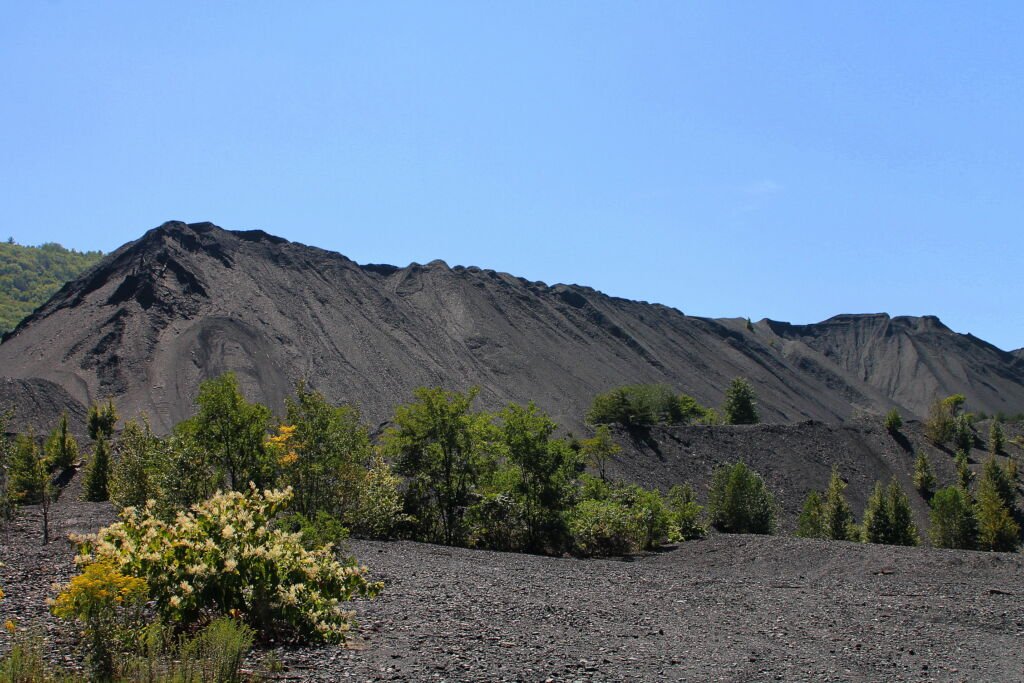
The Northampton site entered into operation in 1992, according to Olympus, and runs on anthracite coal refuse, also called slag or culm. The Ohio site, also coal-powered, is newer. It started running in 2002.
Both Olympus facilities are listed in a proclamation Trump issued in 2025, when he moved to delay the implementation of the Biden-era MATS rule.
Olympus employees have donated $44,010 since 2008 to federal politicians and campaigns, including to Republicans and Democrats from eastern Pennsylvania, according to Federal Election Commission records.



