
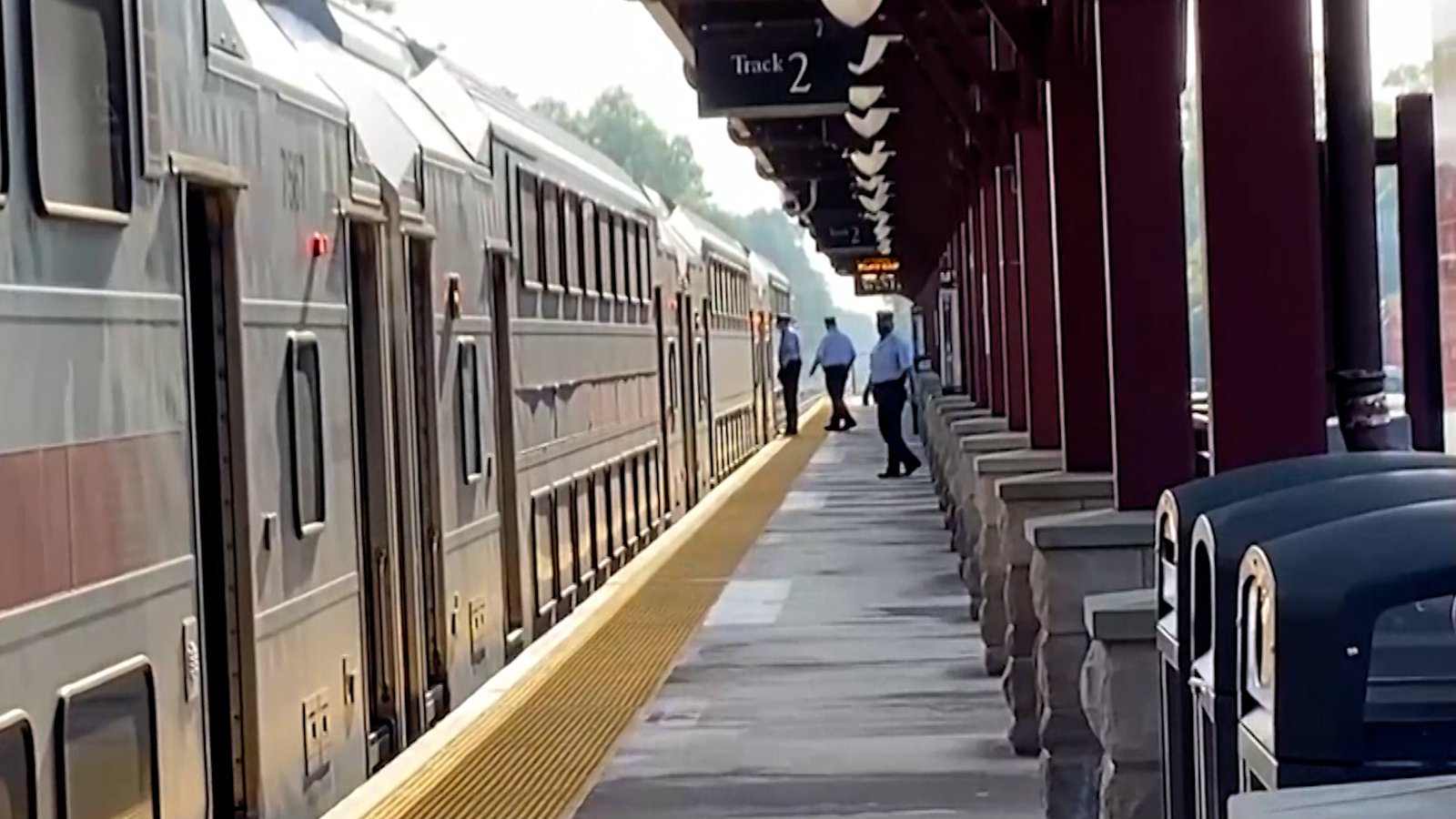
It was NJ Transit’s biggest test: moving hundreds of thousands of soccer fans to and from eight FIFA World Cup soccer matches in East Rutherford. The agency passed, its chief says, and the price tag is being calculated.
The tournament carried extra weight for the agency that flunked what was billed as the first mass-transit Super Bowl. That 2014 debacle left thousands of fans stranded for hours at the Meadowlands stadium. This time, NJ Transit says it moved a record 370,000 riders to and from the games, and no major issues were reported.
Days after he declared the “curse” of the 2014 Super Bowl over, President and CEO Kris Kolluri said in an interview with NJ Spotlight News: “The cloud I was talking about dealt specifically with making sure that New Jersey Transit handles large-scale events, and I think we proved that without a doubt.”
“Uniformly, if you look at the experience of the people who took the system to get to the games, it was extraordinarily positive feedback we’ve gotten,” he said. “I also know that the bread and butter of this agency are the commuters, and what I can tell them is that for a couple of years we’ve had a dual mission of dealing with FIFA.” That done, he said, “we can singularly focus on the commuters.”
What the special World Cup service cost is not yet known. The agency, which planned for the world’s biggest sporting event for years, will not ask commuters to make up any potential shortfall, Kolluri said.
“Number one, there will not be a commuter surcharge. Number two, I will not go back to the Legislature and ask for more money. And number three, there will not be service cuts,” Kolluri said. “The governor gave us a record budget increase. We will live within that number.”

Before the World Cup wrapped, NJ Transit’s board adopted a record $3.5 billion operating budget for the fiscal year that began July 1. That is a record-high budget for the nation’s largest statewide mass-transit provider, and an 11% increase over last year.
Riders are paying 3% more, an automatic annual increase. Kolluri defended the approach, saying predictable funding is the only way to build a reliable system. NJ Transit has lacked a stable funding source for 35 of its 47 years, he said.
“This governor, more than anybody else, has literally said we will make the improvements that we promised, whether it is cleaning the stations, cleaning the buses and trains, or buying new buses and rail cars,” Kolluri said. “We are trying to do all of it with the singular goal of making sure we improve reliability on the system.”
We’re in this together.
For a better-informed future.
Support our nonprofit newsroom.



