
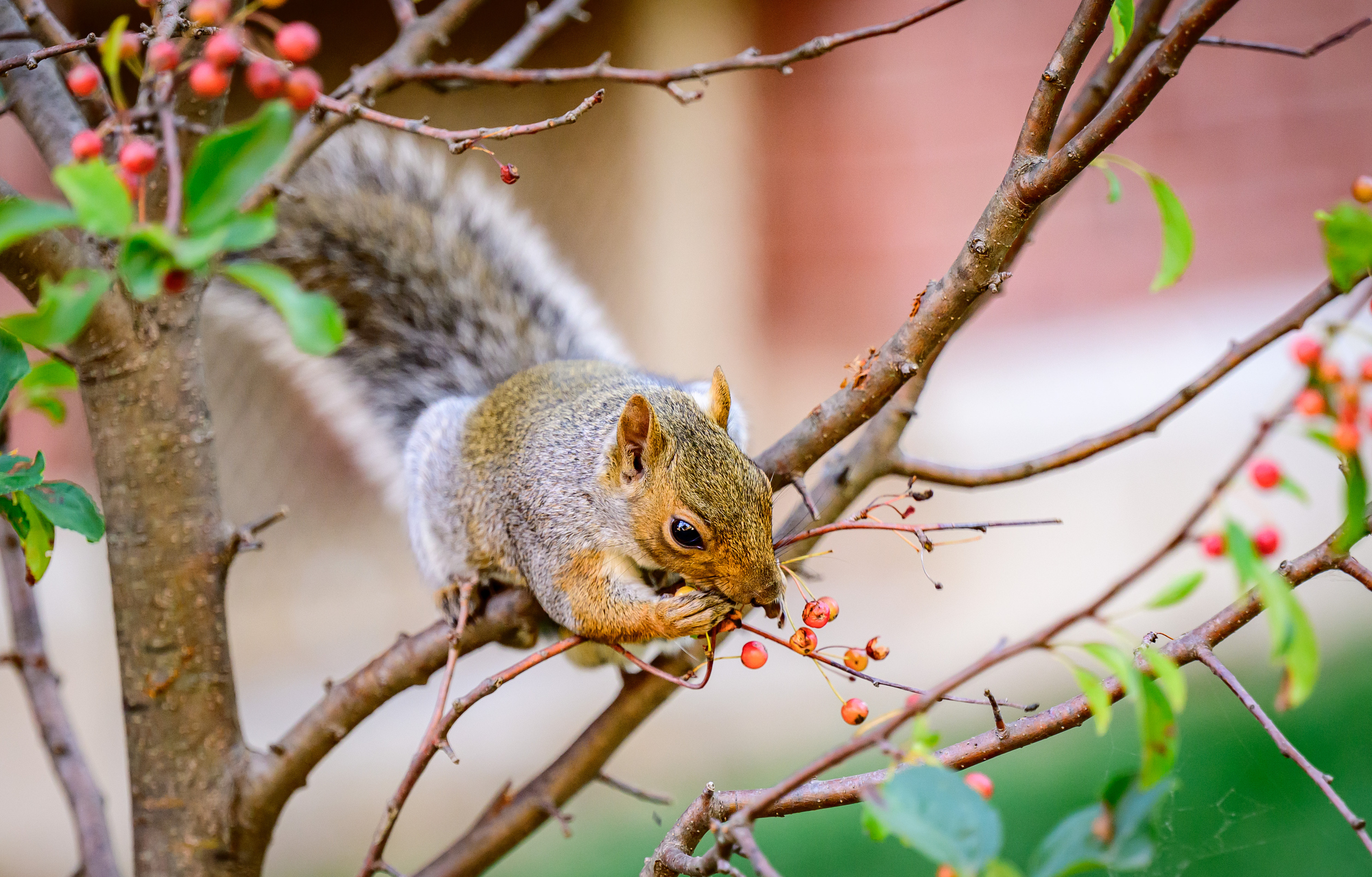
CHAMPAIGN, Ill. — One katydid, a cabbage moth, a dragonfly and a snake skin. That’s all the wildlife we’ve seen on this so-called campus “nature walk.” Oh, and maybe a squirrel. It — or the wind — was rustling the bushes at the edge of the Boneyard Creek behind Engineering Hall a few minutes ago. Also, the dragonfly might have been a damselfly; it flew past too quickly for a solid ID.
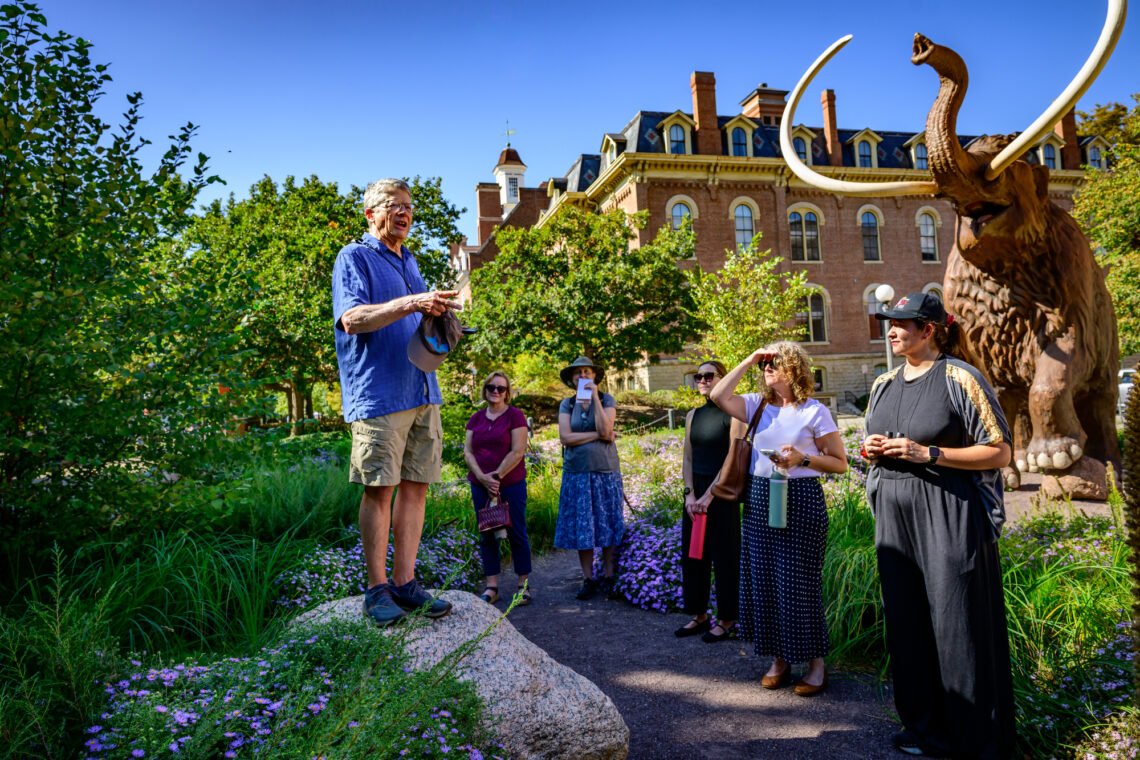
I’m here with my colleagues from Strategic Communications and Marketing. We’re taking a brief outing away from the office to learn more about the flora and fauna that call the Urbana-Champaign campus home. Our guide today is Rob Kanter, a professor emeritus in the School of Earth, Society and Environment who has led countless student groups on tours like this and taught them how to appreciate and write about the natural world. For more than 16 years, Kanter also wrote about the ecology of Central Illinois in the Environmental Almanac, an original series published weekly in the News-Gazette and broadcast on WILL-AM 580 radio and other National Public Radio affiliates.
It’s a gorgeous October day with record-breaking heat. A breeze makes it more bearable. Kanter is on top of his game, and loud enough to be heard by those standing furthest away. Our only problem is timing.
Mid-October is probably the deadest time of year in terms of campus wildlife, Kanter tells us.
“We’re unlikely to see a lot of birds today,” he says. “The house wrens left yesterday. They have gone south for the winter. The warblers heading for the tropics have done passed through. We’re waiting for the arrival of juncos and sparrows. Tomorrow they’re gonna be here. They’re not here today.”
Just our luck.
But, as it turns out, we are quite lucky because Kanter is a fantastic guide, and there is plenty else to see. We start out in the Pleistocene Garden behind the Natural History Building at the north end of the Quad, where we peruse a variety of “plants that might have been in Illinois 10,000 years ago,” Kanter says. Most eye-catching today are the bulging clusters of asters covered in purple blooms.
Kanter then directs our attention to the insects.
“Let’s try and find some things that are not honey bees,” he says, and we all start scanning the greenery.
After a moment, someone sees a small butterfly flitting above the flowers. I know this cute little terror from my garden. These guys — or, I should say, gals — laid their eggs all over my kohlrabi this year and their larvae made Swiss cheese out of the leaves.
This “cabbage white” might be the only butterfly we see, Kanter says wistfully. “Most of the monarchs are gone.”
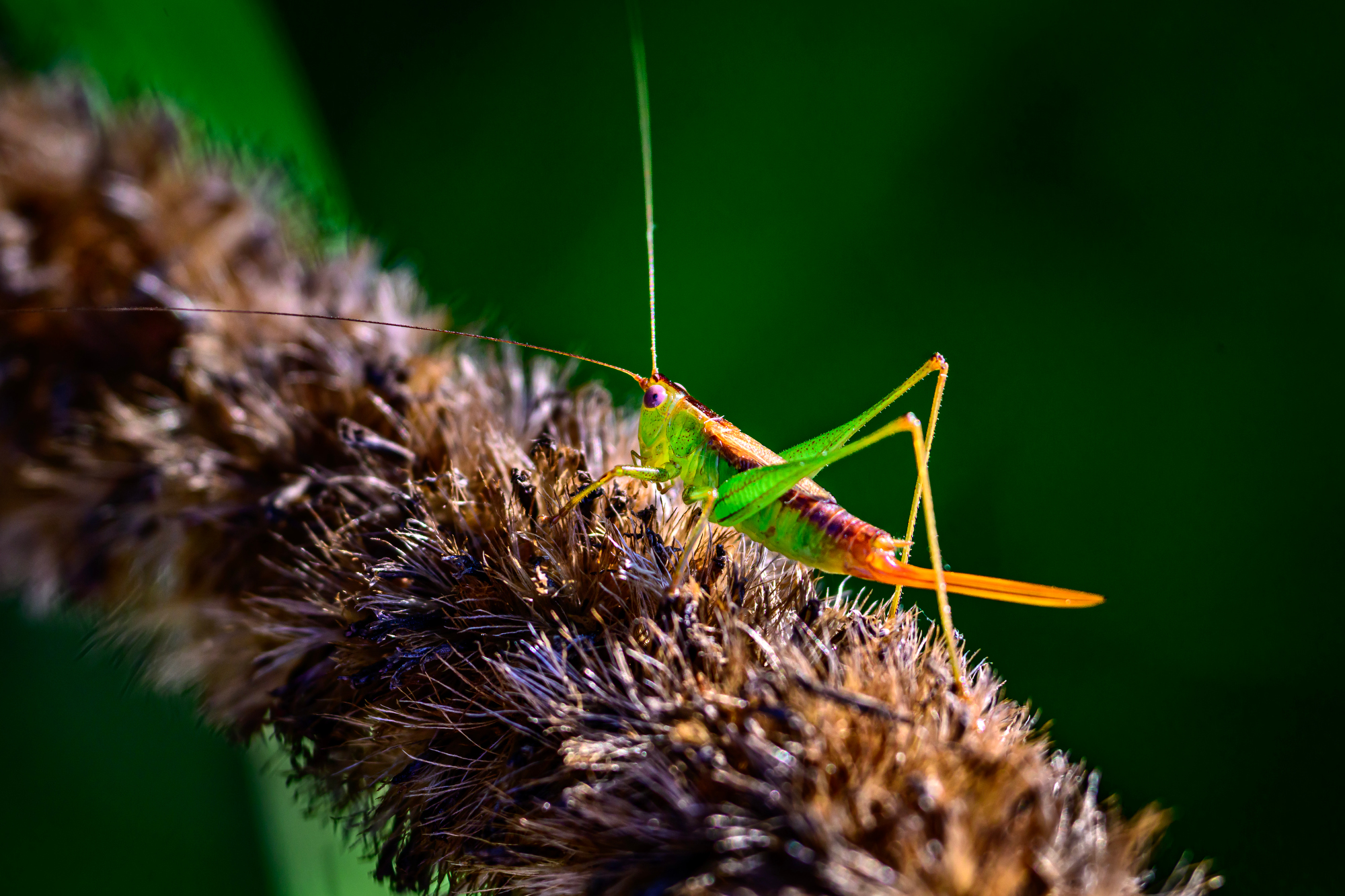
Then StratCom interim associate chancellor Allison Vance spots something that isn’t a honey bee or butterfly. It’s balanced strategically on the tall flowering stalk of a blazing star, Liatris spicata, one of those Pleistocene-era plants. Whenever anyone approaches it, the bug scoots sideways to hide itself on the far side of the stalk — as if it weren’t expecting an audience of giant gawkers. It’s green and it’s got those backward-bending legs, so I assume it’s a grasshopper. Kanter says it’s “katydid-ish.” A quick photo upload on an insect-identification app confirms it: It is Conocephalus brevipennis, the short-winged meadow katydid.
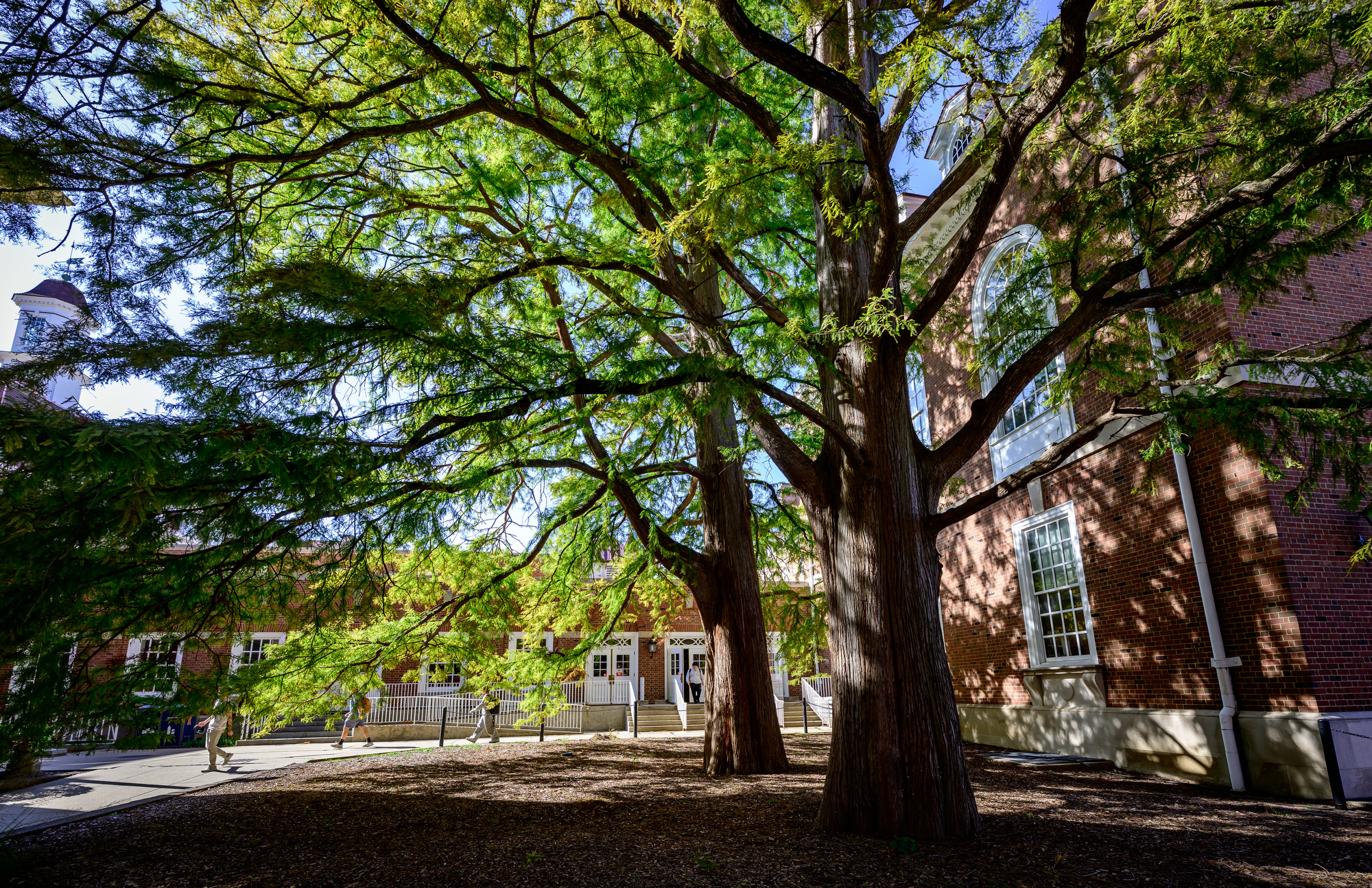
Kanter leads us over to a stand of giant bald cypress trees just outside the Illini Union. These spectacular specimens have rust-colored bark and elegant mops of green needles. Kanter explains that cypresses are both deciduous and coniferous. Like pines and other conifers, they grow needles and reproduce via cones. But like deciduous trees, and unlike most conifers, they drop their leaves (needles) each fall.
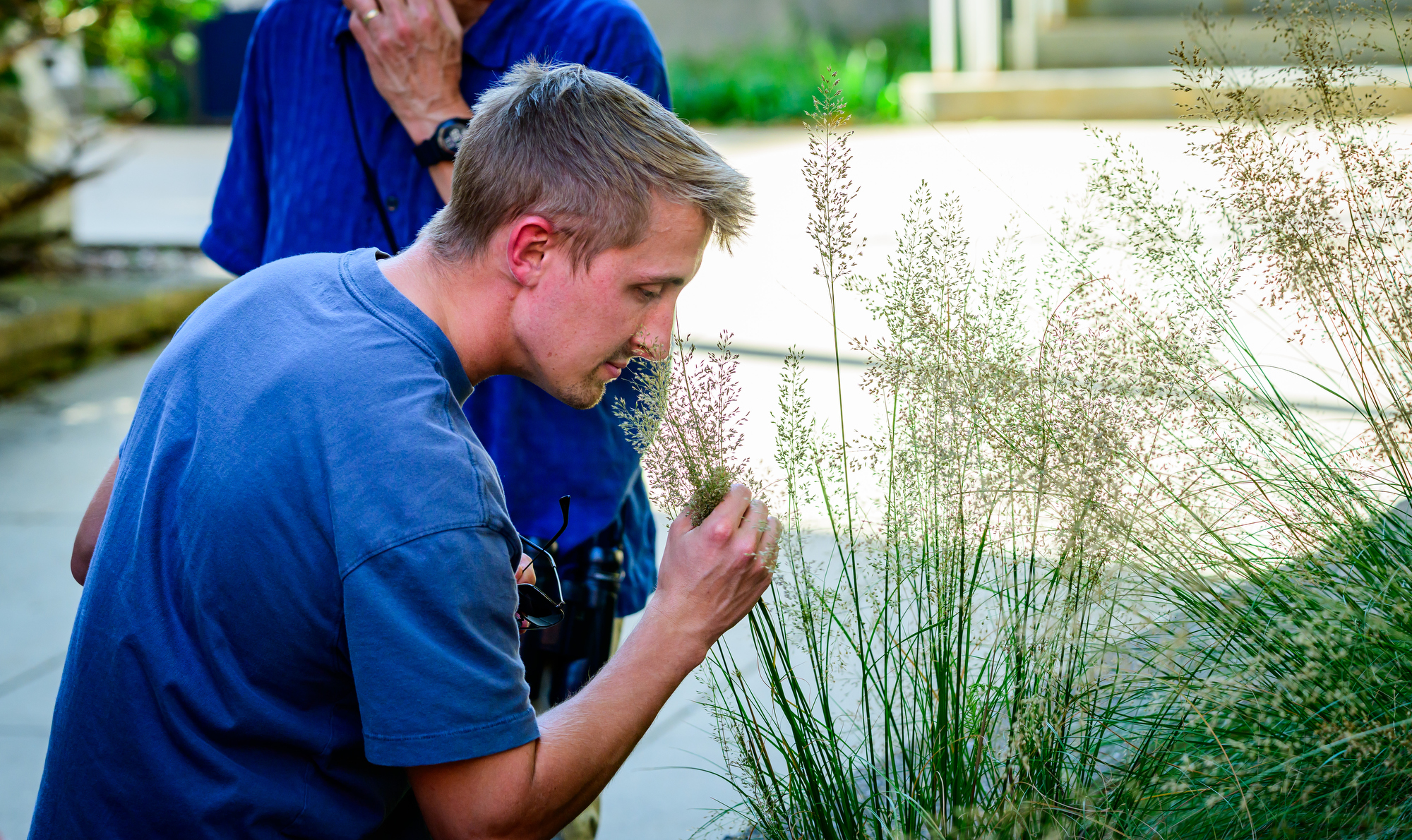
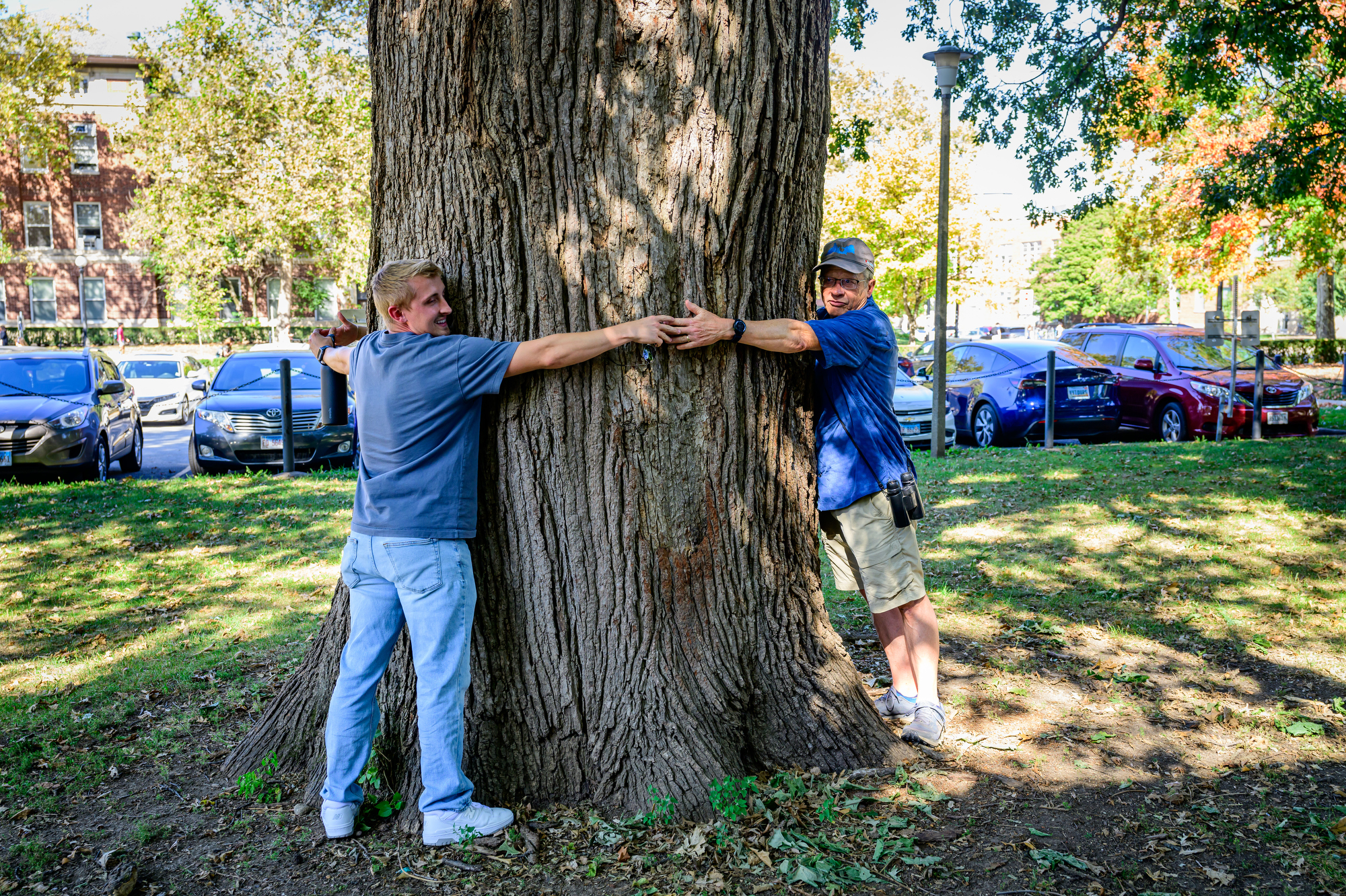
As the tour progresses, we sniff the weirdly cilantro-y aroma of a native perennial grass known as prairie dropseed, visit an outrageously large bur oak tree on the north side of the Natural History Building, where we learn about some of the creatures that depend on it for sustenance, then snake our way across Green Street to observe the Boneyard Creek.
The designers who installed and planned this feat of landscaping and water control converted this zone from a sad gulley into a lovely natural area. Even though the banks of the creek are a tangle of plants that have lost some of their original definition, the creek serves many ecological needs, Kanter says.
“What looks really messy is often very good for wildlife,” he says.
On the south side of the creek, several walkways and seating areas are cobbled out of piles of thick stone.
“The people who did the landscaping were not trying to make habitat for snakes, but they did,” Kanter says. Normally, on sunny fall days, you’ll see a few snakes out on the rocks sunning themselves. “But is it fall? It’s hard to say it’s fall,” he says. The snakes don’t need to come out of hiding to collect the sun’s warmth. They’re warm enough where they are.
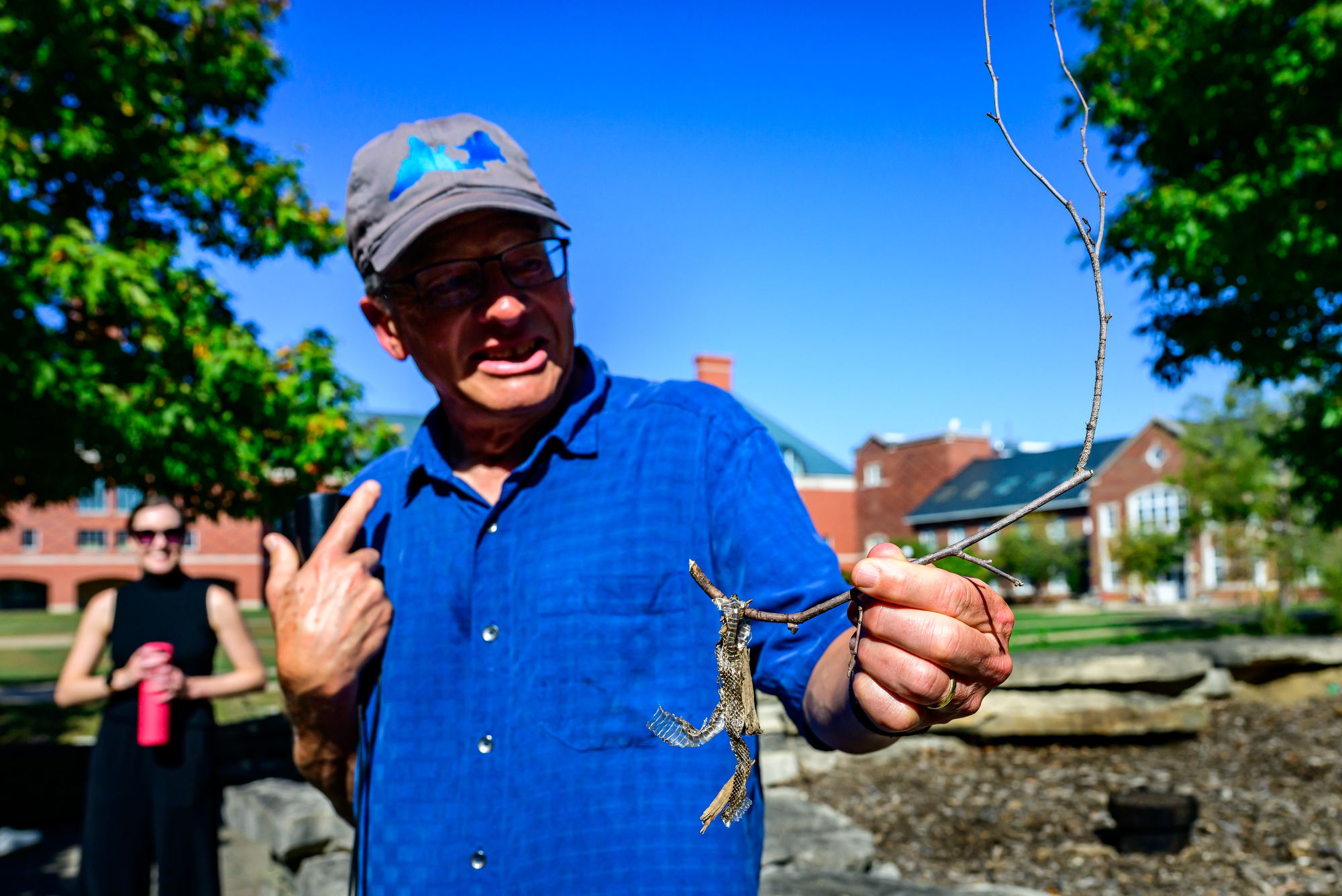
As if on cue, August Schiess, the assistant chancellor of digital strategy and development, appears with a wispy snakeskin she found, draped on a stick, “proof that a snake was here in the relatively recent past,” Kanter says.
At the end of the tour, Kanter answers a couple of questions. He has no favorite bird, but he fondly remembers a distinctive peregrine falcon that haunted campus during fall and winter for about 14 years. Peregrines were once nearly eliminated from North America by pesticide poisoning and only rebounded in the late 20th century thanks in large part to significant conservation efforts. He also speaks up in defense of Canada geese, which some consider a nuisance and actively try to chase away.
“If we’re good at creating habitat for Canada geese, don’t be mad about them using it,” he says.

Even though we haven’t seen a single bird on this excursion, not even a goose, the experience was fun and even edifying. We absorbed a bit of Kanter’s insight into the natural world and, most importantly, noticed wonders we had likely walked past countless times.
“What’s important to me is not ‘did you see the neatest things?’ but ‘did you adjust your way of looking at things?’” Kanter says at the end. “Most people go through time on campus without opening their eyes. They never see a moth, a beetle or a bee.”
Editor’s notes:
To learn more about the natural world of Central Illinois, visit the Environmental Almanac podcast archives.
Subscribe to Behind the Scenes for short blog posts, photos and videos from Illinois faculty, researchers, students and staff about their work and lives. Send an email with “SUBSCRIBE BTS” in the subject line.



