
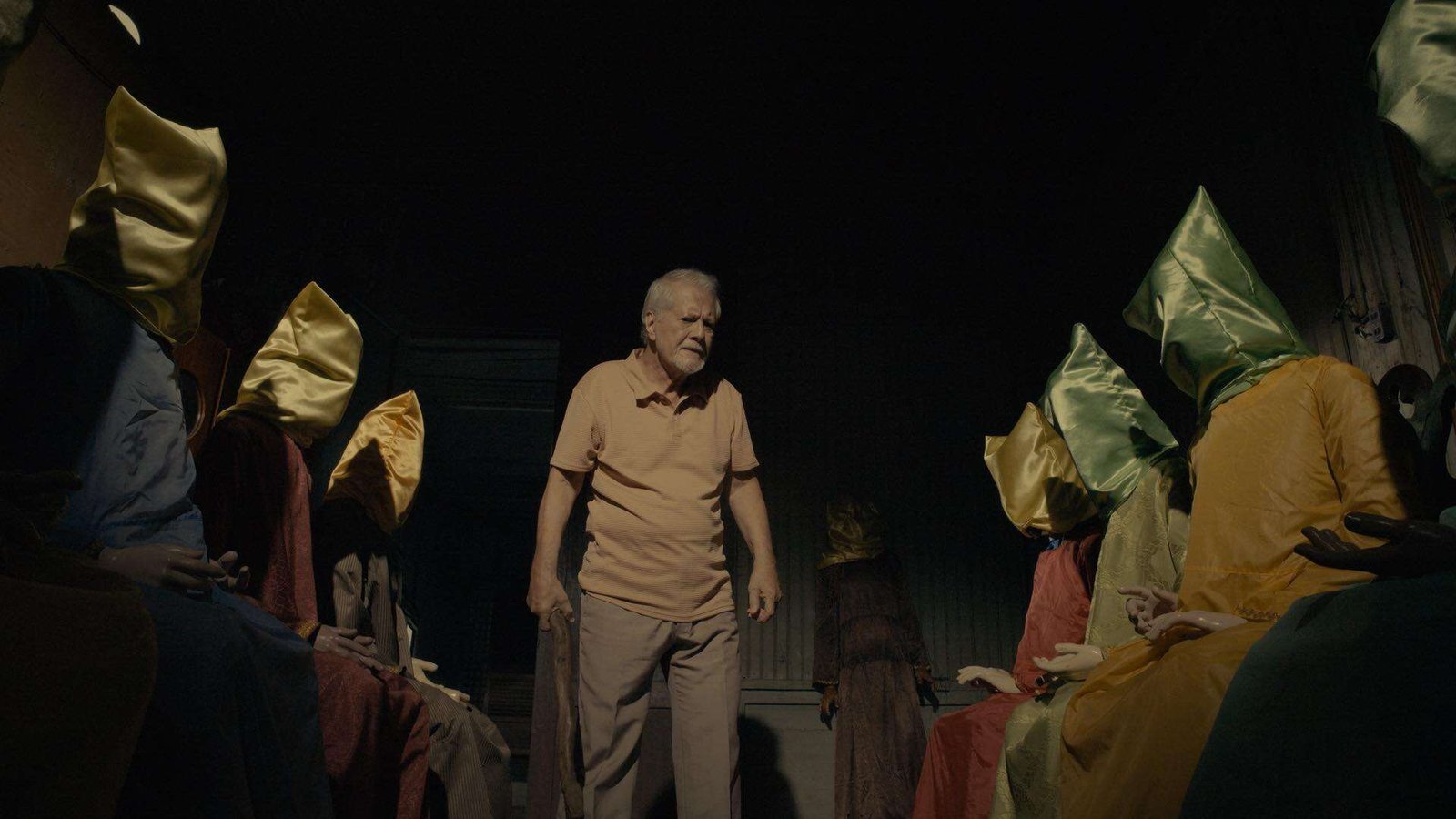
“Poon” is a very significant production for the local industry, particularly as it serves as the swan song of two iconic Filipino actors, Jaclyn Jose and Ronaldo Valdez. Adolfo Borinaga Alix Jr., continuing his impressive streak of moviemaking in recent years, delivers a work that skillfully combines horror with family drama. The movie had its international premiere in Moskau.
The mysterious death of the family patriarch, Peping, during Holy Week forces his three estranged daughters—Adele, a bitter caregiver who has been taking care of their ailing grandmother Berta; Ria, the wife of Daniel, a cult leader; and Mae, a naive expat returning home with her husband Richard—to reunite in the family house. As the tension mounts, long-suppressed resentments and secrets begin to surface, while a vengeful supernatural presence starts to terrorize the household. Meanwhile, Daniel speaks of rituals that may never have taken place, and strange occurrences surround the wooden statues of the twelve apostles preserved in the house—particularly a thirteenth statue that seems to be the source of the evil. At the same time, Faye, the great-granddaughter, begins to function as a medium for a spirit whose intentions remain uncertain.
Adolfo Borinaga Alix Jr. weaves several interesting layers into his narrative. The family drama, with its revelations of shocking and dangerous secrets, unfolds in a way that maintains both mystery and rhythm, allowing the twists to emerge naturally. The differences among the sisters, the role of their mother Sol, and the mystery surrounding Peping’s death further heighten the intrigue, while Adele’s intentions regarding the inheritance of the house intensify the emotional stakes.
Simultaneously, the supernatural thread introduces an engaging sense of religious horror, emphasizing one of the story’s central ideas—that terror can also stem from those who blindly believe in it. The more grounded commentary on the responsibilities of caring for the elderly and the complications of inheritance disputes feels equally authentic, grounding the narrative in real human concerns.
However, the abundance of characters occasionally becomes a drawback, making it difficult to follow or empathize with each arc. This is particularly evident among the younger cast members, who, except for Faye, remain underdeveloped and would perhaps have benefited from a longer format akin to a drama series.
On the other hand, this large ensemble allows many of the country’s most renowned veterans to shine. Lotlot de Leon as Adele, Janice de Belen as Ria, Ara Mina as Mae, and Jaclyn Jose as Sol are all exceptional, portraying both the tensions and the underlying bonds of sisterhood with striking realism. Gina Pareno as Berta embodies a delicate balance of menace and fragility, while Ronaldo Valdez, in his brief role as Peping, leaves a memorable impression. Allen Dizon plays the fanatical Daniel with conviction, though his wig distracts somewhat, while Althea Ablan as Faye stands out in her transformation from a naive girl to something much more unsettling. Lastly, Bembol Roco rounds out the ensemble effectively as the investigating policeman.
The cinematography by TM Malones captures the house in a suffocating light, heightening the sense of claustrophobia, while the presentation of the statues lends the story a gothic tone that deepens the atmosphere—an effect also supported by Jay Custodio’s meticulous production design. Xila Ofloda and Mark Llona’s editing maintains a brisk pace, and the flashbacks are well-placed within the flow of the story. Nevertheless, the narrative could have used more breathing room for its many characters to develop fully.
Moreover, certain aspects of the dialogue and presentation occasionally lean toward the style of television drama. Still, these minor shortcomings do not detract from the overall impression. “Poon” ultimately stands as a well-acted, visually compelling, and engaging work that remains gripping from start to finish.



