
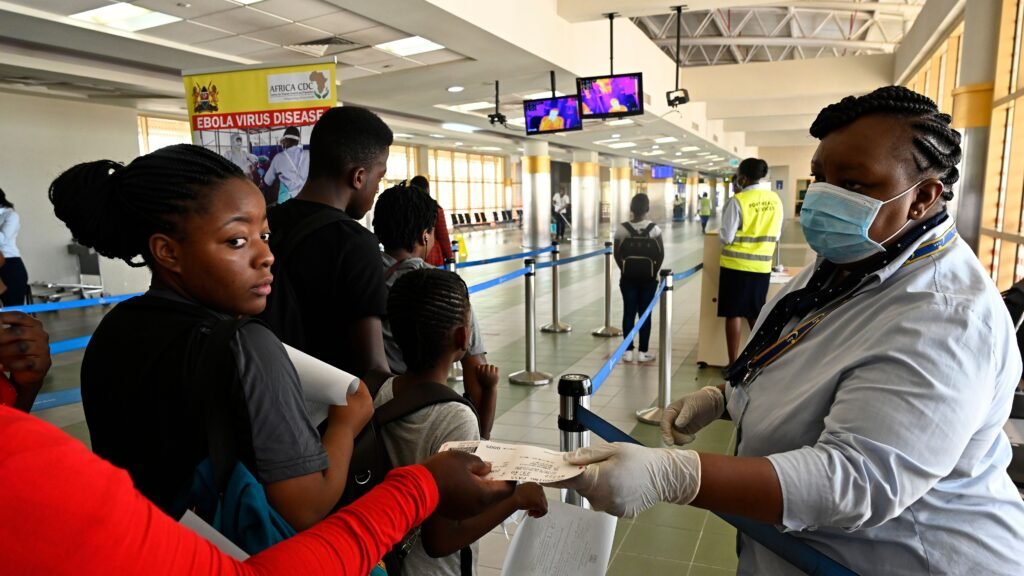
When I deployed to Sierra Leone during the 2014-2016 West Africa Ebola epidemic, I understood the risks.
Every physician, nurse, epidemiologist, laboratorian, and aid worker who enters an Ebola outbreak does. We know that despite rigorous training and infection prevention measures, exposures can occur. We know that outbreaks unfold in difficult environments, often amid insecurity, fragile health systems, and limited resources. We know that if we become ill, our lives may depend on access to highly specialized medical care.
But there was also an understanding: If the worst happened, the United States would bring us home and provide the best care possible.
That assumption now appears to be changing.
As Helen Branswell reported in STAT, the United States plans to send Americans exposed to or infected with Ebola to facilities in third countries such as Kenya or those in the European Union, rather than repatriating them to specialized treatment centers in the United States.
At first glance, such a policy may seem practical. Why bring Americans potentially exposed to or infected with Ebola back to the United States when facilities could be established elsewhere?
The answer is straightforward: because we have already shown that safe repatriation works.
Following the 2014-2016 West Africa Ebola epidemic, the United States invested heavily in a network of specialized high-consequence infectious disease treatment centers. These facilities were built specifically for situations like this. They include highly trained multidisciplinary teams, specialized transport systems, advanced laboratory capabilities, and years of operational experience preparing and caring for patients with dangerous infectious diseases.
Those capabilities were not built overnight and cannot be recreated overnight.
Ebola care requires far more than isolation. Survival depends on advanced supportive care, intensive monitoring, infection prevention expertise, and clinicians experienced in managing highly hazardous pathogens. During the West Africa epidemic, multiple Americans exposed to and infected with Ebola were safely evacuated to the United States and treated in specialized centers. Most survived. Just as importantly, those evacuations did not result in secondary community transmission. Specialized medical transport, treatment in biocontainment units, rigorous infection prevention and control practices, and highly trained clinical teams followed strict protocols to ensure patients were safely cared for while protecting health care workers and the public.
The lesson was clear: Specialized care saves lives, and safe repatriation is possible.
The stakes of this policy extend beyond the handful of Americans who might one day require evacuation.
Today, health care workers in the Democratic Republic of the Congo are caring for Ebola patients under extraordinarily challenging conditions. They are the backbone of the response. International clinicians and public health professionals deploy to support them, not replace them.
The success of that partnership depends on people being willing to go.
Outbreak response is difficult enough without asking responders to wonder whether they will have access to the best available care if they become ill. If experienced clinicians begin to view deployment as carrying greater personal risk, some will understandably choose not to go. The consequences will not be felt in Washington. They will be felt in the communities and health facilities struggling to contain the outbreak.
At a time when the world already struggles to recruit and retain experienced outbreak responders, that should concern all of us.
The proposal also raises questions about priorities.
Resources spent establishing ad hoc facilities overseas are resources not being directed toward controlling the outbreak at its source. What affected communities urgently need are investments in surveillance, laboratory capacity, infection prevention and control, health care worker protection, community engagement, and research into medical countermeasures for Bundibugyo ebolavirus.
The administration has repeatedly highlighted the scale of U.S. financial support for the Ebola response. But that raises an important question: How are those resources being used?
Under extraordinarily difficult conditions, Congolese health workers are bearing the greatest burden of this outbreak — staffing treatment centers, conducting surveillance, caring for patients, and in some cases losing their lives in the process. If the United States is investing hundreds of millions of dollars in the response, those resources should first and foremost support the people and systems working to stop the outbreak where it began.
At the same time, plans to establish facilities in third countries for the evaluation or treatment of the small number of Americans who might require care raise legitimate questions about stewardship. The United States already maintains a network of specialized biocontainment units built for exactly these situations. Creating parallel capabilities overseas risks duplicating existing infrastructure while diverting attention and resources from the interventions most likely to bring the outbreak under control.
The best way to protect Americans, Congolese communities, and global health security is to strengthen the response on the ground while ensuring that Americans who become ill can be safely evacuated and treated in the United States. These goals are not mutually exclusive. We can — and should — do both.
Those investments would benefit the people most affected by this outbreak while strengthening preparedness for future ones.
Finally, the proposal also has implications for the countries being asked to host these facilities.
Kenya has long served as a regional hub for public health and humanitarian response, contributing personnel, expertise, and resources to health emergencies across Africa. Yet reports that it could be used as a destination for Americans exposed to or infected with Ebola have unsurprisingly generated public concern and political controversy.
Many Kenyans are asking a reasonable question: Why should their country be asked to host facilities intended primarily for citizens of another nation when the United States already possesses a well-established network of specialized treatment centers capable of safely caring for patients with Ebola? The extent of these concerns was evident this week when protests over the proposed plans turned deadly in Kenya
Whether one agrees with the protesters’ concerns is ultimately beside the point. What matters is that these concerns reflect broader questions and should give us pause. Global health partnerships are built on mutual respect, shared responsibility, and trust earned over time. At a moment when international cooperation is essential to controlling outbreaks, policies that risk straining those relationships may have consequences that extend far beyond the care of a small number of patients.
The goal should be to strengthen partnerships with countries such as Kenya, not place them in a position where they are perceived as bearing risks that wealthier nations are unwilling to assume themselves.
These concerns prompted a group of physicians — including former Centers for Disease Control and Prevention Chief Medical Officer Debra Houry, former CDC Principal Deputy Director Anne Schuchat, emergency medicine physician and Ebola survivor Craig Spencer, and me— with support from the Infectious Diseases Society of America to write an open letter to Congress calling for transparency, accountability, and oversight of any plans to quarantine, isolate, or treat Americans in third-country facilities.
The letter highlights critical questions regarding standards of care, medical evacuation capabilities, responder recruitment and retention, patient rights, and the potential diversion of resources from controlling outbreaks at their source. It urges Congress to preserve and strengthen the United States’ high-consequence infectious disease treatment network and to ensure that Americans serving on the front lines of outbreak response retain access to timely medical evacuation and specialized care in the United States should they become ill.
Ultimately, this debate is about far more than where a handful of Americans might receive care. It is about what kind of outbreak response system we want to build and whether the United States will continue to lead in global health emergencies or retreat from commitments it has long embraced.
The health workers in the DRC deserve resources, support, and solidarity to bring this outbreak under control. They are carrying the greatest burden of this outbreak and facing the greatest risks. At the same time, international responders willing to put themselves in harms way to serve alongside them deserve confidence that if the unthinkable happens, their country will bring them home and provide the best care possible.
We should not be forced to choose between supporting frontline responders in DRC and repatriating sick Americans. We can and should do both.
The United States possesses the expertise, infrastructure and experience to safely care for patients with Ebola. We should use those capabilities and stand behind the people who answer the call when the world faces dangerous infectious disease threats.
That is not only good medicine. It is good public health. It is good policy. And it is the right thing to do.
The world asks a great deal of those willing to respond to outbreaks. The least we can do is ensure that they never have to wonder whether, if the unthinkable happens, their country will bring them home.
Krutika Kuppalli, M.D., is an infectious diseases physician and former World Health Organization medical officer. She served as medical director of an Ebola treatment unit in Sierra Leone during the 2014–2016 West Africa Ebola epidemic and has supported Ebola preparedness and response efforts in Africa and globally. Dr. Kuppalli is one of the authors of the open letter to Congress calling for transparency and oversight regarding any plans to quarantine, isolate, or treat Americans exposed to or infected with Ebola in third-country facilities.



