
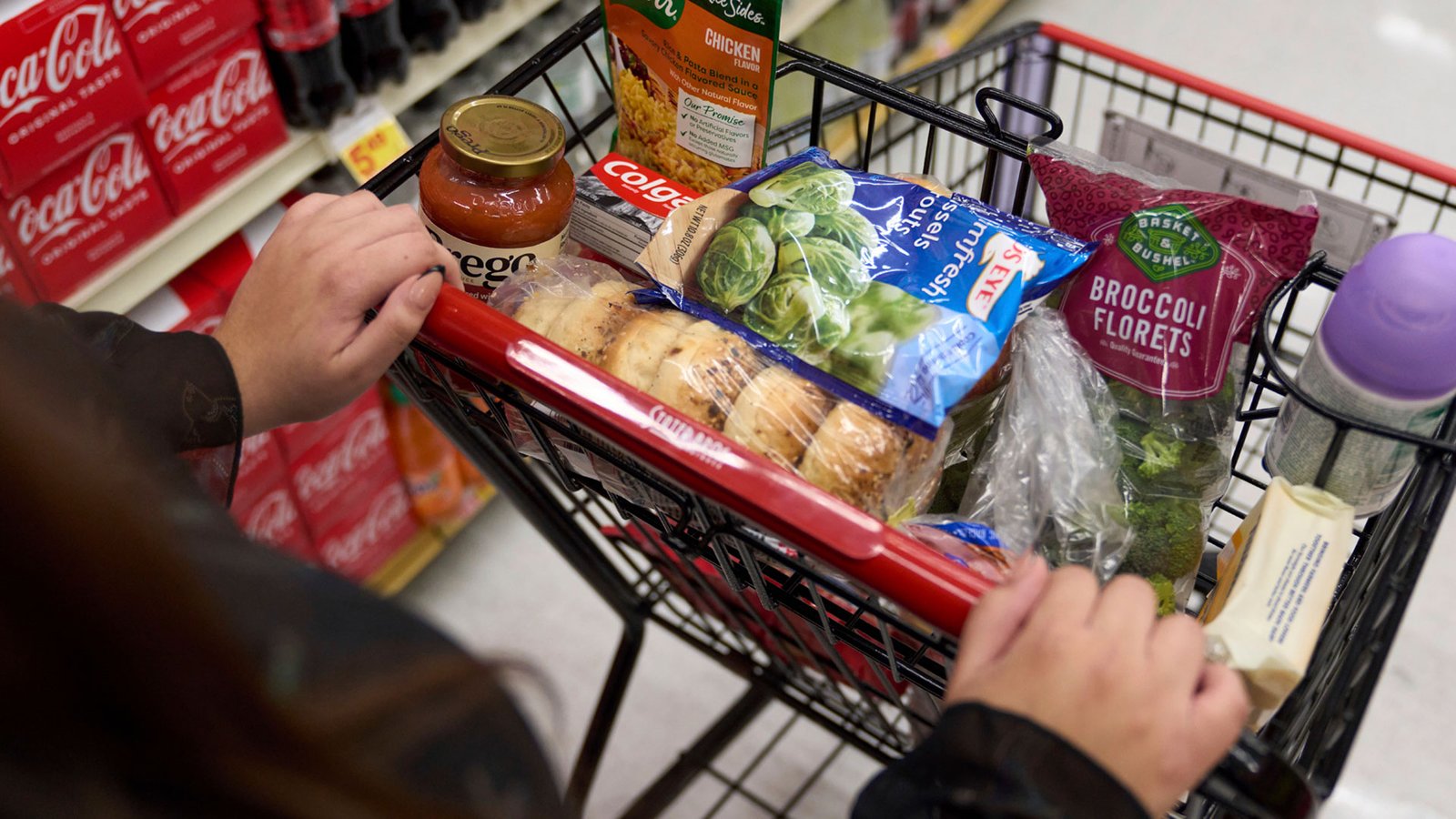
More than 800,000 New Jerseyans — about one in eight residents — are enrolled SNAP, or the Supplemental Nutrition Assistance Program. Changes in federal law last year required many, including veterans and people who are homeless, to work for at least 20 hours per week to maintain the food benefits.
The rule hasn’t increased employment — and has decreased the number of people eligible for SNAP, according to research by the Hamilton Project at the Brookings Institute. That means more people are depending local food banks.
Elizabeth McCarthy, president and chief executive officer of the Hillside-based Community FoodBank of New Jersey, the largest anti-hunger group in the state, told NJ Spotlight News about what’s ahead. This interview has been lightly edited.
Joanna Gagis, anchor: What are you seeing on your end in terms of how that’s played out for recipients?
Elizabeth McCarthy: The impact is really just starting to be felt. Those rules went into place in New Jersey on Feb. 1 with a three-month implementation period. So we’re really expecting that in a few weeks is when we’ll really see demand start to go up. But I think the most alarming thing is in talking to our neighbors when they come to pantries, just how little awareness there is about these work requirements and how people can comply. It hasn’t really been information that’s been distributed, so we’re trying to do that, but obviously can’t do it on a wide scale at this point.
JG: We’re going to get into the food distribution, but what does that effort look like on your end in terms of education and really helping folks understand what it all means?
EM: We’ve been working with all the pantries in our network, which is about 800, really trying to make sure they have the information directing people to the right website. But I feel like every day there’s people who do not know that this is changing and that this could affect them personally.
JG: And there’s a documentation issue here. Tell us what it means in terms of paperwork and folks having to complete the right documents.
EM: That’s the hard part. I mean, many of the people on SNAP are working, but the documentation is really difficult to complete. I’ve looked at the forms. They’re a very high reading level that’s required. You’d have to have a computer and a way to upload them. And also it requires 20 hours every week. For people in the gig economy or if they have seasonal employment, they might be working a lot more than that — let’s say, in the summer if they have a job at the Shore or something. But in the winter could be harder to have those hours. So that’s really our issue — a lot of the people are working but will not be able to comply with this law.

JG: What does that mean then, for you, for the 800 partners across the state who are trying to meet those needs for those who are hungry or food insecure?
EM: We provide over 90 million meals a year. For every one of our meals, nine are provided by SNAP. We would not be able to absorb all of the people that need to come to pantries if their SNAP benefits run out. It’s pretty scary. Obviously we’ll do everything we can to make up the difference, but it’s an exponential number of meals.
JG: So folks come to you expecting to be able to use those SNAP benefits — or I should say, through your partners that are actually delivering some of the food on the ground. Have you ever had to turn anyone away or tell them, “I’m sorry, you’re not eligible for this.”?
EM: No. Pantries don’t require SNAP, so they can use SNAP at grocery stores, at farmer’s markets, at different retail food establishments. Pantries, all the food is free.
JG: You’re getting that federal assistance back. That’s how you’re getting the SNAP.
EM: Exactly.
JG: What does that mean, though, for those who are doing the work, who are serving the food? Have you had to increase fundraising efforts? Have you had to ask for donations?
EM: We absolutely have. In November, when SNAP benefits were cut off altogether, people in New Jersey were incredibly generous and really did help us make up that difference. All of a sudden, we had lines literally a mile long, in some counties, of people who lost their SNAP benefits overnight and had to turn to us. It is really nice that people fundraise, that people donate, but we cannot make up the difference just by donated dollars.
JG: Help us understand the costs. What does it cost to feed a family of four? What does it cost the food bank? And then how are you able to monetize dollars that you receive?
EM: Every dollar that’s donated to us makes up three meals. So that’s pretty good. We do have very good buying power. We also have amazing partners, grocery store chains, those kind of places that donate food to us, as well as individuals who have food drives. So it’s very economical if people want to donate money that it is three meals for a person, but that can only still go so far.
JG: Have you ever had to turn folks away because there’s a pantry that simply doesn’t have the resources to feed them or have you hidden at that critical point?
EM: We have not at this point. If a pantry does, there’s usually another one nearby that they could send somebody to. But we are concerned that that could happen in the coming months, that we would have to either turn people away or give people a lot less food — certainly a lot less of the foods that are more expensive, like proteins and fresh produce.
JG: There is such a wealth disparity between folks here in New Jersey. What’s your message to those who aren’t struggling, who can afford to put food on the table as they think about maybe their community members who aren’t so fortunate?
EM: It’s so easy to be able to come volunteer either your time or to do a food drive or to donate. On our website, there’s all sorts of options of ways people can do that. And we’re lucky we have seen people respond in those moments. It’s just not the magnitude that we’ve ever needed before. That’s our concern.
But absolutely, if people can donate. I think people are always surprised that they know somebody who’s food insecure. They might not realize it right now, but it happens in every single community in the state, even the ones that we consider wealthy communities.
JG: You just took the next question out of my mouth. It’s not always what we imagine hunger to look like, right?
EM: It’s not. Because some families are doing fine and then someone loses a job or there’s a huge medical emergency or their car breaks down and there’s just kind of enough to put them over the edge that they can’t make it to that next paycheck.



