
(PRINCETON, NJ) — Princeton-based interdisciplinary artist Ryan Lilienthal has returned from Germany after completing a German-American Fulbright-funded project exploring Holocaust memory through participatory art and education.
Developed in collaboration with researchers at Goethe University Frankfurt and the Hessian State Archives in Darmstadt, Lilienthal’s project, Tonwerk (Clay Factory): Shaping Responses to National Socialism, engaged approximately 150 elementary and secondary school students across six schools in Germany in a collaborative memory sculpture.
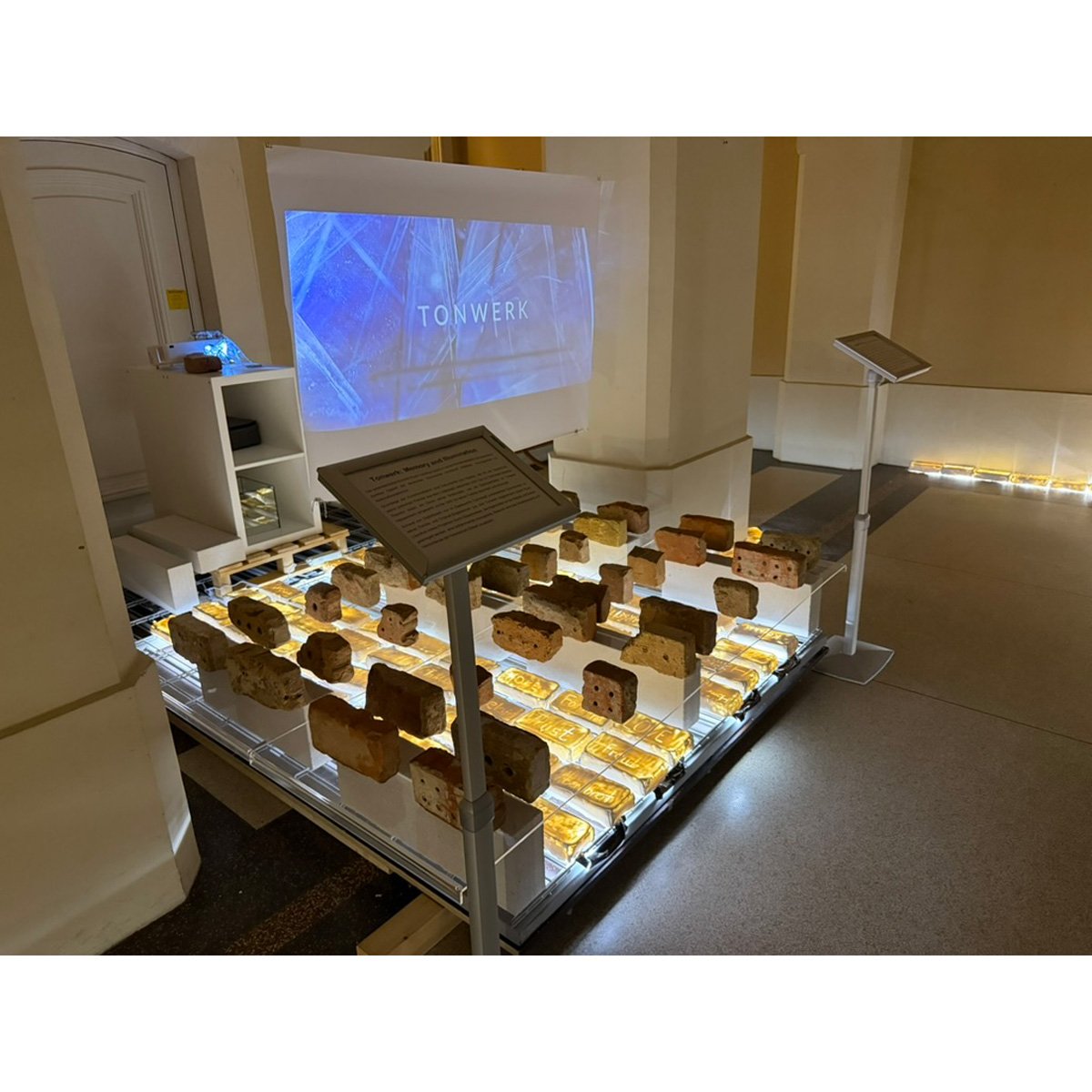
Working with clay forms derived from historic brick molds associated with forced labor under National Socialism, students created translucent porcelain bricks inscribed with words related to identity, belonging, and memory. Once fired and illuminated, the bricks formed a large-scale installation exhibited at the state archive in Darmstadt.

Promote your shows at New Jersey Stage! Click here for info
Photo by Konstantin Weber, Copyright HLA. Hessisches Staatsarchiv Darmstadt
“As its starting point, the work is deeply personal,” Lilienthal said. “But the larger goal is to explore how people from different backgrounds can engage with difficult histories together—through participation, making, and shared reflection.”
Lilienthal’s family history includes relatives who were subjected to forced labor before being deported and murdered during the Holocaust. His work explores how histories of trauma can be brought into dialogue, and how younger generations can engage meaningfully with the past.
“The students’ engagement showed me that Holocaust memory can be both intellectually rigorous and emotionally resonant,” he said. “What surprised me most was how powerfully hands-on, material engagement opened space for reflection across age, background, and lived experience.”
The project brought together students from diverse backgrounds, including German-born participants and those from refugee and immigrant communities, many of whom connected personally to themes of displacement, belonging, and identity.
Lilienthal continues this work as part of Re-Visioning America: 1776–2026, a regional initiative organized by the Trent House Association and Art Against Racism, and curated by Judith K. Brodsky and Rhinold L. Ponder. The exhibition runs June 14 through July 26 and brings together cultural and civic institutions to examine the evolving meanings of American identity through art, history, and public dialogue. Inspired by the 250th anniversary of the signing of the Declaration of Independence, the initiative invites artists and audiences to reflect on the past, present, and possible futures of the American experience.
Ryan Lilienthal, photo by Konstantin Weber, Copyright HLA. Hessisches Staatsarchiv Darmstadt
Ryan Stark Lilienthal was an Anne Reeves Artist-in-Residence at the Arts Council of Princeton (ACP) in early 2024, where he led a community-based project using locally sourced clay from the Paul Robeson House. He collaborated with local students and organizations to create, stamp, and fire tiles made from this historic, site-specific material.
Lilienthal earned an MFA in Design from Rutgers University’s Mason Gross School of the Arts in 2023 and practiced immigration law for more than twenty years before transitioning to a full-time career in art and education.



