
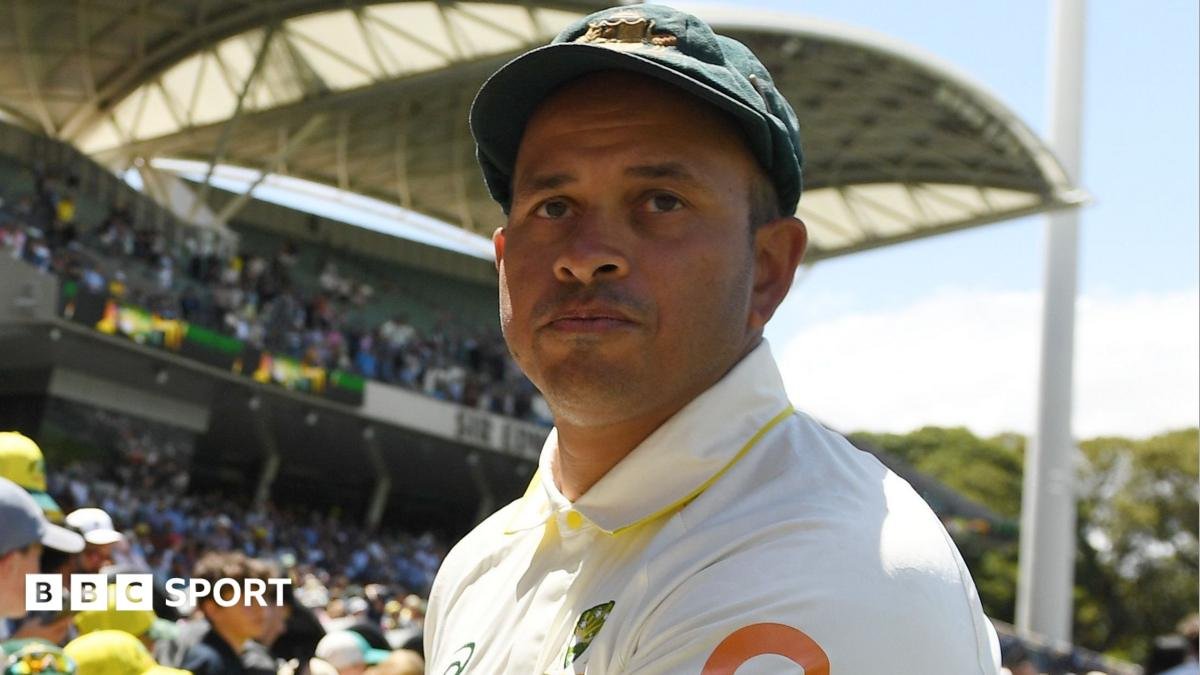
Khawaja, who scored 6,229 runs in 88 Tests, said that discussions about tampering with the ball began during the second Test of the series against South Africa.
That match, played at Port Elizabeth – now Gqeberha – led to what Khawaja said was the “discovery of sandpaper as an effective agent” after “open” discussions held in the dressing room at St George’s Park.
“At this point Smith essentially threw his hands in the air and said he didn’t want to know,” Khawaja wrote.
Khawaja was also shocked not to be asked to provide any evidence during Cricket Australia’s investigation.
“In an ideal world, I don’t want to do this. I don’t want to be the one who comes out and talks about the truth,” he said.
“The issue is that I genuinely thought after eight years the truth would have been out by now.”
While Smith, Warner and Bancroft – all batters – were punished, there was never an explanation of how bowlers Cummins, Starc, Hazlewood and Lyon did not notice a change in the state of the ball.
In a 2021 interview with the Guardian, Bancroft was asked if the bowlers knew and replied: “It’s pretty probably self-explanatory.”
Days after Bancroft’s interview was published, the quartet released their statement which said: “We feel compelled to put the key facts on the record again.
“We did not know a foreign substance was taken on to the field to alter the condition of the ball until we saw the images on the big screen at Newlands.
“And to those who, despite the absence of evidence, insist that ‘we must have known’ about the use of a foreign substance simply because we are bowlers, we say this: The umpires during that Test match, Nigel Llong and Richard Illingworth, both very respected and experienced umpires, inspected the ball after the images surfaced on the TV coverage and did not change it because there was no sign of damage.
“We respectfully request an end to the rumour-mongering and innuendo. It has gone on too long and it is time to move on.”



