
As much as we now know about superconductivity – where a material conducts electrical charge without resistance or heat loss – there remain long-standing mysteries about how the phenomenon works.
One of those mysteries centers around a group of superconducting materials called transition metal dichalcogenides (TMDs).
In ultra-thin form, two of these TMDs appear to have just a single superconducting energy gap – one of the fingerprints physicists use to understand how electrons pair up in a superconductor.
The problem? Not all of the math fully added up to fit a single-band theory without a bit of approximation.
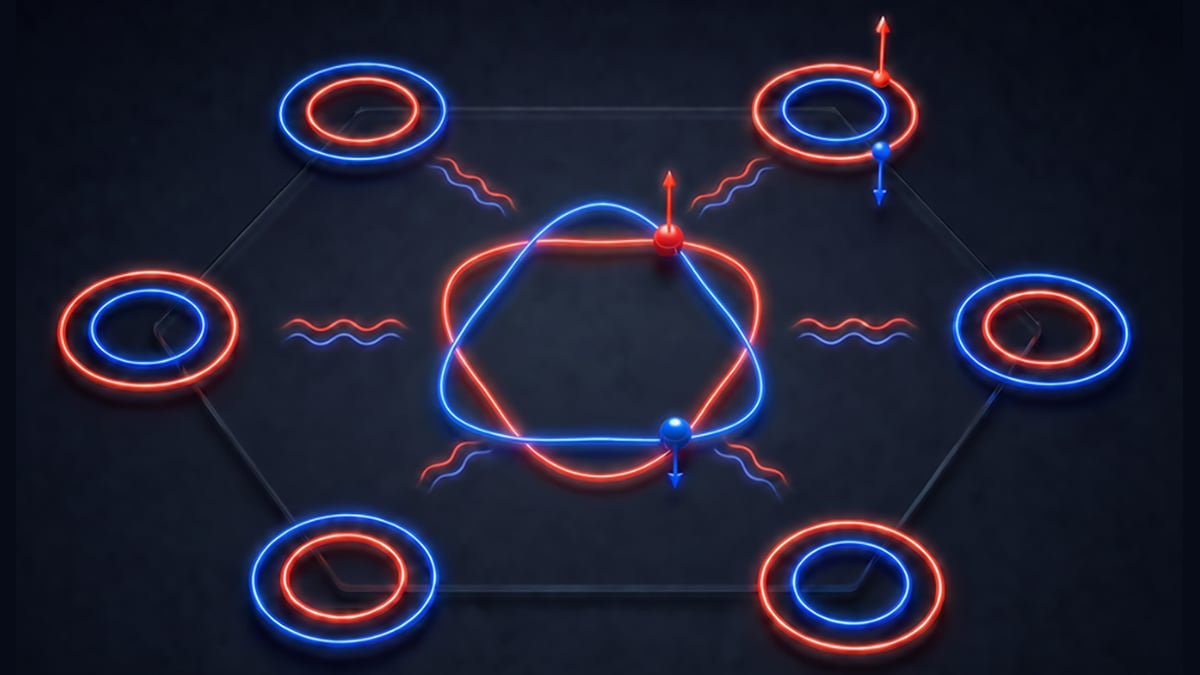
Now researchers from the Hebrew University of Jerusalem in Israel have found out why, publishing their results in Physical Review Letters: There appear to be two superconducting bands here, masquerading as one.
The two superconducting bands behave so much like one that their two energy gaps appear as a single gap in measurements.
According to the research team: “It’s a bit like listening to what sounds like a single singer, only to discover it’s actually a perfectly synchronized duet.”
The researchers started with the well-known superconductor niobium diselenide (NbSe2), using a highly sensitive measurement technique called tunneling spectroscopy to precisely map electron behavior in the material.
When the experimental measurements were compared against mathematical models, it emerged that a two-band model fitted the data much better.
What appeared to make the material look simpler than it really is was unusually strong electron scattering, or movement between the bands, during the lifetime of the Cooper pairs essential for superconductivity.
“These large scattering parameters imply that during the Cooper pair lifetime, charge carriers experience multiple scattering events between the two bands, averaging out the two superconducting gaps that are separated on the Fermi surface into one effective gap that is measured by tunneling,” write the researchers in their published paper.
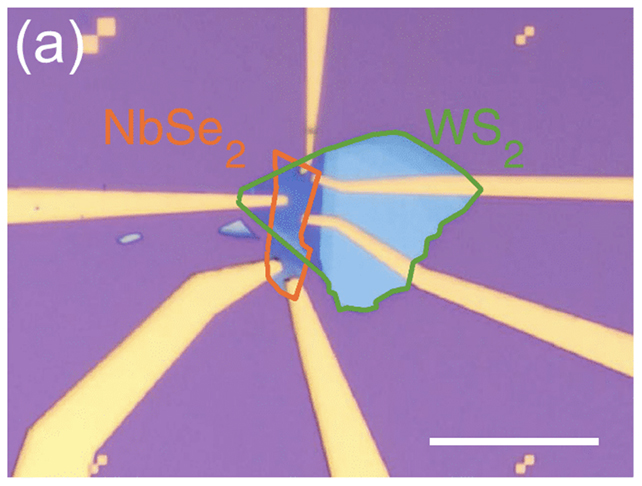
Evidence of this strongly coupled two-band behavior also showed up in subsequent magnetic field measurements.
The researchers also observed more evidence for this two-into-one behavior in another ultra-thin TMD, tantalum disulfide (TaS2). The same phenomenon seemed to be happening, backing up the idea that it may extend across related materials in the TMD family.
These TMDs don’t exist only in ultra-thin forms, and the researchers think that thicker versions of NbSe2 could hide even more complex superconductivity states, waiting to be discovered.
For now, the ultra-thin mystery appears to be solved – giving us a better understanding of how these superconductors are operating.
“The data shown strongly indicate that the spectra of ultra-thin NbSe2 and TaS2 can be explained successfully by two-band superconductivity,” write the researchers.

These concepts may seem detached from everyday life, but superconductors could be hugely important for the power grids, electronics, and quantum technologies of the future – highly efficient, super-fast setups with minimal heat loss.
Right now, superconductors typically need very controlled conditions, and technical challenges still limit their widespread use. As the technology advances, we’re going to need to know exactly how electrons are behaving in these materials.
That’s what this latest research provides. Insights into electron movement in different types and sizes of superconductors could ultimately help scientists control them more precisely and design systems around them.
The findings are also a reminder that many important discoveries can happen by looking more closely at something we thought we had already figured out.
Related: Physicists Just Set A Major New World Record For Superconductors
This wouldn’t be superconductor physics if finding one answer didn’t lead to yet more questions. One future route for research is to look more closely at thicker, bulk NbSe2, where three bands may participate in superconductivity.
“Our data cannot distinguish between the two explanations, and further work is required to resolve this open question,” write the researchers.
The research has been published in Physical Review Letters.
This article was fact-checked by Rebecca Dyer and edited by Rebecca Dyer. While we pride ourselves on our process, we are only human. If you spot a mistake, please let us know.



