
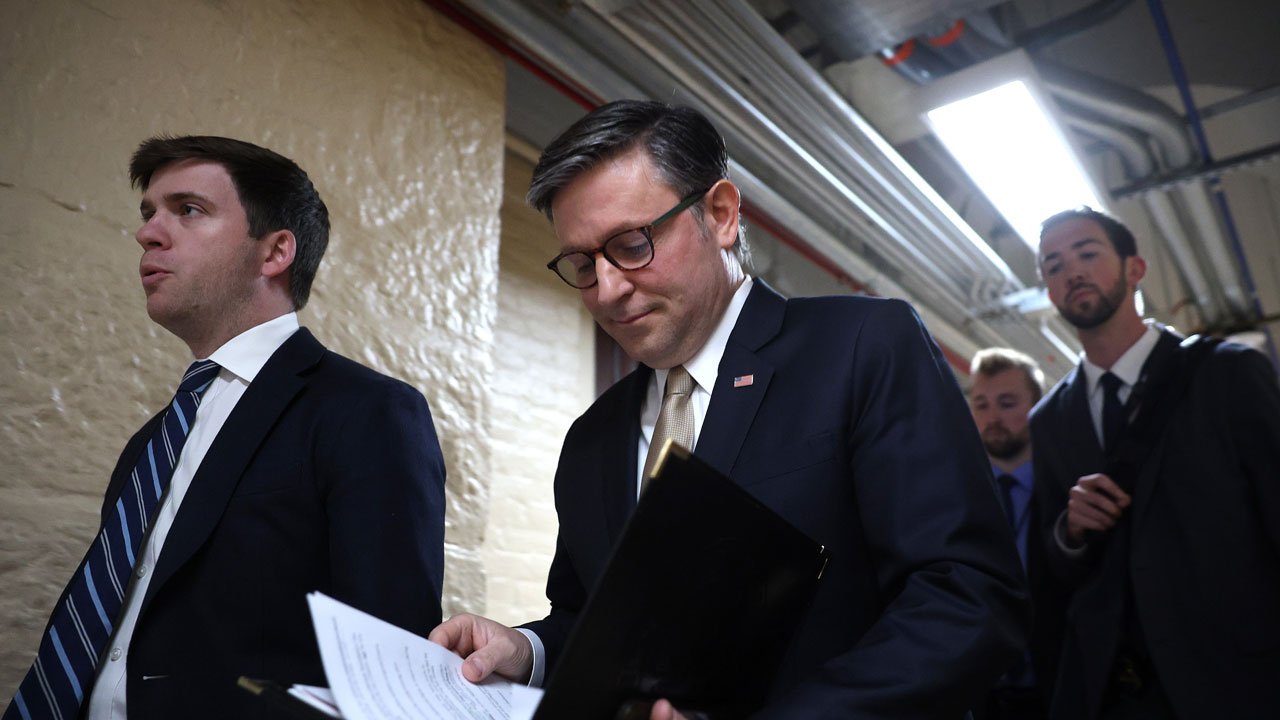
A select group of Republicans on the House Budget Committee were called to Camp David for a “hush-hush” Reconciliation 3.0 meeting with House leadership Friday. After months of planning, Republicans are now acting on legislation that could determine if they keep the majority in the midterms.
Committee members who were invited met at the White House on Sunday afternoon. After their phones were taken, the select Republicans boarded a bus for a two-hour drive to the secret meeting.
Following the meeting, House Speaker Mike Johnson, R-La., announced that the committee will take its first steps on legislation President Donald Trump calls a “must pass.”
According to Johnson, Reconciliation 3.0, which will begin on Wednesday with a markup of the budget resolution, “will include our nation’s most immediate priorities.”
In recent months, Republican committee members have met with congressional leadership and Chairman Jodey Arrington, R-Texas, multiple times to discuss attempts at Reconciliation 3.0. However, the meeting at Camp David revealed the White House’s involvement.
While there are whispers the president attended, a meeting at Camp David was not on his schedule.
Johnson confirmed that White House officials and House Majority Leader Steve Scalise were present. Other committee members who attended the meeting include Brandon Gill and Chip Roy of Texas, Marlin Stutzman of Indiana, and Mike Carey of Ohio.
Committee members who did not attend include Erin Houchin of Indiana and Josh Brecheen of Oklahoma. Arrington will brief all committee members about the Camp David meeting on Monday night.
Three GOP staffers familiar with the event confirmed that rank-and-file members had their phones taken before boarding the bus. The meeting was described as “last minute,” “hush-hush,” and “mostly unstaffed.”
“We were a little caught off guard by it,” one source familiar with the meeting said.
The meeting, which was planned on Friday, required members to rush back to Washington early while many were in their districts for the weeklong recess.
Secret Service officials could not be reached to confirm whether the meeting’s protocol followed standard procedure.
Reconciliation 3.0
Reconciliation is a Senate procedure that allows budget legislation to pass with 51 votes instead of the required 60 votes, avoiding the filibuster. The last major reconciliation package was the “One Big, Beautiful Bill,” which delivered more than $1.6 trillion in tax cuts to Americans.
In June, Congress passed Reconciliation 2.0, the Securing America Act, which provided funding for U.S. Immigration and Customs Enforcement and U.S. Customs and Border Protection.
Reconciliation 3.0, which is still awaiting a bill name, will include Republicans’ final efforts before the midterm season. They have less than eight days in session to meet their deadline.
In June, The Heritage Foundation released “Setting the American Opportunity Agenda,” a special budget and spending report meant to guide Congress toward a successful third reconciliation. It includes lowering health care costs through price transparency, reducing fraud, expanding opportunities for families, ending federal funding for abortion, and protecting American workers and taxpayers.
The House Freedom Caucus, represented on the Budget Committee by Brecheen, Roy, Gill, and Stutzman, also has released goals for reconciliation. Members are pushing to undo President Joe Biden’s climate policy, end federal funding for abortion, eliminate fraud, and prevent the possibility of another Democrat shutdown. The caucus also seeks to prioritize dollar-for-dollar spending cuts.



