
The basics:
- Supreme Court ruled 6–3 that IEEPA does not authorize broad presidential tariffs
- Chief Justice John Roberts said taxing power rests with Congress under Article I
- Trump plans to pursue new tariffs under other trade statutes
- Gov. Mikie Sherrill and NJ business groups weigh economic impact
In a landmark ruling, the U.S. Supreme Court struck down President Donald Trump‘s signature tariff policy.
The Supreme Court ruled 6–3 Feb. 20 the president does not have authority under the International Emergency Economic Powers Act to impose broad tariffs on imports.
The case centered on tariffs imposed by presidential proclamation under a declared national emergency. Businesses challenged the measures, arguing that IEEPA authorizes regulation of economic transactions but does not explicitly grant the power to levy duties or tariffs.
Roberts’ majority opinion
The court maintained that Article I of the Constitution gives Congress – not the president – the power to “lay and collect Taxes, Duties, Imposts and Excises.”
While Congress may delegate certain powers to the executive branch, the Court said such delegation must be clear and explicit, particularly when the action carries vast economic and political consequences. The majority opinion concluded that IEEPA’s language allowing the president to “regulate” importation does not include the authority to impose tariffs.
Chief Justice John Roberts penned the opinion.
“Many statutes grant the Executive the power to ‘regulate.’ Yet the Government cannot identify any statute in which the power to regulate includes the power to tax,” Roberts wrote. “The Court is therefore skeptical that in IEEPA — and IEEPA alone — Congress hid a delegation of its birth-right power to tax within the quotidian power to ‘regulate.’
“While taxes may accomplish regulatory ends, it does not follow that the power to regulate includes the power to tax as a means of regulation.”
Trading tariffs
He continued, “Indeed, when Congress addresses both the power to regulate and the power to tax, it does so separately and expressly. That it did not do so here is strong evidence that ‘regulate’ in IEEPA does not include taxation.”
The decision applies only to tariffs imposed under IEEPA. It does not directly affect tariffs enacted under other statutes, such as Section 232 of the Trade Expansion Act or Section 301 of the Trade Act of 1974.
The ruling also did not address whether the billions of dollars collected since the tariff implementation (during last year’s so-called “Liberation Day”) would now be refunded, or how that would work. The full decision is available here.
Trump talks taking action
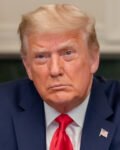
Trump lashed out at the Supreme Court Friday, calling the ruling a disgrace. The president said he is ashamed of members, particularly Republican-appointed ones, that ruled against him.
He held a briefing at the White House Feb. 20 discussing the situation.
He said that while he disagrees with the ruling, he plans to invoke new trade authorities under different statutes, such as the ones above. The president said he plans to sign an executive order later Friday to impose a 10% global tariff under Section 122.
“This was an important case to me, more as a symbol of economic, national security. And also, I would say, just for our country itself,” said Trump. “The good news is that there are methods, practices, statutes, and authorities as recognized by the entire court in this terrible decision.
This was an important case to me, more as a symbol of economic, national security.
– President Donald Trump
“And, also as recognized by Congress, which they refer to, that are even stronger than the IEEPA tariffs available to me as President of the United States.”
‘Too much to bear’
Reaction has poured in from around the great Garden State and beyond.

“I applaud the Supreme Court’s decision striking down President Trump’s illegal tariffs that hurt working people,” said Gov. Mikie Sherrill. “Donald Trump and his rich friends are the only people benefiting from this economy, while his tariffs are crushing small businesses and costing average families $1,700 every year.
“I’m focused on fighting for working families to bring down costs and make New Jersey more affordable.”
I applaud the Supreme Court’s decision striking down President Trump’s illegal tariffs that hurt working people.
– Gov. Mikie Sherrill
New Jersey business leaders also responded to the landmark ruling.

New Jersey Business & Industry Association President and CEO Michele Siekerka said, “Since President Trump instituted tariffs last year, there has always been an understanding that while some New Jersey manufacturers might benefit in the long-term, there would indeed be short-term pain in the form of increased costs for business.
“But for some employers, that pain has been too much to bear,” said Siekerka, who pointed to a recent layoffs announced at Saddle Brook-based Arrow Fastener this week, as well as the responses in NJBIA’s Annual Business Outlook Survey about the impact of tariffs.
“So, there is no question our employers have been impacted by tariffs.”
Waiting for ripples

New Jersey Chamber of Commerce President and CEO Tom Bracken said, “The New Jersey Chamber of Commerce is closely monitoring today’s decision by the Supreme Court of the United States to strike down a significant portion of President Donald Trump’s global tariff program.
“At this early stage, it is too soon to determine the full economic impact of this ruling, particularly for New Jersey’s diverse and globally connected business community,” said Bracken. “The tariffs had been generating revenue for the federal government, while also increasing costs in certain sectors — costs that, in some cases, were passed along to businesses and consumers.”
Bracken noted New Jersey companies operate in complex supply chains that span sectors.
“Any major shift in federal trade policy can have ripple effects across pricing, investment decisions, and competitiveness,” said Bracken. “Until we have greater clarity on how the administration and Congress may respond, and how markets adjust, predicting the ultimate outcome would be premature.”
Potential for relief
Siekerka echoed that sentiment, “Shifting federal tariff policies often creates a lack of predictability and certainty for New Jersey businesses. And that uncertainty can cause businesses to freeze investments, stop hiring, and, in some cases, pivot to less favorable, cost-burdened operations.
“Today’s ruling could potentially alleviate some of those cost pressures for those impacted. We hope that this pause can bring about more conversation and collaboration between industry and lawmakers to strengthen our national economy, but without putting our employers in peril.”
Bracken added, “The Chamber will continue to evaluate developments and engage with policymakers to ensure that New Jersey businesses remain competitive, stable, and positioned for growth in a changing trade environment.”
Please stay with NJBIZ for the very latest on this developing story.
The post Supreme Court strikes down Trump tariffs appeared first on NJBIZ.



