
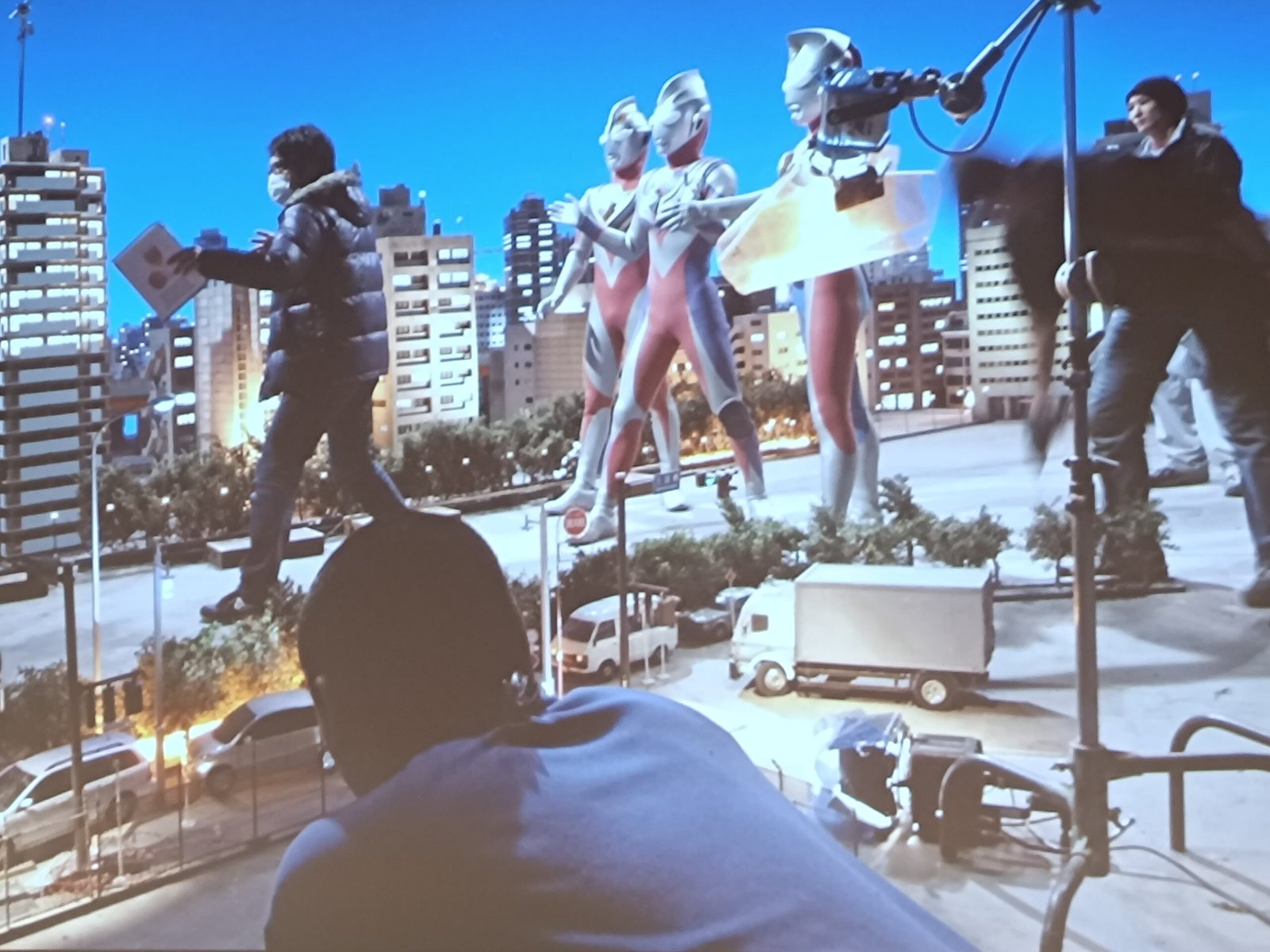
Exactly 60 years after the first episode of “Ultraman” was broadcast in Japan, director and special-effects filmmaker Takeshi Yagi appeared at the Fantasia International Film Festival to reflect on the cultural transformation that followed.
Held in Montreal on July 17, the anniversary event accompanied the international premiere of “The Origin of Ultraman”, Tsuburaya Productions’ documentary examining the creation and enduring influence of the red-and-silver hero. Overseen by Hirokazu Koreeda, the documentary features memories and observations from surviving members of the original production alongside international filmmakers and creators including Hideaki Anno, Hideo Kojima, Guillermo del Toro and Nicolas Winding Refn.
Refn, who had presented a masterclass at Fantasia earlier in the afternoon, personally introduced Yagi before the Japanese filmmaker took the stage. His presence provided an appropriate bridge between the documentary’s international appreciation of “Ultraman” and the perspective of a director whose career has been closely connected to the franchise.
Rather than offering a conventional production history, Yagi organized his presentation around a larger question: What happened to Japan after “Ultraman” appeared on television on July 17, 1966?
For Yagi, the answer could be found in the behaviour of the children watching. Across the country, children from very different backgrounds were suddenly connected by the same 30-minute experience. The next morning, they imagined themselves as members of the Science Patrol, drew monsters, staged battles in schoolyards and parks, and looked toward the sky wondering what might exist beyond the clouds.
“Ultraman” did not simply become a successful television program, Yagi argued. Many programs become popular and are subsequently forgotten. “Ultraman”, however, entered family memories, childhood games and the collective imagination of several generations.
“I don’t believe Ultraman simply became popular,” Yagi said. “It became part of childhood, part of family memories, part of our imagination, and eventually part of our collective imagination.”
Yagi connected that impact to the Japanese tradition of tokusatsu, a term commonly translated as “special effects” but which, according to the director, describes something much broader than a technical process. Tokusatsu is a method of storytelling that gives physical form to dreams, fears and possibilities, making the impossible appear tangible.
“Godzilla” had introduced audiences to the potential of Japanese monster cinema, but “Ultraman” brought comparable scale into domestic spaces. Every week, viewers encountered a 40-metre silver giant, kaiju battles, miniature cities and elaborate visual effects, all broadcast in colour through an ordinary television schedule.
Yagi described this as a cinematic revolution. What had previously belonged primarily to theatrical monster features was now arriving directly in Japanese living rooms. For children, tokusatsu became a place where ordinary people could become extraordinary and where imagined worlds suddenly felt accessible.
However, he suggested that the franchise’s longevity cannot be explained through monsters, costumes, music or effects alone. Its central strength was its ability to see the world through the eyes of children. This was not merely because children constituted its principal audience, but because they represented the future toward which “Ultraman” continually looked.
Yagi himself was not among those who watched “Ultra Operation No. 1” during its original broadcast. Born in 1967, he discovered “Ultraman” through later broadcasts, but received what he described as the same dream.
He recalled walking beside the sea with his father as a child and asking what existed beyond the horizon. His father answered that there were other countries and that the world was much larger than what they could see. Although Yagi could no longer remember every word of the conversation, he remembered the sense that another world, another future and another possibility existed beyond the visible landscape.
Years later, he recognized the same feeling in “Ultraman”: the quiet conviction that beyond the limitations of the present, another tomorrow was waiting.
That childhood fascination eventually developed into a professional relationship with the Ultra Series. Yagi joined Tsuburaya Productions during the mid-1990s and worked as an assistant director on productions including “Ultraman Tiga”. After making his directorial debut with an episode of “Moon Spiral” in 1996, he worked as both a director and special-effects director across several Ultra productions. His subsequent credits included “Ultraman Gaia”, “Ultraman Cosmos”, “Ultra Q: Dark Fantasy”, “Ultraman Nexus” and “Ultraman Mebius”. He also served as series producer on “Ultraman Max” and as main director and series organizer on “Ultraseven X”, before becoming a freelance filmmaker in 2008.
One of his most prominent contributions to the franchise was the 2008 feature “Superior 8 Ultraman Brothers”, which assembled heroes from the Showa and Heisei periods. The movie begins with children watching the original “Ultraman” broadcast on July 17, 1966, before following them into an adulthood in which their childhood aspirations have gradually faded.
Yagi explained that he chose that date because it represented “the day the imagination of Japan’s childhood changed forever”. The movie was not intended simply to recreate or celebrate the past. Instead, it attempted to pass forward the dream that Yagi and his generation had inherited.
That process, he suggested, explains how “Ultraman” has continued for six decades. No single generation has retained exclusive ownership of the character. Each one has encountered the hero differently and then reshaped his meaning for the next.
Yagi concluded by emphasizing that the 60th anniversary should not be treated only as an exercise in nostalgia. The creators behind “Ultraman” were never satisfied with merely repeating what had worked previously. They continued searching for images, stories and ideas capable of inspiring children who had not yet discovered the character.
The Fantasia presentation subsequently returned the audience to the franchise’s point of origin with a screening of “Ultra Operation No. 1”, the episode first broadcast on July 17, 1966. In Yagi’s account, watching it six decades later was not simply an opportunity to revisit Japanese television history. It was an invitation to see the world momentarily through the eyes of the children whose imaginations it transformed—and to consider the futures that “Ultraman” may still inspire.



