
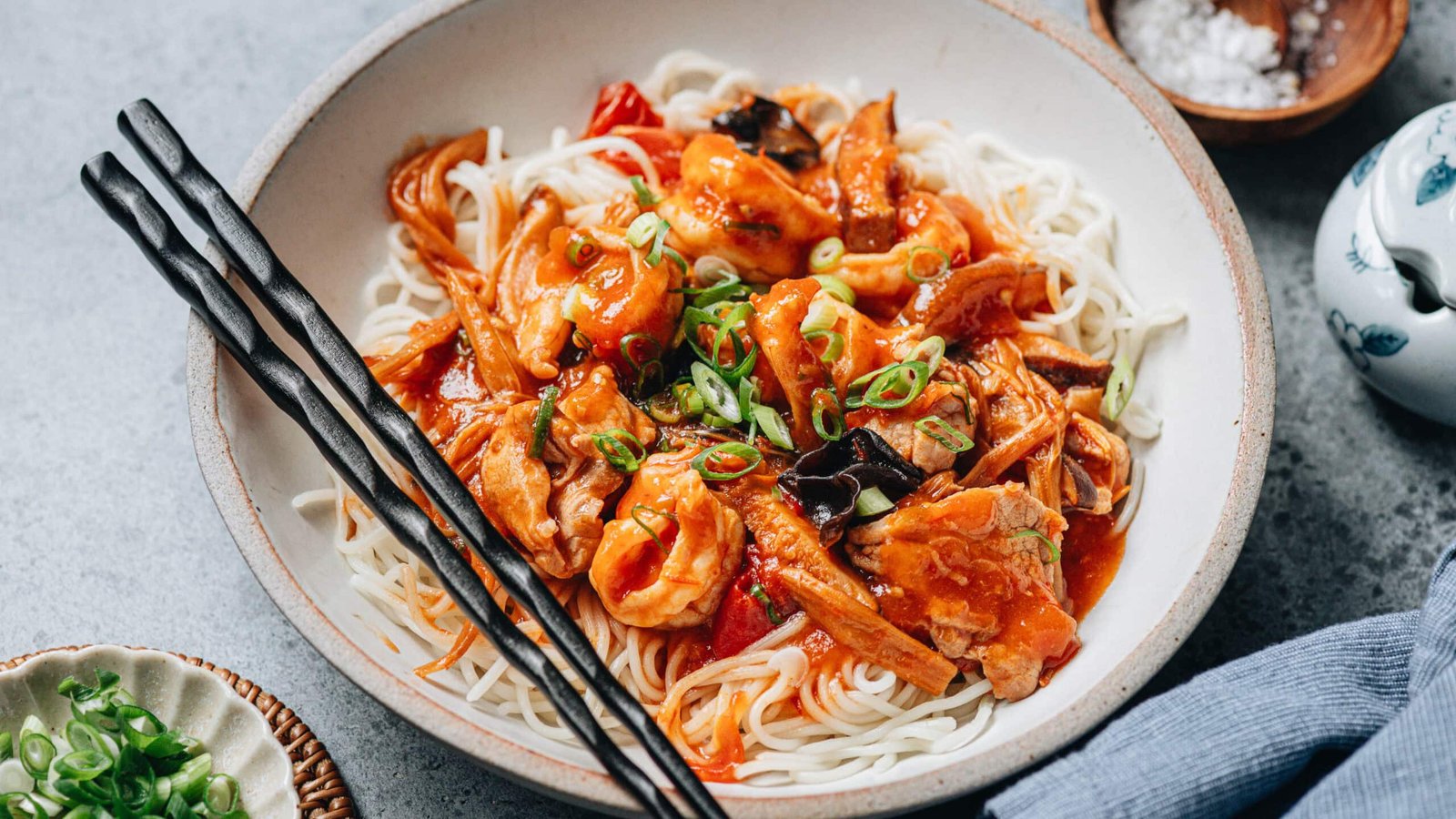
Da lu mian (打卤面) is a Northern Chinese noodle dish topped with a savory, cornstarch-thickened gravy. Everyday versions are often simple, made with ingredients like eggs, pork, and mushrooms, and served over whatever noodles are available at home.
My family’s version is more elaborate, with plenty of pork and shrimp in a tomato-based gravy enriched with dried lily flowers, shiitake mushrooms, and wood ear mushrooms. The recipe I’m sharing with you today was inspired by my grandma’s version, with a little more tomato added to the gravy. It’s a dish we still serve at every Chinese New Year and many of our family gatherings.
My grandparents were quite well-off back when everyday necessities were rationed in China. While most families relied on food vouchers to buy staples and had limited access to meat, my grandma could afford generous portions of pork and even shrimp. She added these expensive ingredients to her noodle gravy to make it extra special for celebrations and, as she liked to do, show off a little to the neighbors.
If I had to pick just one noodle dish to eat for the rest of my life, it would be this one. Plus, I love making my own hand pulled noodles for a weekend treat. I rehydrate the dried vegetables first, then save the lily flower soaking water and stir it back into the pot so the gravy has a stronger base. Also, I marinate the pork and shrimp with cornstarch so they stay tender, simmer the tomato and stock into a sauce, add the proteins at the end, and thicken with a cornstarch slurry. I hope you make a full batch for a crowd using my directions below, because trust me, the leftovers taste even better the next day.
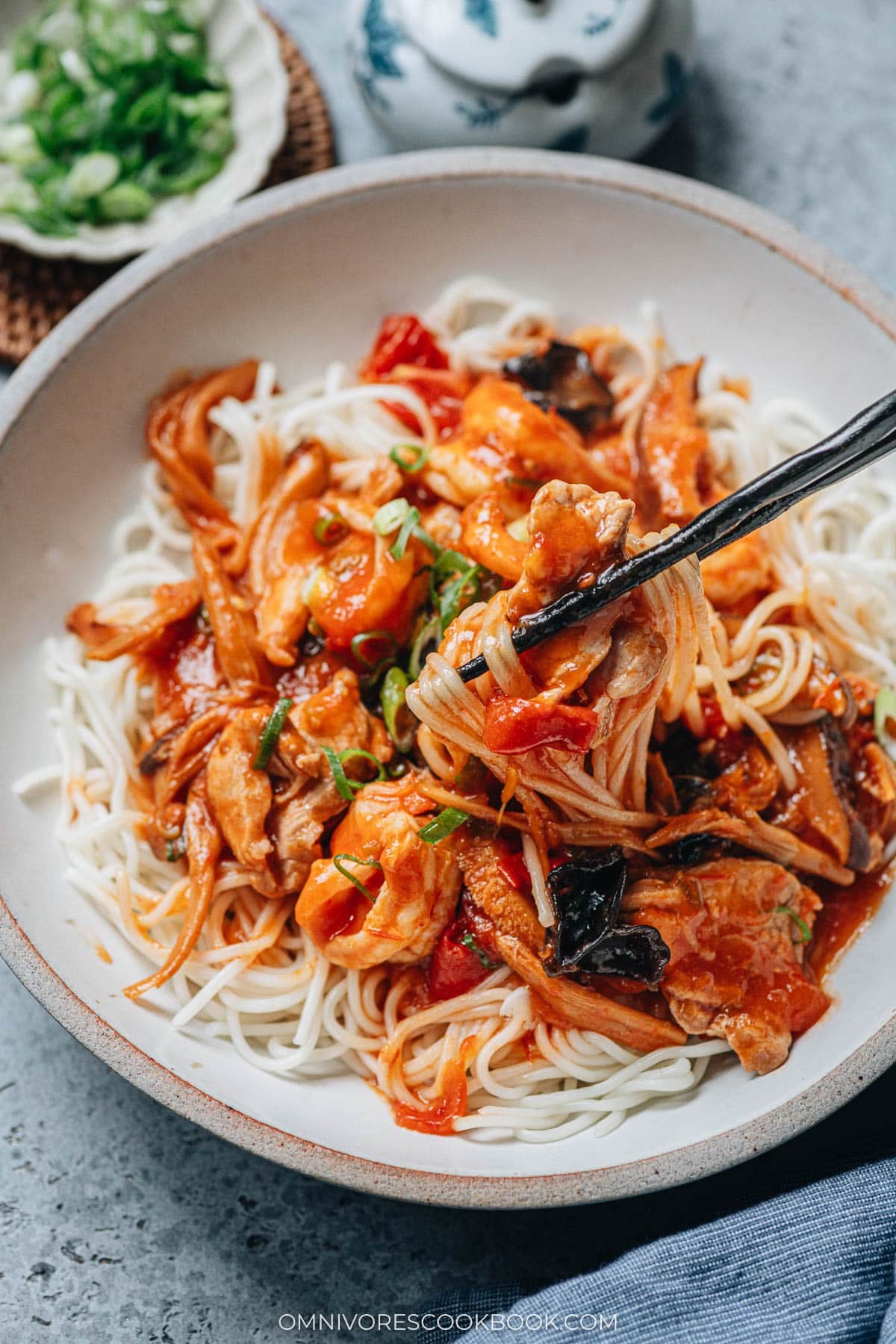
Ingredients
To make this Chinese Noodle Sauce (Da Lu Mian, 打卤面) I use the ingredients listed below.
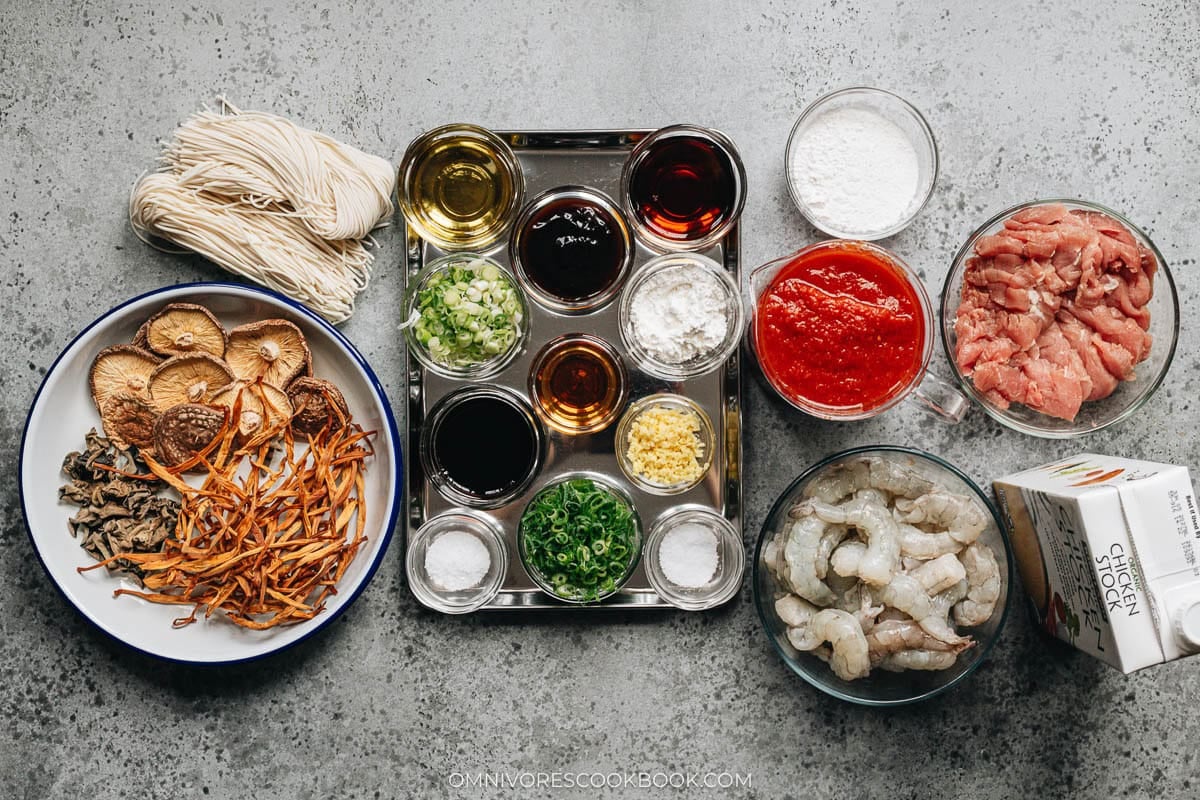
Dried vegetables: I soak dried lily flowers, dried shiitake mushrooms, and wood ear mushrooms in hot water until tender.
Proteins: I use shrimp and thin-sliced pork tenderloin, each marinated with Shaoxing wine, salt, and cornstarch.
Sauce base: I start the sauce with canned diced tomato, green onion whites, and minced ginger cooked in oil.
Seasoning: I season the pot with chicken stock, soy sauce, sugar, and salt. I like to add oyster sauce for extra savory depth.
To finish: I whisk cornstarch with water for the slurry that thickens the gravy, and I drizzle toasted sesame oil or a little homemade chili oil over the top at the end.
How to Make
1. Rehydrate the lily flowers: Rinse the dried lily flowers with tap water, then soak them in warm water until tender, 15 to 20 minutes. Snip off any tough woody ends. Reserve 2 cups of the soaking water from the top, leaving behind any grit that settled on the bottom.
2. Rehydrate the mushrooms: Rinse the dried shiitake, soak them in hot water until tender, then drain and slice. Soak the wood ear mushrooms separately in hot water until soft, then rinse and drain.
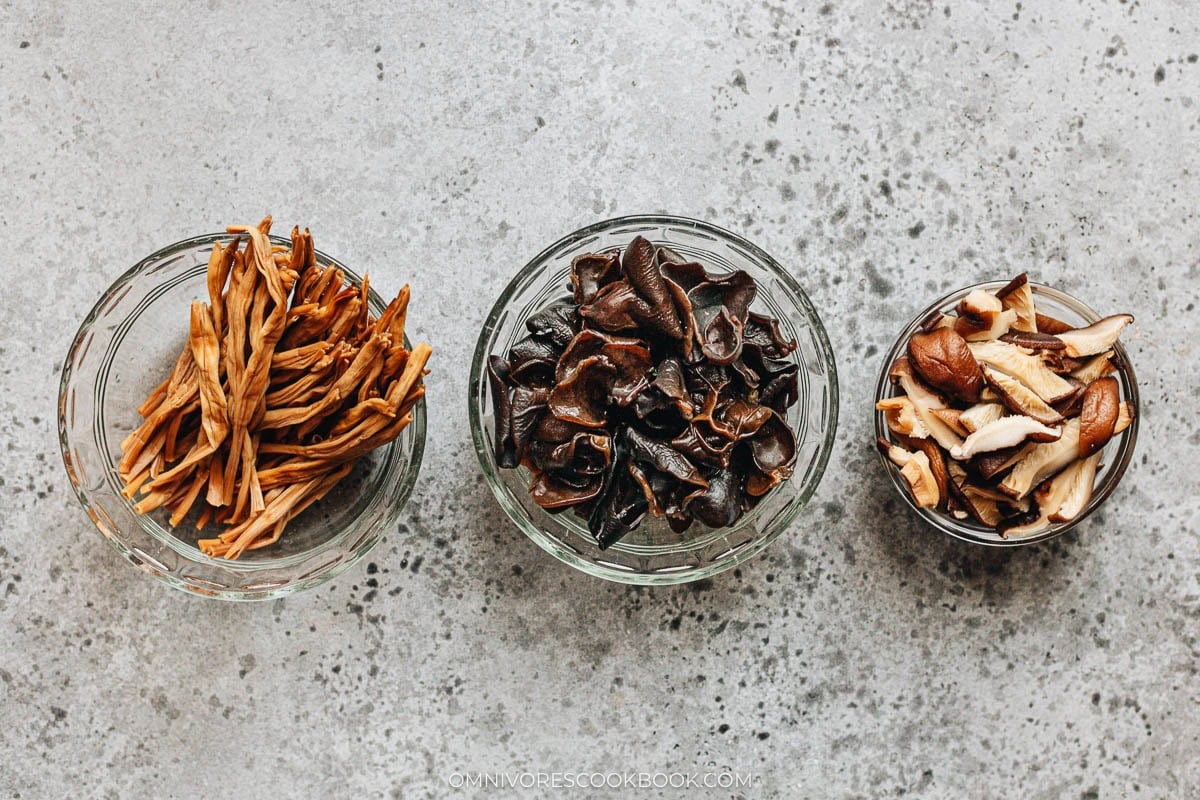
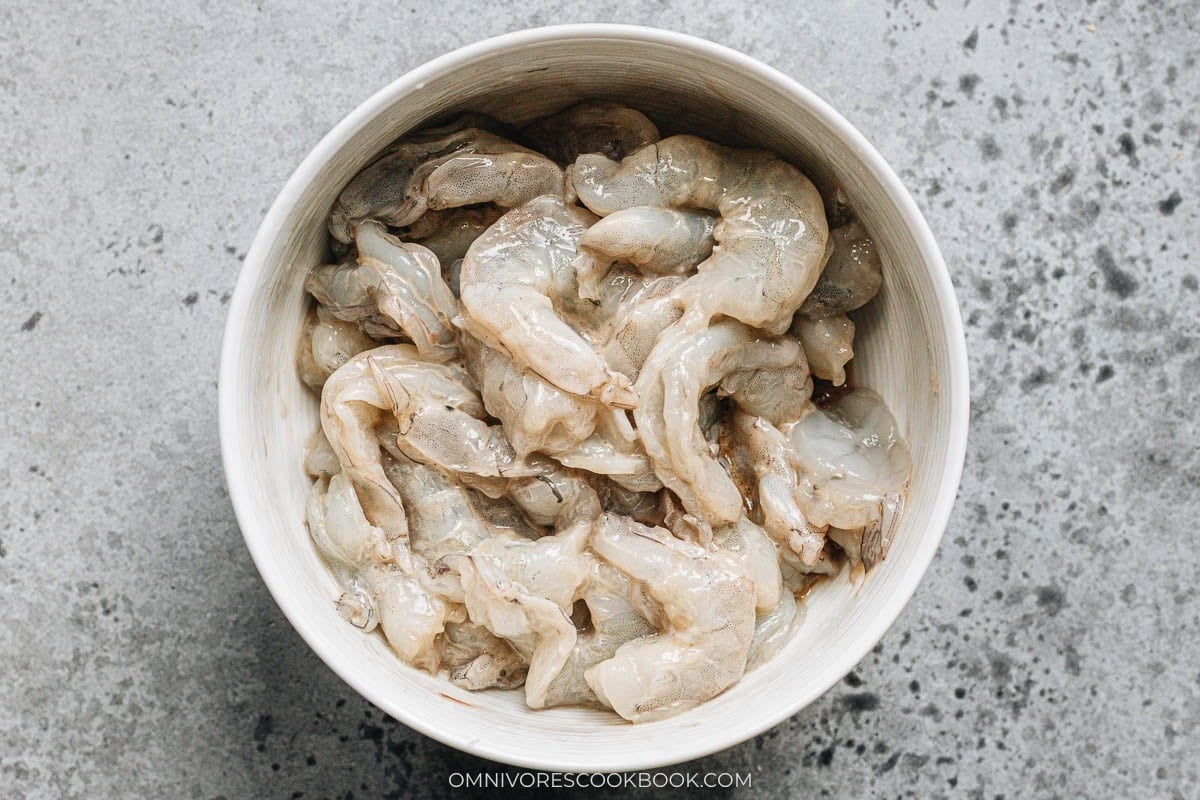
3. Marinate the shrimp: Combine the shrimp with Shaoxing wine, salt, and cornstarch. Mix by hand and marinate for 15 minutes.
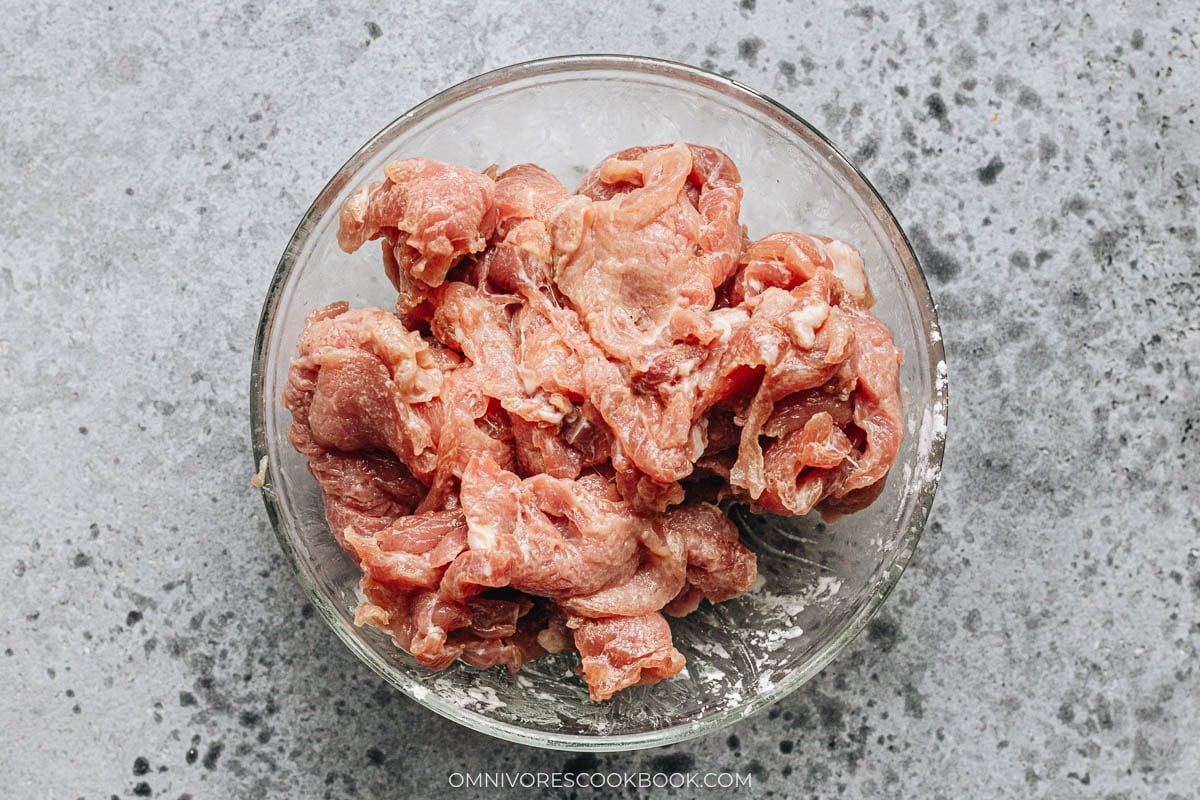
4. Marinate the pork: Combine the sliced pork with Shaoxing wine, salt, and cornstarch. Mix by hand and marinate for 15 minutes.
5. Prep the rest: Chop and prepare the other vegetables. Mix the cornstarch with water in a small bowl for the slurry and set it aside.
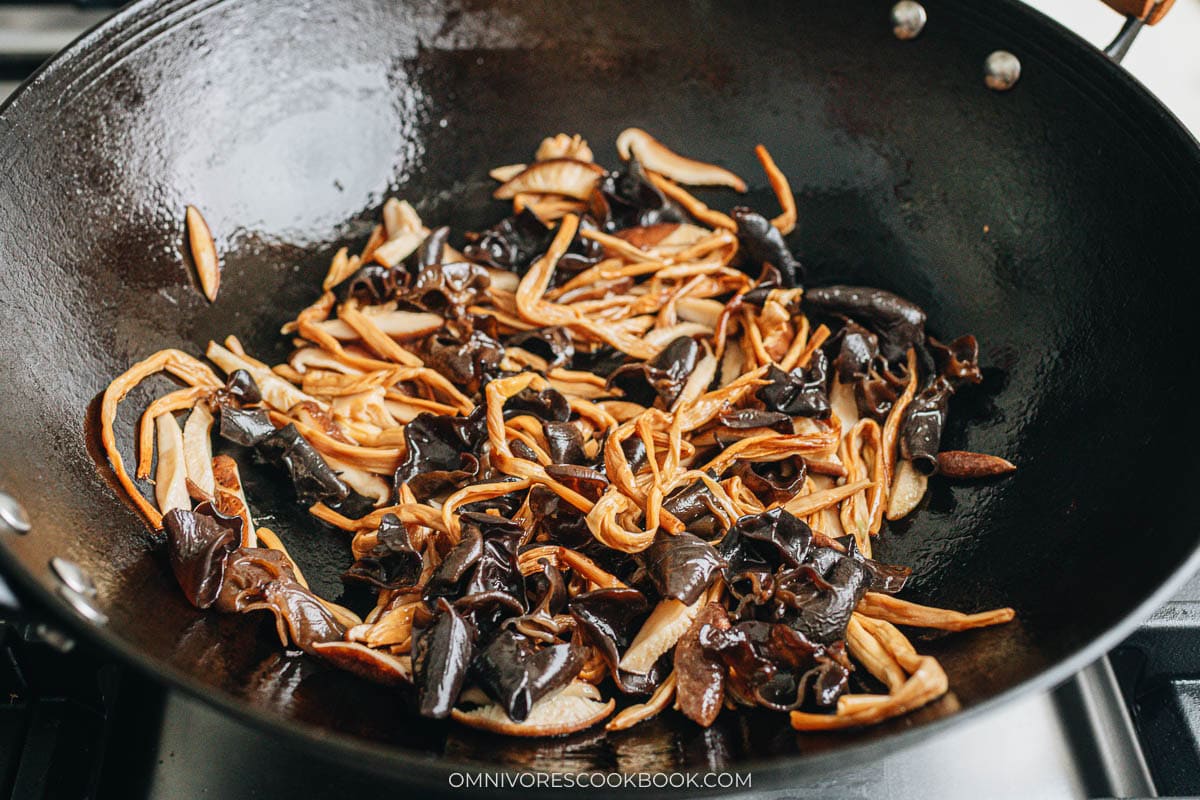
6. Cook the dried vegetables: Heat oil in a large wok or dutch oven over medium heat until shimmering. Add the lily flowers, shiitake, and wood ear. Stir and cook over medium low heat until light golden, 2 to 3 minutes.
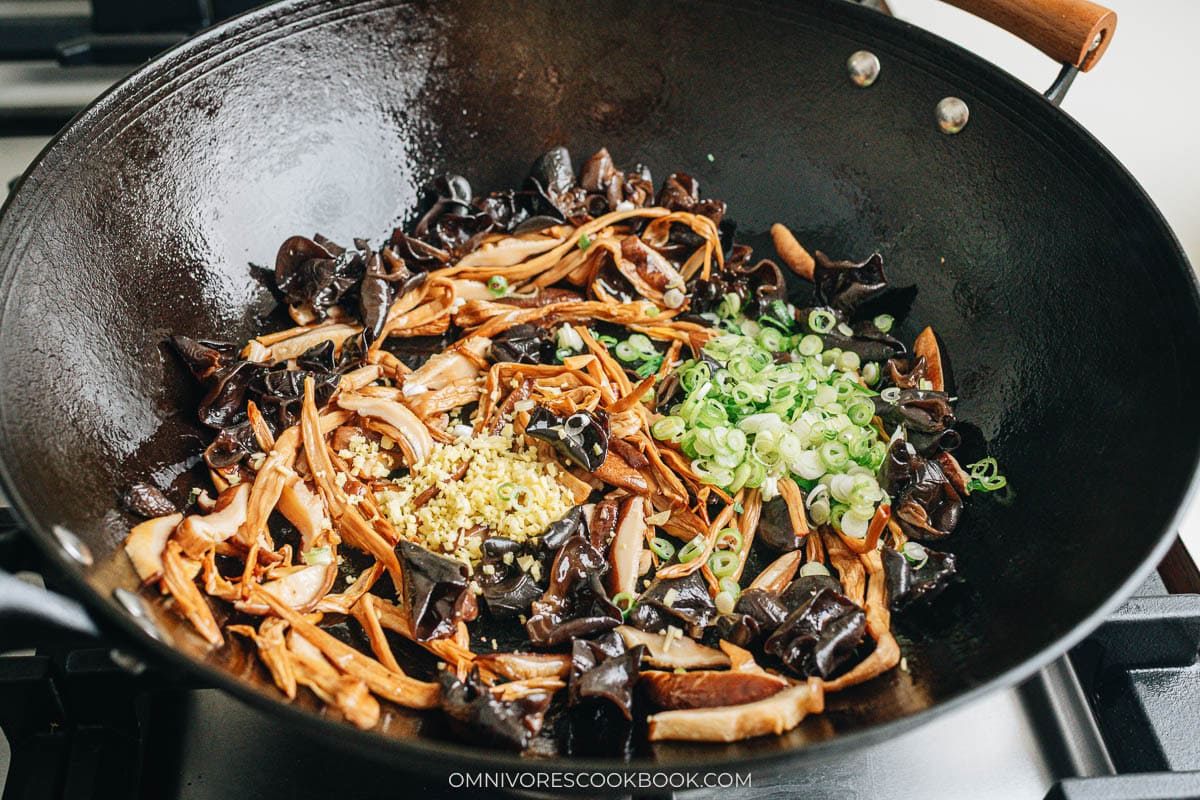
7. Add the aromatics: Add the green onion whites and ginger. Stir and cook until fragrant, about 1 minute.
8. Cook the tomato: Add the canned tomato, stir, and cook for 1 minute.
9. Simmer the gravy: Add the 2 cups reserved lily flower water, chicken stock, soy sauce, oyster sauce, sugar, and salt. Bring to a boil over medium high heat while stirring. Reduce to medium low and simmer for 15 minutes.
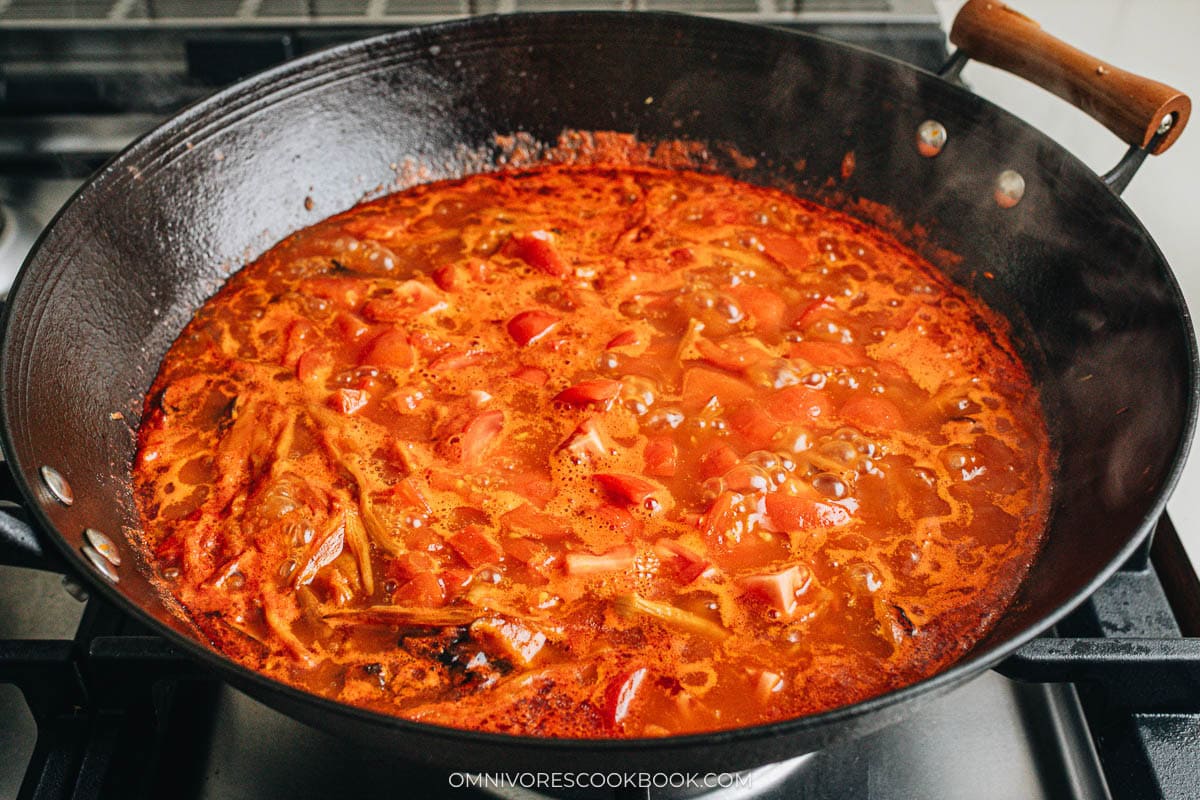
10. Add the proteins: Add the shrimp and pork. Stir and cook until the shrimp goes white and the pork is just cooked through, 1 to 2 minutes.
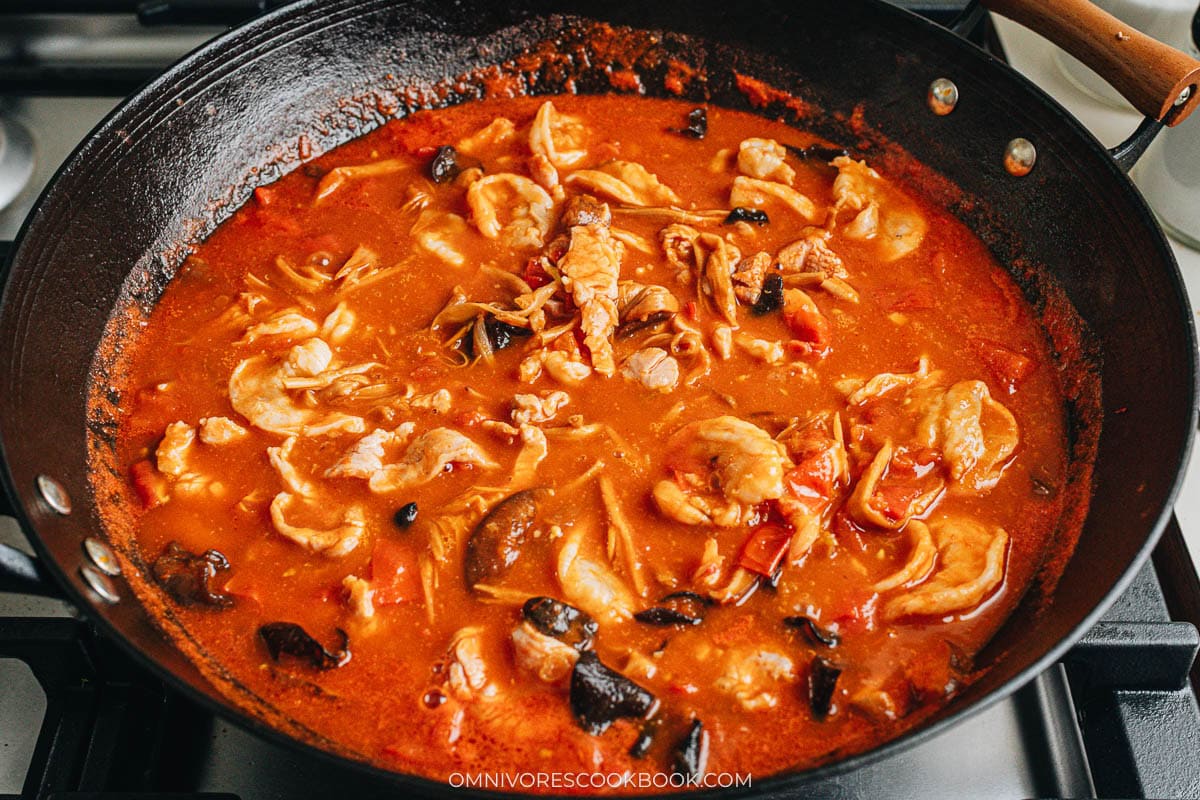
11. Thicken the sauce: Whisk the cornstarch water again and swirl in half. Stir until incorporated, then add the rest slowly until the gravy reaches the thickness you want. Taste and add more salt if needed. Drizzle with sesame oil or chili oil, stir in the green onion greens, and cover to keep hot.
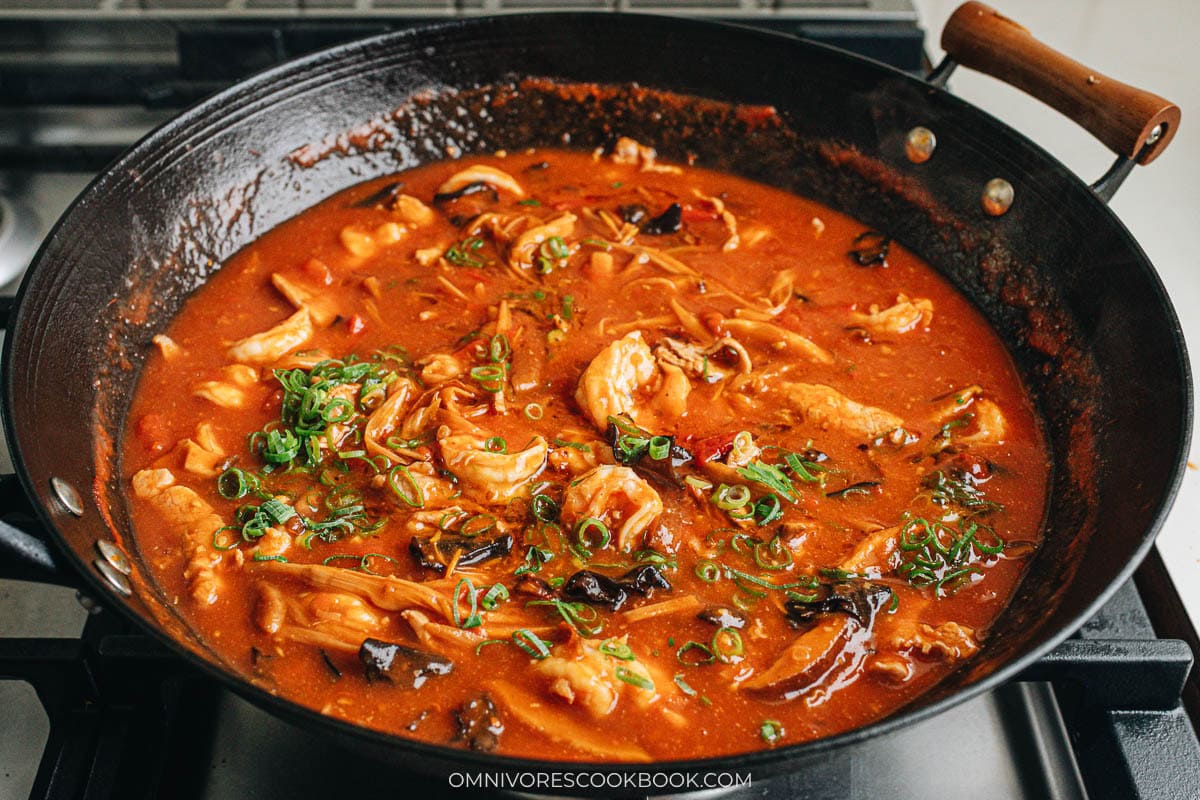
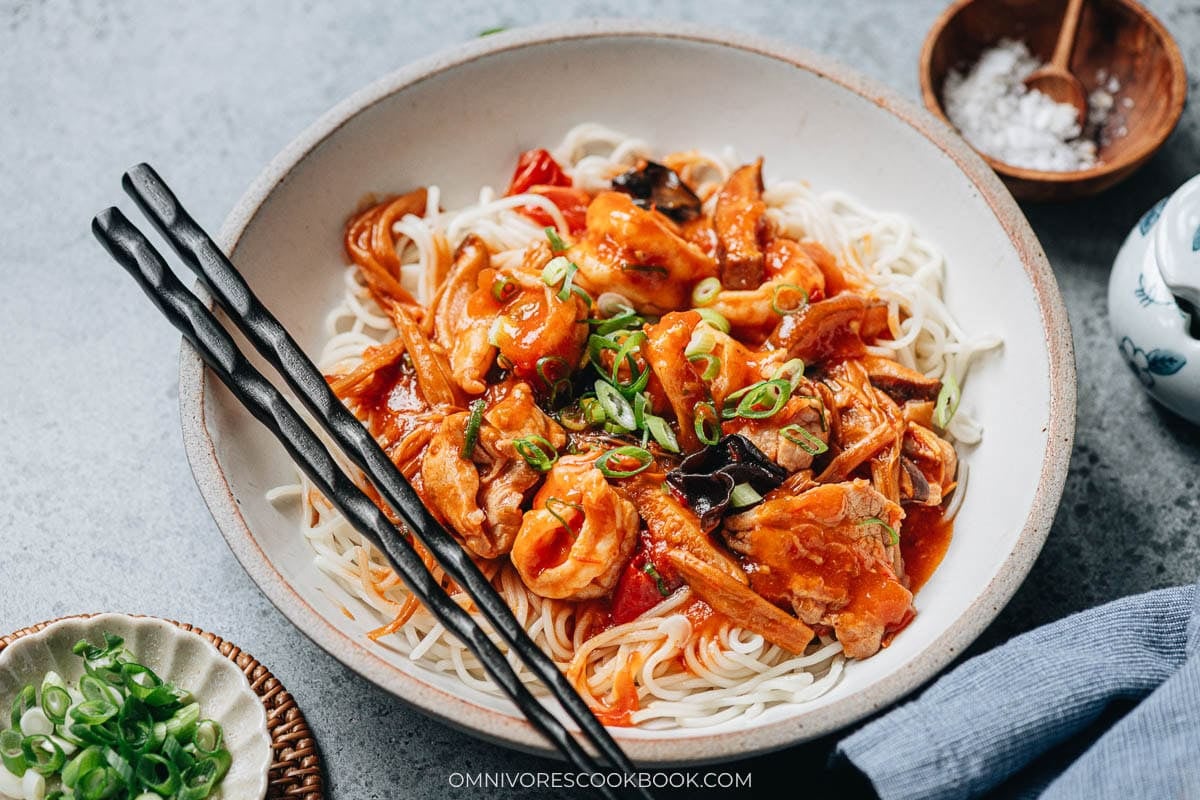
12. Cook the noodles and serve: Cook the noodles according to the package. Drain and divide among serving plates. Ladle the hot sauce over the noodles and serve right away.
Cooking Tips I Recommend
Save the lily flower soaking water: The 2 cups you reserve from soaking the lily flowers is the backbone of this gravy. Pour it from the top so you leave the grit behind, and your sauce has a deeper base without a longer simmer.
Slice the pork while it is partly frozen: Thin, even slices of tenderloin cook in a minute or two in the hot sauce. A partly frozen piece is firmer and much easier to slice thin than one at room temperature.
Add the proteins near the end: Shrimp and thin pork need only 1 to 2 minutes in the simmering gravy. Adding them too early makes the shrimp and the pork dry and chewy, so I hold them back until the sauce is ready.
Control the gravy thickness yourself: The cornstarch slurry is added in two pours, so you decide how thick the sauce gets. Stop when you like the consistency and save the rest if you want a thinner gravy.
Make the full batch: This recipe takes some time no matter how many servings you make, so I never cut it in half. The leftovers taste even better the next day, which makes the effort worth it.
How to Serve
Da lu mian is typically a one-plate meal in my house, with the noodles down first and a heavy ladle of the pork and shrimp gravy spooned over the top. I like placing extra green onion greens and a small dish of homemade chili oil so we can adjust our own bowl, and I keep the pot covered on the stove so second helpings stay hot.
When I make this for a weekend lunch with friends, I like to serve a few lighter dishes alongside the noodles to balance the rich gravy. I usually prepare a cold Chinese cucumber salad for its tangy, refreshing crunch, a plate of stir-fried baby bok choy for some greens, and a bowl of egg drop soup to complete the meal. You can also browse my blog for more serving ideas.
Frequently Ask Questions
What noodles work best for da lu mian?
Handmade noodles are a wonderful choice for special occasions, but thick dried noodles, such as udon, work beautifully too and are much more convenient. If you have access to an Asian market, fresh wheat noodles from the refrigerated section are another great option.
Can I skip the dried lily flowers or wood ear mushrooms?
Yes! Both ingredients add flavor and texture to the gravy, but you can leave out either one if you can’t find it. Dried lily flowers add a subtle earthy flavor, while wood ear mushrooms provide a pleasant, slightly crunchy texture. You can add a little more shiitake mushrooms to make up for them. The gravy will still be delicious without either ingredient.
Why is my gravy too thin or too thick?
The thickness comes from the cornstarch slurry, which you add in 2 pours so you stay in control. Add half, stir until it is incorporated, then add the rest slowly and stop when you like the texture. If it sets up thicker than you want after sitting, stir in a splash of hot stock or water to loosen it.
Can I use just pork or shrimp instead of both?
Absolutely! You can use just pork or shrimp, depending on what you have on hand. I recommend increasing the amount of whichever protein you choose to make up for the one you’re leaving out. The gravy will still be rich and flavorful thanks to the dried mushrooms, lily flowers, and savory seasonings.
Want to Save This Recipe?
Enter your email below & we’ll send it to your inbox. Plus get great new recipes from us every week!
This traditional northern-style Chinese noodle sauce is a delicious way to serve a bowl of noodles. I prepare a thick savory tomato-based gravy with pork tenderloin, shrimp, dried lily flowers, shiitake mushrooms, and wood ear mushrooms. I love how the dried ingredients enhance the flavor of the sauce, making it so rich and savory that I could eat it on its own.
Prevent your screen from going dark
Rehydrate
Gently rinse the dried lily flowers with tap water. Transfer to a big bowl and add 4 cups hot water. Rehydrate until tender, about 15-20 minutes. Then remove tough ends of rehydrated lily flowers (*Footnote 3). Transfer 2 cups of the marinating water to another bowl without any of the solids that may have settled on the bottom. Set aside.
Gently rinse dried shiitake mushrooms with tap water. Add mushrooms and 2 cups hot water to a big bowl. Rehydrate until tender, about 15-20 minutes. Then drain and slice the mushrooms.
Add wood ear mushrooms to a small bowl and add hot water to cover. Let rehydrate for 15-20 minutes. When woodear mushrooms turn soft, gently rinse, drain, and set aside.
Marinade & Prep
Combine shrimp, 1 tablespoon Shaoxing wine, 1/4 teaspoon salt, and 2 teaspoons cornstarch in a small bowl. Mix well by hand and marinate for 15 minutes.
Combine pork, 1 tablespoon Shaoxing wine, 1/2 teaspoon salt, and 2 teaspoons cornstarch in a small bowl. Mix well by hand and marinate for 15 minutes.
Chop and prepare the other vegetables.
Combine the the 1/4 cup cornstarch with 1/2 cup water in a bowl. Mix well and set aside.
Cook
Heat oil in a large wok or 5.5-quart dutch oven over medium heat until shimmering. Add lily flowers, shiitake mushrooms, and wood ear mushrooms. Stir and cook over medium low heat until turning light golden, 2 to 3 minutes.
Add green onion white part and ginger. Stir and cook until fragrant, about 1 minute.
Add canned tomato, stir, and cook for 1 minute.
Add the 2 cups marinating water from the lily flowers, chicken stock, soy sauce, oyster sauce, sugar, and salt. Bring to a boil over medium high heat, stirring constantly. Turn to medium low heat and simmer for 15 minutes.
Add the shrimp and pork. Stir and cook until the shrimp turns white and the pork is just cooked through, 1 to 2 minutes.
Whisk the cornstarch water again and swirl in half of it. Stir until fully incorporated. Slowly add the rest of the cornstarch water and stir, until the gravy reaches the desired thickness (you will have some slurry left if you prefer a thinner gravy). Taste the sauce and add more salt if needed. Drizzle with sesame oil or homemade chili oil to finish up, if using. The sauce should be slightly salty by itself. Remove the pot from your stove, add the green onion green part, and cover to keep hot.
Cook noodles according to instructions. Drain and transfer to each serving plate. Serve the sauce hot over the noodles. Enjoy!
Ingredient Substitution Guide
- Wide, thick noodles made with wheat flour work the best. If you want the meal to be extra fancy, you can make hand pulled noodles.
- I used some oyster sauce to add more flavor and sweetness. If you do not have a bottle of it on hand, use 1 tablespoon soy sauce and 2 teaspoons sugar instead.
- Not all lily flowers have tough ends. Depending on the quality of your flowers, you might not need this step. Feel the end of the flower with your hand. If there is a thin, tough, woody stick (less than half an inch / 1 cm), snip it off and discard it.
Serving: 1serving, Calories: 292kcal, Carbohydrates: 33g, Protein: 22g, Fat: 7.5g, Cholesterol: 125mg, Sodium: 785mg, Fiber: 3.6g, Sugar: 4.6g

Did you make this recipe?
I’d love to hear how it turned out for you! Please take a moment to leave a 5-star rating ⭐️ and share your thoughts in the comments further down the page. It really helps others discover the recipe too.
I posted this recipe back in May of 2015, but I have been improving the workflow ever since, to make it more friendly for Western kitchens. The recipe was updated in October, 2026.



