
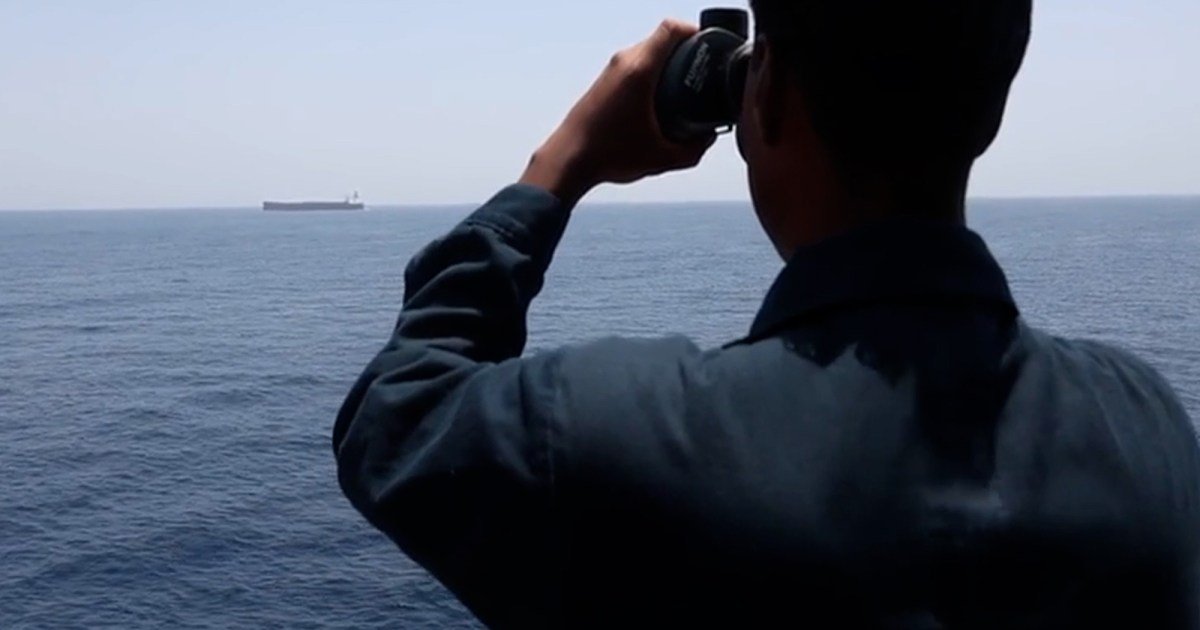
A US Sailor on the USS Rafael Peralta peers at an oil tanker as it enforces the maritime blockade. /U.S. Central Command Public Affairs
Defense Secretary Pete Hegseth recently told Congress that the US government has spent an estimated $37.5 billion to date on the Iran war and requested an additional $67 billion in emergency funding.
But there are several hidden costs that don’t factor into Hegseth’s accounting—ones that the rest of us are actually paying.
The most obvious example is increased fuel prices. As of this writing, Americans have already paid more than $75 billion in additional gasoline and diesel costs—more than $570 per household—since the war began, according to a live tracker from Brown University’s Climate Solutions Lab.
The jump in fuel prices has raised the cost of airline tickets, and delivery fees for Amazon, UPS, FedEx and the US Postal Service have gone up as much as 8 percent. Because trucks carry more than 70 percent of goods in the US, higher diesel prices affect almost everything on store shelves, including groceries.
Oil is used to make plastics and petrochemicals, so higher prices are already starting to work their way into the cost of everything from stuffed animals, diapers, and baby wipes to crayons, bottled water, soft drinks, and clothing.
And because K-12 schools in the US spend more than $8 billion a year on energy—their second-largest expense after teacher salaries—rising utility costs will likely strain already-stressed public schools.
The closure of the Strait of Hormuz has also caused the price of fertilizer to skyrocket. About 70 percent of US farmers said they were unable to afford all the fertilizer they need, according to a survey by the American Farm Bureau Federation. In the US, that will likely eventually mean higher food prices. In other parts of the world, the UN is warning that the war in Iran is driving historic levels of global hunger. The head of the World Food Programme recently said the organization is being forced to “take from the hungry to give to the starving.”
Of course, the impact of the cost in human life is incalculable. At least 18 US service members have been killed and more than 100 wounded. In Iran alone, human rights groups have documented at least 1,700 civilian deaths, with the regional toll likely thousands more.
Ultimately, the cost of the war doesn’t end when the last shot is fired. Veterans will draw care and disability payments for decades. Historically, these costs don’t peak until 30 to 40 years after a war ends. Meanwhile, US weapons stockpiles will need replenishing and American facilities in the Middle East—damages to which are reportedly more extensive than the Trump administration has acknowledged—will need to be rebuilt.
Taken all together, $37.5 billion isn’t anywhere near a final number. It’s more like a down payment—one that all of us are making.



