
But the contest over the first-in-the-nation primaries has also become a proxy war over the future of the Party. The D.N.C.’s decision, expected by late summer, could have a significant effect on the 2028 cycle—from the crop of campaign staffers who can afford to relocate to the ability of small campaigns to break through in large media markets. Although Iowa and New Hampshire haven’t always picked candidates that go on to win the Presidency, the early victors get to fly out of Des Moines and Manchester with an extremely valuable spoil: momentum, the type that an inert political party might need against a major popular movement. “The issue here is about the stakes in this election, in 2028,” the New Hampshire senator Maggie Hassan, who won her seat in 2016 by a thousand and seventeen votes, told me. “We have to win. We have to reverse Trumpism.”
For more than a century, New Hampshire was the entire story—since 1920, it hosted the first primary, and, beginning in 1972, Iowa hosted the first Presidential caucuses. But over time, many Democrats came to believe that those early, white-majority states no longer represented the Party’s base. The reckoning came at an opportune moment for Joe Biden, who’d called himself a “bridge” to future generations but had left the window open to running again. In December, 2022, Biden wrote to the D.N.C. expressing his concern that, although Black voters were the “backbone” of the Democratic Party, the Party had not “recognized their importance in our nominating calendar.” The letter prompted the committee to select South Carolina, the state where Biden’s flagging 2020 Presidential campaign had recovered—with the endorsement of a powerful, longtime ally, Representative Jim Clyburn—as the new starting point of the primaries. “That was kind of what elevated South Carolina to be first, was the Biden letter,” Christale Spain, now the chair of the South Carolina Democratic Party, told me. On February 4, 2023, the D.N.C. selected South Carolina as the first primary; Biden announced his fateful rëelection campaign about two months later.
During this cycle, according to the D.N.C.’s rules, any state can apply for an early slot. Spain praised Biden’s “foresight” in trying to win back the South, but she’s told the committee members that her state is not “asking for nostalgia”—in other words, that it’s not asking to go first to follow the precedent from 2024, or out of some loyalty to Biden’s legacy. “If we ever, ever want to get another Jimmy Carter, another Barack Obama, another Pete Buttigieg, we have to have states like South Carolina in the window, because if we don’t, and we start putting in states like Virginia and starting with these super expensive, these large states, these candidates will never be able to get off the ground,” she told me.
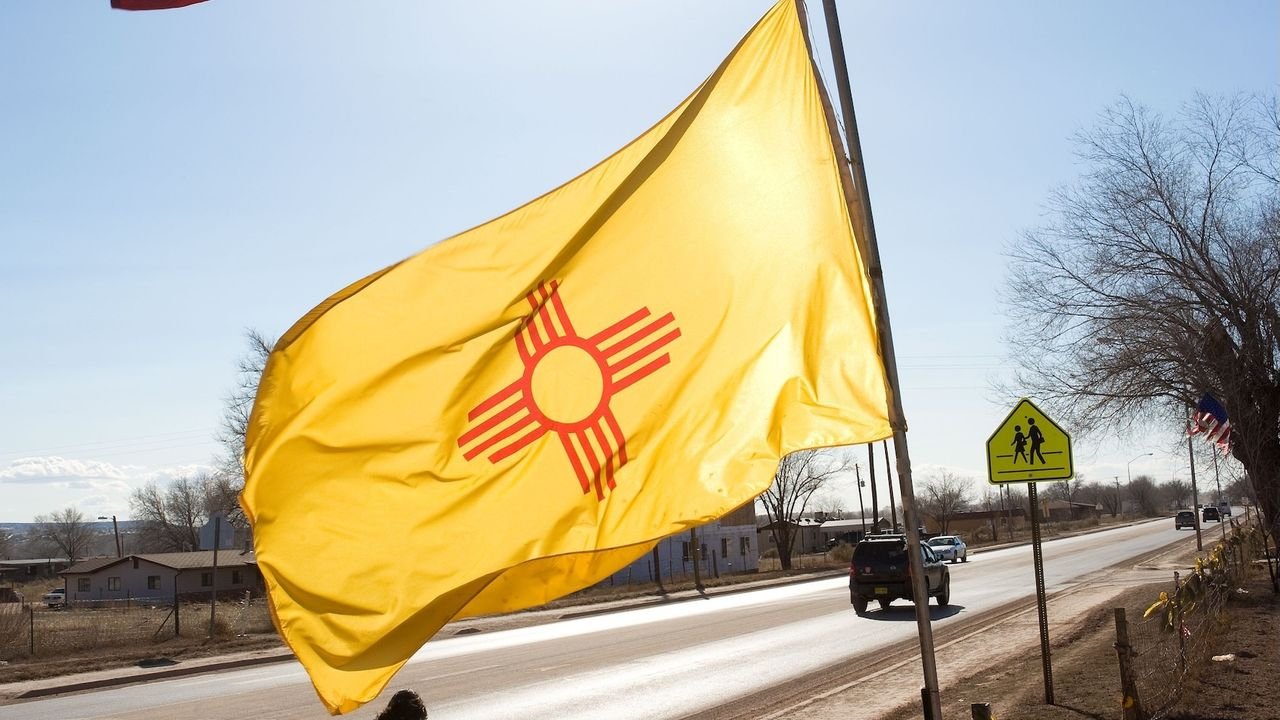
How do you campaign to be first? “Everybody’s lining up,” Minyon Moore, a co-chair of the Rules and Bylaws Committee, said in an interview. “Everybody is doing their own set of lobbying.” By the committee’s rubric, merely looking like America isn’t enough; states also need to show that campaigning there is affordable, and that they can, as a practical matter, run fair and transparent elections. But relationships and human interaction also matter—after all, this is Washington. The presentations at the D.N.C. meeting had the feeling of a science fair mixed with a trade show: The Illinois delegation showed a video that featured Governor J. B. Pritzker apparently taking a shot of Malört, the Chicago liqueur famous for making people recoil in disgust, with a voice-over declaring, “Illinois can handle the tough stuff—no explanation needed!” When New Mexico’s presentation was finished, Lujan Grisham walked around and shook everyone’s hand, and then she jogged out of the room in her stilettos, presumably to catch her flight. Clayton, the North Carolina chair, told me her party had made T-shirts for the members of the committee that read “We represent a new South.”
Among all the delegations, Nevada’s appears to be the most eager. “Why shouldn’t Nevada be first in the nation, is my question,” Cortez Masto, the senator, told me. The state, which is typically third on the nation’s primary calendar, has been trying to move up for several cycles. Its culinary-workers’ union has developed a canvassing operation that historically has helped Democrats turn out Latino voters—although, in 2024, the Hispanic vote broke for Trump there. “We know that, going into 2028, if we want to win, we have to be successful among diverse voters, specifically working to earn back the support of Latino voters,” Molly Forgey, a senior adviser for the Nevada Democratic Party, told me. “So, starting the calendar in Nevada is a decision and a message that we are taking Latino voters, Black voters, A.A.P.I. voters, working-class voters seriously in this election, and we’re beginning that work.” The culinary workers’ parent union and national Latino groups have endorsed the effort. The delegation had also produced all manner of memorabilia to present to members of the committee: holiday cards, gift bags with coffee, chocolate-chip cookies, local chocolate, a biography of Senator Harry Reid, poker chips that read “ALL IN ON NEVADA,” and plastic cups printed with “NEVADA FIRST.”



