
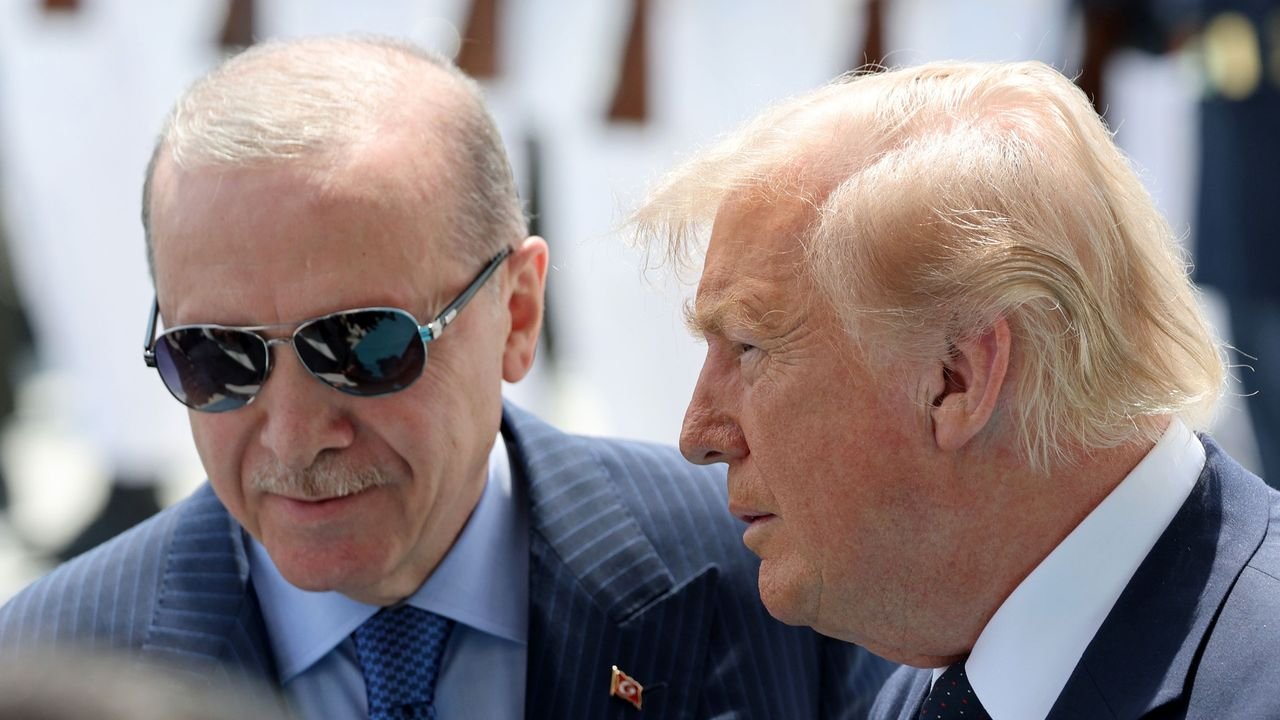
Little of this was in discussion as the NATO leaders convened in Ankara. In 2020, Jens Stoltenberg, the alliance’s then secretary-general, who is Norway’s current finance minister and its former Prime Minister, argued that NATO’s defining values were “freedom, democracy, and the rule of law”—all of which seem to be imperilled in Erdoğan’s Turkey. Yet, at a press conference on Monday, the current secretary-general, Mark Rutte, a former Prime Minister of the Netherlands, could only muster platitudes about the importance of democratic norms, and avoided directly criticizing Erdoğan’s governance. More pressing for the NATO chief was the collective goal of boosting European defense spending, rallying support for Ukraine, and appeasing President Donald Trump, whom he has spent many months wooing, at times in puzzling fashion, amid fears that the Administration would abandon NATO altogether. In an interview with Politico, Rutte praised Trump for cajoling European partners to do more when it came to their own defense; last year, most of the NATO allies agreed to Trump’s demand to increase military spending to five per cent of G.D.P. for each member nation by 2035. “I think what he is doing for NATO is great news,” Rutte said.
Trump was less gracious on his arrival in the Turkish capital. He reiterated his desire for possession of Greenland, complaining about what he described as Denmark’s inadequate stewardship of the Arctic territory, and seeming to suggest that continued U.S. military deployments on the European mainland could be contingent on U.S. ownership of the island. He also bemoaned the lack of support from some European countries during the U.S.-Israeli campaign against Iran, with nations such as Spain stopping the United States from using bases on their soil for offensive operations. “Spain is a wasted cause,” Trump said on Wednesday, threatening to “cut off all trade” to the E.U. member state. Hovering in the air, too, was an awkward rift with the Italian Prime Minister, Giorgia Meloni, whom Trump fell out with over Italy’s opposition to the war. After renewed attacks in the Strait of Hormuz, Trump said he believed that the tenuous ceasefire with Iran was “over” and branded the regime’s leaders as “scum.” The NATO leaders, many of whom disagree with Trump’s military campaign, could only look on.
The one leader Trump seemed to have time for was Erdoğan. The men have long shared a conspicuous rapport. On Tuesday, Trump said that, if the NATO summit had not been “held in Turkey, where my friend happens to be a very strong leader, a very strong person, it’s possible that I wouldn’t have attended.” He added that he would drop sanctions on the nation which have been in place since 2020, after Ankara bought air-defense systems from Russia, and that he would consider selling F-35 fighter jets to Turkey—a move that other allies, including Israel, oppose. “We have a better relationship with Turkey, and Turkey has been in many ways much more loyal than other countries that we think would be loyal,” he told reporters.
Turkey joined NATO in 1952, and it’s fair to say that the country’s democracy has been troubled for most of three-quarters of a century since; it has experienced multiple military coups and interruptions of democratic rule. But Turkey was a frontline state in the Cold War, on multiple borders of the Soviet Union, and Western interests at that time prioritized its strategic membership within NATO. Erdoğan, who first took office in 2003, has spent the better part of a generation reconfiguring Turkey’s politics to suit his interests. If he appeared to be a liberal reformer in his first years in power, that image melted away after his rule was challenged by a wave of protests in 2013. Purges of the state bureaucracy and judiciary followed, while Erdogan whittled away at the Turkish republic’s secular foundations with his brand of religious nationalism.
A failed coup attempt in 2016 accelerated Erdogan’s remaking of the nation. Following a controversial 2017 referendum, the parliamentary system was converted into a highly centralized Presidency, granting the office overwhelming control over economic and foreign policy, as well as most of the organs of state, including the judiciary, the intelligence services, and the military. The Presidential palace complex in Ankara, built under Erdoğan’s watch, is known as the Ak Saray, or White Palace; it’s more than thirty times the size of the White House and reflects the scale of Erdoğan’s authority. “They’re running the country in kind of the way that Trump seems to wish that he could run his country,” Selim Koru, an analyst at the Economic Policy Research Foundation, an Ankara-based think tank, told me. He added that, whatever visions of domination may motivate illiberal politicians in the West, they are all fully “blossoming” in Ankara.



