
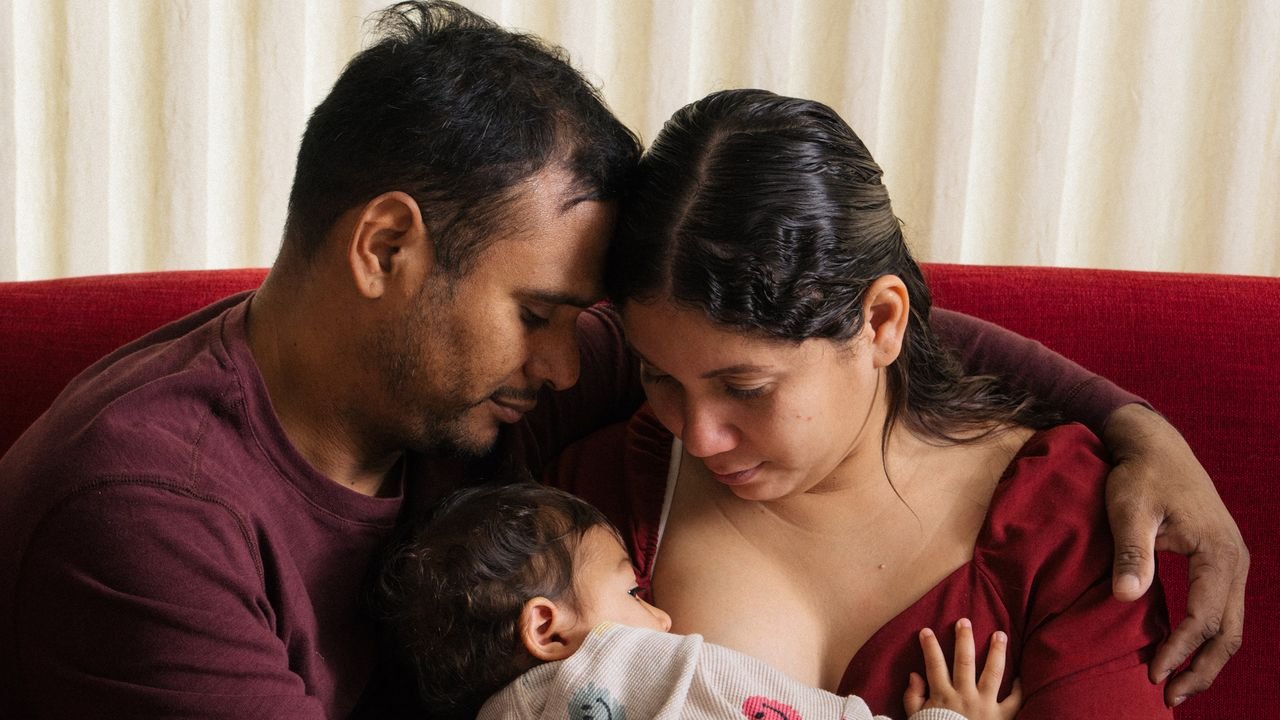
During the Obama Administration, allegations of neglect at Dilley were common. I wrote about a client of Mukherjee’s, a Honduran asylum seeker named Suny Rodríguez, who’d been detained there with her seven-year-old son for four months, in violation of Flores. In federal court, the pair alleged that they were subjected to “inhumane conditions” (including disregard for Rodríguez’s son’s asthma and weight loss), pressured to self-deport, and threatened with separation, claims for which they reached a settlement. Similarly, a group of ten mothers filed formal complaints in 2016, alleging substandard medical care in D.H.S. custody. One of those mothers noted, “I thought I came to this country to escape abuse, mistreatment, and disrespect. But it’s the same here.”
During Trump’s first term, family detention soared, and so, too, did accounts of medical horrors at Dilley. In the spring of 2018, a Guatemalan toddler contracted a respiratory infection there and died six weeks after being released; then, between September of 2018 and May of 2019, six children died in U.S. immigration custody, after nearly a decade without any such deaths. Under Biden, Dilley was shuttered. Asylum seekers were largely allowed to await their court dates outside detention, and many, like Amalia’s family, were granted humanitarian parole.
The second Trump Administration reopened Dilley in March of last year. By January 16, 2026, more than five hundred and fifty children were held in ICE detention, according to government data analyzed by the Marshall Project. Recently, detained families at Dilley have come from such countries as Afghanistan, China, Colombia, Haiti, Russia, and Uzbekistan. Often, Juburi and Barnard told me, children from non-Spanish-speaking countries have been asked to translate for their parents in high-stakes interactions with ICE officers, owing to Dilley’s limited interpretation services.
According to Barnard, the center has both threatened family separations and enacted them. “Many of the families we interviewed recounted being threatened that, if you don’t comply with us, we will separate you from your loved ones,” Barnard said.
In one case, an eleven-year-old boy and his parents fled Mongolia, flying to Chicago with the intention of seeking asylum. D.H.S. sent the family to Dilley, where officials, lacking a translator, allegedly asked the boy to inform his parents that ICE intended to separate him from them. The parents were shackled and sent to adult detention; the child was shipped to a federal shelter as an unaccompanied minor. “I am devastated,” the mother said in an official declaration. “ICE officers have not explained anything to me.” The family was only reunited two months later, in order to be deported back to Mongolia.
In another case, a thirty-seven-year-old woman from China and her ten-year-old son sought asylum at the border in San Diego. They were taken to the airport, where, she said, agents told her that she could accept deportation to China with her son or be forced to return on her own and have him “taken away” from her. She physically resisted and was briefly dragged by an agent. (In a sworn statement, she recounted one of the agents saying, “Fuck! You’re going on a military plane back to China!”) The mother and her son were sent to Dilley. There, according to RAICES records, they were officially separated: the son was sent, alone, to a federal shelter in New York, while she was sent to detention centers, first in New Jersey, and then in Texas and New Mexico. As of early April, the two remained separated.



