
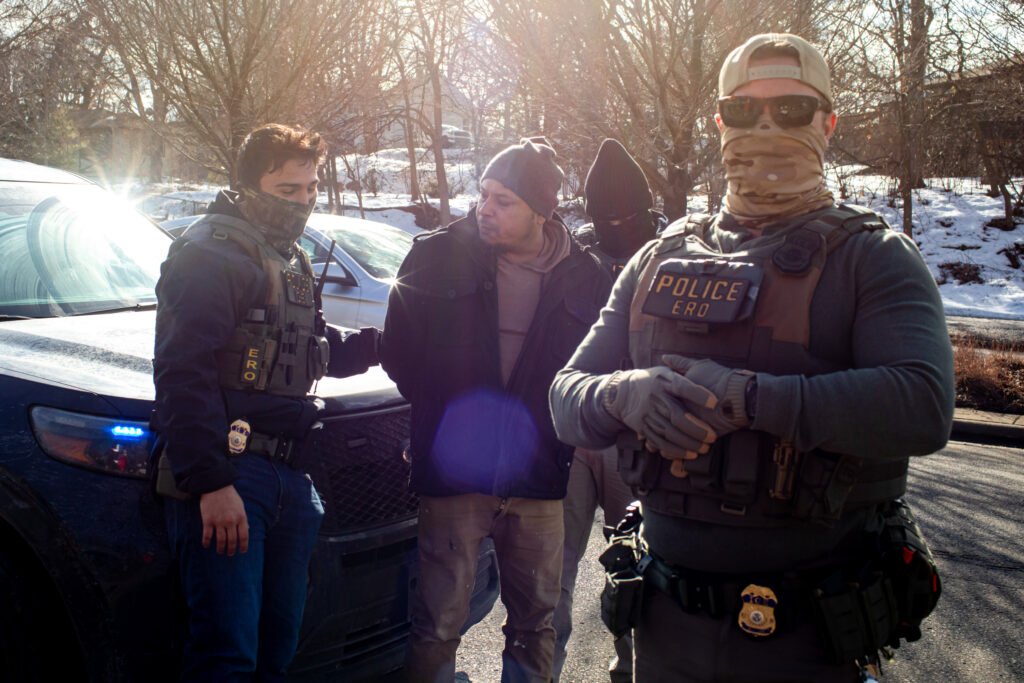
This is the story of Nazra Ahmed’s experience during Operation Metro Surge. She’s a home care worker and member of SEIU Healthcare Minnesota and Iowa. As told to Phillip Cryan, SEIU Healthcare Minnesota and Iowa executive vice president.
When Operation Metro Surge first happened, I was talking with my family: “How are we going to get groceries?” We were scared. Somebody could kill us, because we’re Somali. And President Trump is just spreading all this hate against us.
There were Somali people who wouldn’t leave their houses, because of their trauma from the Somali civil war. They were used to seeing dead bodies everywhere during the war. Because my people, we didn’t even go to therapists to heal after the war, displacement and coming to the U.S. as refugees. We never sat down with someone to talk about it all. When Trump was reelected for a second term, I couldn’t sleep for night after night. I was back in the civil war in Somalia in my mind. Fear had damaged me, too.
My son needs a special diet. He’s non-verbal. “What’s going to happen to him if ICE takes me?” It was a horrible feeling.
Everybody in the Somali community was saying: How can this be happening here, in the United States?
But it didn’t go the way we’d feared. Minnesotans stood up and said: “No. You’re not going to get my neighbor.” We have people here who actually believe in us, who love us. The opposite thing to what we had feared happened. I’d go to the grocery store, and people would say “We love Somalis.” They would say “We love you.”
Then I felt power. We have power. We have people behind us.
Trump thought people wouldn’t have documents, but well over 90% of Somalis here are American citizens. And we’re not a scared people. We stood up to him.
Once we realized they weren’t going to be able to do much against us Somali-Americans, I started checking in on my neighbors.
When I first bought this house a couple years ago, I met one of my neighbors. He had legal status, not citizenship or a green card but political asylum. He has worked on my house, fixing things, doing my kitchen. He and his wife don’t speak much English, so we use Google Translate to talk to each other. He has asylum and his kids are citizens, but his wife is undocumented. And they have a 9-month-old baby who was born premature and has special needs. I was scared for them.
“How can I help them?” I talked to another SEIU organizer and my son’s therapist, and we figured out together how to pay their rent, and to go to the grocery store for them. But then ICE took his wife, one day while she was on her way to work as a house cleaner.
They have three other kids, and the baby. And he’s looking after all of them.
He and his wife are very hard-working. They don’t ask anyone for help. They’re proud. I could see that he was feeling shame about accepting help. But I told him: We’re family. He started crying, and he was saying he will never forget us. I told him: That’s why we’re here. We’re here for each other. We are all God’s children.
We paid his rent from December to March. Now he feels safe enough that he can go back to work, so we aren’t paying his rent anymore. And he has a pro bono lawyer helping his wife.
I never thought I would see ICE come out to the suburbs. But one day, all of a sudden, they stopped me in my car. And that was my nightmare.
My son had therapy that day. We had been carrying our identification everywhere because we never knew what was going to happen. We had just finished his therapy and were coming home. I saw this big SUV behind me. Right away, I felt like “Uh oh. Is that them?” But then I thought, “Maybe I’m overthinking this, it’s nothing.” But they just kept coming coming coming behind me. And then I saw: There’s no license plate. That’s when I knew for sure. That’s when I slowed down and stopped.
And the masked people came out. How could I know if they were even real agents? There’s no license plate, no name badge. Just a number on their chest. So you don’t know who you’re even talking to.
Oh my God. I didn’t show them, but my heart was sinking. And I started shaking. One of them approached the car.
“Are you an American citizen?”
“Yes, I am. Why are you guys doing this?”
“We’re just doing our job, you know.”
“What would you think if this happened to you? Or your sister? Or your wife? If someone harassed them like this?”
“We’re just doing our jobs.”
“Okay. But why are you covering your face to do your jobs? I want to see you. … Have you ever heard of Al Qaeda? Al Shabab?”
“Yes.”
“That’s exactly how they look. They look like you. That’s why I’m scared now.”
“No, no. You’re doing great. You can just go ahead and go.”
I couldn’t go. I was stopped there, shaking in my car, for about 10 minutes. When you have that kind of anxiety, you can’t drive a car. Every time bad things like that happen, you flashback: back home, the civil war. It’s all in there somewhere — the memory of people attacking you. So I had to breathe and say to myself, “It’s okay, it’s okay.”
When he pulled me over, he had been thinking that maybe I would yell at him or call him names. But I never call people names. You’re not going to win by calling people names.
The only way you can win, with the cowards, is by showing them strength. If they see that you’re scared, they will come after you. That’s the way I’ve always done it: Anyone who’s coming after me, attacking me, I will smile at them and talk to them. I’ll attack them, but in the nicest way: Hit them in their heart.
When I asked what he’d do if something like this happened to his sister or his wife, I could see his eyes — that was the only part of him I could see — tear up. That got him in his heart.
It’s what people who are cowards try to do: they try to scare you.
But we’re not going to stop for fear. We’re not going to stop. We’re going to go vote. We’re going to knock doors and make calls. We won’t be scared. Minnesotans are warriors. On Jan. 23, the day of the general strike and march, it was like -30 degrees with windchill, but Minnesotans didn’t care! I wish I could have been there, but I couldn’t bring my son with me and I didn’t have a caregiver for him that day. I wish I could have been there that day with everyone. I would have brought so many sambusas.
This story was originally produced by Minnesota Reformer, which is part of States Newsroom, a nonprofit news network which includes Florida Phoenix, and is supported by grants and a coalition of donors as a 501c(3) public charity.



